Full Article
about Istán
The Costa del Sol spring near the La Concepción reservoir, known for its many fountains
Hide article Read full article
Getting your bearings
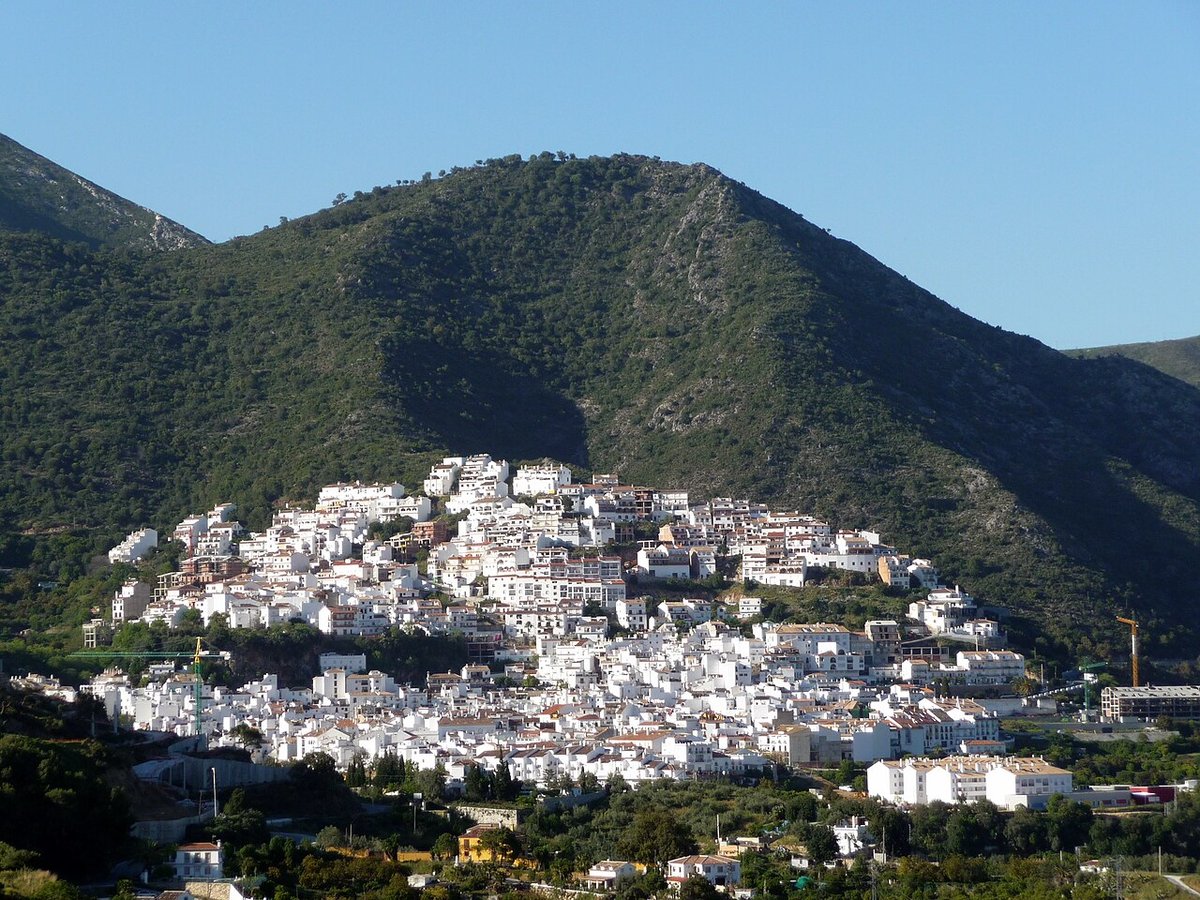
Anyone planning tourism in Istán should first understand what kind of place it is. The village is small, built on slopes, and short on space for cars. Most visitors leave the car near the entrance or in the wider streets at the top, then continue on foot. Driving into the centre rarely feels worth the effort.
By mid-morning in summer and at weekends, the village tends to fill up. An early arrival makes a difference. Heat builds quickly from midday, and the inclines feel steeper than they appear on a map.
The shape of the old town
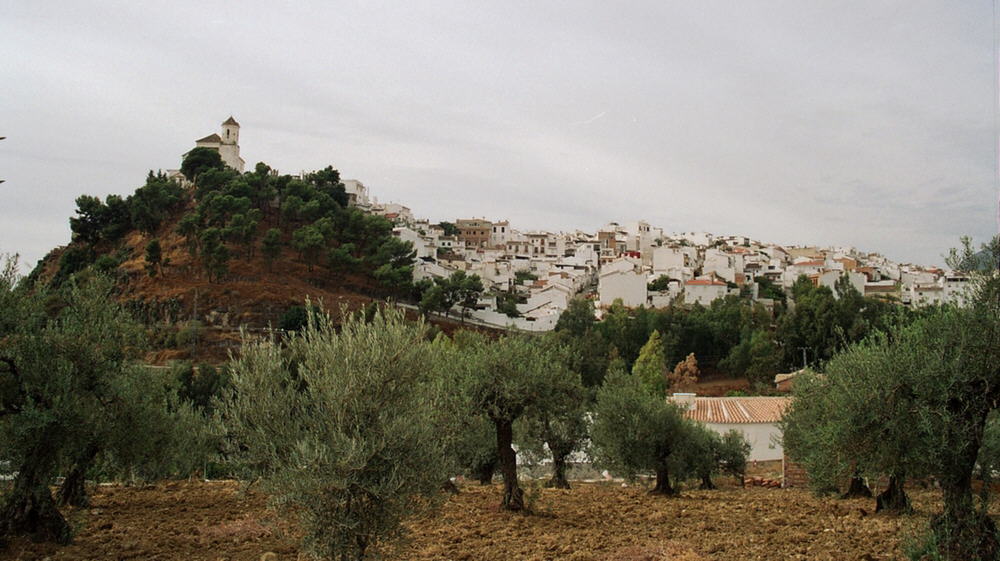
Istán keeps the layout of a mountain village. Streets are narrow, there are plenty of slopes, and the houses are simple and whitewashed. Large squares and striking landmark buildings are not part of the scene. You can cover the old town in a short time.
A typical visit involves wandering without a fixed route, moving up and down the streets and pausing where the valley opens out. Small fountains appear here and there across the village. Some still serve as everyday stopping points for local residents.
The Fuente de la Chorrera is usually the most photographed. It is not large or particularly ornate, yet water flows from it all year and it stands out well in pictures.
The church and the village centre
At the heart of the old town sits the iglesia de San Miguel Arcángel, built in the 16th century. The building is restrained in style, much like the rest of Istán. Inside, there are typically Baroque altarpieces and several religious images. A visit does not take long.
Around it, a few older houses show wrought-iron grilles and wooden doors. Nothing here aims to impress on a grand scale, though these details help explain how the village has looked and functioned over the centuries.
Beyond the streets: the Sierra de las Nieves
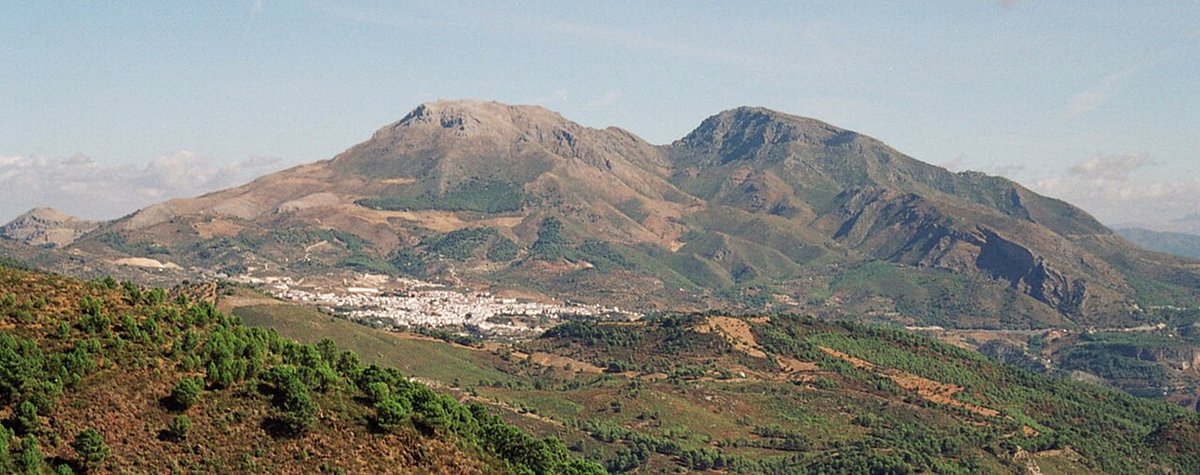
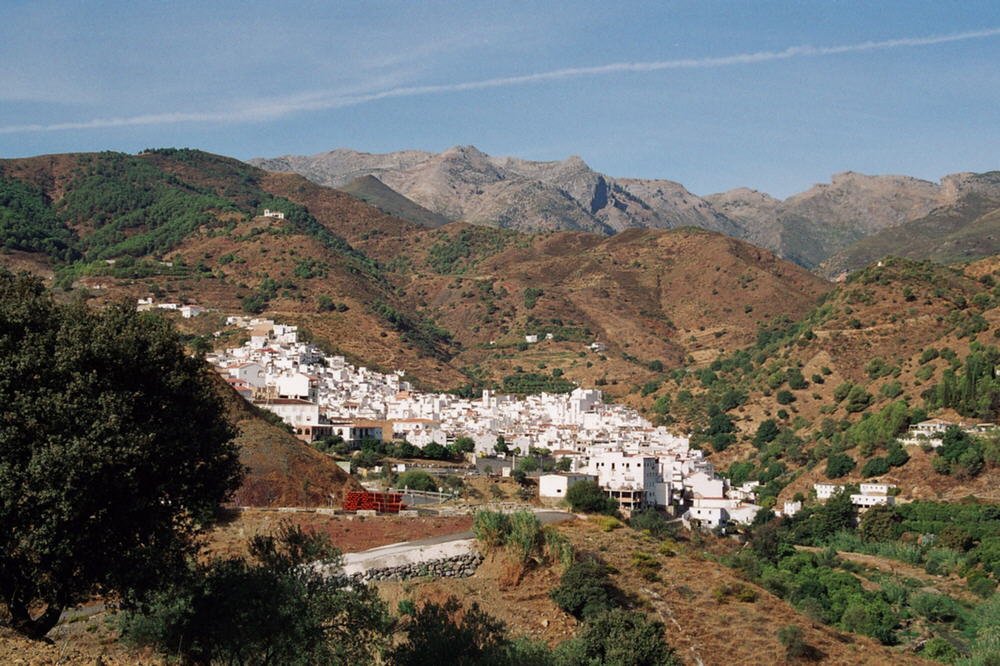
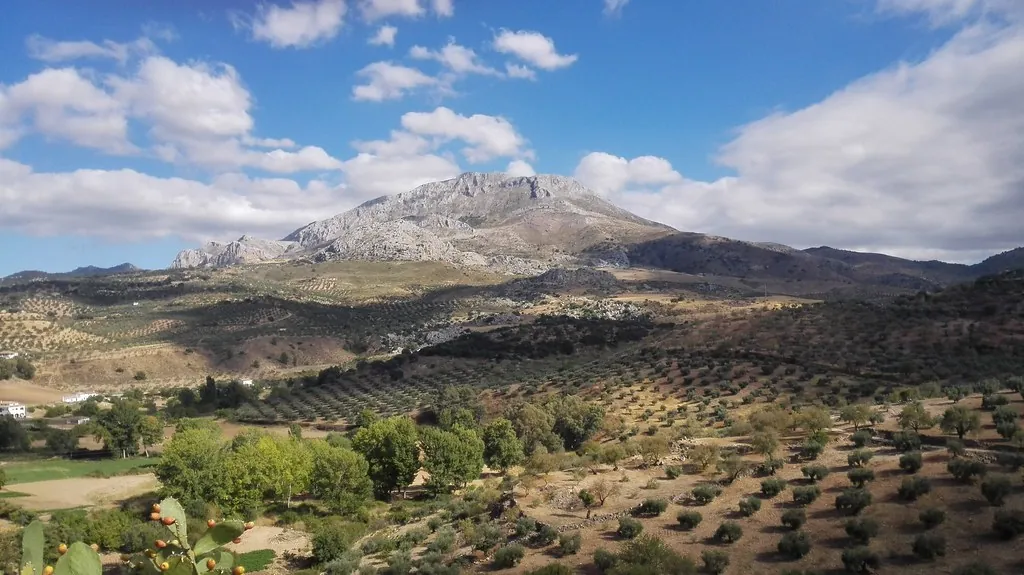
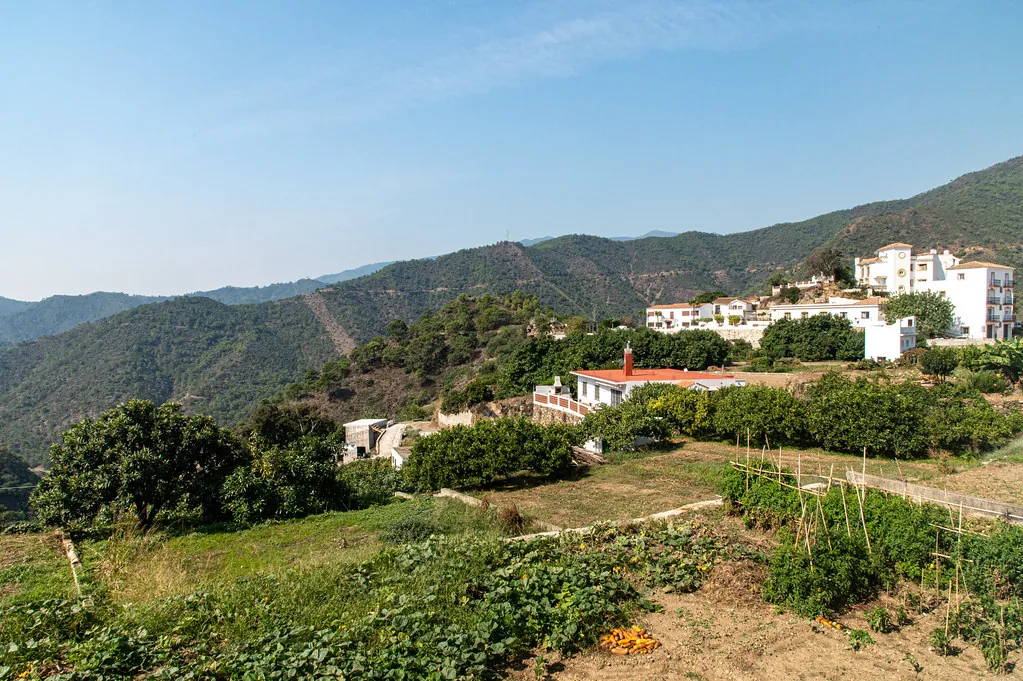
The landscape changes once you leave the built-up area. Istán lies within the Sierra de las Nieves, and that setting becomes clear as soon as you start walking out of the village.
Some paths descend towards the valley of the río Verde. Others climb towards higher ground, in the direction of the sierra or the surroundings of El Juanar. These are not heavily signposted routes, and you should not expect prepared viewpoints. They are traditional countryside paths.
Traces of older rural life remain visible. There are small orchards, historic irrigation channels known as acequias, and scattered cortijos, or rural houses. A number of them are still in use.
A short walk is often enough to spot birds of prey circling above the hills. Smaller birds move through pine and holm oak areas. Nothing here is organised as an attraction. It is simply the natural character of a mountain landscape.
Food and everyday life
Cooking in Istán follows the patterns of inland Andalusia. Dishes are filling, with a focus on meat and recipes that spend time on the heat. Almonds and local olive oil appear frequently.
The village does not maintain a constant tourist atmosphere. Outside certain weekends, daily life moves at a calm pace.
Local celebrations
The main festivities centre on San Miguel in September. There are processions, music and gatherings among neighbours. It is a local celebration rather than a large-scale event.
Easter, or Semana Santa, is also observed, though on a smaller scale than in bigger towns. The processions involve modest floats and short routes through narrow streets.
August usually brings the village fair. This is when Istán sees the most activity and movement.
A simple plan
An early visit and parking near the top work best. From there, a relaxed walk through the old town gives a clear sense of the place. If time allows, head out on foot towards the surrounding paths. That is where Istán changes most noticeably, from compact streets to open mountain scenery.