Full Article
about Arroyo del Ojanco
Young municipality known for its thousand-year-old olive tree in Fuentebuena and its tradition of San Marcos festivities.
Hide article Read full article
A Young Municipality in an Ancient Landscape
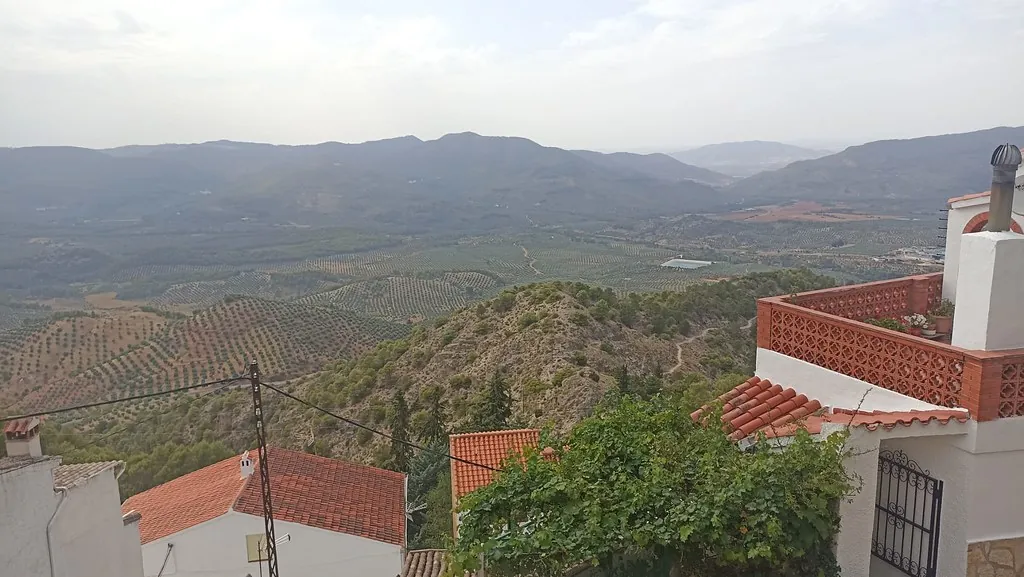
The Fuentebuena olive tree has been facing the same stretch of horizon for centuries. From that vantage point, the fertile plain of Arroyo del Ojanco opens out into an unbroken sweep of olive groves. The municipality itself is recent as an administrative entity. It was established at the beginning of the 21st century after separating from Beas de Segura. The land around it, however, tells a much older story.
In this corner of the Sierra de Segura, in the province of Jaén, the landscape carries more weight than the date on the town hall’s paperwork. Fields and hills shape daily life. The calendar here follows the rhythm of agriculture rather than official milestones.
The Time of the Olive Trees
Arroyo del Ojanco revolves around the olive grove. Almost the entire municipal area is planted with olive trees that cover whole hillsides and descend into the valley floor. Their silvery leaves define the view in every direction.
Some of these trees are said to be several centuries old, perhaps more. Dating them precisely is not always straightforward, but olive cultivation in this part of the Sierra de Segura is documented as far back as Roman times. That continuity links the present harvest to a much earlier agricultural past.
The N‑322 runs close to the town centre and acts as a main route between eastern Andalusia and the Levante. During the olive harvest, tractors and lorries pass through constantly. For a few months the pace intensifies, shaped by the urgency of collecting the crop. Outside the campaign, life slows down. Pruning takes place at the end of winter. Spring brings work on the soil. Summer arrives with dry heat that settles over the groves and the plain.
This steady cycle defines the atmosphere of the town. The sense of time is practical and seasonal, rooted in what happens in the fields.
Roman Footprints at Los Baños
A short distance from the town lie the remains of the Roman villa of Los Baños. It is not a monumental archaeological site. Low structures and sections of flooring hint at the presence of an agricultural estate that operated between the 1st and 2nd centuries AD.
Some mosaics survive under light protective coverings. Birds and plant motifs appear in small tesserae, carefully arranged into decorative patterns. The visible area is modest, yet it is enough to suggest that this was once a rural residence with a certain level of prosperity, closely tied to farming in the Guadalimar valley.
The name of the municipality also carries traces of history. “Ojanco” seems to derive from an older form, probably of Arabic origin, recorded in documents from the area after the Castilian conquest. Over time the sound adapted to local Spanish usage.
Popular tradition offers another, more imaginative interpretation. In the mountain dialect, an ojanco is a one‑eyed mythological being, similar to a cyclops. That image explains the eye represented on the municipal coat of arms approved after the creation of the town council.
The Church of the Immaculate Conception
The Church of the Immaculate Conception stands in the main square and dates from the late 19th century. For many years it did not have its own parish and depended on Beas de Segura. Even so, local residents already used the building for burials and celebrations.
The structure is sober in appearance. It has masonry walls, a simple roof and a bell gable added some years after the initial construction. Twentieth‑century renovations strengthened the structure and altered part of the interior.
According to local tradition, the main altarpiece came from another nearby church affected by the 19th‑century confiscations of church property in Spain. In its niches stand images of the Virgen de los Dolores and San Francisco de Asís. San Francisco is one of the town’s patron saints alongside San Marcos. The carving of San Francisco was completed by local hands in the mid‑20th century after the death of the sculptor who had begun it. The difference can be seen in the face, which appears slightly more rigid than the rest of the figure.
The church reflects the town’s gradual consolidation as an independent community. Long before the administrative separation from Beas de Segura, religious life already had a physical centre here.
Up to the Portazgo Hill
One of the best‑known walks in the surrounding area leads to the hill known as El Portazgo. The path first crosses terraces of olive groves, then enters a reforested pine area.
The summit stands at around one thousand metres above sea level. From there the position of the town within the Guadalimar valley becomes clear. To the north rise the higher mountain ranges of the natural park. To the south the land opens out towards Beas de Segura.
Signage along the tracks is not always clear. Visitors usually orient themselves by asking in the town or by following the agricultural paths used by farmers. The route offers a direct way to understand how Arroyo del Ojanco fits into the wider geography of the Sierra de Segura.
San Marcos and the Luminarias
The main festival takes place around 25 April in honour of San Marcos. During those days many residents who work elsewhere return home, a common pattern in towns across this part of Jaén since the second half of the 20th century.
The celebration combines religious events with street gatherings and evening dances. On the eve of the feast, luminarias are lit at different points in the town. These bonfires burn through the night while neighbours gather to talk and share simple food.
In the morning, blessed bread is distributed. This custom also appears in other towns in the Sierra de Segura and links Arroyo del Ojanco to a wider regional tradition.
Eating and Finding Your Bearings
Local cooking centres on basic produce from the countryside. In winter, gazpacho serrano appears on the table. Unlike the cold tomato soup associated with other parts of Spain, this version is served hot and includes bread. Spring brings tortillas made with collejas or other wild greens that sprout after the rains. In summer, ochíos and simple dishes are prepared for meals eaten out in the fields during working days.
Arroyo del Ojanco sits close to the N‑322, which makes it easy to place on the map as a stop between eastern Andalusia and the Mediterranean side of Spain. Beyond that road, the municipality blends into a landscape of groves, low hills and distant mountains. Its history as an independent town may be recent, yet the agricultural setting and the stories attached to its name reach much further back.