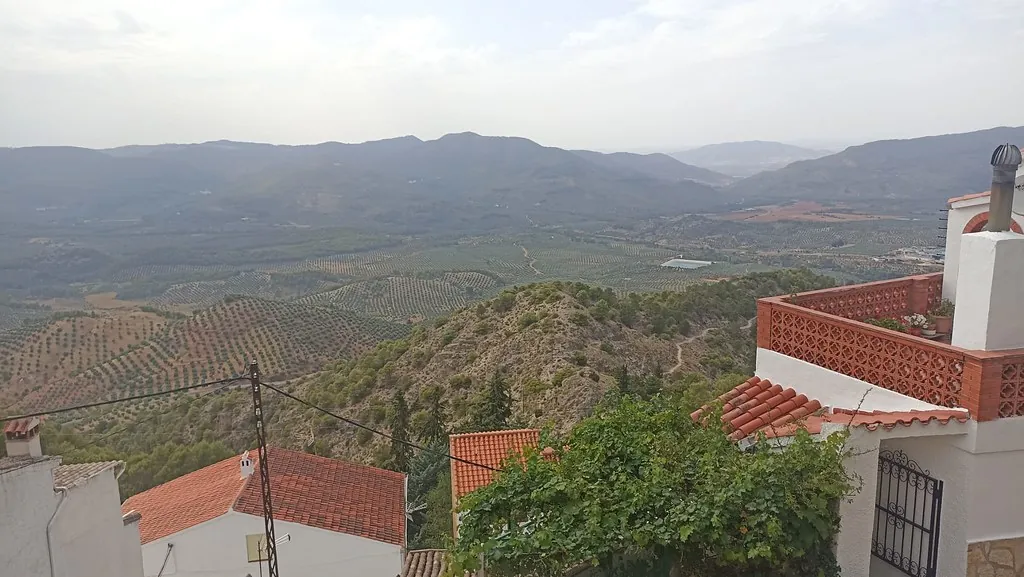
Vista aérea de Benatae
Instituto Geográfico Nacional · CC-BY 4.0 scne.es
Andalucía · Passion & Soul

Benatae

The church bell strikes noon and the only other sound is a tractor grinding up the lane. From the stone bench outside the Iglesia de la Inmaculada ...

423 inhabitants · INE 2025
842m Altitude

Why Visit

Mountain Cardete Castle Hiking to Pico Peñalta

Best Time to Visit

summer

San Ginés de la Jara festival (August) agosto

Things to See & Do
in Benatae

Heritage

  • Cardete Castle
  • Church of the Assumption
  • Peñalta Viewpoint

Activities

  • Hiking to Pico Peñalta
  • Birdwatching
  • Rural tourism

Festivals
& & Traditions

Fecha agosto

Fiestas de San Ginés de la Jara (agosto), San Isidro (mayo)

Las fiestas locales son el momento perfecto para vivir la autenticidad de Benatae.

Full Article
about Benatae

Small mountain village with rural charm; perfect for unplugging and enjoying untouched nature.

Ocultar artículo Leer artículo completo

The church bell strikes noon and the only other sound is a tractor grinding up the lane. From the stone bench outside the Iglesia de la Inmaculada Concepción you can see olive groves slide away towards the Guadalquivir headwaters, four hundred metres below, and beyond them the ramparts of the Sierra de Segura turning violet in the heat haze. Benatae doesn’t do panoramas by half-measures; at 842 m it perches on a ridge like an afterthought someone forgot to knock down.

Five hundred souls live here, plus the odd British couple who bought a ruin before Brexit closed the door. They came for the silence, the 360-degree skyline, and the fact that you can still buy a habitable townhouse for less than a garage in Sussex. What they hadn’t banked on was the shop opening only when Concha feels like it, or the broadband packing up whenever the easterly wind rattles the telephone wire. These are the trade-offs; nobody pretends otherwise.

Stone, Cal and Winter Smoke

The village blueprint is classic frontier Andalucía: narrow lanes, whitewash thick as icing, and roofs pitched steep enough to shrug off the occasional snow that drifts across the Segura range. Houses are built for temperature swings; walls half a metre thick keep August heat at bay and January frost outside the kitchen. Look closely and you’ll spot 1950s coal scuttles rebranded as plant pots, and timber doors bleached the colour of old bones. There is no architectural fanfare, just the satisfaction of things done properly the first time.

Walk downhill from the church and you reach the mirador in thirty paces. The plaque tells you the names of distant peaks—Cabañas, Hornos, Las Banderillas—but the view works without captions. Early morning brings a low sun that picks out every terrace wall; by dusk the same ridges soften into silhouettes that could pass for water-colour. Photographers fight over the golden hour elsewhere; here you get it to yourself, unless you count the retired shepherd who uses the railings to stretch his calves.

Olives Older Than the Queen

Benatae’s economy still runs on three things: olives, sheep, and the pension money wired back from sons in Madrid. The surrounding groves contain trees that were already mature when the Armada sailed; their trunks twist like badly wound rope and their roots have cracked bedrock that would defeat a pick-axe. Harvest runs November to February—men in quilted waistcoats, pneumatic rakes that whirr like hair-dryers, and small convoys of tractors that turn the main street into a one-way puzzle for twenty minutes a day.

Stop at the cooperative on the outskirts and you can fill a five-litre tin for about thirty-five euros. The oil is emerald, peppery, and nothing like the supermarket “extra virgen” that’s been blended into submission. Bring cash; the card machine works on solar panels and clouds are democratic.

Walking Maps and Other Fiction

Footpaths do exist, but the council gave up marking them when the money ran out in 2011. The best tactic is to buy a beer in the Bar Centro and ask for Paco—he’ll draw you a route on the back of a lottery ticket. A gentle loop south-east follows an old irrigation channel to the centenary olive that locals call El Abuelo; it’s thirty minutes out, thirty back, and you’ll meet more ibex than people. Serious walkers can continue along the Cañada Real to the ruined hamlet of Peñallave, an eight-kilometre round trip that gains another 300 m and delivers views across two provinces. GPS tracks are downloadable, but phone signal dies two minutes beyond the last streetlamp, so screenshot the map while you have Wi-Fi.

After rain the clay turns to axle grease; boots with tread are non-negotiable. Summer hikers should start at dawn—by 11 a.m. the thermometer kisses 35 °C and shade is a theoretical concept.

What Passes for Nightlife

Evenings centre on the plaza, a rectangle of granite slabs furnished with one bench, two plane trees, and a fountain that spouts potable water colder than any fridge. Children kick footballs until their mothers whistle them home; dogs conduct low-level diplomacy; the bar owner rolls out three tables and counts the day’s coins. Order a caña and you’ll get a free tapa—perhaps a wedge of tortilla or chorizo sliced so thin you could read the Jaén headline through it. There is no menu del día; lunch is whatever Amparo decides to cook, and if you haven’t booked by 10 a.m. she won’t peel an extra potato.

The nearest restaurant with printed prices is in Villacarrillo, 22 km away. That’s also where you’ll find the nearest cashpoint, petrol station, and pharmacy. Benatae’s lone shop stocks UHT milk, tinned tuna, and a lottery ticket machine that doubles as village gossip hub. Bread arrives in a white van at noon; if you’re late you eat yesterday’s.

When to Come, When to Stay Away

April brings almond blossom and daytime highs of 20 °C; nights still drop to single figures, so pack a fleece. May is greener but adds swallows and the first biting fly. September offers the same temperatures without the pollen, plus the grape and fig harvest—drivers should watch for tractors piled high enough to scrape motorway bridges. Mid-winter can be magical: snow on the sierra, wood smoke in the streets, and skies scrubbed clean by the cierzo wind. It can also mean roads closed by ice; carry chains if you book between December and February.

August fiestas tempt returnees from Barcelona and Valencia, swelling the population to maybe a thousand. The plaza hosts a foam party that leaves the stones slimy for days, and decibel levels rise enough to make the village cat depart for the fields. Accommodation is block-booked by cousins; if you dislike synchronised drumming in 38 °C heat, choose another week.

Beds, Roofs and Other Practicalities

Rural houses number exactly two. Casa Puerta Azul sleeps four, has a wood-burner and a roof terrace that faces sunrise; El Serbal is larger, adds a modest pool heated by solar tubes, and closes in January so the owners can visit grandchildren in Preston. Expect €90–120 a night, towels that match, and a welcome pack containing olive oil, coffee, and instructions not to flush anything ambitious. Both places will arrange dinner if you ask before 6 p.m.—lamb shoulder slow-cooked with rosemary, or trout caught that morning and served with potatoes the size of golf balls.

There is no hotel, no campsite, and no plan for either. The closest beds outside the village are in Santiago-Pontones, half an hour along a road that corkscrews down 500 m and then climbs back up again. Drive it in daylight first; stone walls don’t forgive wing mirrors.

Getting Here, Getting Out

Málaga airport is the simplest gateway: UK flights arrive before noon, and the hire-car queue moves fast if you’ve paid for the “key-ready” option. Take the A-45 towards Antequera, switch to the A-92 at Loja, and stay on it until junction 275. From there it’s country tarmac all the way—first the olive-ocean of the Jaén plains, then the foothills that tighten into hairpins. Total time: two and a quarter hours if you resist stopping for photos. Granada airport is nearer in miles but fewer airlines fly there; the saving is negligible once you factor in the wait for the single-carrier luggage belt.

Public transport is a bedtime story. There was a bus twice a week until 2018; it stopped when the driver retired and nobody could reverse a 12-seater around the plaza. Taxis from Cazorla will do the run for €70 if you telephone in Spanish and promise a tip. Otherwise you need wheels.

Parting Shot

Benatae will not change your life. It has no Michelin stars, no infinity pool, and no craft-beer tap room. What it offers is a place where the sierra still decides the timetable, where oil is judged by its bite, and where the night sky is unaltered since the Moors planted the first almond. Turn up expecting rustic solitude and you’ll leave content; arrive craving nightlife and you’ll be asleep by ten. Either way, fill the tank before the last roundabout—once the road starts to climb, the next petrol is thirty kilometres and a whole different altitude away.

Key Facts

Region
Andalucía
District
Sierra de Segura
INE Code
23016
Coast
No
Mountain
Yes
Season
summer

Livability & Services

Key data for living or remote work

2024
Connectivity5G available
HealthcareHospital 12 km away
EducationHigh school & elementary
Housing~5€/m² rent · Affordable
Sources: INE, CNMC, Ministry of Health, AEMET

Official Data

Institutional records and open data (when available).

  • Castillo de Puente Honda
    bic Castillo/Fortaleza ~3.3 km

Planning Your Visit?

Discover more villages in the Sierra de Segura.

View full region →

More villages in Sierra de Segura

Traveler Reviews