Full Article
about Hornos
Spectacular hilltop village overlooking the Tranco reservoir; historic-artistic site with castle and planetarium
Ocultar artículo Leer artículo completo
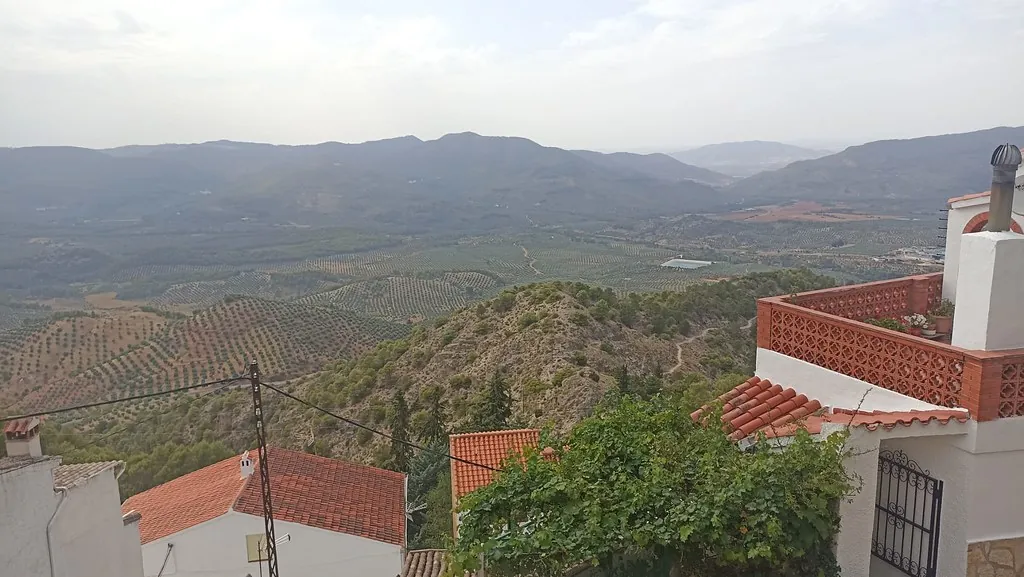
The first thing you notice is the castle wall glowing like a sheet of printer paper in the morning sun. From the roadside it seems to float, a white cube stapled to a cliff 865 m above the Guadalquivir valley. Then the road corkscrews down and you realise Hornos is the cliff: every house is mortared to the same pale limestone, and the castle is simply the last house left standing.
Most visitors photograph the village from the mirador on the JV-2303, spin the hire-car round and disappear. Staying longer is rewarded with silence so complete you can hear goats’ bells across the ravine and, at dusk, the soft clap of storks landing on the castle battlements.
A Village That Works for its Living
Forget souvenir arcades. The only shop doubles as the bakery and closes once the morning roll is sold. Fishermen from the reservoir sometimes set up a plastic table outside the bar and sell black bass by weight; if you want it cleaned you do it yourself on the stone sink in the plaza. The place survives on olives, almonds and the weekend trade from Jaén families who keep second flats here. Tourism exists, but it is still outnumbered by tractors.
The upside is authenticity without the performance. Order a caña in Bar Cruz and the television stays on the news; nobody flips it to an English football channel. The downside is practical: if the village’s solitary cash machine is out of order (frequent) you face a 40 km mountain drive to the nearest bank. Bring euros.
Up and Down in Fifteen Minutes – and Why You’ll Take All Day
Hornos is officially one of Spain’s “Pueblos Más Bonitos”, yet the entire casco histórico fits inside a single contour line. A slow circuit from the upper car park, past the sixteenth-century Iglesia de la Asunción, down to the reservoir road and back up through Calle Cuesta takes barely quarter of an hour. You will, however, stop every twenty paces: to read the 1767 date on a brass door-knocker, to let a donkey squeeze past, or simply to stare across the emerald tongue of the Tranco reservoir 300 m below.
Inside the church the air smells of candle wax and damp stone; the baroque retablo glints with gold leaf applied by craftsmen who never saw the sea. Entry is free when the door is open – usually 10:00–13:00, except when it isn’t. A discreet sign asks for a €1 donation towards roof repairs; drop coins in the box and the sacristan might unlock the choir for a closer look.
From the plaza a cobbled ramp climbs to the castle gate. The fortress is ruined but safe; climb the keep for a 270-degree sweep of the Sierras de Cazorla, Segura y Las Villas. On clear mornings the view stretches 50 km to the razor ridge of Cabañas. Interpretation boards are in Spanish only, so download an offline translator before you leave the hotel Wi-Fi.
Water, Walks and Temperature Reality Checks
The Tranco de Beas reservoir is not a backdrop; it is the village fridge. Morning mist rolls uphill, cooling houses that would otherwise bake at this latitude. By July thermometers still nudge 38 °C, but nights drop to 20 °C, so sleep comes easier than on the coast. August is lively – the feria brings fireworks and a makeshift disco in the sports hall – yet even then bars shut by 23:30 and the only after-hours option is a bottle of tinto on the mirador bench.
Swimming is possible from a small concrete platform at the dam, 3 km below the village. The water is soft, clean and, until late June, frankly cold. No lifeguard, no sun-lounger hire, just a portable loo and a sign warning of sudden depth changes. Kayaks can be rented at the nautical club on weekends; call ahead because volunteers staff the hut.
Walkers should aim for spring or late September. The classic ascent to Pico del Yelmo (9 km return, 600 m climb) starts from the hydrographic station 10 minutes down the road. The path is way-marked but rough; allow four hours and carry more water than you think necessary. For a softer outing follow the olive-track to Cañada de la Cruz, a two-hour loop through wild rosemary and the occasional boar print.
What Lands on the Table
Menus are short and heavy. Starters tend to be andrajos – flat noodles stewed with rabbit and wild mint – or a plate of warm migas flecked with pancetta. Mains revolve around Segureño lamb, slow-roasted until the knuckle meat slides off the bone. Vegetarians get a thick pisto (Spanish ratatouille) topped with a fried egg; vegans should warn the kitchen in advance or settle for chips and the village’s excellent olives.
House wine comes from Valdepeñas further south; expect to pay €2 a glass, €9 a bottle. Most restaurants will open whatever you choose, even if you are their only table. Lunch service finishes by 16:00; dinner rarely starts before 20:30.
Getting There and Away – The Bit the Brochures Skip
The nearest airport is Málaga: collect a hire-car, join the A-45 to Antequera, then the A-4 towards Bailén. Turn off at junction 292 for Úbeda, follow the A-32 for 25 km, then pick up the JV-2303 into the mountains. Petrol stations become scarce after Villacarrillo; fill the tank while you can. The final 40 km wriggle through pine plantations where wild ibex occasionally wander across the tarmac. Total driving time from the airport is three hours without stops.
There is no railway and bus provision is academic: one daily service from Úbeda timed for market day, outbound at dawn, return mid-afternoon. Useful only if you fancy spending more time on a local bus than in the village itself.
Accommodation is limited to a handful of casas rurales and one small hotel inside the old walls. Expect €70–€90 for a double room, less out of season. Most properties have wood-burning stoves; nights can dip below 5 °C from December to February, so check heating is included. Parking is on the street or in the upper plaza – arrive early on weekends because day-trippers from Jaén claim every space.
Leave the Car, Keep the Quiet
Hornos will never tick the “packed with attractions” box, and that is precisely its appeal. It offers space, stone and silence, plus food cooked by people who eat the same dish at home. Come for one night and you will probably leave after two; the village is small, but the calm works its way into your bones. Just remember to top up the tank, download the map and bring enough cash for another round.