Full Article
about Segura de la Sierra
One of Spain’s prettiest villages, topped by an unassailable castle and birthplace of Jorge Manrique.
Hide article Read full article
Getting There and Getting Around
If you are planning a visit to Segura de la Sierra, the first practical detail is the car. The historic centre is small, steep and threaded with very narrow streets. The usual approach is to leave the car in the lower part of the village or in designated areas before entering, then continue on foot. Trying to drive all the way up tends to mean awkward manoeuvres rather than convenience.
Arriving early makes a difference. By mid-morning, day visitors begin to appear and the village fills quickly for its size. Later in the afternoon, things settle again and the pace becomes noticeably calmer.
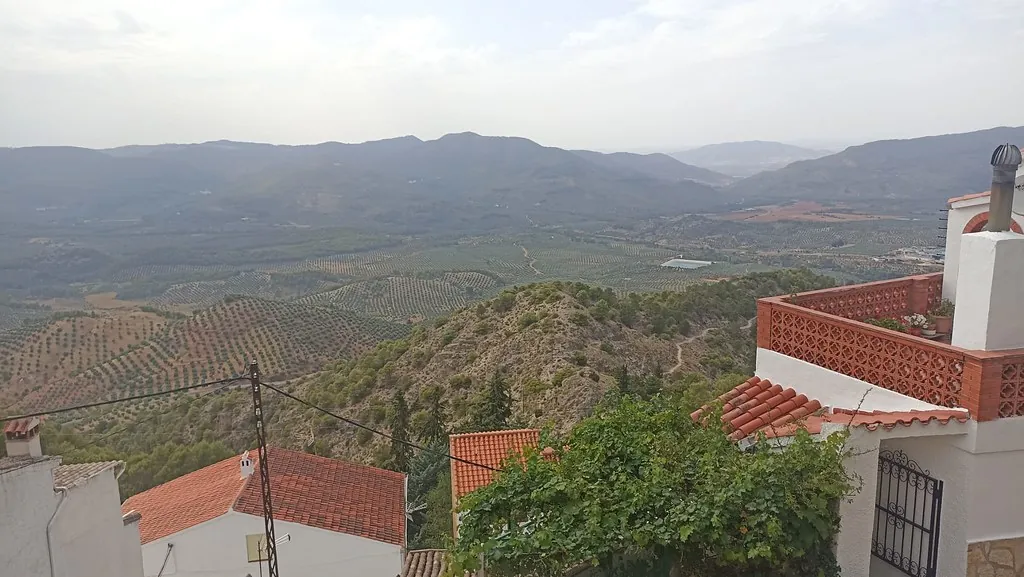
Segura sits at around 1,145 metres above sea level, high in the Sierra de Segura. Just over 1,700 people live here. The old town still follows a medieval layout: cobbled streets, constant inclines and tightly grouped white houses. Everything leads upwards, drawing you towards the castle at the top.
The Stops That Matter Most
The Castillo de Segura is the main landmark and the point everything revolves around. It is visible from a distance and dominates the hill. Its origins are Muslim, later reworked after the Christian conquest. From the top, the surrounding landscape becomes clear: mountains in every direction and, on a clear day, the Yelmo massif in the distance. It is worth checking opening times before heading up, as they can change depending on the season.
Within the old town stands the Iglesia de Nuestra Señora del Collado. Its exterior is restrained, built in pale stone with a solid, compact form. Inside, there are altarpieces and older religious pieces, although the visit itself is brief.
The Archivo Histórico Municipal holds medieval documents known among researchers. For most visitors, it does not offer much unless there is a specific interest in local history at a detailed level.
The Casa de Jorge Manrique connects the village to the poet, who served as the fortress’s governor. Today it functions as a cultural space. It does not take long to see, but it helps place Manrique’s presence here into context.
The Fuente Imperial can easily be missed if you are not paying attention. It has been altered several times over the years. It is not especially monumental, but it points to something fundamental in mountain villages like this: water shaped where people lived and how daily life was organised.
Walking Beyond the Streets
Segura de la Sierra is also used as a starting point for walking routes into the surrounding mountains.
The ascent to El Yelmo begins near the village along marked paths. It is a long route with a noticeable climb. The terrain alternates between tracks and rougher, rocky stretches. Proper footwear and water are essential. From the summit, much of the natural park can be seen.
A gentler option is the so-called sendero de las Fuentes. This route passes springs and areas of holm oak and pine woodland. It does not require the same level of preparation and allows for a longer walk without straying too far from the village.
Food from the Sierra
The cooking here reflects its mountain setting. Dishes are filling and direct. Game stews appear when in season, mushrooms are common in autumn, and local olive oil is used generously. This is not a place focused on elaborate cuisine. The food is closely tied to what is produced in the surrounding area.
Autumn also brings mushroom foraging. Some visitors come specifically for this. It is worth checking the rules beforehand, as the natural park usually sets limits and guidelines.
Local Life and Celebrations
The main celebrations remain largely local in character. In May, processions dedicated to the Virgen del Collado usually pass through the streets of the old town. They do not draw large crowds from outside, but the village becomes active and engaged.
August brings the patron saint festivities. For several days there is music, activities and a lively atmosphere in the streets.
In some years, cultural events dedicated to Jorge Manrique are organised, including talks and activities connected to the village’s history.
A Simple Way to Experience It
The easiest way to understand Segura de la Sierra is straightforward. Leave the car below and walk up. Take your time through the old streets and finish at the castle. In a couple of hours, you can get a clear sense of the place. If walking appeals, then it is worth staying longer and heading out into the surrounding sierra.