Full Article
about Siles
Mountain village surrounded by forests and water; highlights include the Torre del Cubo and the reservoir.
Hide article Read full article
A village seen from above
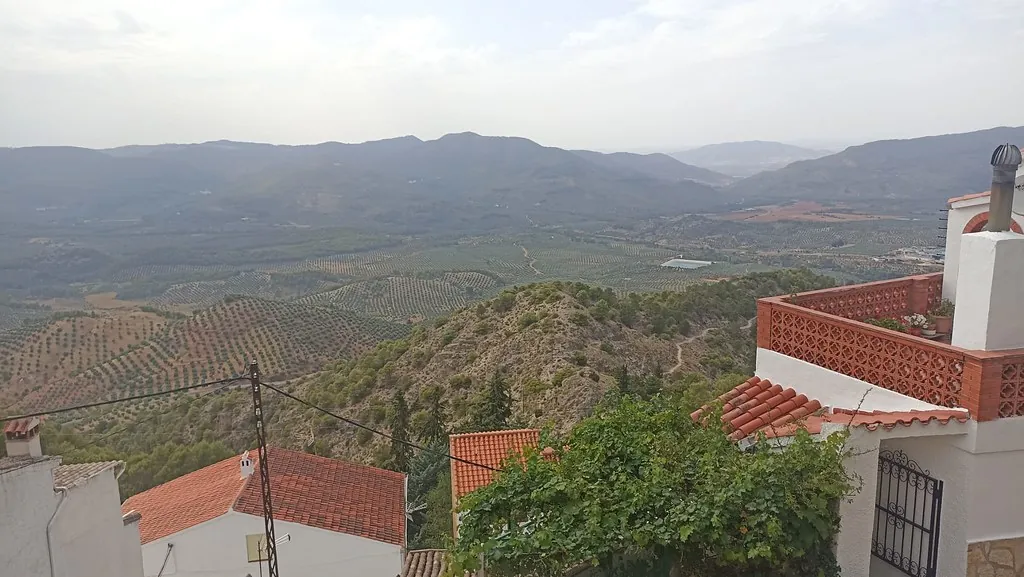
By mid-afternoon, as the sun begins to drop over the Sierra de Segura, the valley around Siles fills with quick flashes of light, as if a handful of mirrors had been scattered among the olive trees. From the hill where the remains of the old castle still stand, the village looks compact: reddish roofs, streets curling uphill, and beyond them a line of blue-tinged mountains that turn almost violet at dusk. It is easy to see why many visits to Siles begin here, pausing to take it all in before heading down.
The descent is slow. Narrow streets carry the smell of warm bread and firewood, especially once the evening cool sets in. The houses are low, built with thick walls that keep interiors cool during the summer heat. In the main square, the town hall clock marks the hours with a metallic sound that carries along several streets. Around that time, there is always someone passing through with shopping bags or stopping to talk, leaning on a railing without hurry.
The scent of the caldera
In August, when the heat settles above thirty degrees for much of the day, a particular smell spreads through Siles and can be recognised from a distance: vinegar, bay leaf, pepper and meat cooking slowly for hours. It comes from the caldera de toro prepared during the fiestas of San Roque.
At the centre of it all is a huge metal pot that, according to local accounts, has been in use for more than a century. Each year it is set over a fire in the square and stirred with long wooden poles. From early on, people gather around it, watching, commenting on how the stew is progressing or helping out where needed.
Small groups form naturally. Some arrive carrying bread, others bring a bottle of wine, and some simply stand and watch the broth bubble away. When the time comes to serve it, the queue stretches across much of the square. No one seems in a rush. People eat standing up, talking about how this year’s version compares with the last.
Castles that take some finding
In the hills surrounding Siles, traces of medieval fortifications remain. Some appear on old maps or along walking routes, though they are not always easy to locate on the ground. Asking around in the village is often still the quickest way to find them.
One nearby hill preserves fragments of wall and stones that once formed a tower. The path runs through a pine forest where the ground is covered in dry needles and the air smells of warm resin under the sun. From the top, the whole valley opens out: a patchwork of olive groves, the Guadalimar river winding between cultivated plots, and the white cluster of Siles gathered along the slope.
Other remains require more patience. Forest tracks can be uneven, with loose earth and rough sections, and at some point it makes sense to leave the car behind and continue on foot. The final stretch often disappears among rockrose and rosemary. When the pile of stones that once made up a tower or wall finally appears, the wind moves freely across the hilltop. The location makes immediate sense: from here, anyone approaching through the valley would have been visible well in advance.
The night when the bull is spared
During the fiestas of San Roque, held in mid-August, there is a moment that many residents speak about with a certain seriousness. On the final day of the bull-related celebrations, a particular custom is maintained: the animal is not killed in the arena.
Instead, it is led to the centre of the ring and people throw buckets of water over it. The bull snorts, shakes its head, and the water hits the sandy ground, releasing a brief smell of damp earth. Some link the practice to an old promise made by the town to its patron saint, though the exact story varies depending on who tells it.
The scene does not last long. When the bull is led back to the pen, the square falls quiet for a few moments, as if everyone were waiting for something more. Then the music and conversation return, and the night carries on.
When to come and what to keep in mind
Late summer is often a good time to visit. From September onwards, the heat begins to ease, and a light breeze moves through the higher streets in the afternoons. The olive groves start to darken as the fruit develops, and the landscape shifts in tone.
In winter, it is worth coming prepared if the plan involves walking in the surrounding countryside. After several days of rain, the dirt tracks can become muddy, and that mud clings easily to shoes. In return, the night sky is often especially clear when there is no moon and the air turns cold.
For the climb up to the castle hill or any nearby viewpoints, morning or late afternoon is the better choice. In the height of August, the stones hold the heat and the ascent becomes more demanding. Carrying water is sensible, as there are usually no fountains at the top.
And when asking for directions, expect answers that rely on loose references: a bent olive tree, an unusual bend in the track, a solitary house. It tends to work better than it sounds.