Full Article
about Torres de Albánchez
Small mountain village with medieval charm and a defensive tower
Hide article Read full article
A Village That Looks Out Over the Valley
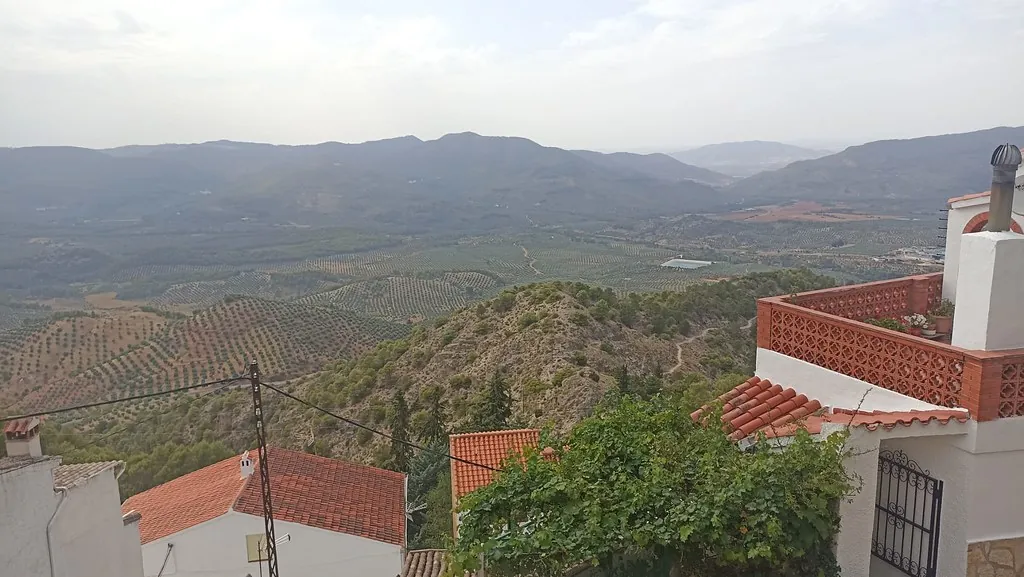
Some villages feel like viewpoints with houses attached. You arrive, park, and within minutes you are gazing across a wide valley as if you had climbed to the roof of the whole region. Tourism in Torres de Albánchez has that quality. This small municipality in the Sierra de Segura, home to only a few hundred residents, sits among olive groves and scrub-covered hills where daily life moves to the pace of conversations in the square and the shade cast by an olive tree in mid-afternoon.
This is not a place for ticking off a checklist of monuments. People come here to walk for a while, tackle a few uphill streets, and stand quietly before a landscape that seems to move more slowly than any city.
Torres de Albánchez forms part of the wider Sierras de Cazorla, Segura y Las Villas area in the province of Jaén, a mountainous corner of inland Andalusia known for its natural scenery and agricultural traditions. The setting defines the experience. The village does not try to compete with grander destinations. It simply occupies its hill and looks outwards.
A Hilltop Church and Steep Streets
At the centre of the village stands the parish church of the Encarnación. Its tower rises above the surrounding rooftops and helps you find your bearings as you enter the old quarter. The building dates back to the 16th century. It may not feature in major art history books, yet inside it preserves Baroque details and an image of the Virgin that remains closely tied to village life.
Around the church, the historic centre keeps its network of narrow streets that climb and dip without much warning. Whitewashed houses line the slopes. Reddish roof tiles catch the light. In small patios, plant pots interrupt the white of the walls. Those who enjoy small architectural details will find plenty to hold their attention: an old wooden door, an iron balcony, a slightly uneven façade that hints at centuries of adjustments.
Above everything rises the Cerro del Castillo. Medieval remains still crown the top of this hill. The greater reward, though, lies in the wide views across the surrounding sierra. The ascent can feel demanding in hot weather. It is the sort of climb taken slowly, with regular pauses to look out over the valley before continuing upwards.
Within the village there are two fountains still known to local residents: the Fuente de los Poyatos and the Fuente del Pilar. For years they were everyday meeting points. Today they remain places to stop briefly, refill a bottle or sit for a moment. They connect present-day visitors with routines that shaped the community for generations.
Walking Straight Into the Sierra
Torres de Albánchez sits within the natural surroundings of the Sierras de Cazorla, Segura y Las Villas, so it would be unusual to leave without heading out on foot.
Rural tracks begin almost at the edge of the village and lead into pine woods, holm oak groves and more open mountain terrain. Some paths link up with longer routes that cross the sierra. Others are gentler walks suitable for a morning outing. In the area, the ascent of Pico Almorchón is often mentioned. Certain stretches are steep and require effort, but the summit offers broad panoramas in return.
Wildlife is part of the rhythm of these hills. With a bit of patience, it is not uncommon to spot Iberian ibex on rocky slopes or birds of prey circling above ravines. Such moments underline that here the landscape sets the tone.
Autumn brings another reason to venture out. Many people head into the countryside to look for wild mushrooms. This is done carefully and in line with the rules of the natural park. The mountains still have a strong mycological culture, and local residents are well aware of what can be collected and what should be left untouched.
Food in Torres de Albánchez reflects what is produced nearby. Cordero segureño, a local lamb from the Sierra de Segura, appears on the table. Migas, a traditional dish based on fried breadcrumbs, tends to surface when the weather turns cold. Extra virgin olive oil accompanies almost everything. The cooking is not elaborate. It is hearty, rooted in the area and closely linked to the surrounding fields and flocks.
Celebrations That Belong to the Community
Festivities in Torres de Albánchez retain a local feel. In March, the village celebrates events linked to the Virgen de la Encarnación. Processions pass through the streets and shared meals bring together much of the population.
Summer shifts the focus to open-air evenings in the square. Verbenas, or informal night-time gatherings with music and dancing, fill the warm nights. These are not large-scale events designed for crowds from afar. They revolve around tables set out in the open, familiar faces and conversations that continue long after sunset.
May usually sees the romería of San Isidro. A romería is a pilgrimage, often with a festive character, and here it involves walking up to a nearby hermitage for a day in the countryside. Families gather, sandwiches are unpacked, and fields are blessed before the agricultural season begins.
When autumn reaches the sierra, activities connected to mushrooms appear once more. Depending on the year, there may be organised walks into the hills, talks or gatherings focused on cooking with seasonal fungi. These events reflect how closely daily life remains tied to the land.
The Road Into the Sierra
Reaching Torres de Albánchez means heading deep into the Sierra de Segura. From the city of Jaén, the usual route leads towards Úbeda. From there, regional roads continue into increasingly mountainous terrain. The final stretch includes the kind of bends typical of this area, so a steady pace is advisable.
Spring and autumn are generally the most pleasant times to visit, with mild temperatures and lively vegetation. Summer brings heat, although the altitude can make nights feel cooler. Winter mornings sometimes arrive with a sharp chill.
Torres de Albánchez rewards an unhurried approach. It does not function as a destination where attractions are lined up one after another. It works better as a pause within the sierra. A walk through the streets, a climb to the Cerro del Castillo, a quiet look across the valley: that is often more than enough.