Full Article
about Villarrodrigo
The northernmost municipality in the province; quiet mountain air.
Ocultar artículo Leer artículo completo
The morning tractor convoy rolls through Villarrodrigo at half-seven sharp, engines echoing off whitewashed walls as farmers head for the olive terraces that engulf this tiny Jaén settlement. By eight, the only sound is swifts diving between terracotta roofs 860 metres above sea level. With 375 residents and roughly 40,000 olive trees, human conversation is statistically the minority language here.
A Village that Measures Time in Harvests
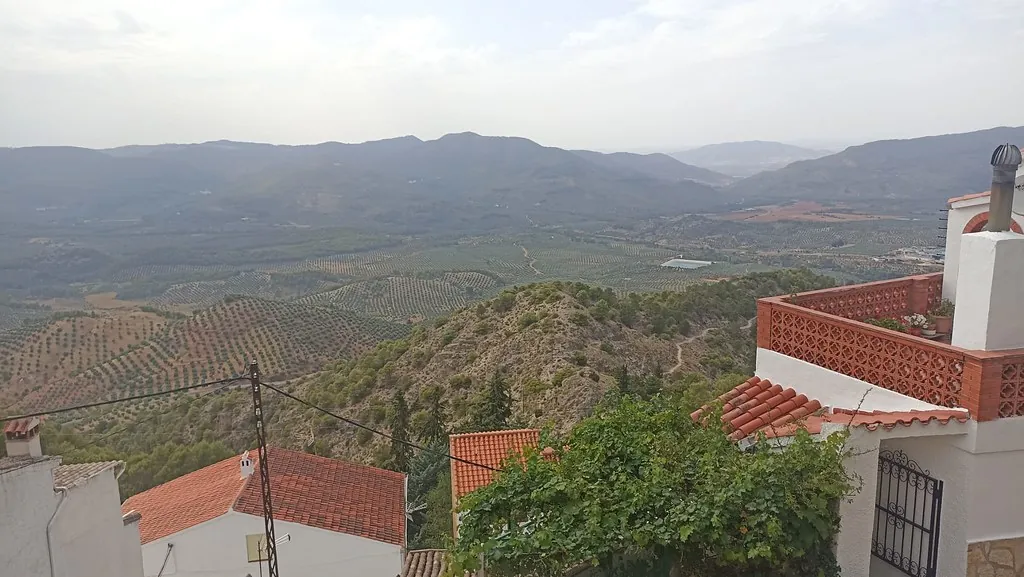
Villarrodrigo sits halfway between the Guadalquivir valley and the razor-edge summits of Sierra de Segura. That altitude buys cool nights even in July, when the lower olive plantations swelter at 35 °C. Spring arrives late; wild rosemary flowers purple in May, and the surrounding sea of silver-green leaves shimmers like disturbed water when the wind climbs the slopes. Autumn is harvest season—November to January—when tractors block the single main street and every family seems to be either climbing ladders or feeding twigs into small roadside crushers. The air smells of crushed olives and diesel, an honest perfume that no boutique diffuser has managed to bottle.
There is no sea view, no beach promenade, no yacht marina. The nearest water is the Trujala reservoir, fifteen kilometres down a road that corkscrews through holm-oak forest. What you get instead is altitude: vistas that stretch across three provinces on clear days, and night skies dark enough for the Milky Way to cast a shadow. In winter that elevation turns brisk; frost feathers the windscreens and the village thermometer can dip to –5 °C. Snow is infrequent but not unheard-of, and when it arrives the access road from Rus is closed until a gritter edges through.
What Passes for Sightseeing
A five-minute loop from the church square at the top takes you past the parish church (16th-century, locked unless you time the Saturday evening mass), the old olive mill now used as a store for irrigation hose, and three identical drinking fountains fed by a mountain spring. The fountains matter more than any museum; locals still fill plastic carboys here, insisting the water is “ más suave” than the treated supply. Try it—temperature is a constant 12 °C year-round and the taste carries a faint memory of limestone.
Architecture buffs may feel short-changed. There are no fortresses or Renaissance façades, just the consistent vocabulary of rural Andalucía: whitewash, ochre stone trim, wrought-iron balconies barely wide enough for a flowerpot. The pleasure is in spotting the details: a stone relief of a harvest sickle above one doorway, the way the alley named Cuesta del Aljibe narrows to shoulder width before opening onto sudden farmland. If you need a selfie backdrop, the mirador beside the cemetery delivers a 180-degree sweep over olive waves all the way to the russet escarpment of El Yelmo, 30 km distant.
Trails, Tarmac and the Tyranny of Gravity
Walkers can choose between sign-posted but skeletal routes that fan out from the football pitch at the village edge. The easiest is the 7 km circular to Fuente del Cuerno, a spring where shepherds once watered mules; gradients are gentle, though you will share the track with the occasional hunting dog that has forgotten the concept of a domestic pet. Ambitious hikers can link farm tracks into a 22 km traverse to the hamlet of Arroyo Frío, dropping 600 m to the valley floor before clawing back the height—carry more water than you think necessary, as shade is theoretical once you leave the pine scraps on north-facing slopes.
Road cyclists arrive with compact chainsets and a survival plan. The JA-9103 west to Santiago-Pontones averages 6 % for 9 km, ramps to 12 %, and rewards the masochist with eagle views and zero traffic before breakfast. Mountain bikers find endless olive-dust tracks; download the GPX because phone signal vanishes in every ravine. A local bike shop does not exist—nearest is in Beas de Segura, 35 km away—so bring spares and a morale-saving second inner tube.
Food Without the Fanfare
There is one bar, Casa Paco, open when the owner’s cousin is not minding the till. Order a caña and you receive a plate of crumbly Manchego and a saucer of olives that were probably in the grove that morning. The printed menu is fiction; instead Paco recites what his wife has cooked: migas—fried breadcrumbs laced with garlic and pancetta—maybe a cazuela of partridge in brandado if shooting season delivered. A three-course lunch with wine costs €11; card payments are tolerated but cash keeps the smile wider.
Self-caterers should stock up in Beas de Segura before the climb—Villarrodrigo’s tiny shop opens two mornings a week and stocks UHT milk, tinned tuna and an apology. The Saturday market in Villacarrillo, 25 km away, sells local goat cheese wrapped in chestnut leaves; it keeps for a week in a rucksack and smells like a farmyard in the best possible way.
When the Village Decides to Party
Fiestas patronales in the second week of August drag the population back from coastal second homes. The programme is pinned to every door: foam party for children in the polideportivo, outdoor cinema showing dubbed Marvel films, a procession behind the statue of the Virgen de la Estrella carried by men who grew up on these gradients and therefore consider calf-burning hills relaxing. Visitors are welcome but not announced over the tannoy; buy a €3 raffle ticket from the kiosk and you might win a ham.
Easter is quieter—three processions, no brass bands, just a single drum whose echo off the stone alleys feels medieval. Even then, plastic chairs outside Casa Paco fill with men debating rainfall statistics while women shoulder the statues. Gender roles remain 1950s; eye-rolling is optional but advisable.
Beds for the Night—Or the Lack of Them
Villarrodrigo itself offers no hotels, no hostals, not even a bunkhouse. The closest legal beds are:
- Casa Rural Mirador de Hornos, 12 km down the mountain: three-bedroom cottage, wood-burner, terrace that stares straight at a 1,200 m ridge. Around £95 a night, two-night minimum, bring slippers for the stone floors.
- Corrales de la Aldea, Pontones: eco-cabins built into old animal pens, solar showers, no phone signal. Adults only, breakfast delivered in a wicker basket, £120.
- Balcony of Riópar Viejo, half an hour west: group-friendly cottages sleeping eight, plunge pool, valley views, £200–£250 depending on season.
Camping is technically forbidden beside the olive groves—private land, shotgun ownership widespread—though a discreet bivouac above the tree line usually passes unnoticed. Leave no trace, and never light a fire between June and October; the province keeps aerial water bombers on standby for good reason.
Getting There, Getting Out
Fly to Alicante or Málaga, collect a hire car with decent ground clearance, and point the sat-nav towards the N-322. After Villacarrillo the tarmac narrows, guardrails disappear, and the final 15 km wriggle through limestone outcrops where wild ibex stare like traffic police. Budget ninety minutes from the motorway, more if you meet the school bus that refuses to reverse. In winter carry snow chains; the council ploughs eventually, but "eventually" is a flexible concept.
Buses from Jaén reach neighbouring Rus on schooldays only; from there a taxi costs €25 if you can persuade the driver to make the return journey on an empty mountain road. Trains stop at Linares-Baeza, 70 km away, a scenic but impractical relic of British mining investment in the 19th century.
The Bottom Line
Villarrodrigo will not change your life. It offers no souvenir shops, no sunset yoga, no repost-worthy infinity pool. What it does provide is a calibration device for urban urgency: the realisation that entire communities still set their clocks by rainfall and olives, that silence can be so complete your ears invent background noise, that a £11 lunch can taste of earth and labour in ways molecular gastronomy never will. Come if you want calf-powered walks, guilt-free siestas and conversations that end with “see you at first light”. Leave if you need room service, Uber or a flat white before ten.