Full Article
about Cambil
Picturesque mountain village split by the river; southern gateway to Sierra Mágina with remains of border castles
Hide article Read full article
A low-key arrival
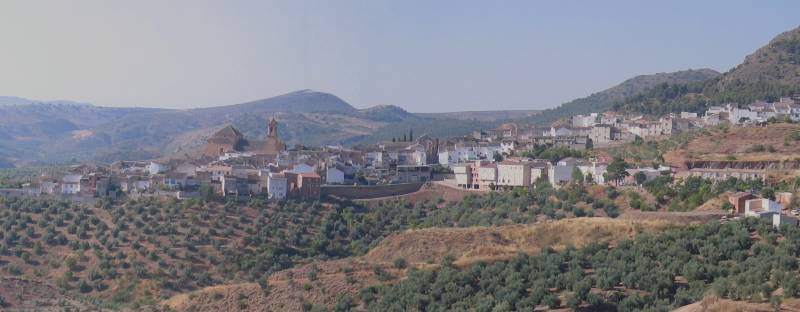
There is a moment, just as the last olive groves fall away and the road tightens into bends that make you drop a gear, when Cambil comes into view almost casually. It is not the kind of place that announces itself with spectacle. It feels more like someone who joins a gathering without fuss and, before long, is part of the conversation.
The village has been here for centuries and today has around 2,600 residents. For a long time it barely registered beyond the local area. That changed when attention turned to something unexpected: dinosaur footprints. Real ones, preserved in stone. Some pieces found within the municipality are usually kept at the town hall. There is no formal museum or elaborate display. You ask, and if circumstances allow, they might show you the rocks marked with fossilised tracks. It comes across less as an attraction and more as a curiosity the village keeps without making a big deal of it.
Two castles and a frontier past
Some parts of Cambil’s story are still not widely told outside the province of Jaén. For centuries it held military importance on the frontier between the Nasrid kingdom of Granada and Castile. To control this passage, two fortifications were built: one in Cambil itself and another in nearby Alhabar.
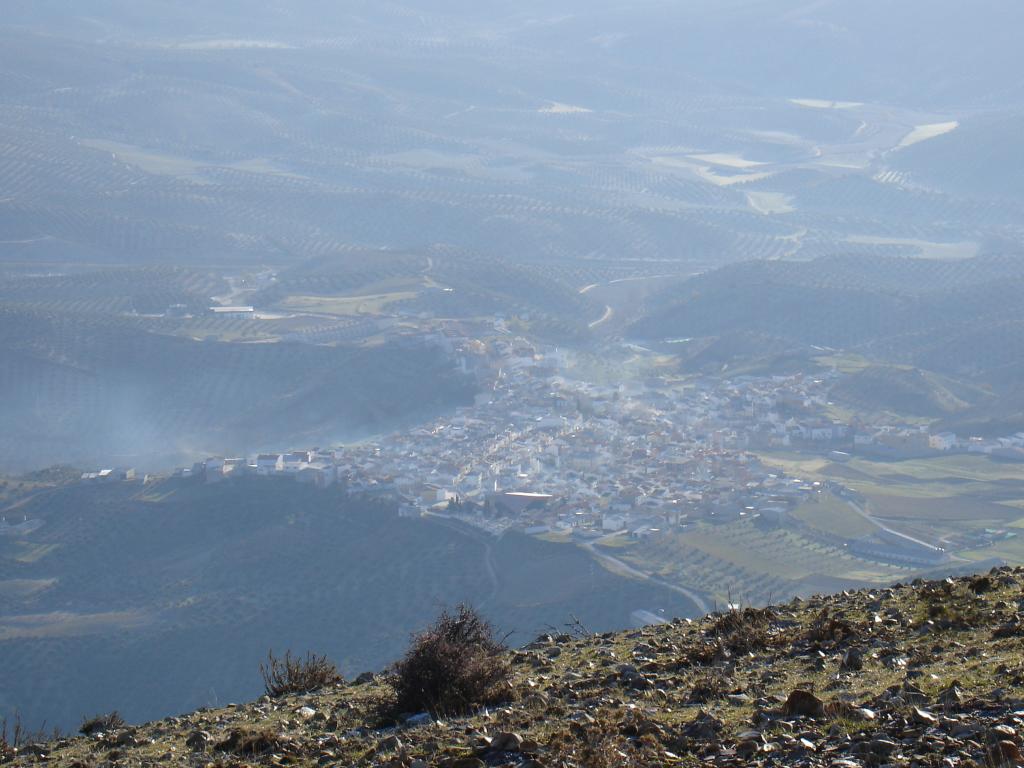
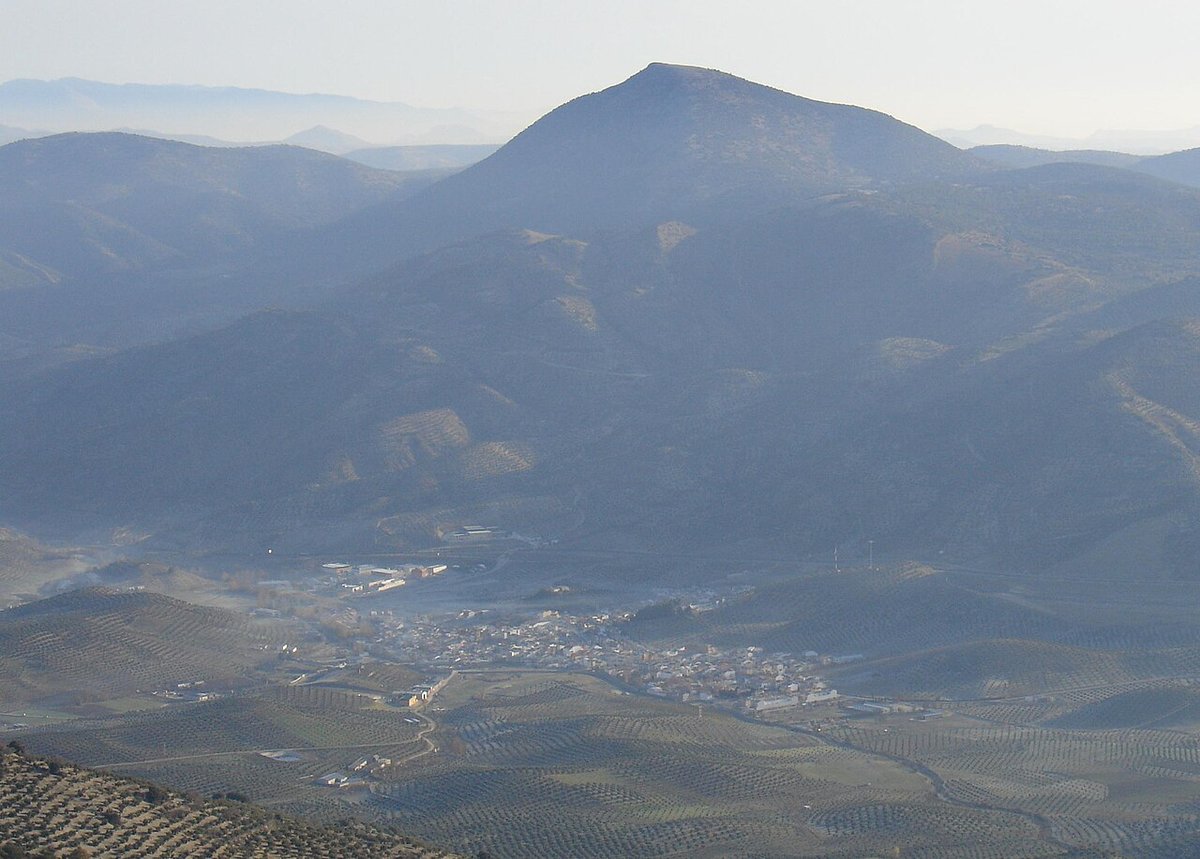
When the Catholic Monarchs advanced through the area in the late 15th century, this was one of the positions they needed to secure. A glance at the landscape makes the reason clear. The village sits between mountain ranges and commands a natural route towards Granada.
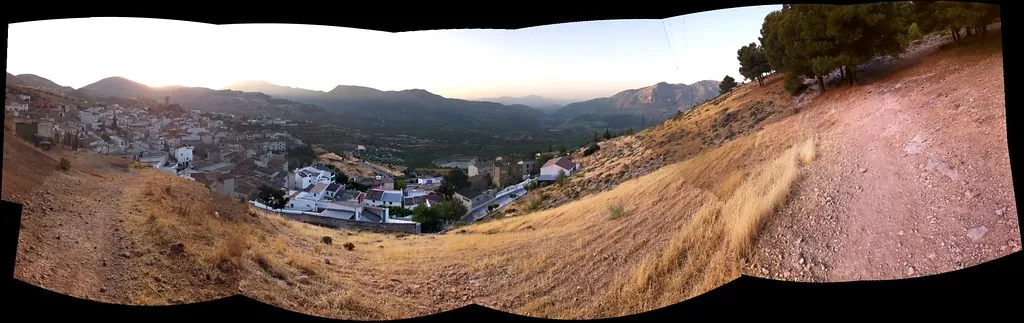
Today, only remains of those castles survive. There are no complete walls or carefully restored towers. What you find are ruins that ask for a bit of imagination. Still, a steady walk up, with water if the heat is strong, brings a reward. From above, much of the valley opens out and the strategic logic becomes obvious. It is easy to see why someone chose to fortify this exact spot.
A church built over time
After the conquest came a different phase: reorganising the settlement and constructing new buildings. The church of Nuestra Señora de la Encarnación began in the late 16th century, and the work continued well into the 17th.
The project is often linked to the circle of Andrés de Vandelvira, the architect behind many Renaissance churches and palaces across Jaén. Cambil’s church is not vast and does not aim to impress through scale. Instead, it carries the restrained character typical of mountain churches in the province. Stone, balanced proportions, and a calm atmosphere that naturally lowers the volume of any conversation.
Where the olive groves give way
Cambil’s municipal area extends into the Parque Natural de Sierra Mágina, and the change is noticeable as soon as you leave the built-up centre. The landscape shifts quickly: fewer olive groves, more Mediterranean woodland. Holm oaks and Portuguese oaks appear, and when the sun is strong, the air carries the scent of thyme.
Several walking routes pass through this area, leading into the mountains and linking with longer trails across the natural park. The Ruta de los Nazaríes also crosses the municipality. This is a historical route connecting former defensive positions between Jaén and Granada, a reminder of the same frontier history that shaped the castles.
Anyone heading out on foot here should keep things simple: water, suitable footwear, and a bit of awareness of the heat. The mountains are accessible, but they are still mountains.
Everyday life, without display
Cambil is not a place that builds a show for visitors. It is an agricultural village, closely tied to olive cultivation and the rhythms of the surrounding sierra. In winter, the air smells of firewood. In summer, of dry countryside.
Bread is still often delivered by van, and in the main square there is usually someone lingering in conversation longer than planned. Sit down for a drink and you may notice a glance that lasts a moment more than expected. It is not suspicion so much as curiosity. In a place like this, it is easy to tell who belongs and who has just arrived.
Then there are the nights. When the sky is clear, the darkness of the sierra reveals stars that are increasingly hard to see in many places.
A simple way to approach it
Cambil works best without the pressure of ticking off sights. A slower pace suits it.
A walk through the centre is a good place to start, followed by a visit to the church, then a gradual climb towards the castle remains to look out over the valley. If it happens to be a market day in the square, it is worth pausing for a while. It gives a direct sense of how the village moves.
With a bit more time, heading towards the sierra, even for a short walk, changes the perspective again. Sierra Mágina can seem understated at first. Spend a little longer there and the scale of the landscape begins to show itself.
Cambil is not somewhere that promises to transform a weekend. It leaves a quieter impression than that. More like stepping away from noise for a while, and later wondering why that does not happen more often.