Full Article
about Jimena
Town known for the Cánava spring and its century-old fig tree.
Hide article Read full article
A village that moves at its own pace
Some places are designed to keep you busy from morning to night. Jimena is not one of them. Set in the heart of the Sierra Mágina in the province of Jaén, this small Andalusian village feels more like a country house where lunch drifts into a long, unhurried afternoon. Everything happens calmly, with the landscape constantly in view.
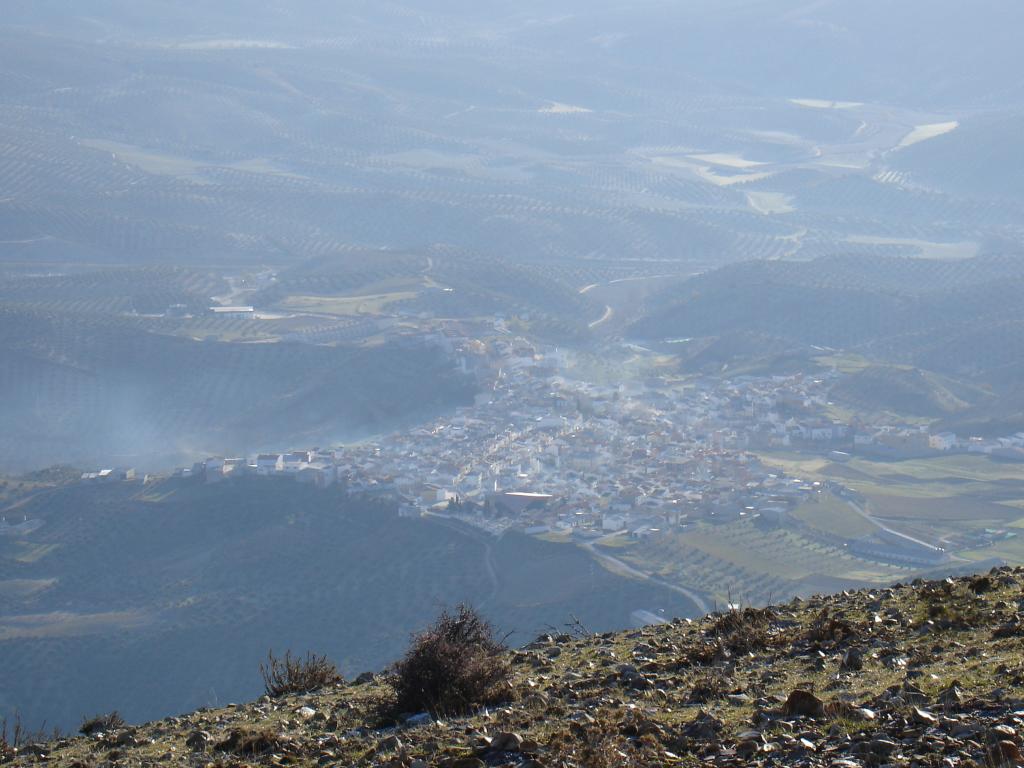
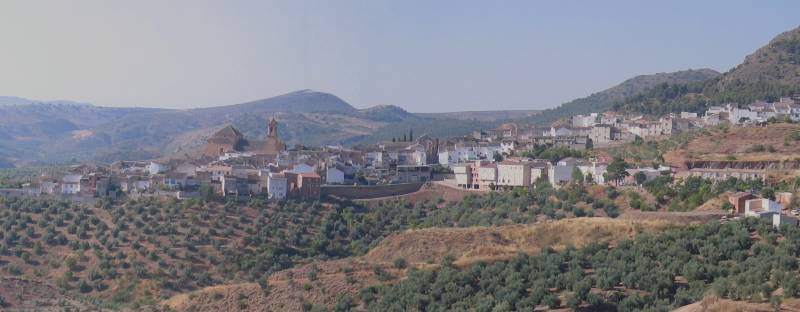
Home to just over a thousand residents, Jimena is surrounded by olive trees. Completely surrounded. The approach by road makes that clear from the start: kilometres of olive groves stretch in every direction, and in the middle sits a compact urban centre where daily life follows a rhythm familiar to anyone who has spent time in rural Andalucía. Conversations often begin in the main square and end on a neighbour’s doorstep.
The heart of Jimena
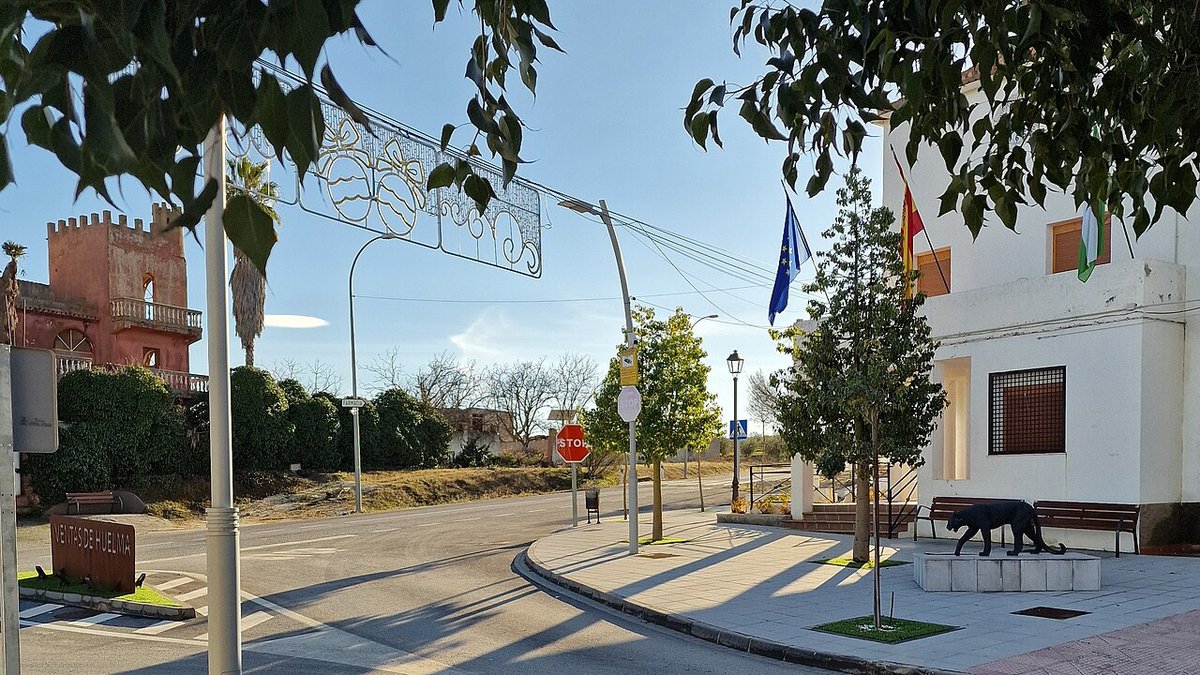
The centre of the village revolves around its parish church. It is a sober, unpretentious building, the sort that has witnessed centuries of baptisms, weddings and farewells. It is not grand or imposing, and it does not need to be. Its scale matches the village and its straightforward way of doing things.
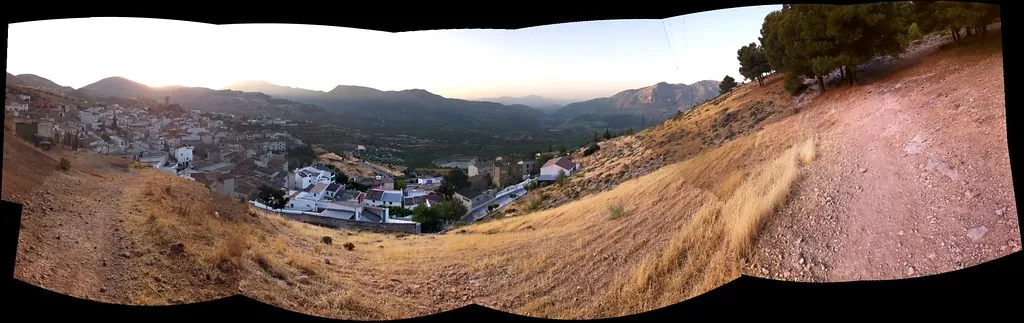
From there, the best plan is simply to walk. Jimena’s streets slope upwards in places, lined with whitewashed houses and the occasional old iron window grille. None of these elements is extraordinary on its own, yet together they create the atmosphere of an agricultural village shaped by practical needs rather than by tourism. Most buildings exist for everyday life, not for photographs.
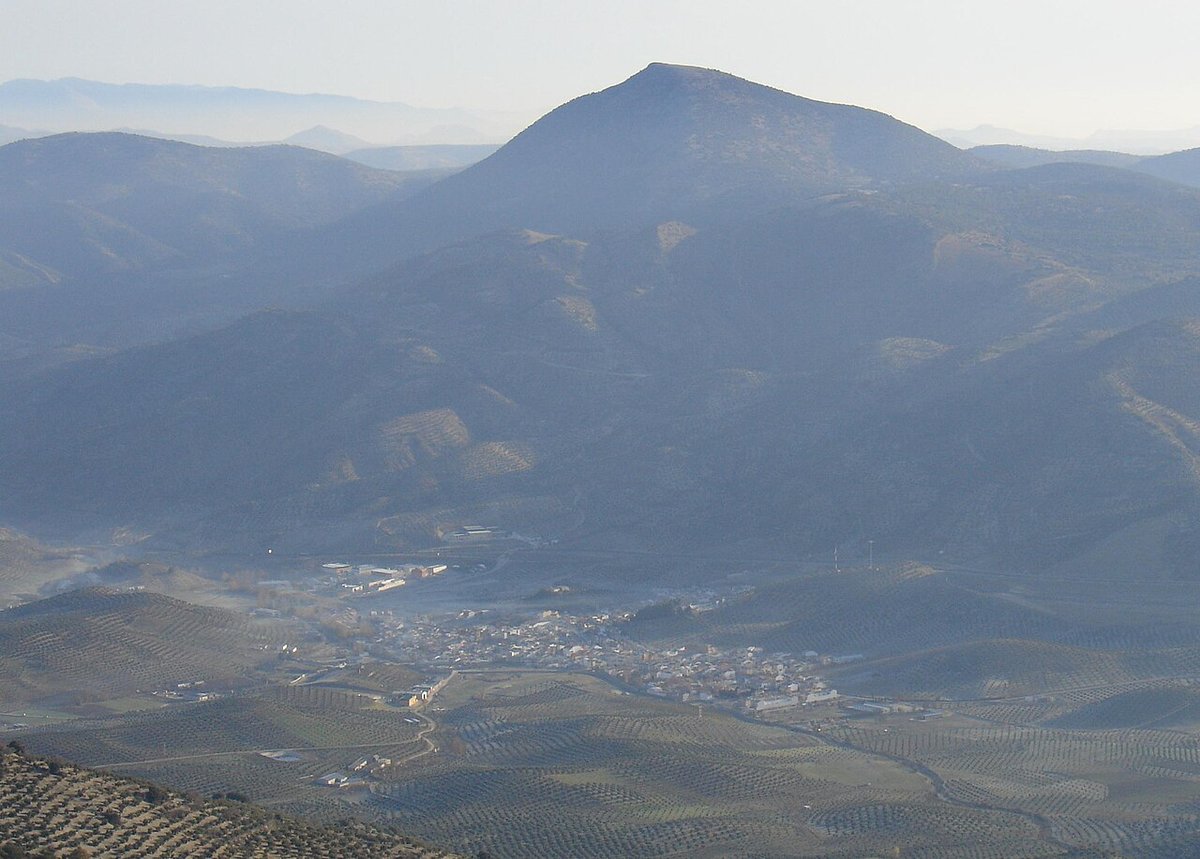
Head towards the higher parts of the village and the views begin to open up. From here, the setting becomes unmistakable: a vast sea of olive trees rolling towards the horizon, with the mountains of Sierra Mágina rising in the distance. This is the characteristic landscape of this part of Jaén, and seeing it from above helps put its scale into perspective.
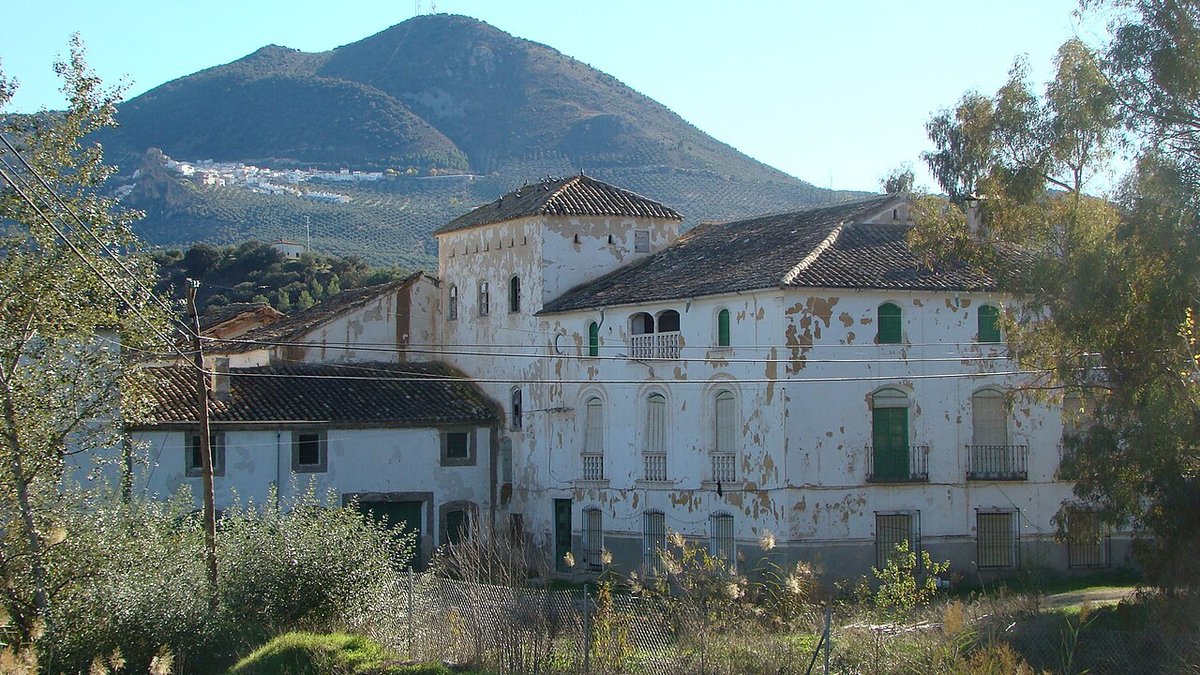
Around the outskirts of Jimena, there are still cortijos, traditional rural farmhouses, and remnants of older oil-related facilities. They are not always signposted or prepared for visits, but they form part of the scenery. They also reveal a great deal about how the local economy has functioned for generations, rooted in olive cultivation and oil production.
Walking out into the olive groves
One of Jimena’s defining features is how quickly the village gives way to open countryside. A few minutes on foot and you are already among olive trees or following rural tracks used by farmers and residents moving between plots of land.
These are not high-mountain hiking routes, nor are there large-scale walking infrastructures. The paths are simple and traditional, the kind that have long connected one finca to another. Even so, they are well suited to a gentle walk and offer a close look at the surrounding landscape.
Spring tends to bring more life to the fields. The edges of the paths fill with aromatic plants such as rosemary and thyme, adding scent to the air. Summer, by contrast, can be intensely hot. In this part of Jaén, the heat makes itself felt quickly once you set out walking, so earlier starts and carrying water are sensible precautions.
Looking more closely at the terrain also reveals how carefully it has been organised. Terraces carved into slopes, narrow access tracks and small agricultural storehouses all speak of long-term cultivation. The land is not wild countryside but a working landscape shaped over time.
Olive oil as everyday culture
It would be strange to talk about Jimena without mentioning olive oil. The entire Sierra Mágina comarca revolves around olive groves, and that influence is evident both at the table and in conversation.
Extra virgin olive oil from the area appears in almost everything: spread over toast, enriching simple stews, accompanying cured meats and goat’s cheese. There is no need here for elaborate gastronomic speeches. Olive oil is simply part of daily life, as basic and constant as bread or the morning coffee.
During the olive harvest, usually between late autumn and winter, the atmosphere shifts. There is more movement in the fields, and many conversations revolve around the crop, the weather and expectations for the season. The harvest shapes the local calendar as much as any festival does.
Paying attention to the broader landscape helps explain this way of life better than any information board could. The layout of the groves, the agricultural buildings, the rural tracks linking properties together all form a system built around olives. In Jimena, the economy and the scenery are closely intertwined.
Traditions through the year
Jimena’s annual calendar follows a pattern shared by many towns in the province of Jaén. In summer, the village celebrates its patron saint festivities. Music fills the streets, and neighbours gather for evenings that stretch late into the night. It is a time when public spaces become meeting points and daily routines loosen.
Semana Santa, or Holy Week, also has a presence in the village. Processions move through the central streets in an atmosphere that feels close and community-based. In small towns like this, these events tend to be intimate rather than large-scale, rooted in local participation.
Alongside these religious and festive moments, the olive campaign remains one of the most significant periods of the year. Even for visitors, it is noticeable in the rhythm of activity across the surrounding fields. The talk of the harvest, the condition of the olives and the prospects for the oil crop becomes part of everyday conversation.
Getting to Jimena
Jimena lies less than an hour from the city of Jaén. The usual route is to leave Jaén on the A‑316 towards Mancha Real and then continue along a local road to the village.
The journey itself works as an introduction to the area. Hills covered in olive trees accompany the drive, with the mountains of Sierra Mágina forming a backdrop in the distance. By the time you arrive, the setting already makes sense.
If choosing when to visit, spring and autumn are generally the most comfortable seasons for walking around the village and its surroundings. Summer heat can be intense, something that becomes immediately clear once you step outside and begin to explore on foot.
Jimena does not compete for attention with grand monuments or packed itineraries. Its appeal lies elsewhere: in the steady pace of daily life, in the repetition of olive groves across the horizon, and in the sense that here, time is measured less by schedules and more by harvests and conversations.