Full Article
about Jódar
Gateway to Sierra Mágina, with a notable historic quarter and esparto-grass tradition.
Hide article Read full article
A castle that sets the scene
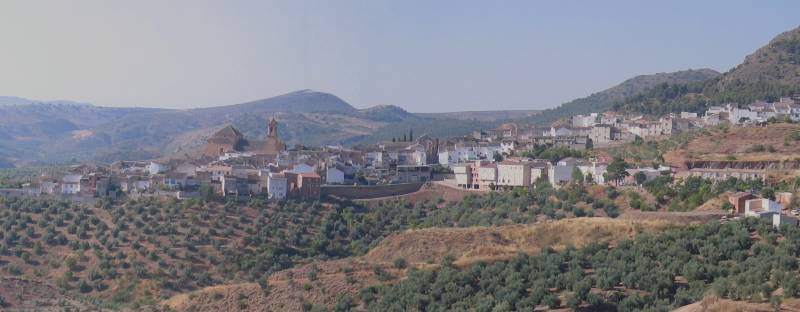
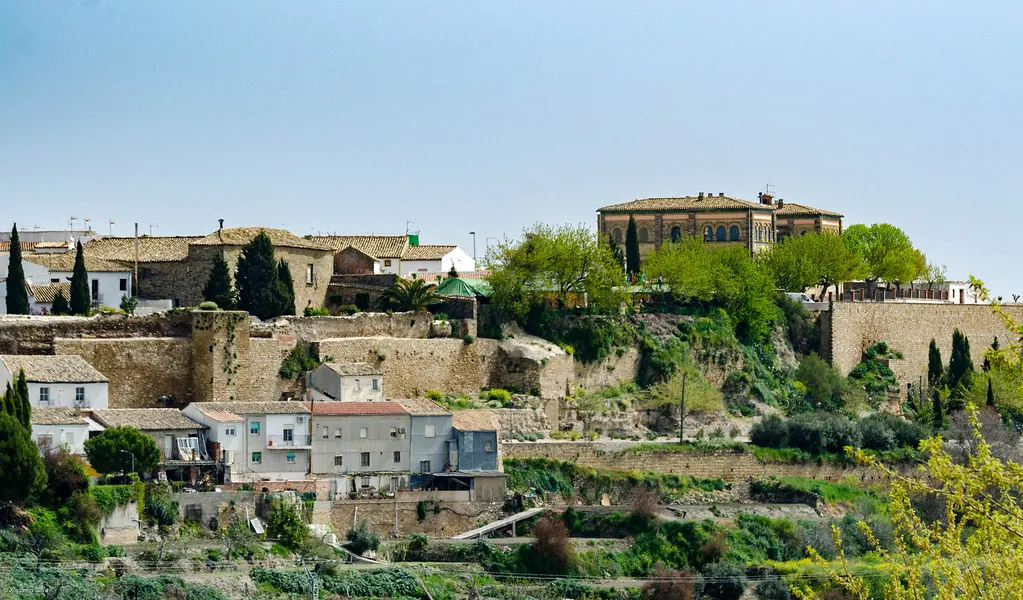
Tourism in Jódar almost always begins with the same image: the castle rising on the hillside before reaching the town, surrounded by olive groves. From the road, the keep stands out clearly, cylindrical in shape and built in brick. That form is unusual in the province and is often cited as an example of late Mudéjar architecture in the area.
It was probably constructed after the Christian conquest, using builders and techniques inherited from the Islamic period. That detail goes a long way in explaining the history of the place, shaped by overlapping layers of occupation rather than sharp breaks.
The hill and the valley
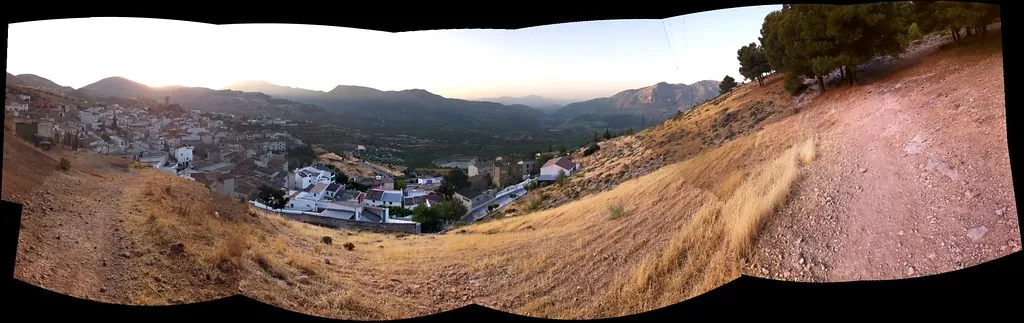
Jódar sits on a hill that overlooks the passage of the Guadiana Menor river, just before the valley opens out towards the area of Lopera. The location is deliberate. There are signs of ancient settlement, and an Iberian inscription linked to the city of Galdur is known from here, now kept in the Museo Arqueológico Nacional in Madrid.
Like many strategic points along the valley, the site was fortified first by the Romans and later by the people of Al-Andalus. The Castilian conquest arrived in the 13th century during the advance of Fernando III through the upper Guadalquivir. From then on, the castle continued to serve both military and seigneurial purposes for centuries.
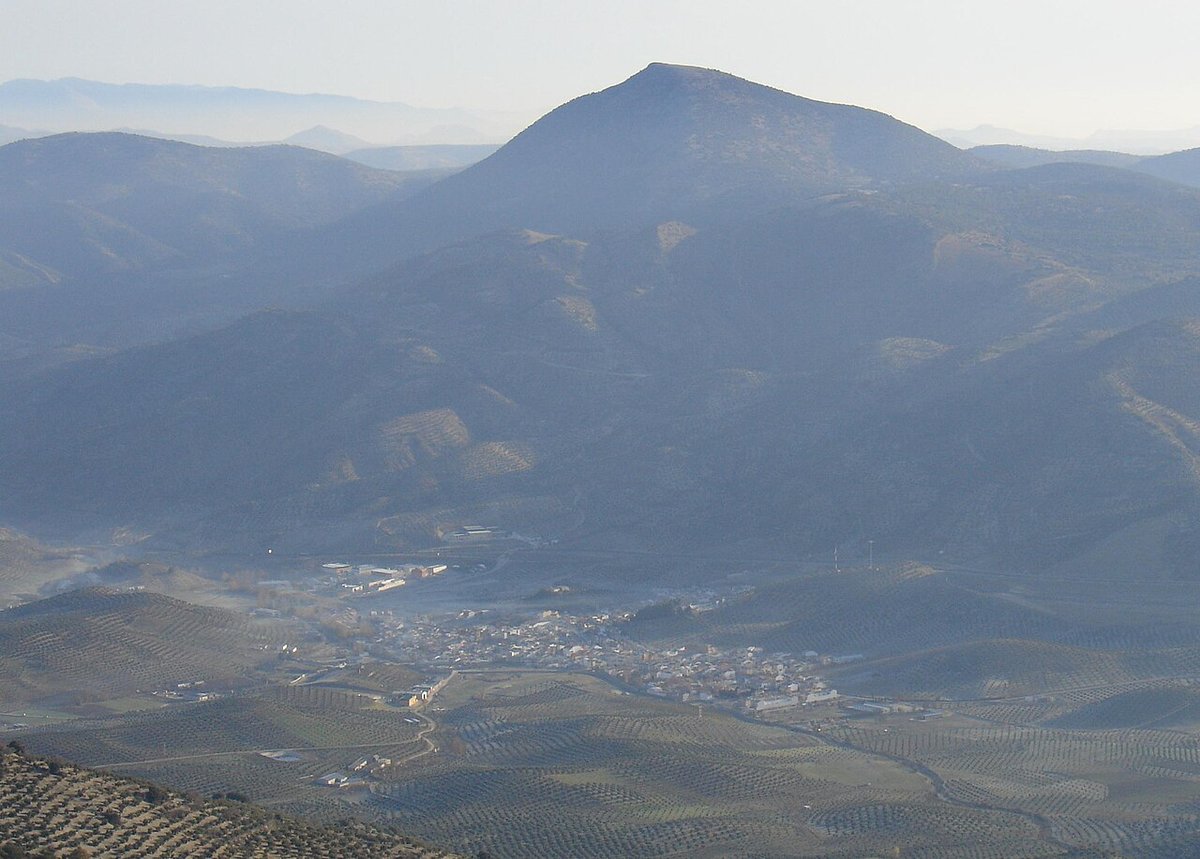
The cylindrical tower that dominates the complex today is usually dated to that period. The site has undergone recent restoration and is open to visitors. From the top, the surrounding geography becomes clear: the Guadiana Menor valley, the first ridges of Sierra Mágina, and the continuous spread of olive groves that define the landscape around the town.
Streets shaped by the slope
The historic centre is organised around the climb up to the castle. Streets rise steeply and often bend sharply, a common feature in medieval defensive layouts. It is not a large old quarter, but it retains that sense of adapting to the terrain.
At the lower end lies Plaza de la Constitución, traditionally the hub of markets and public life. Nearby stands the Iglesia de la Encarnación, built in the 16th century and altered in later centuries. Its interior reflects a restrained late Baroque style. The main altarpiece fills the entire chancel and incorporates marble from the surrounding area in some of its decorative elements.
San Sebastián holds a special place in local devotion. Each January, bonfires are lit in the streets during his feast day, a custom shared with many towns across the province of Jaén. It is a winter ritual that brings activity back into the streets despite the cold.
A little-known 19th-century episode
In the early decades of the 19th century, during the final phase of the Trienio Liberal, this part of Sierra Mágina saw military movement. Historical sources mention fighting in the passes near the Lopera valley, connected to the pursuit of General Rafael del Riego after the restoration of absolutism.
It is not an episode widely remembered in Jódar today. There is little signage along the road climbing towards the pass to indicate what happened there, and the events remain more of a footnote than a defining moment in local memory.
Seasonal cooking and olive country
The local cuisine reflects what the surroundings have traditionally provided: cereals, small irrigated plots near the river, home-reared meat, and olive oil.
Gachas de matanza are still prepared in winter. Thick and strongly flavoured with garlic and paprika, they are linked to the season of pig slaughter that once structured rural life. In milder weather, remojón de naranja con bacalao appears more often. This dish combines orange, onion and olive oil with desalted cod, a mixture common across eastern Andalusia.
Tagarninas, a wild thistle gathered in the countryside towards the end of winter, feature in several traditional stews. When the plant begins to sprout, it is common to see people collecting it along paths and on nearby hillsides.
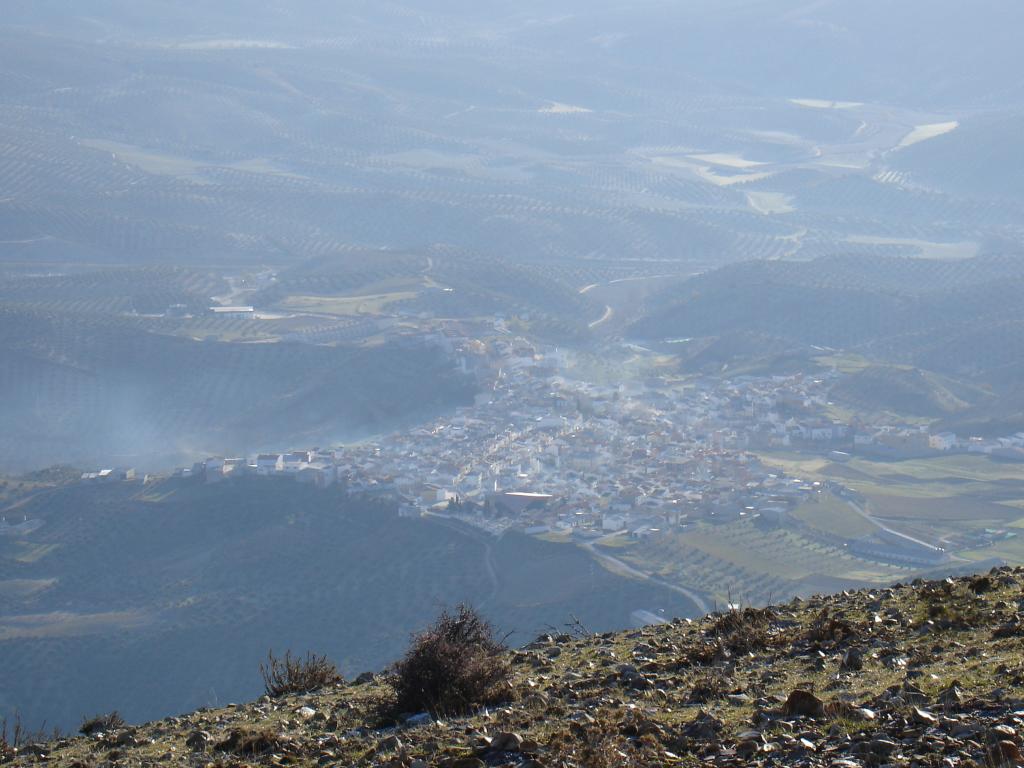
Olive groves dominate the municipality. Much of the landscape around Jódar is a continuous sequence of olive plots, and the oil produced in the Sierra Mágina area forms part of a protected designation of origin. It is the defining feature of both the scenery and the local economy.
Moving through Jódar
Jódar lies to the north-east of the city of Jaén, within the comarca of Sierra Mágina. The road connecting the two passes through open countryside and, depending on the stretch, begins to reveal the first elevations of the natural park.
The essential walk through the town is short: the climb up to the castle, the surrounding streets, and the area around the main square. For those wanting to go a little further, there are paths that descend towards the river and tracks that run through the olive groves, linking to natural viewpoints across the comarca.
Local celebrations tend to gather in September during the feria, and in spring with the romería del Santo Cristo, when the image is carried from the castle to a rural hermitage.
The climate plays a significant role in any visit. In high summer, the heat can be intense, typical of inland Jaén. Spring and autumn are usually more comfortable times to explore both the town and its surroundings.