Full Article
about Villaviciosa de Córdoba
Large mountain municipality with outstanding natural surroundings, perfect for hunting and enjoying the Mediterranean forest and the Puente Nuevo reservoir.
Hide article Read full article
A place that reveals itself slowly
Villaviciosa de Córdoba is not the sort of place that impresses at first glance. It does not try to. Think of it more like a relative you barely notice at a big family gathering, until you sit down and discover there is plenty to say and a quiet sense of humour underneath it all.
This is a town that asks for a different pace. Nothing pushes itself forward, and that is part of the point. You walk its streets, look out towards the surrounding hills, and begin to see how daily life fits together here without much fuss.
The bridge that kept going
On arrival, the first landmark tends to be the caliphal bridge over the Guadiato. It is not especially large, and it does not rely on decoration to stand out. What it has is time behind it. For centuries it has simply remained in place, carrying whatever needed to cross.
At one point that meant pack animals. Later came carts, then lorries, and now cars pass over it without a second thought. The bridge formed part of the old route between Córdoba and Badajoz, which gives some sense of its importance in earlier days.
If you slow down and look closely at the stone, the wear is visible. There are no explanatory panels or modern walkways added for effect. It is still a working structure, doing exactly what it was built to do. That, in itself, says enough.
A church that arrived late
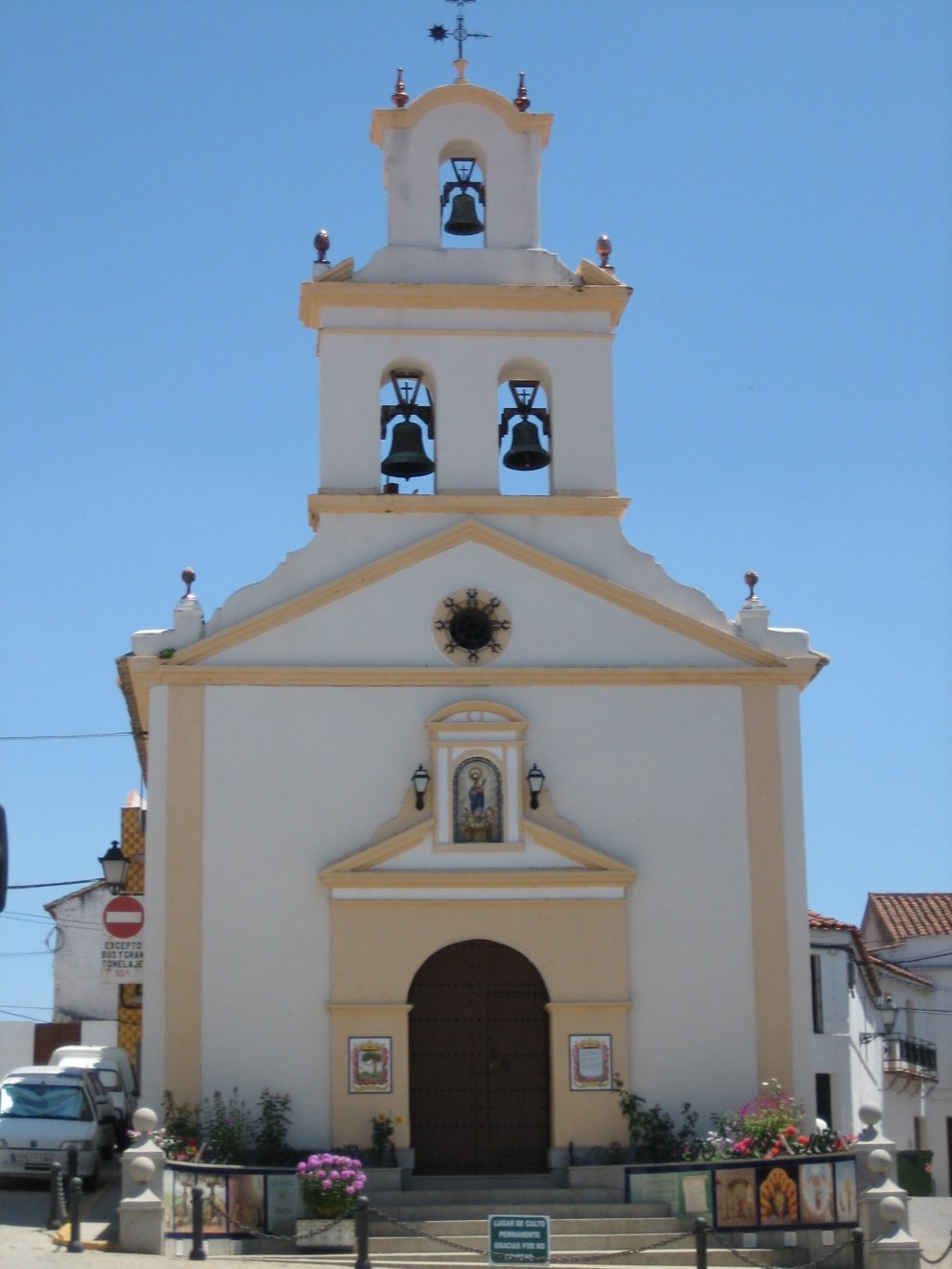
The parish church of San José feels relatively recent compared with what is often seen in Andalucía. For a long time, the town depended on nearby Espiel for religious matters. It was a bit like living in your own home while someone else held the key.
The church is straightforward in its design. It has a single nave and a tower without much ornamentation. Inside stands the image that is venerated today, although local devotion centres more strongly on the Virgen de Villaviciosa. This figure is linked to the old hermitage that gave the town its name.
That origin story is typical of many places in the sierra. First comes the hermitage, then houses begin to gather around it over time. Villaviciosa grew in that same gradual way, shaped by faith and the landscape rather than by any grand plan.
Where wildlife feels close
The municipality stretches into the denser parts of the Sierra Morena and, towards the south, reaches the surroundings of the Hornachuelos natural park. Here, the countryside sets the rhythm.
Holm oaks and cork oaks cover the land, while dirt tracks wind through it without any sense of urgency. These are not routes designed for speed. They bend and twist as they go, as though the destination is not the main concern.
Wildlife is part of everyday awareness. Early mornings or night-time drives can bring encounters with wild boar, and signs of deer are not unusual either. Hunting is a common topic in conversation, and in many homes antlers and trophies hang on the walls. They are not there as a decorative trend, but because they have always been part of life here.
La Tercia and traces of a busier past
One building stands out for its size: La Tercia, dating from the eighteenth century. It has a solid, serious look, the kind associated with places where something important was stored. In this case, it was used to collect tithes, a form of taxation in earlier times.
That detail hints at a different period in the town’s history. Villaviciosa was not always as quiet as it feels now. Trade routes once passed through the area, bringing movement and activity that have since faded.
There was also wine production, centred around an old house that functioned as a family-run winery. That work is no longer part of daily life, yet the memory remains. Conversations with older residents bring up stories of harvests, barrels, and a wine described as fairly strong.
Shared food and a September pilgrimage
Food in Villaviciosa de Córdoba reflects its setting in the sierra. Dishes are designed to satisfy and to be shared. Migas is the clearest example. It is prepared in a large frying pan using stale bread, garlic, paprika, and whatever else is available to accompany it.
People gather around the pan itself, eating together and talking. The focus is less on presentation and more on the act of sharing the meal.
The area is also known for honey from the Sierra Morena, and some still produce aguardiente in the traditional way. These are not presented as attractions, but as part of everyday continuity.
In September, the romería of the Virgen de Villaviciosa takes place. A romería is a pilgrimage, usually involving a journey to a rural shrine. Here, people head up to the hermitage, some on foot, others using cars or trailers. The day is spent there, each family keeping to its own space and rhythm.
There is no strong sense of spectacle. Some people dress up, others arrive in practical countryside clothes. It does not seem to matter. The gathering is simple and unforced.
Taking it as it comes
Villaviciosa de Córdoba makes more sense when expectations are adjusted. It is not about major monuments or a packed schedule. It works best as a place to slow down.
A short walk through the streets, a pause to look out over the sierra, and the atmosphere becomes clear. If there is time, heading out along the surrounding paths adds another layer. No detailed plan is needed. A walk, something to eat carried along, and the willingness to wander are enough.
Afterwards, returning to the town and sitting in the square for a while feels like a natural conclusion. The afternoon passes without much structure.
Plans here can be that simple. In a place like this, that simplicity tends to be exactly what works.