Full Article
about Almadén de la Plata
Picturesque village in the Sierra Norte Natural Park, known for its ham industry and as a stop on the Camino de Santiago.
Hide article Read full article
An evening pause in the Sierra Norte
Late in the afternoon, when the sun drops behind the holm oaks, the main square of Almadén de la Plata falls briefly silent. The stone fountain keeps running, water striking steadily against the basin. A few doors open, someone crosses the square carrying a bag of bread, and in winter the smell of firewood lingers between the whitewashed façades.
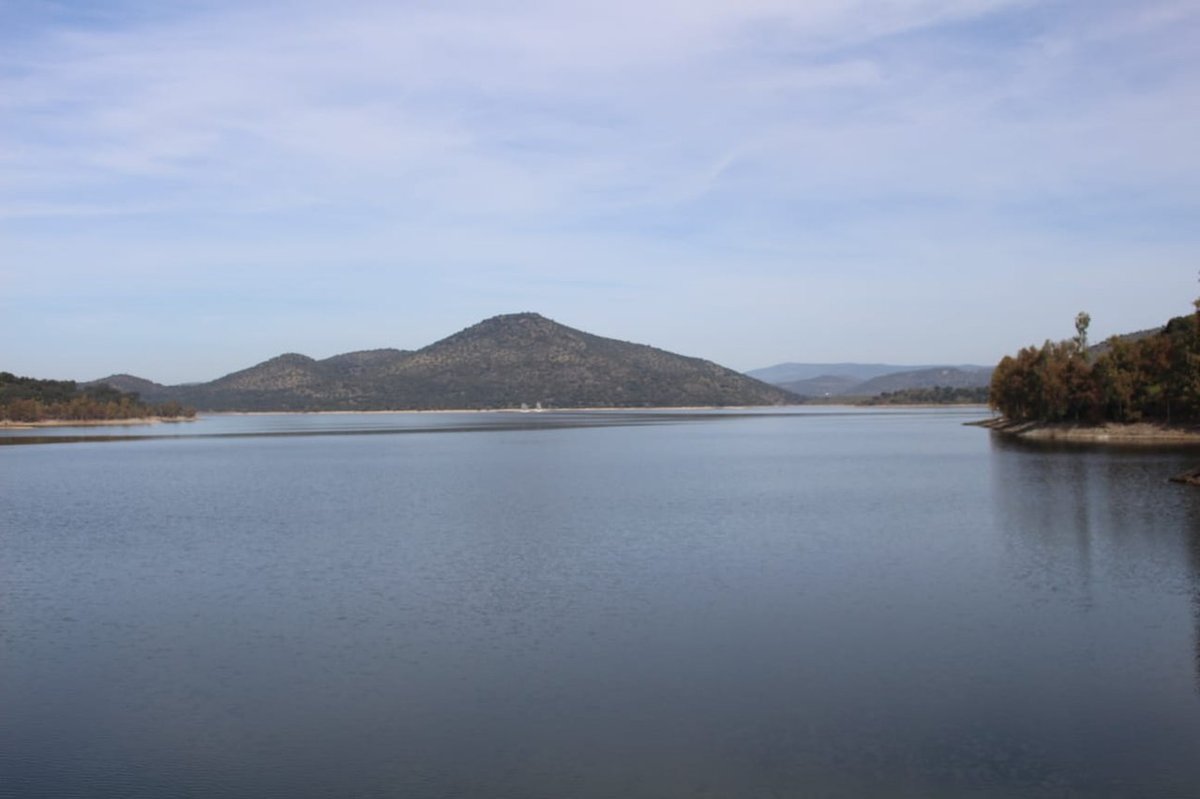
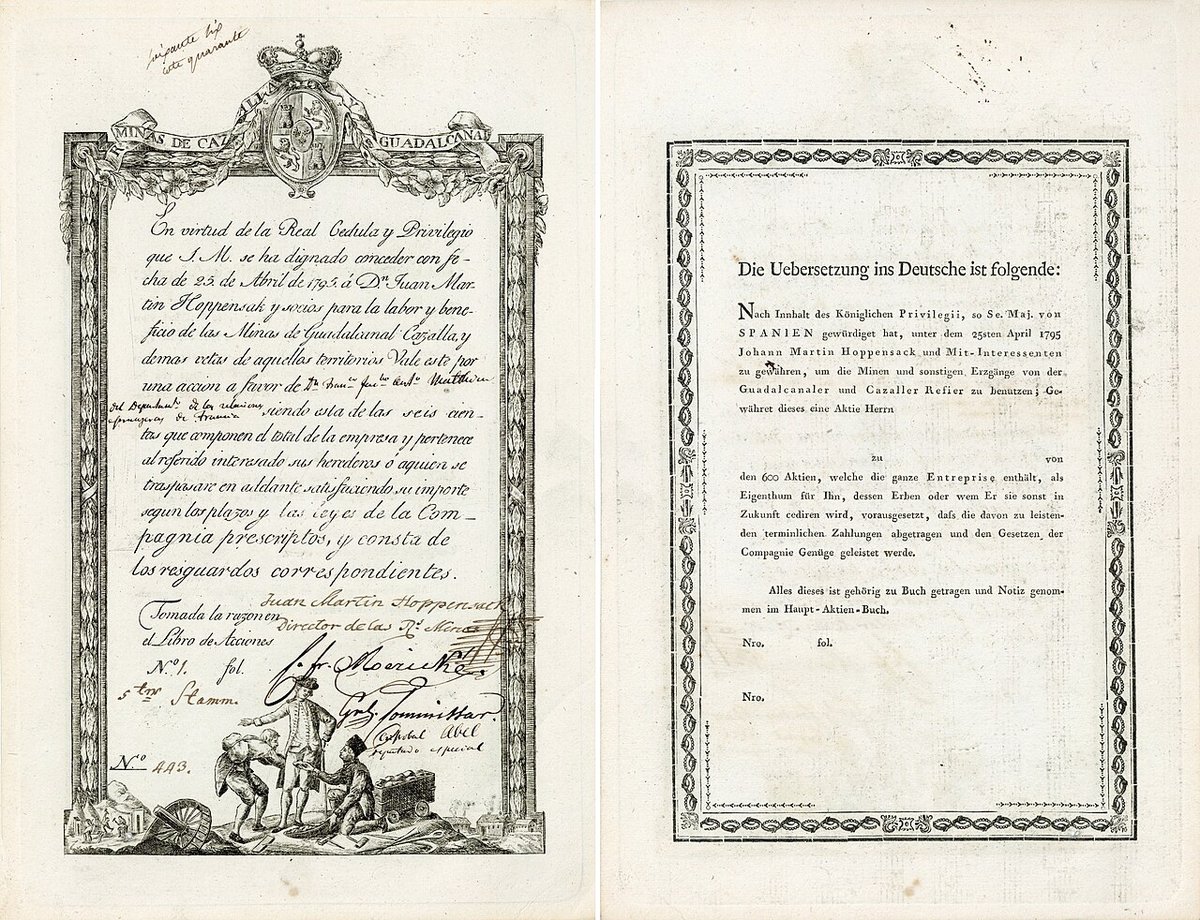
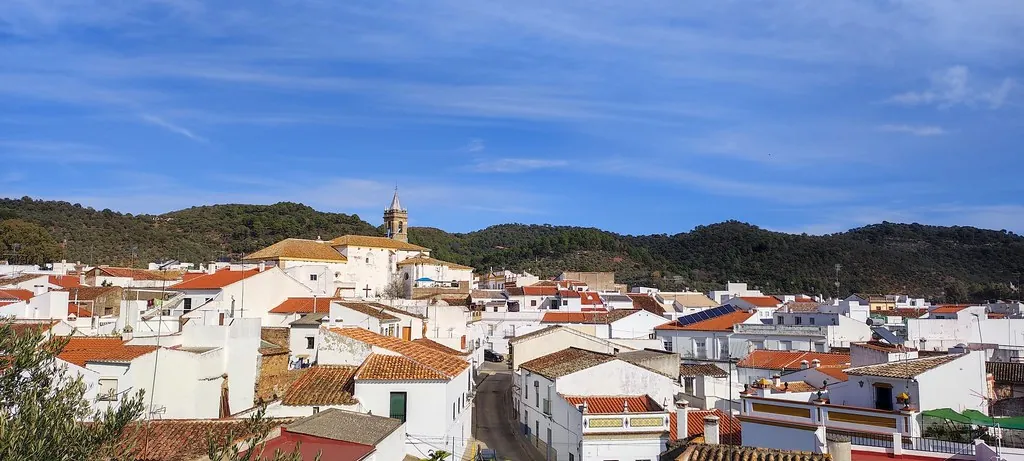
Almadén de la Plata sits in the Sierra Norte of Seville, around 450 metres above sea level, surrounded by dehesas of holm oak and cork oak. The landscape has that open, gently rolling look typical of this part of the province: grazing land, reddish dirt tracks, and patches of shade beneath scattered trees. The village’s mining past still appears from time to time in the form of old wells, abandoned galleries, or place names that recall the silver extraction that gave the settlement its origin.
The church above the rooftops
The Iglesia de Santa María de Gracia stands in one of the highest parts of the village. Its origins are Mudejar, a style shaped by the coexistence of Islamic and Christian traditions, although the building has changed over the centuries. A square bell tower rises above the surrounding rooftops and, when the bells ring, the sound travels down the narrow streets that lead towards the square.
Inside, there are gilded wooden altarpieces and several religious images that are still carried in procession during Semana Santa, the Holy Week before Easter. The patron saint, the Virgen de Gracia, takes centre stage during summer celebrations that bring together many residents, including those who no longer live here but return for those days.
The village centre is small and easy to explore on foot. There are short slopes, cobbled streets and low, whitewashed houses with wooden doors opening directly onto the street. On some façades, old ceramic tiles display dates or family names, small details that are easy to miss if you pass by too quickly.
On the outskirts, traces of the mining activity remain scattered. They are not always signposted, and many wells are sealed for safety, so it is wise to move carefully when leaving marked paths.
Dehesa landscapes and quiet paths
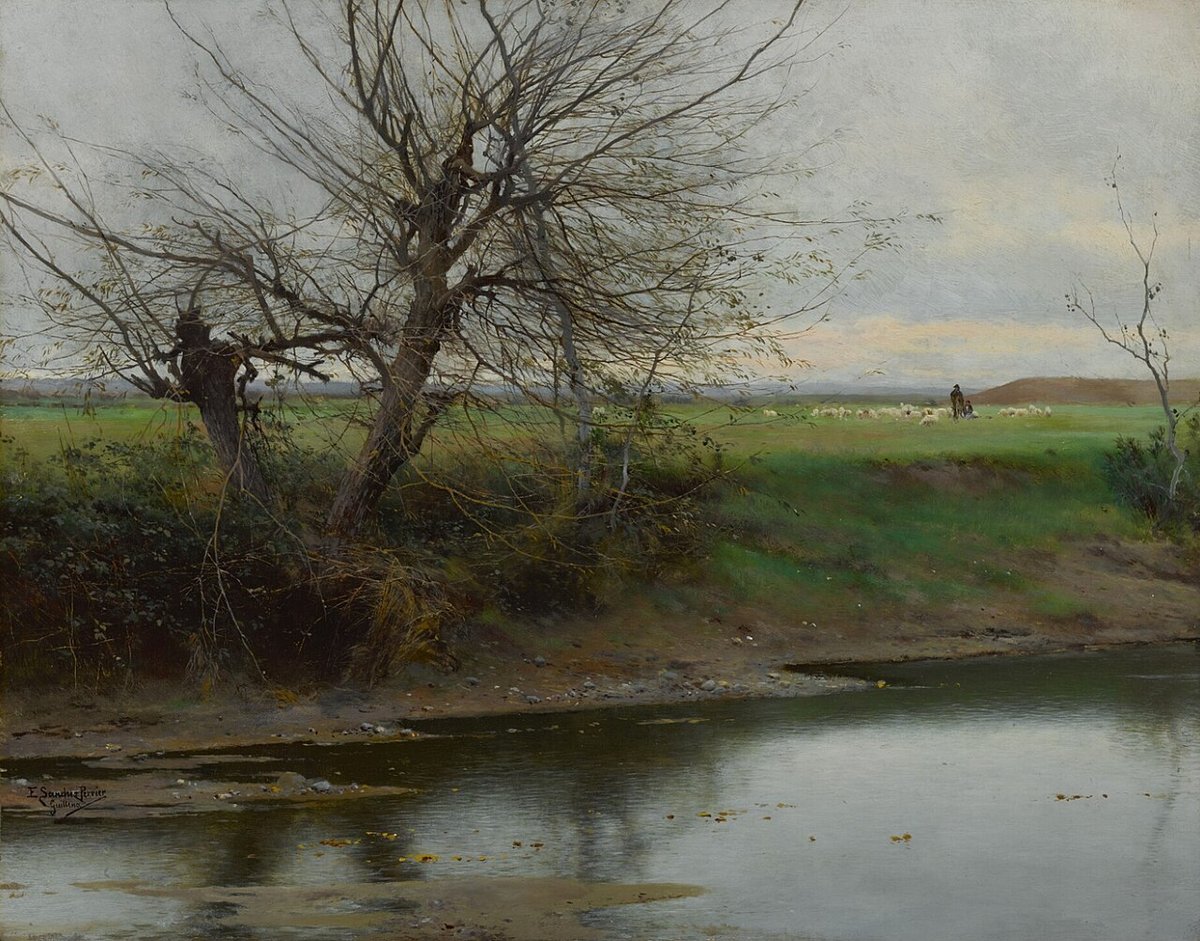
The surroundings of Almadén de la Plata are shaped by open dehesa. Holm oaks spaced apart, grassland, and livestock moving slowly between the trunks define the scene. In winter, streams carry water and the ground turns greener. In summer, the soil cracks and cars raise dust along the tracks.
Several rural paths begin directly from the village, used for walking or cycling. Some lead into denser areas of Mediterranean woodland, where rockrose, mastic trees and strawberry trees appear. Early in the morning, deer can sometimes be seen in clearings, or the distant clanging of cowbells carries across the landscape.
Birdlife is also part of the setting. In the quieter parts of the Sierra Norte, birds of prey and other harder-to-spot species move through the skies. Those interested in observing them tend to head out early or wait until late afternoon, when the heat softens and the countryside grows almost silent.
Routes into the hills
A number of walking routes start from the edge of the village or very close by. Some climb towards nearby hills, opening views over the Sierra Norte and the valleys that surround it. Others follow streams or old livestock routes that have been used for generations.
Among the better-known routes in the area is the Ruta de los Molinos. It follows watercourses where small hydraulic mills once operated. The landscape changes noticeably depending on the time of year: in winter there is more shade and moisture, while in summer it is best to set out early, as the sun is strong in open stretches.
A practical detail to bear in mind is that many of these paths cross grazing land. Gates and barriers should be left exactly as they are found, so as not to disrupt the movement of livestock.
Seasonal food and life tied to the land
With the first autumn rains, the countryside around the village begins to attract those searching for wild mushrooms. Níscalos, known in English as saffron milk caps, and other species appear in clearings and pine areas. It is important to know the terrain well or go with someone who can identify them properly.
Local cooking is closely tied to what the Sierra provides. Iberian pork, honey, goat’s cheese and slow-cooked dishes become more common as temperatures drop. Meals such as migas, made from fried breadcrumbs, or hearty vegetable stews are still prepared in many homes, especially in colder months.
Festivities that shape the year
Celebrations in honour of the Virgen de Gracia usually take place in summer, when the village becomes livelier and many former residents return. During these days there are processions, music in the streets and family gatherings that continue late into the night.
Semana Santa has a different tone here, more restrained and reflective. Some processions move through the narrow streets at night, lit by lanterns. The sound of footsteps on the cobbles carries clearly when the rest of the village falls quiet.