Full Article
about Aznalcóllar
Mining town at the foot of the sierra, home to a major reservoir and historic ruins.
Hide article Read full article
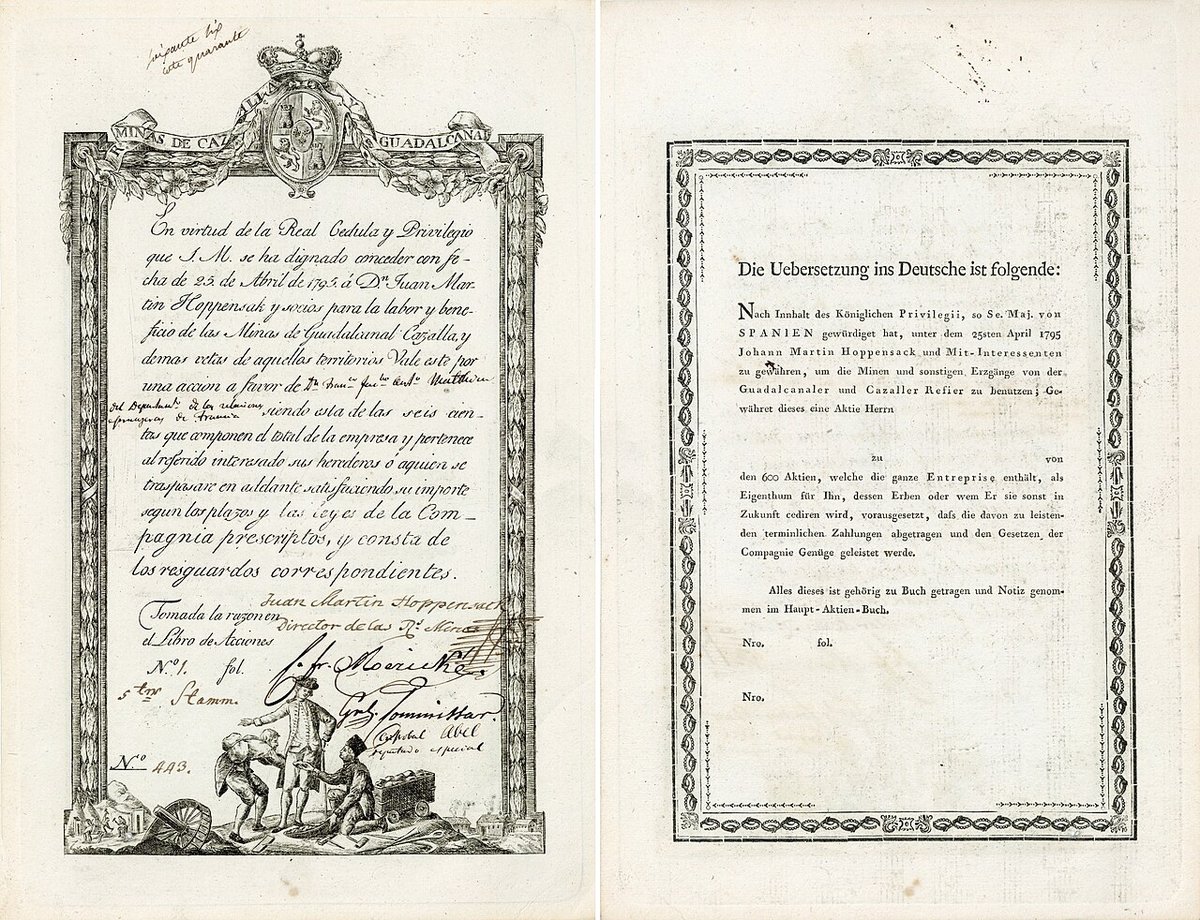
If you are driving towards Huelva through this part of the province of Seville, Aznalcóllar might not seem like somewhere that demands a stop. From a distance, what usually catches the eye is the mine. A vast orange scar in the landscape that looks more science fiction than rural Andalucía.
Yet step out of the car, walk into the village, and you find something far more unexpected: a 13th-century mosque hidden inside the cemetery. Quite literally.
The Zawiya Among the Graves
Ask for the cemetery in Aznalcóllar and you may get a curious look. Mention that you are looking for the old mosque and the response changes. Locals know it as the zawiya.
The zawiya of Aznalcóllar is one of those places that seems improbable in its setting. It is a small Islamic building dating from the Andalusi period, probably the 13th century, when much of southern Spain was under Muslim rule. Over time, like many religious buildings in the region, it was repurposed. It became a Christian hermitage. Much later, the surrounding land was turned into a cemetery.
Today the structure stands among graves on a sloping site arranged over several levels. You climb steps between niches and headstones and, suddenly, there it is. Modest, almost understated, as if it has grown used to changing roles across the centuries and now prefers not to draw too much attention.
Inside, it is small. There is nothing monumental about it. That is part of its impact. These walls have served different faiths and different needs: first a Muslim place of prayer, then a Christian hermitage, later a family pantheon within the cemetery grounds. Some cemeteries are known for elaborate sculpture or sweeping views. This one contains a medieval mosque at its heart, which is not something encountered every day.
The setting adds to the sense of layered history. The quiet of the cemetery, the whitewashed niches, the uneven levels of the hillside, all frame a building that predates them by centuries. It does not attempt to dominate the space. It simply remains, a reminder that this corner of Andalucía has changed hands and identities more than once.
The Mine on the Horizon
Then there is the mine. In Aznalcóllar, you do not have to look for it. It appears on its own. From various points in the village, the reddish landscape is visible, a constant reminder that mining has shaped local life for decades.
It is part of the everyday backdrop. Many residents have worked there or have family members who did. The presence of the mine is not a distant chapter in a history book. It is recent, personal and visible.
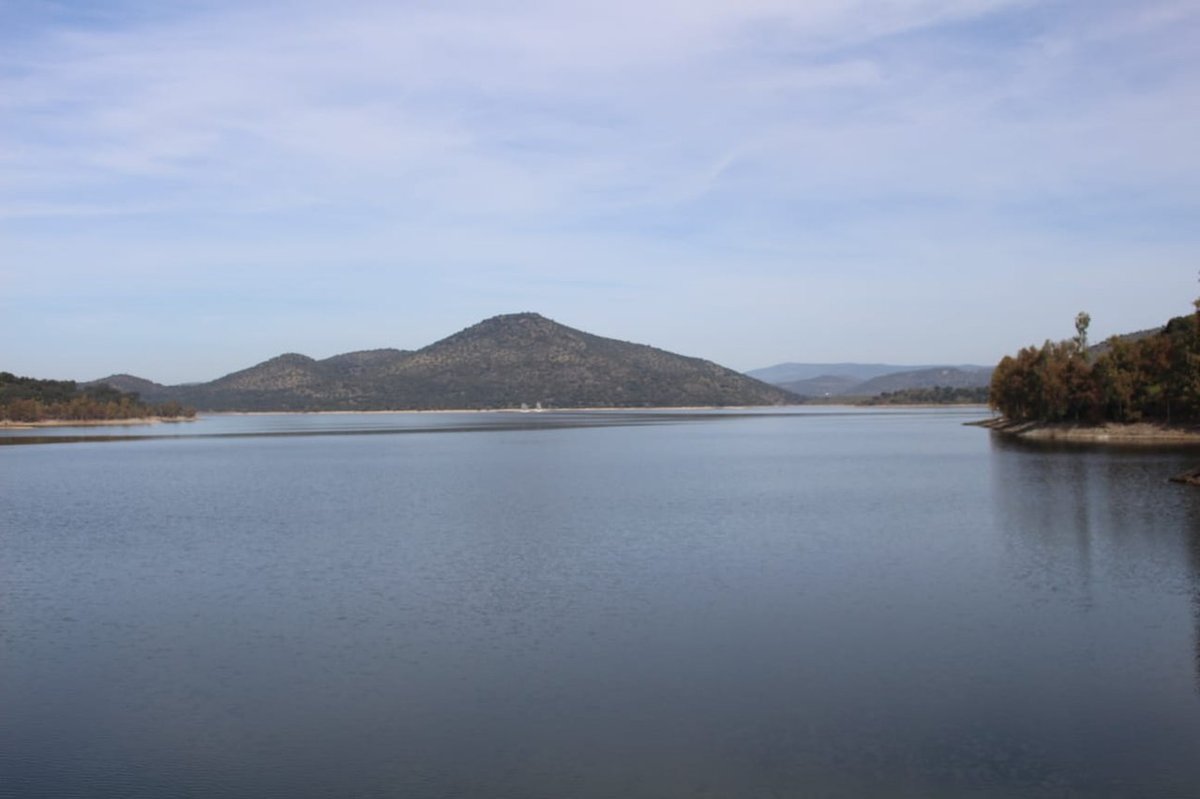
At the same time, the nearby area of the Guadiamar has been gradually recovering over the years. Close to the village lies what is known as the corredor verde, or green corridor. There are paths and walking trails through this area, offering a different perspective on a landscape often associated with extraction rather than renewal.
Walk here and the scenery may at first seem simple: scrubland, open stretches, low vegetation. Stay a little longer and it begins to reveal more. Birdwatching is popular in the area, and it is the sort of place where someone might suddenly point out a rare species and binoculars appear from a rucksack.
It is not a postcard landscape in the conventional sense. What makes it interesting is the coexistence. The mining past is still visible, while nature gradually reasserts itself along the Guadiamar. The contrast between the orange tones of the mine and the green corridor nearby tells a quiet story about change and adaptation.
Traditional Dishes from the Kitchen
In Aznalcóllar, food leans towards tradition, the kind associated with home cooking and family kitchens.
One dish often mentioned by locals is gazpacho de vigilia. Unlike some versions of gazpacho found elsewhere in Spain, this one is prepared without egg. It includes tomato, pepper, day-old bread and olive oil. The name refers to periods of religious observance such as Lent, when certain ingredients were avoided, although many people now prepare it at any time of year.
Another staple is rabbit stewed with Montilla-style wine, a type of wine from Andalucía. It is a recipe common in this part of the region. The sauce is the kind that calls for bread on the side, so that none of it goes to waste.
When Semana Santa, or Holy Week, arrives, pestiños make their appearance. These are pieces of fried dough coated in honey, typical of Andalusian festive baking. Expect sticky fingers and the need for more than one napkin.
The cooking here is not elaborate. It is rooted in continuity. Recipes are passed down and repeated, shaped by the rhythm of the religious calendar and the produce available. It reflects a village that has seen change in other areas of life yet keeps its culinary habits intact.
A Morning Is Enough to Understand It
Aznalcóllar works well as a short, unhurried visit.
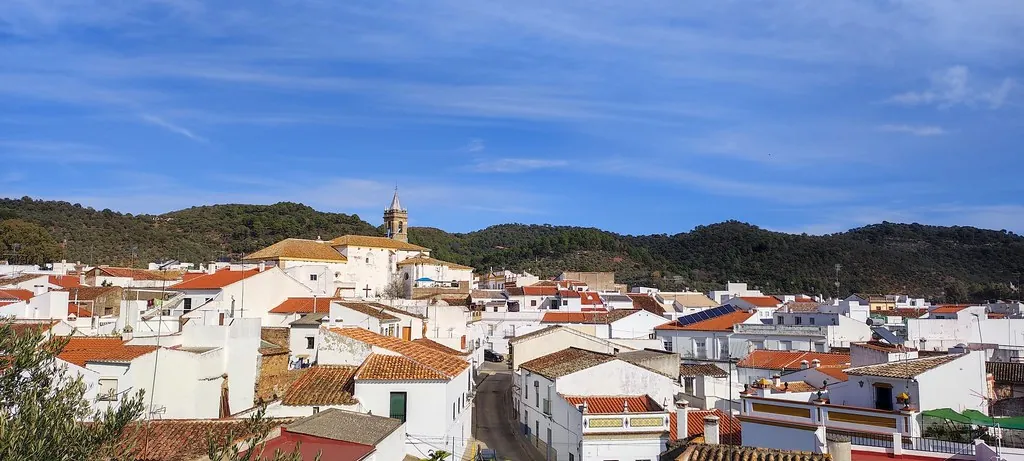
Head to the cemetery to see the zawiya. Wander through the centre. Find a street or viewpoint where the surrounding landscape comes into view, with the mine in the distance and the countryside stretching beyond. Sit down for a relaxed meal. In the space of a morning, it is possible to form a clear impression of the place.
What often happens in villages like this is that someone starts telling a story. About the mine and what it meant for local families. About how the valley used to look. About relatives who spent years working in extraction and processing. These conversations tend to emerge naturally, without ceremony.
Aznalcóllar brings together several layers: medieval Islamic heritage, more recent mining history and the steady rhythm of village life. It does not attempt to conceal its contrasts. The mark of the mine is visible and undeniable. In the cemetery, a small 13th-century mosque stands quietly among graves, a reminder of earlier chapters.
At first glance, it may not dazzle. There are no grand monuments dominating the skyline, no carefully staged historic quarters. Yet after hearing a handful of local stories and walking its slopes, the perspective shifts. The orange mine, the green corridor of the Guadiamar, the zawiya among the tombs, all begin to connect.
And that is often what justifies the stop: not spectacle, but the slow realisation that this ordinary-looking village holds an unusual mix of histories within a compact, very human scale.