Full Article
about Constantina
Historic-Artistic Site in the heart of the sierra, dominated by an Arab castle and white manor streets.
Hide article Read full article
A town that smells of anise
Constantina has a scent that arrives before anything else. That sweet, slightly nostalgic aroma of anise can drift through the air in a way that catches attention even from the road. It recalls traditional Spanish sweets, the kind often associated with festive baking at home. This is not a coincidence. Anise has been distilled here for generations, and at one point the town supported a surprisingly large number of distilleries.
When this history is explained, it starts to make sense. In a place with just over five thousand inhabitants, several distilleries operated at the same time. The scale feels almost improbable, as if every street had its own workshop dedicated to the same craft.
That past has not disappeared. It lingers in more than just the occasional trace of scent. Older residents still speak about anise in the tone reserved for a lifelong trade, something familiar and defining. The industry may no longer dominate as it once did, but its imprint remains part of how the town understands itself.
Up to the castle, at your own pace
The Castillo de Constantina stands above the town in a way that makes it hard to ignore. From many streets, it is visible, almost inviting the walk upwards.
The climb is short, though it has enough of a slope to slow the pace. It is the sort of ascent that encourages a pause halfway, a glance back over the rooftops, perhaps under the excuse of taking in the view rather than catching breath.
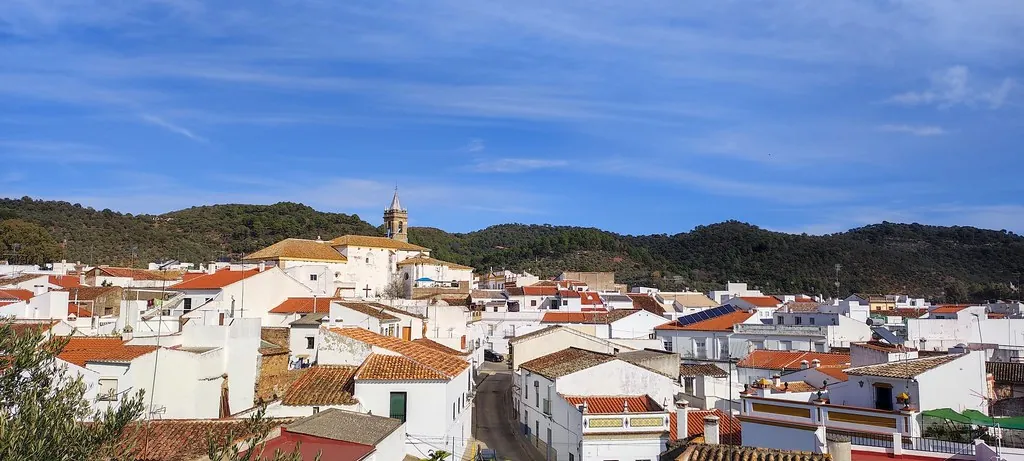
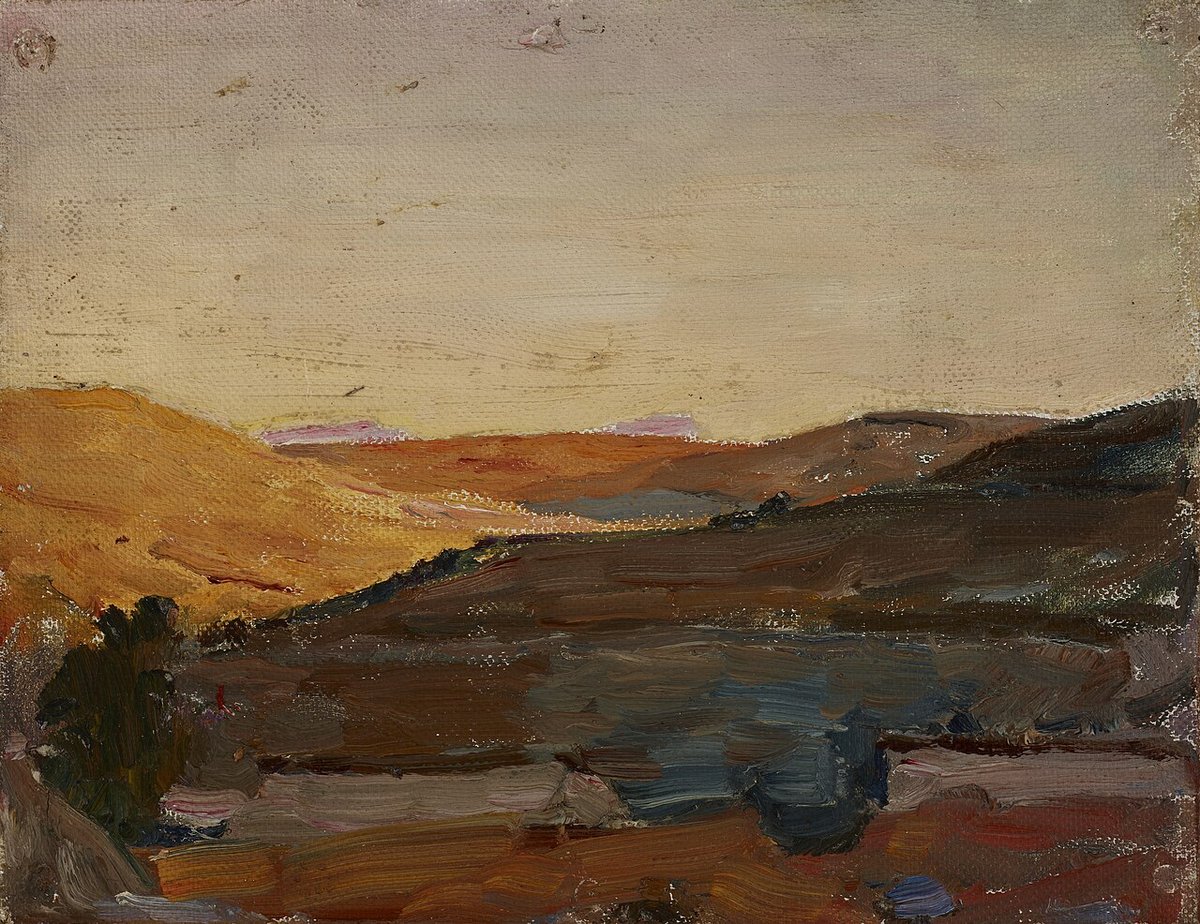
At the top, the remains of a medieval fortress still hold their shape, with several towers marking what was once a strategic frontier for centuries. The structure itself tells part of the story, but the real reward lies in the view. Below, whitewashed houses cluster tightly together, their red roofs forming a patchwork. Beyond them stretches the Sierra Norte, a wide expanse of rolling land covered in holm oaks that seems to go on without interruption.
The dehesa and what it brings to the table
In this part of the Sierra Morena, plans often shift in a predictable way. A walk intended for photographs can easily turn into thoughts of food.
The surrounding landscape is dominated by dehesa, a traditional system of open woodland with scattered holm oaks. Acorns play a central role here, feeding Iberian pigs that roam freely across the land. Much of what appears on local tables begins in this environment.
There is also honey produced in the sierra, with flavours that reflect the plants of the area. It carries notes of thyme and wildflowers, shaped by the open countryside where the bees forage. At certain times of year, homemade sweets appear as well, prepared in many households and shared traditions that repeat across generations.
This is not showpiece gastronomy. It is straightforward, rooted in local habits and ingredients, and designed to satisfy rather than impress.
When Constantina changes rhythm
For much of the year, Constantina moves at a steady, unhurried pace. That changes at certain moments when the calendar brings people outdoors and the town takes on a different energy.
One of those moments comes in September with the romería, a traditional pilgrimage that combines religious devotion with a day spent in the countryside. Horses, carts and groups of people make their way towards the ermita, creating an atmosphere that feels both festive and communal. Even without knowing the details of the tradition, it is clear that participation here is wholehearted.
Summer brings the feria. It is more modest than those in larger cities, but it follows the same spirit. There is a caseta, music, families walking together and streets that stay lively later than usual.
Autumn introduces another seasonal marker: the chestnut. In this part of the sierra, it is closely tied to the time of year and becomes a familiar presence as temperatures begin to drop.
The Huéznar and paths by the water
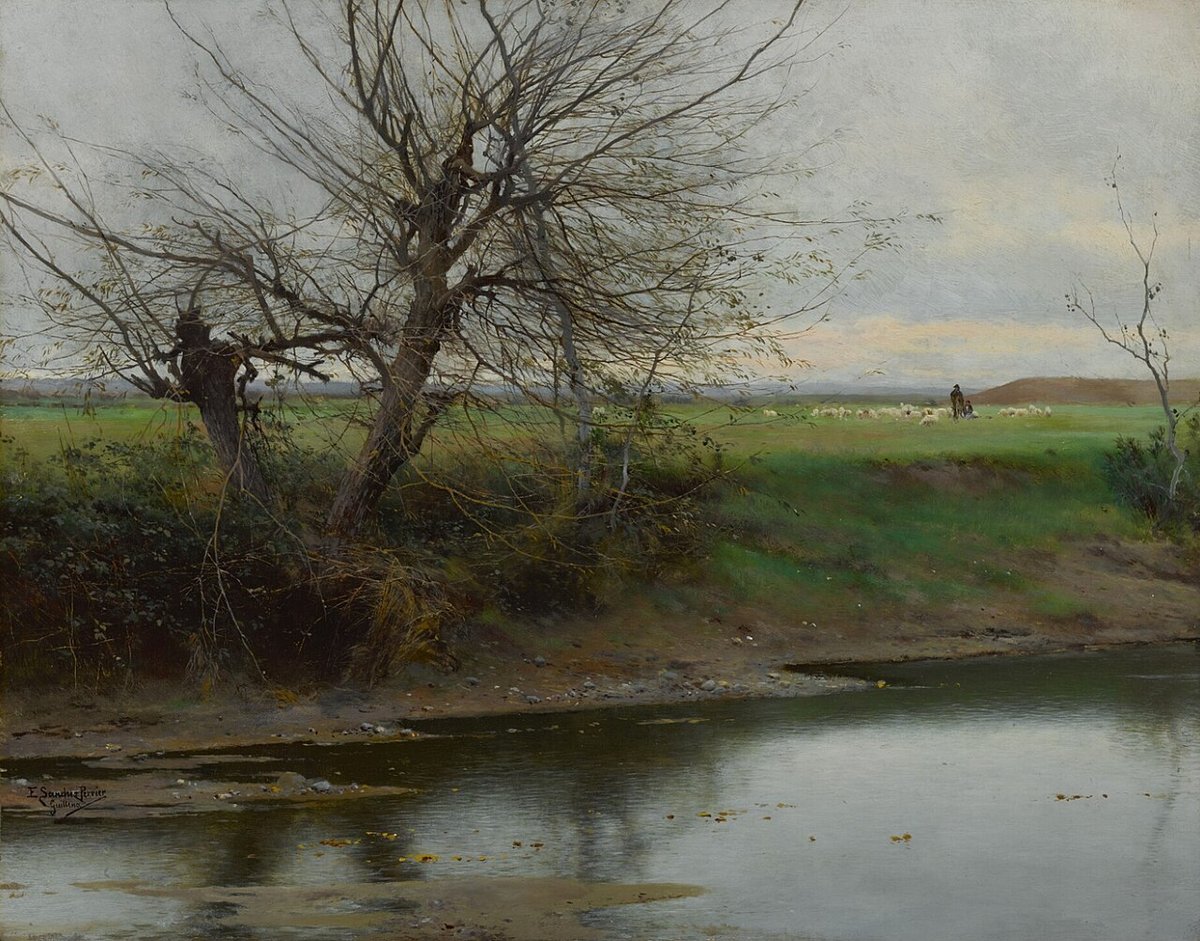
A short distance from the town centre, the river Huéznar flows through the landscape. It does not stand out for dramatic scale, yet it has a quiet appeal that draws people in. The water runs clear, shaded stretches offer relief from the sun, and there is a constant background sound that accompanies anyone walking nearby.
Paths follow the riverbank through areas of holm oaks and cork oaks. These are easy routes, suited to unhurried walks and conversation rather than effort. Along the way, traces of older irrigation systems and small hydraulic structures appear, reminders that water has long been carefully managed in this environment.
Time tends to pass without much notice here. It is the kind of setting where a morning can slip by without any need to check the clock.
A place that works without trying too hard
Constantina does not set out to impress. Its elements are straightforward: a castle overlooking the town, a history tied to anise, dehesa all around and several walking routes nearby. That is the full picture, and it proves to be enough.
There is a particular ease in how people interact. Asking for directions can turn into a calm explanation, sometimes even a short walk together to point the way. That sense of everyday openness shapes the experience as much as the physical surroundings.
Spring and autumn suit the area well, when the sierra is at its most comfortable for walking. A simple plan fits naturally here. Park, wander through the old centre, head up to the castle, then make time for the river.
The main sights can be seen in a day. Staying longer usually means something has clicked. The appeal is not about standout attractions or packed schedules. It works more quietly than that, in the same way a familiar place draws people back without needing to explain why.