Full Article
about El Castillo de las Guardas
Mountain municipality known for its wildlife reserve and a landscape of dehesa and Mediterranean forest.
Hide article Read full article
A hillside village on the edge of Sierra Morena
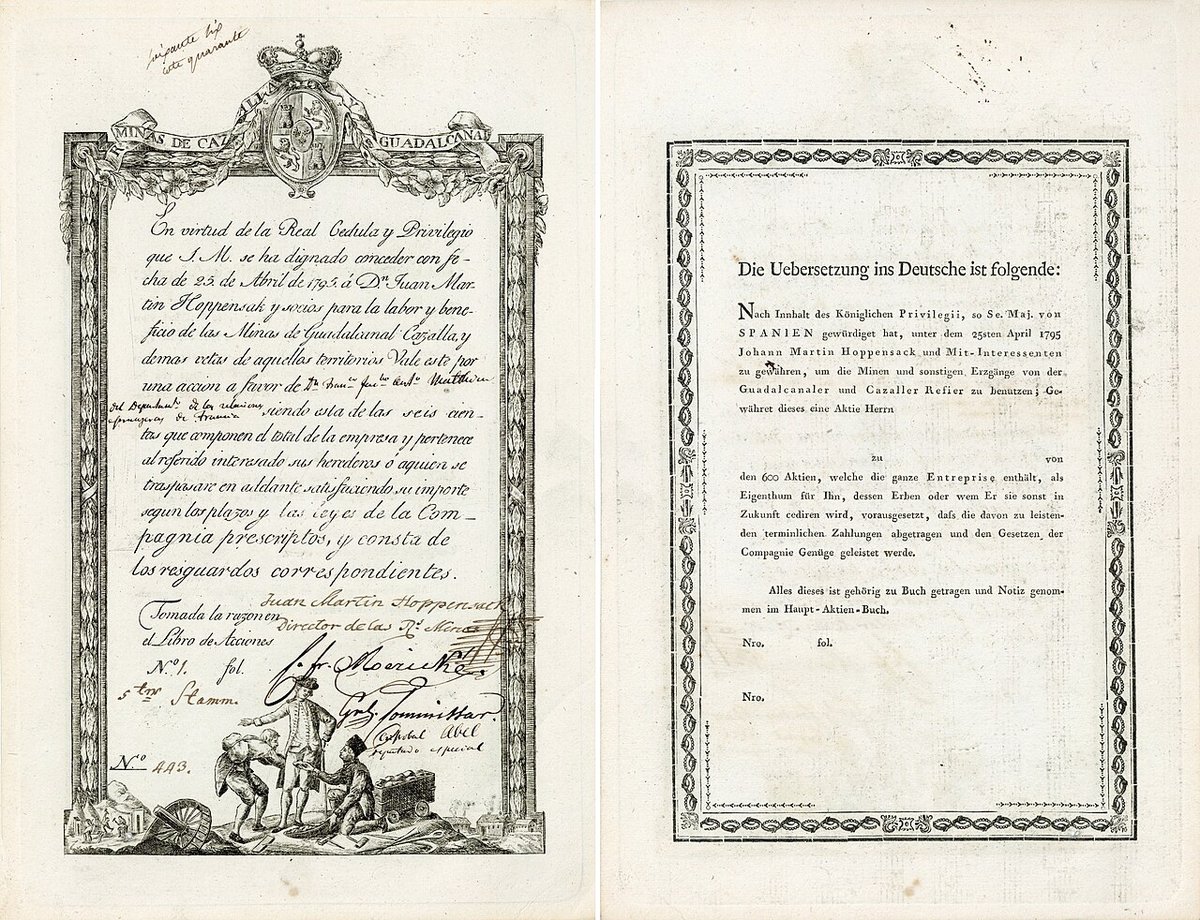
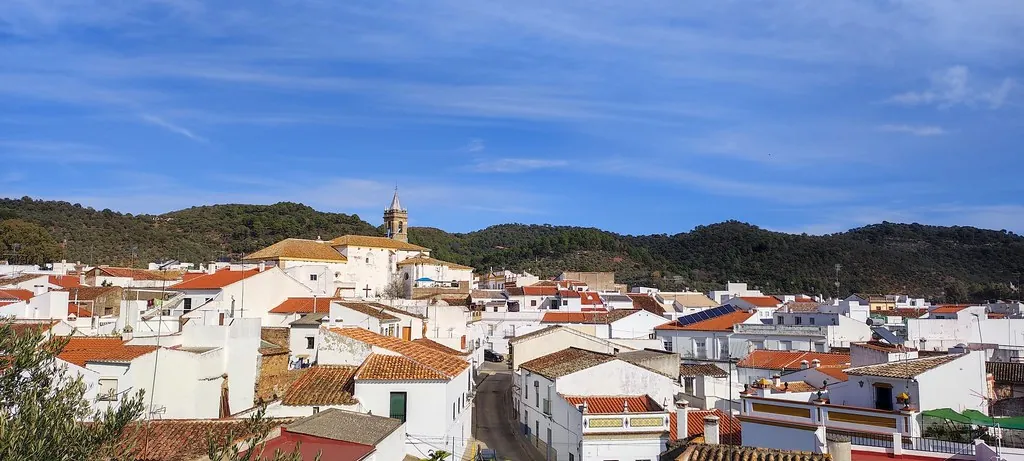
El Castillo de las Guardas sits at the northern edge of the province of Seville, close to the first rises of Sierra Morena. The village stands on a modest hill at around 350 metres above sea level, surrounded by dehesa pastureland and former mining areas. Just over 1,500 people live here. The landscape explains much of what the place is: scattered holm oaks, rural tracks, and isolated farmsteads set far apart. For centuries, local life has revolved around livestock, hunting and, at certain points in time, mining.
The settlement climbs the slope in an irregular way. Streets are narrow and in places quite steep. Whitewashed houses look out across the valley of the Guadiamar. Many retain features typical of rural mountain architecture, such as interior courtyards, thick walls and tall chimneys suited to the colder winters in this part of Andalucia. Around the main square, daily life gathers, along with many of the local celebrations that mark the year.
Parish life and the remains of a fortress
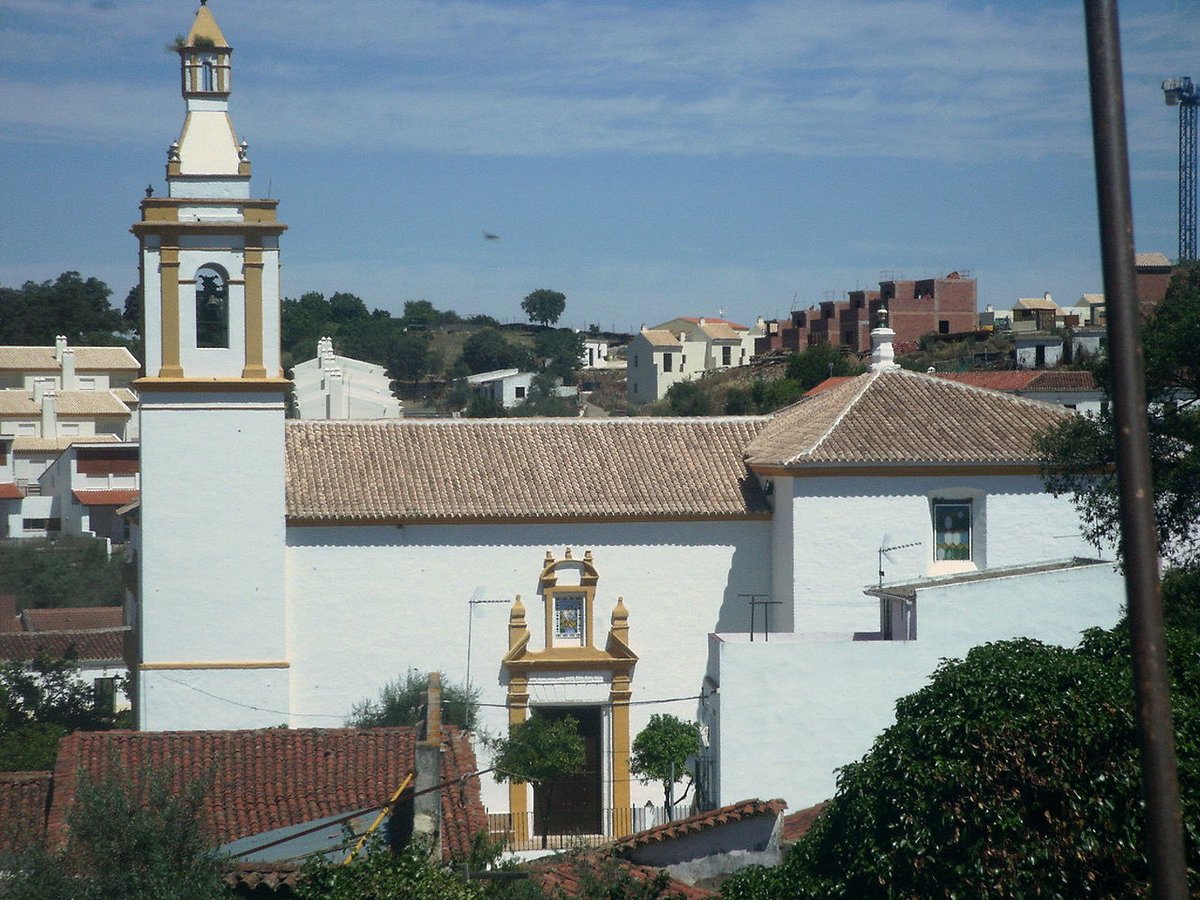
At the centre of the village stands the parish church of Nuestra Señora de los Remedios. It dates back to the 16th century and is often associated with the late Mudéjar style that continued in the province at that time. Like many churches in small towns, it has been altered over the years. Inside, there are Baroque altarpieces and several older religious images tied to local devotion. The building’s importance lies as much in its role within the community as in its architecture. For generations, much of the town’s social and religious life has been organised around the parish.
The castle that gives the village its name survives only in fragments. A few stretches of wall and scattered structures remain on a nearby hill. It likely formed part of a defensive system that once monitored the routes between the Sevillian countryside and the northern sierras. The strategic position is still evident today, as the site overlooks a wide expanse of dehesa.
The dehesa and the Guadiamar landscape
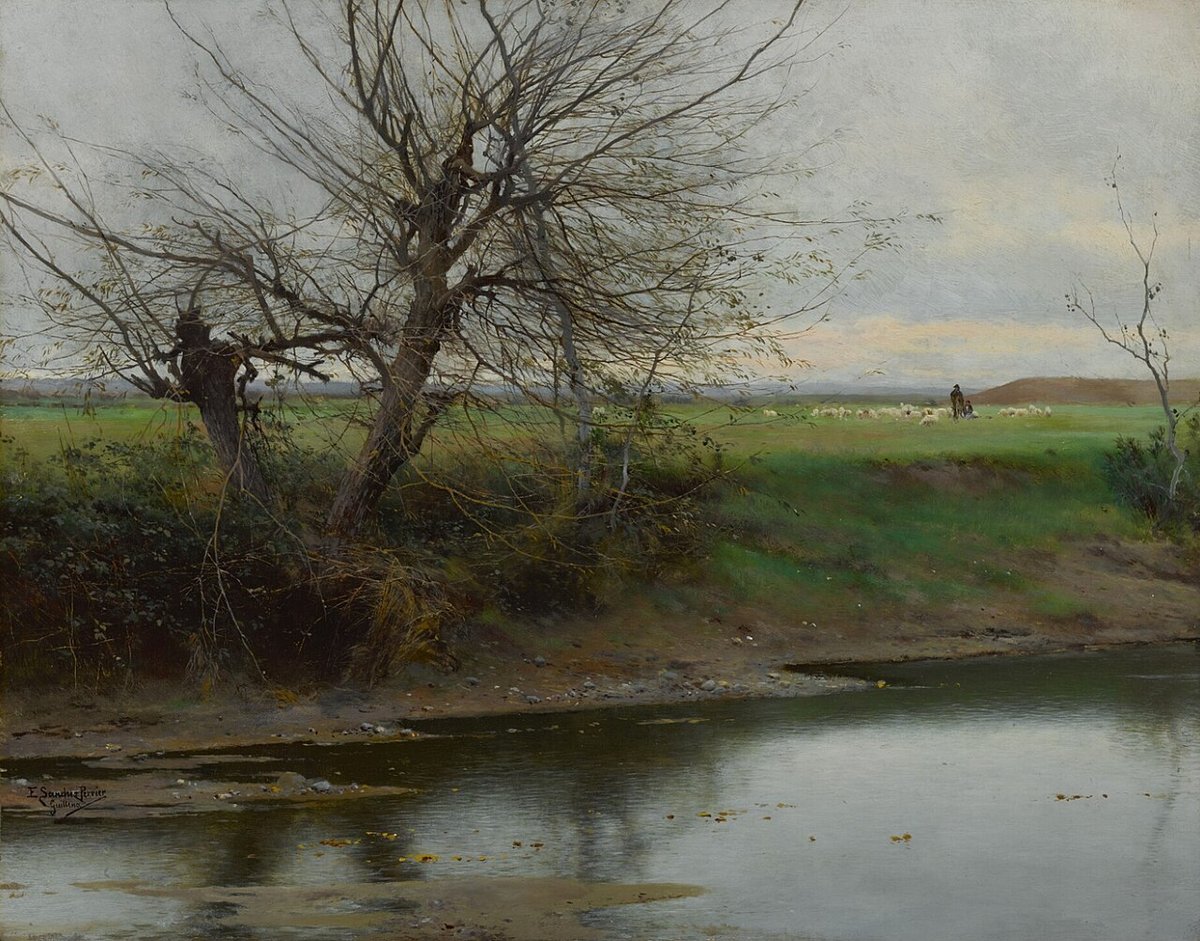
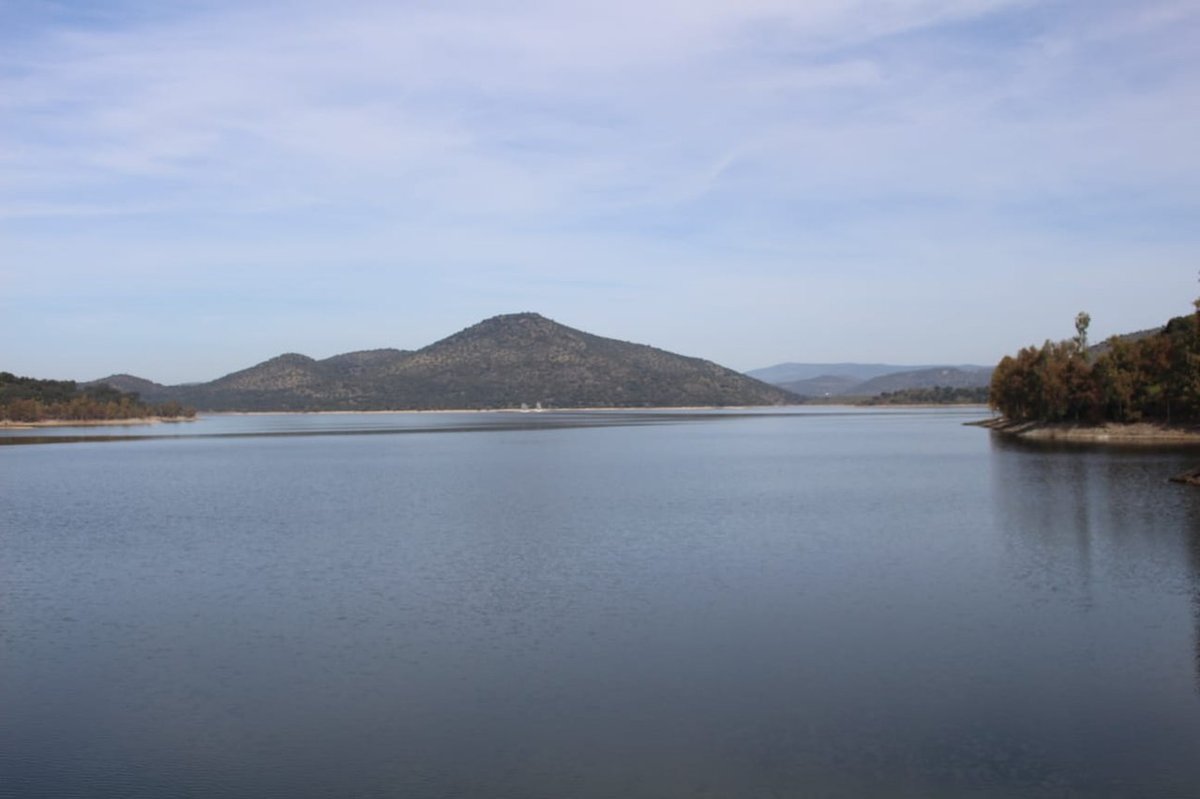
The surrounding landscape belongs to the western strip of Sierra Morena. Holm oaks and cork oaks shape the terrain, broken up by shallow valleys where the Guadiamar flows alongside seasonal streams. This is land used for extensive grazing, and it also supports a notable amount of wildlife. Deer and wild boar are not unusual sights at dawn along quieter paths. Over the hillsides, vultures and other birds of prey can often be seen circling.
The Guadiamar plays a key role in local walking routes. Some paths follow its course and pass by the remains of old watermills, now heavily altered by time and vegetation. Conditions can change, so it is worth checking the state of the trails before setting out. After periods of rain, sections of ground can become muddy.
The dehesa itself invites slower walks along agricultural tracks. In autumn and winter, the scenery shifts noticeably, with greener pastures and a greater presence of birdlife. With binoculars, it is possible to spot birds of prey and black storks at certain times of year, especially in less frequented areas.
Food shaped by the land
Local cooking reflects what the dehesa provides. Products from Iberian pigs are common, along with meat stews during the colder months. Dark honeys produced from holm oak areas circulate locally, as do cheeses made in nearby small-scale farms. Baking tends to be simple, often based on traditional fried sweets and honey.
When autumn rains arrive, nearby pine and oak woods begin to produce níscalos and other mushrooms. Foraging is part of local custom, although it is advisable to go with someone who knows both the terrain and the species well.
Local traditions and a landscape-led identity
Festivities here remain closely tied to local life. The romería of Nuestra Señora de los Remedios usually takes place in May and brings residents out to a rural hermitage. August sees the patron saint festivities, a period when the streets become livelier and many people return to the village.
El Castillo de las Guardas is best understood through its surroundings rather than through major monuments. It is a small place within a wide region shaped by the dehesa and by the routes that cross Sierra Morena դեպի the north. The interest lies in that landscape and in the way the village has always lived in direct connection with it.