Full Article
about El Garrobo
One of the smallest municipalities in the province, gateway to the sierra and surrounded by pastureland.
Hide article Read full article
On Sunday mornings, El Garrobo smells of firewood and freshly baked bread. That is not poetic licence. It is what drifts out of chimneys when many households start preparing migas as the village eases into the day. In that simple scene lies the key to this corner of the Sierra Norte in the province of Seville: El Garrobo is not a place you come to tick off sights. It is somewhere you cross paths with everyday life.
A village that keeps things simple
First things first. If you are looking for photogenic colonial houses and design-led bars, turn around before you get here. El Garrobo is more like that cousin you only see at Christmas. There are no grand tales attached to it, yet once you sit down together you remember why you get on so well.
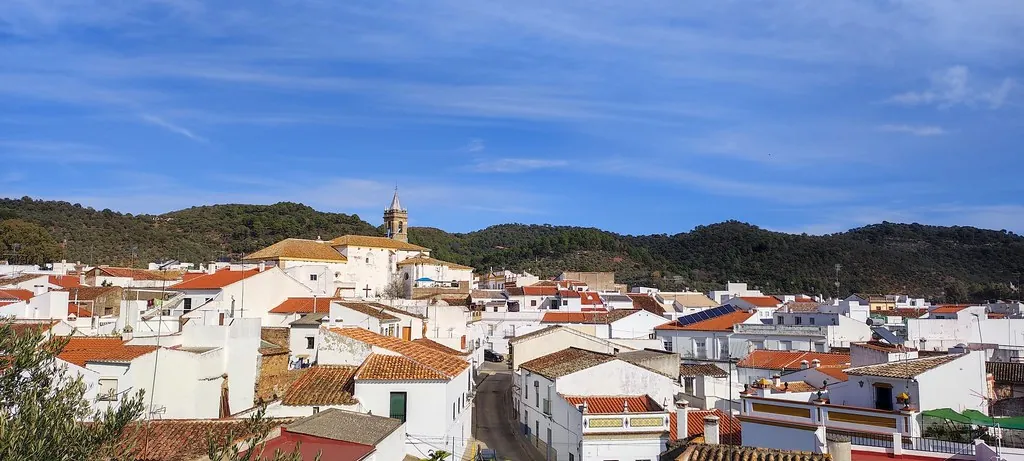
Around 800 people live here. There is one main street, not especially long, and a couple of bars where locals drift in and out throughout the day. That is the scale of it.
On paper it sounds slight. In practice, the place has a pull. Mobile coverage in the centre is not always reliable, so your phone stops dictating the pace. That absence feels deliberate, even if it is not. Time stretches a little.
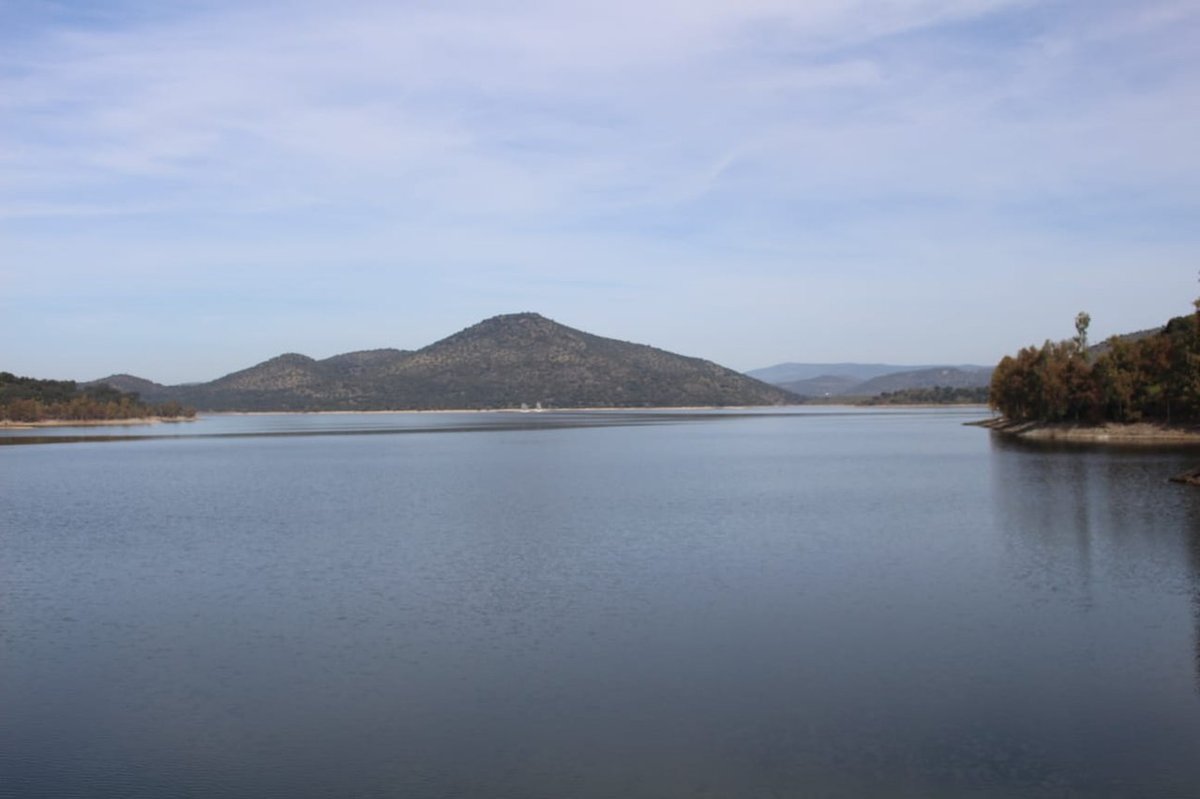
El Garrobo sits in the Sierra Norte, a rural area of hills and Mediterranean woodland to the north of Seville. You are in the countryside here. Life runs at a different rhythm.
The church and the fountain
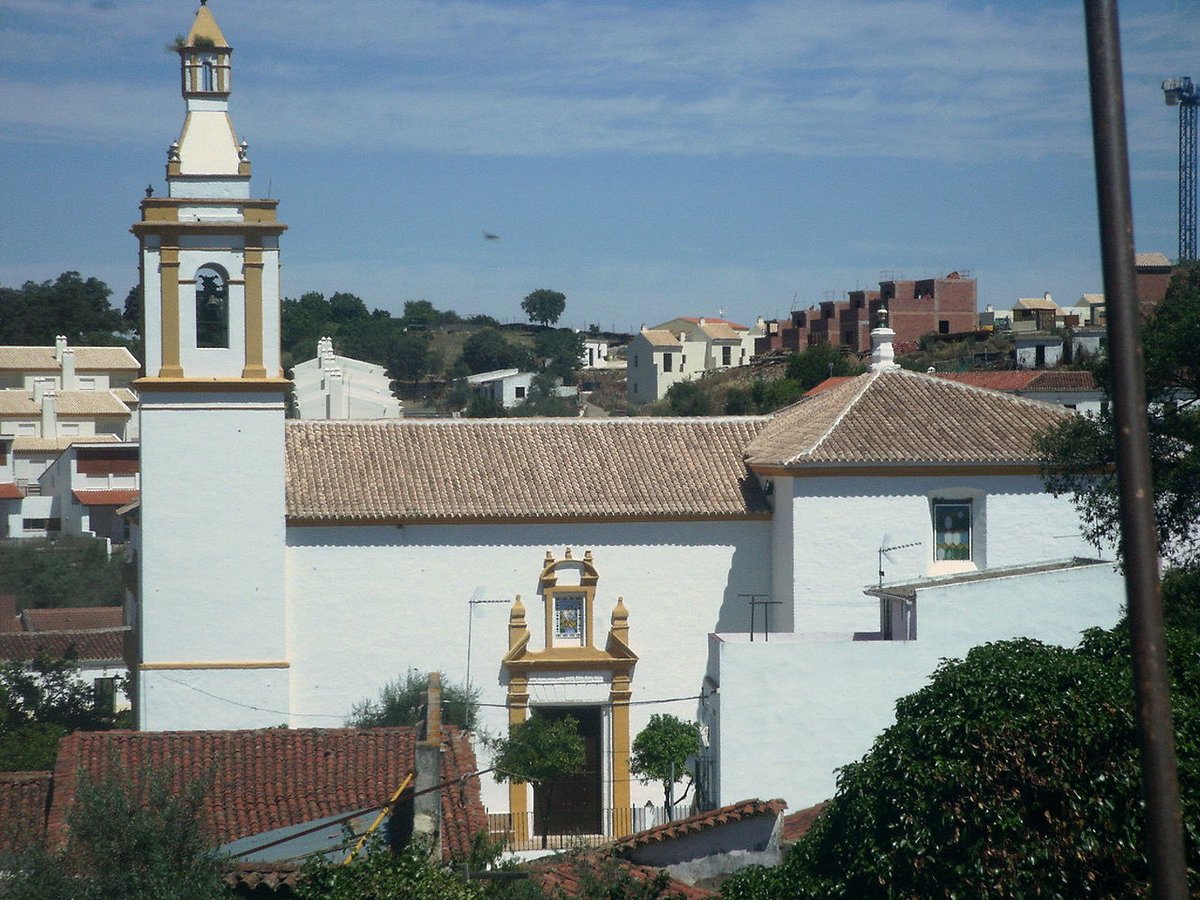
The Iglesia de la Concepción is the most obvious landmark. From the outside it appears larger than it really is, with a straightforward façade and stonework without excessive decoration. Step inside and you find a retablo and the lingering scent of incense, the sort that clings to village churches.
Sit quietly for a while and someone will eventually come through the door. An older woman, perhaps, or a neighbour who pops in to light a candle. These are small, ordinary moments, yet they explain more about the place than any information panel could.
A short walk away stands the Fuente de la Estrella. It is decorated with old tiles and still carries the air of a communal space. In the past it would have been used for washing clothes, watering animals and catching up on news. Today you are more likely to see cyclists refilling their bottles or local teenagers perched on the edge talking among themselves.
Nothing here is packaged for visitors. The fountain remains what it has always been: a practical meeting point.
Walking out into the Sierra Norte
If you come to El Garrobo, you will end up walking. There is little else to do, and that is the point.
One of the simplest routes heads towards Fuente Abades, threading between encinas and jaras. Encinas are holm oaks, the evergreen trees that define much of inland Andalucía, and jaras are rockroses that release a resinous scent in warm weather. The walk is not demanding, yet it offers a kind of rural silence that feels increasingly rare. Bring water with you, as there are no kiosks or vending machines along the way.
A stage of the Camino Benedictino also passes nearby. This route links several villages in the area along old paths. Expect steady climbs and descents on tracks and trails. It does not take long to understand why travelling used to be a serious undertaking.
A few kilometres away, near Venta del Alto, runs the Vía Verde de la Sierra Norte. Greenways in Spain often follow former railway lines, and this one attracts more movement than the paths around the village. Cyclists roll past, families walk together, dogs race about. It works well if you want something straightforward.
Even so, the most appealing routes are the ones that leave El Garrobo almost without signposting. Some locals speak of megalithic tombs in the surrounding countryside, half concealed by vegetation. Do not expect an archaeological park or explanatory boards. Things here tend to remain where they have always been.
Eating whatever is on offer
There is no grand gastronomic narrative to sell. In El Garrobo you sometimes eat very well and sometimes it is simply decent. That is the reality of a small village.
On a good day, migas serranas appear. This is a traditional dish made from day-old bread, usually fried with chorizo and topped with a fried egg. It is solid, filling food. The kind of plate that makes you pause for a moment before setting off again.
You may also come across almorraque, a hearty stew prepared with mondongo. It belongs to an older style of cooking, the sort that calls for a spoon and a chunk of bread alongside.
Then there are aceitunas aliñás, often set down with a beer. Black olives seasoned with cumin, garlic and paprika. You start with one, then another, and before long the bowl is half empty.
This is straightforward, rural cooking shaped by what is available and what has always been cooked here.
When to come
The easiest way to understand El Garrobo is to visit in spring.
In August, the village fills with people who return for a few days and the square carries more noise than usual. In winter, the sierra can turn quite cold. Spring brings mild afternoons, green encinas and paths that release the scent of rosemary when you brush against it.
A simple plan works best. Arrive around midday on Saturday, eat something substantial, rest for a while if you can, then head out for a walk to a fountain or into the surrounding countryside. Supper can be unhurried.
Before leaving on Sunday, stop by the village bakery and pick up a loaf. Leave it on the car seat as you drive away. When the interior begins to smell of warm bread, something clicks into place. Some places do not need to offer very much in order to stay with you.
El Garrobo is one of them. And if anyone asks what brought you there, you can always say you got a little lost in the Sierra Norte. It would not be far from the truth.