Full Article
about El Real de la Jara
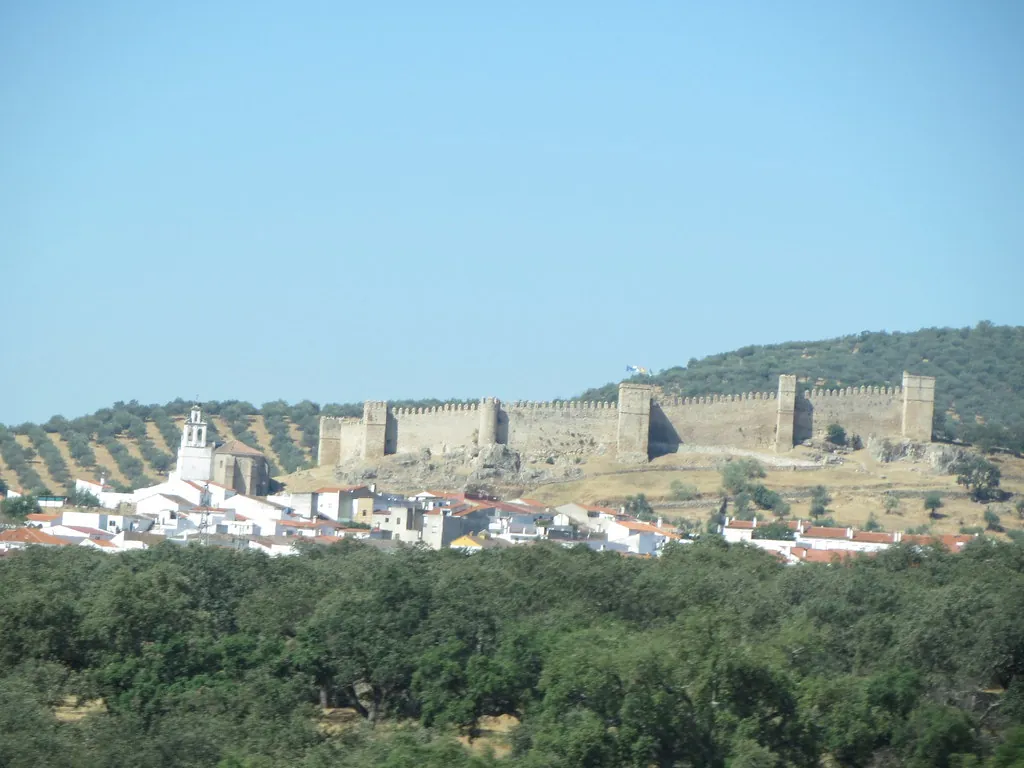
Last Andalusian stage of the Vía de la Plata Camino de Santiago, with a restored medieval castle
Hide article Read full article
Morning light over the dehesa
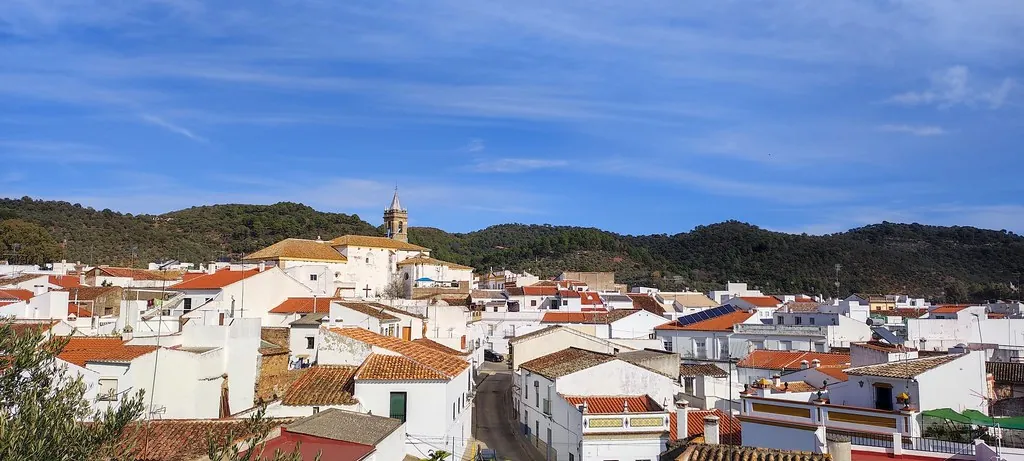
Early in the day, when a trace of moisture still clings to the ground, the dehesas around El Real de la Jara carry a distinct scent of crushed grass and holm oak. The village comes into view gradually, white houses and reddish roofs appearing on a gentle rise, close to the border with Extremadura. The setting defines everything here. Dirt tracks cut across grazing land, stone walls mark out boundaries, and a wide, quiet stillness settles over the area, broken now and then by the sound of bells on livestock or a tractor passing at an unhurried pace.
This is not a place shaped by busy itineraries or packed schedules. The rhythm comes from the land itself, from the way fields are worked and animals move through them. Even before reaching the centre, that sense of space and continuity is clear.
A small and unhurried centre
From the main square, the layout of the village reveals itself easily. Streets do not follow a strict grid. They climb, bend, narrow, then open suddenly into small corners where a bench often sits in the shade. On bright mornings, the whitewashed façades reflect the light strongly, and footsteps echo more than expected.
The parish church of San Bartolomé stands near the centre. Its walls bring together different periods, with origins usually placed around the 15th century, followed by later alterations. Inside, those layers of time are still visible. There are simple vaulted ceilings, altarpieces added in different eras, and dark wood that carries a faint scent of wax when the doors have been closed for a while.
Walking through El Real de la Jara does not take long, but it rewards a slower pace. Iron balconies look out over the streets, large gateways open into interior courtyards, and in some corners the wind carries the smell of firewood when winter arrives. Nothing demands attention, yet details accumulate quietly as you move through.
The dehesa beyond the houses
Step beyond the last houses and the dehesa begins almost immediately. Holm oaks and cork oaks stand spaced apart, low grass spreads between them, and the land is largely given over to livestock. Iberian pigs are a common sight, moving slowly beneath the trees, often alongside cattle or flocks of sheep.
Many of the tracks crossing this landscape have been in use for decades, likely much longer, linked to farming and grazing. Some lead up gentle rises where the view opens towards the surrounding hills. On clear days, the continuity of the terrain becomes obvious, a patchwork of estates stretching far beyond what can be covered on foot.
Summer brings strong sun and long stretches without shade. Anyone heading out along these paths benefits from an early start and enough water. The trees offer some cover, but by midday the heat is unmistakable.
What stands out most is the sense that this is working land. The dehesa is not arranged for display. It functions as it always has, shaped by practical needs, with a balance between trees, pasture and animals that gives it a particular character.
Along the Rivera del Cala
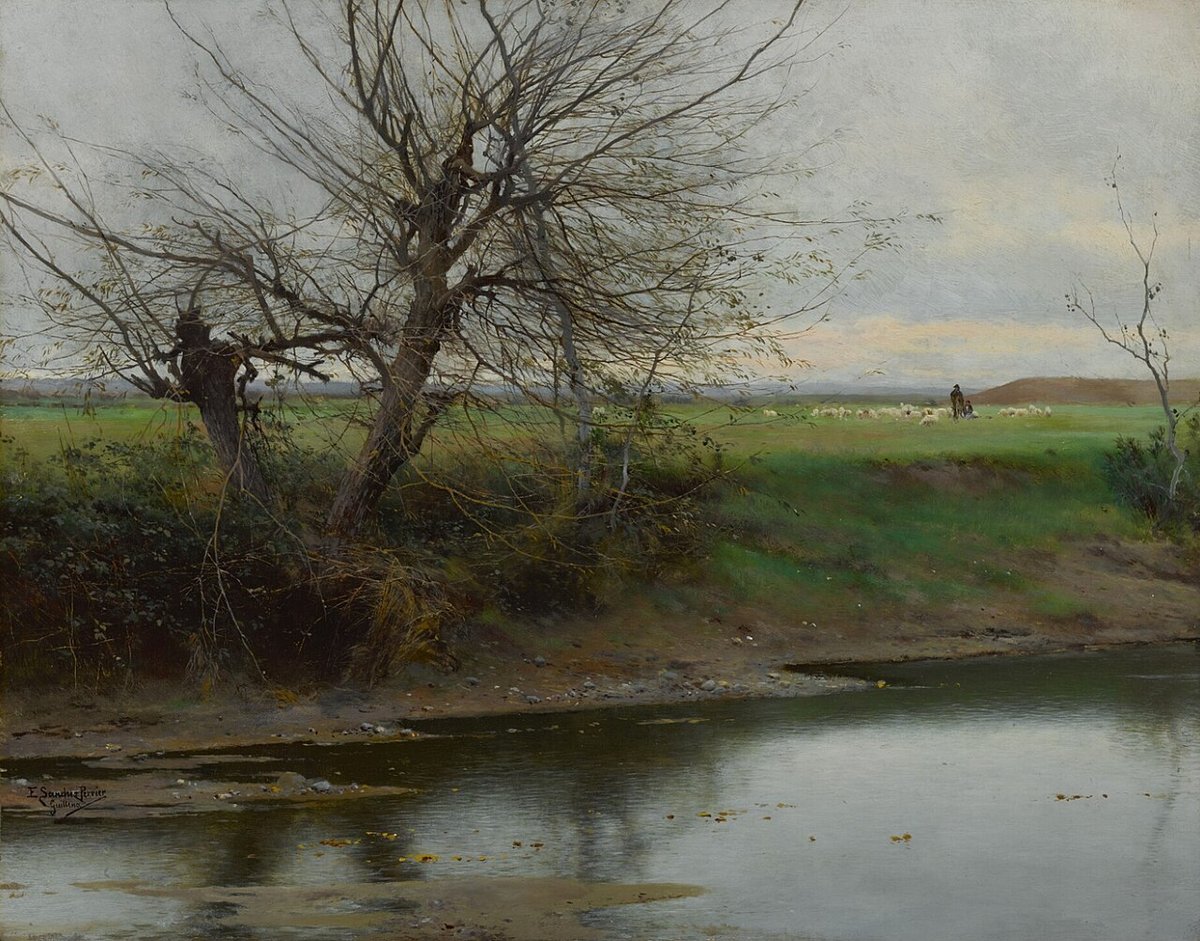
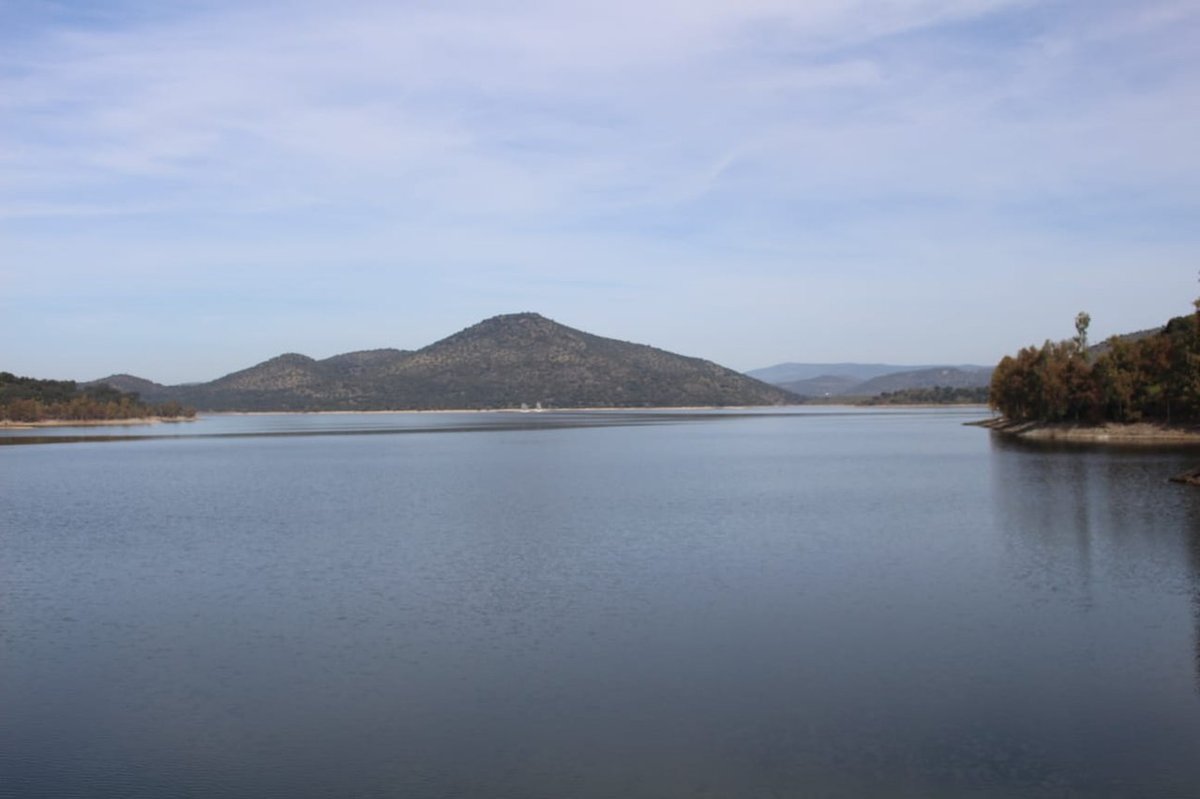
One of the natural boundaries of the municipality is the Rivera del Cala. The change in scenery is noticeable as you approach it. Vegetation becomes denser near the water, with willows along the banks and patches of ground that stay damp even when the surrounding countryside has dried out.
In wetter years, the river carries a good flow. In the height of summer, it can look far more restrained. Even so, late afternoon tends to be a good time to walk nearby. The air cools slightly, and birdlife becomes more noticeable than during the hotter parts of the day.
The presence of water shifts the atmosphere. After the open, sunlit stretches of the dehesa, these greener edges feel more enclosed, with softer sounds and a different pace. It is not dramatic, but the contrast is clear enough to change how the landscape is experienced.
On foot or by bike through the hills
The area around El Real de la Jara includes several marked paths and forest tracks that allow for unhurried exploration. The routes are not especially technical, although some sections are longer than they appear on a map.
Walking at a relaxed pace often means looking up as much as ahead. Birds of prey use the air currents above the hills, vultures circle high, and storks cross the dehesa in near silence. These sights are more frequent in spring and autumn, when movement through the area increases.
Bicycles, especially mountain or gravel types, work well on these tracks. The surface changes regularly, from compacted earth to looser gravel, so conditions can vary from one stretch to the next.
There is no single defined route that sums up the landscape. Instead, it is the accumulation of paths, views and small changes in terrain that shape the experience.
Flavours tied to the land
Local cooking reflects what is raised nearby. Iberian pork appears in many forms, from cured products to sausages and slow-cooked dishes. In winter, more substantial meals are common, including migas and hot stews that suit colder days and outdoor work.
Cheeses made from goat and sheep’s milk are also produced in the area, often with a strong, distinctive flavour linked to animals raised in open pasture.
These are foods connected to long days in the countryside, closer to rural tradition than to elaborate menus. The emphasis is on sustenance and familiarity rather than presentation.
Festivals shaped by local rhythm
The calendar of celebrations follows the pace of the village. Towards the end of August, festivities dedicated to San Bartolomé bring more activity to the streets than usual. In January, San Antón is marked with the blessing of animals, a custom that still holds clear meaning in a place so closely tied to livestock.
During Semana Santa, the village’s brotherhoods organise processions through the same narrow streets that remain quiet for most of the year. These events briefly change the atmosphere, filling spaces that are otherwise defined by calm and routine.
El Real de la Jara does not revolve around major monuments. What tends to stay in mind is something less tangible: the smell of holm oaks when the heat intensifies, the distant sound of bells, and the feeling of moving through a landscape that continues to function, above all, as working countryside.