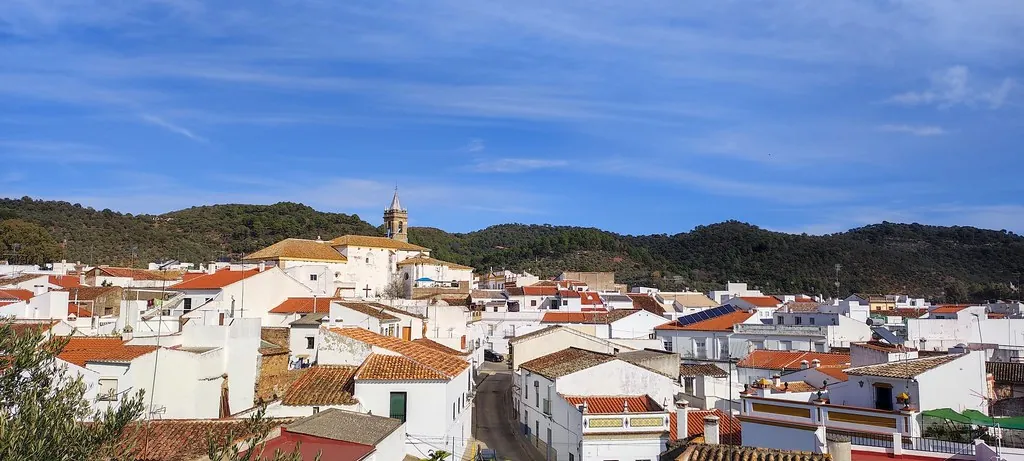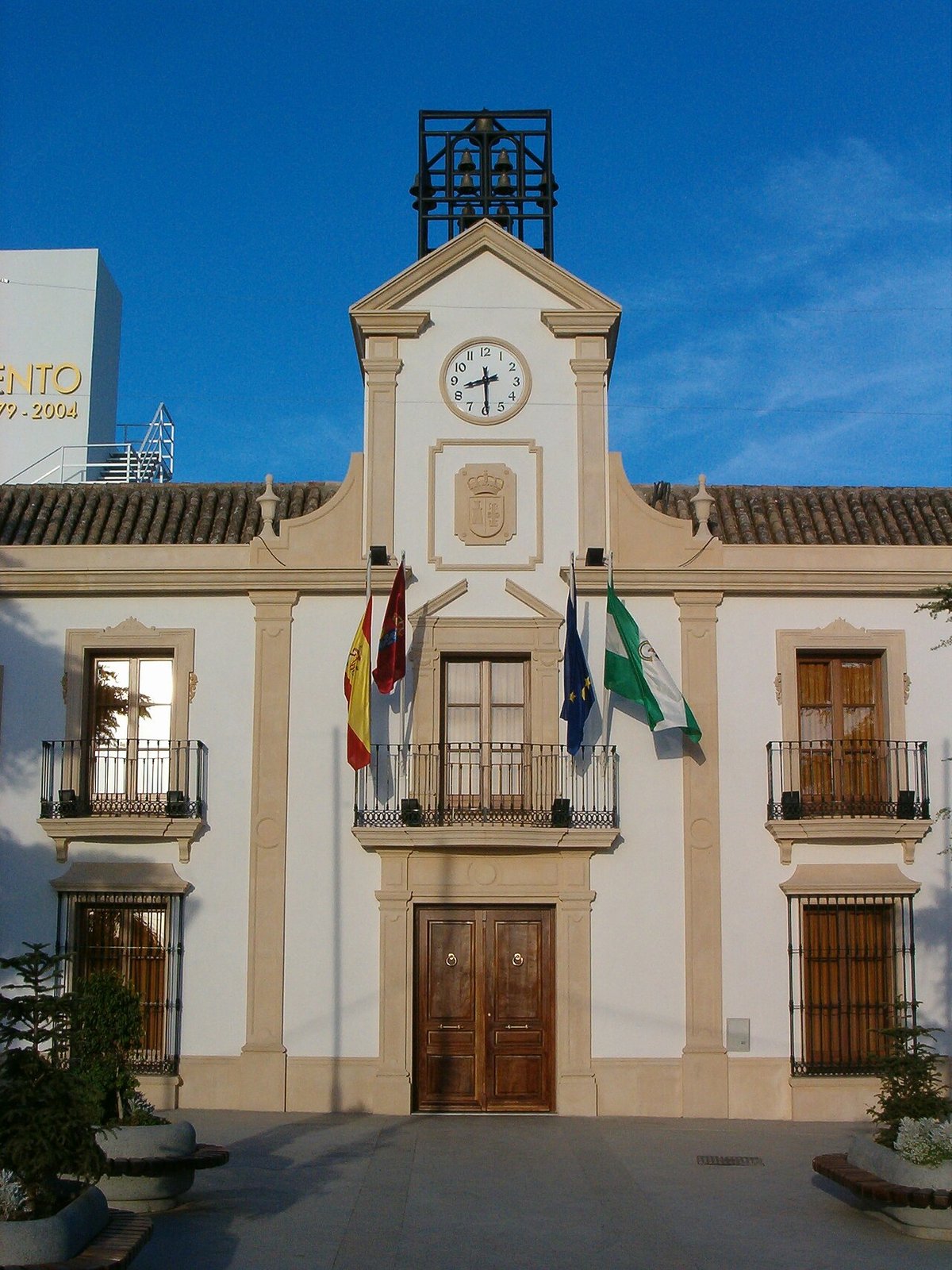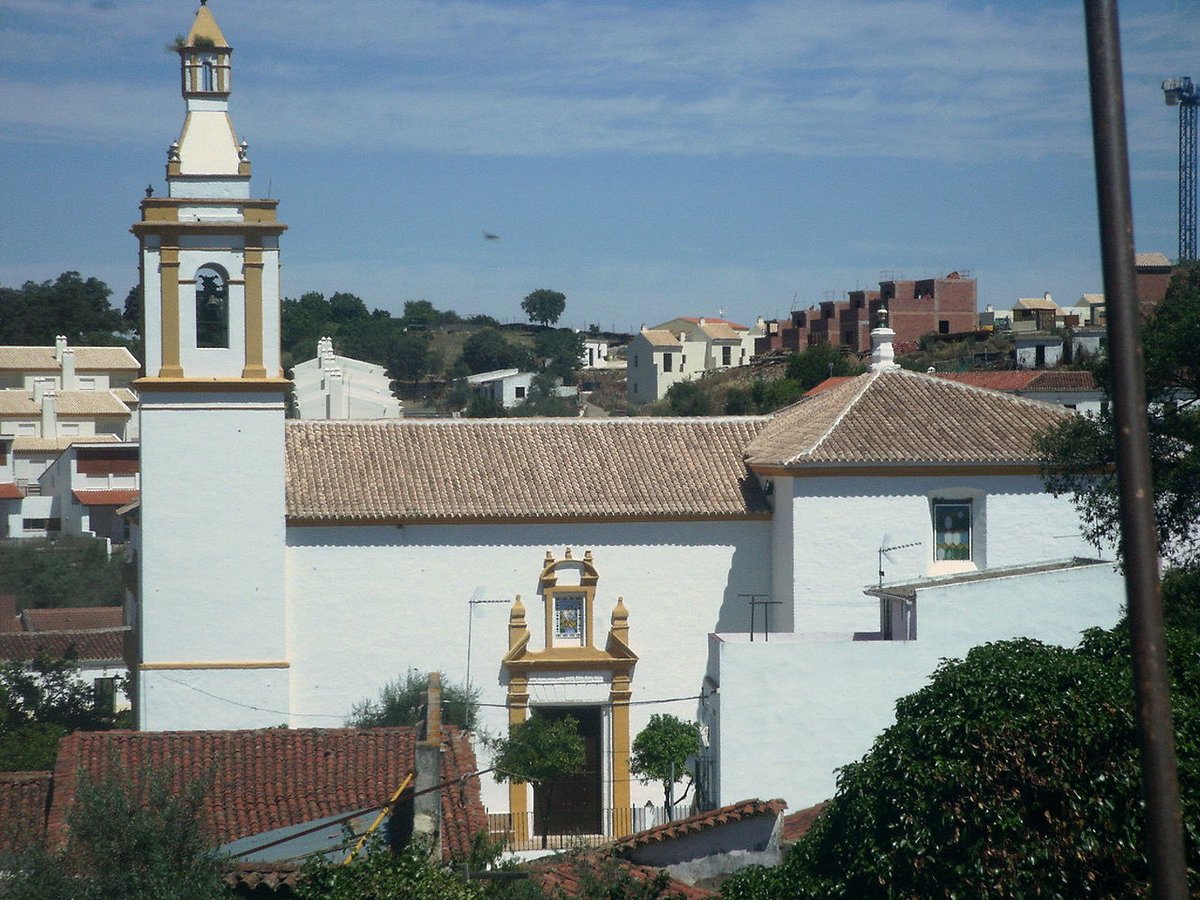
Parroquia El Divino Salvador (El Ronquillo).jpg
Guadalinfo.elronquillo · CC0
Andalucía · Passion & Soul

El Ronquillo

The church bell tolls at 352 metres above sea level and the sound rolls across dehesa oakland that stretches clear to the Portuguese border. Stand ...

1,453 inhabitants · INE 2025
352m Altitude

Why Visit

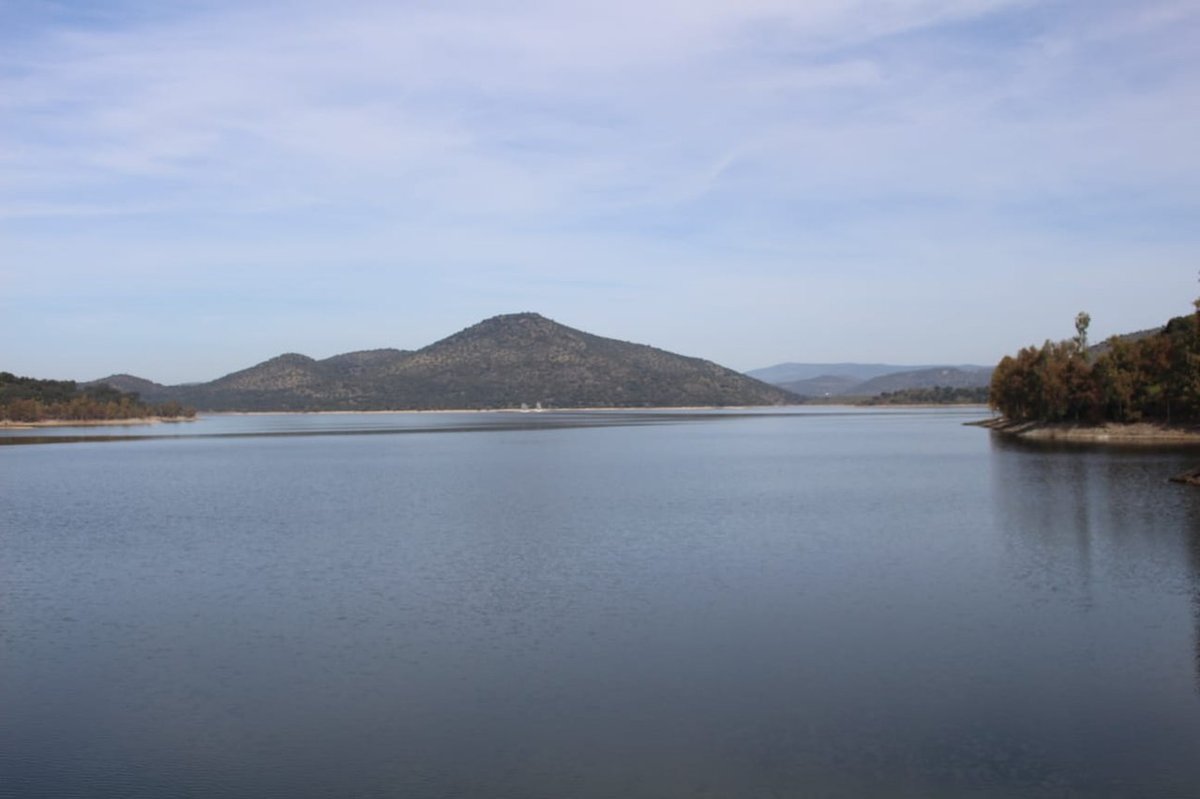
Mountain Lakes of the Serrano Fishing and picnicking at the Lagos

Best Time to Visit

spring

August Fair (August) agosto

Things to See & Do
in El Ronquillo

Heritage

  • Lakes of the Serrano
  • Church of the Divine Savior
  • Greenway

Activities

  • Fishing and picnicking at the Lagos
  • hiking the Vía Verde
  • game cuisine

Festivals
& & Traditions

Fecha agosto

Feria de Agosto (agosto), Romería (mayo)

Las fiestas locales son el momento perfecto para vivir la autenticidad de El Ronquillo.

Full Article
about El Ronquillo

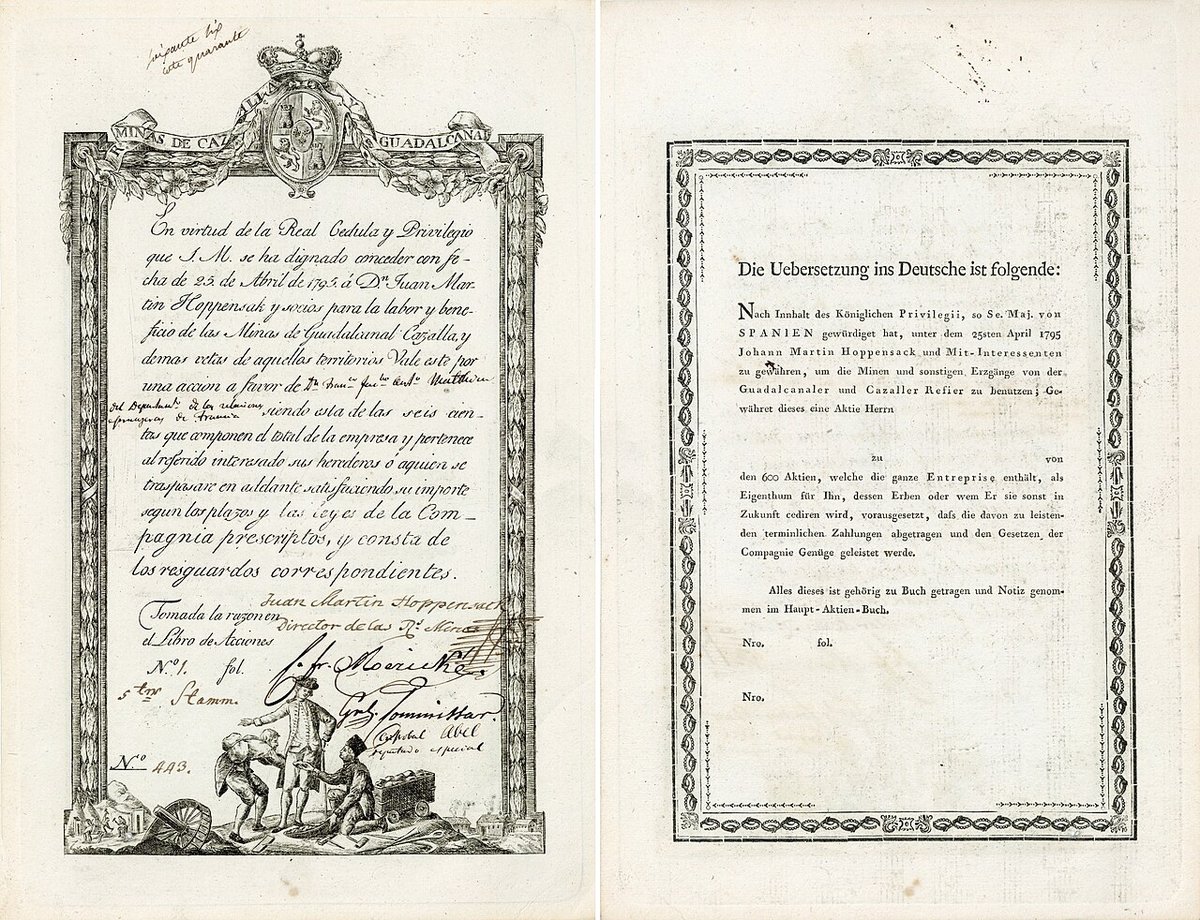
Traditional stop on the Silver Route, known for its cuisine and the Serrano lakes setting.

Ocultar artículo Leer artículo completo

The church bell tolls at 352 metres above sea level and the sound rolls across dehesa oakland that stretches clear to the Portuguese border. Stand on the Vía Verde at sunrise and you’ll count more ibex than cars; by nightfall the same track carries villagers out for a paseo, toddlers on tricycles weaving between retired farmers discussing rainfall. That contrast—wild sierra on one side, lived-in village on the other—defines El Ronquillo, a parish of barely five thousand souls parked halfway between Seville and the frontier.

A Working Landscape, Not a Pretty Picture

Forget manicured plazas and geranium pots. The main road, the old N-630, slices straight through town, so lorries rumble past the Bar Central at 07:30 while almond delivery vans unload opposite. Traffic dies after the morning rush and the place reverts to a slow tick of agricultural time: goats clank past the parish church, a tractor reverses into the Cooperative petrol station, someone’s grandfather sweeps last night’s olive leaves from the pavement. Whitewash flakes, satellite dishes sprout, life continues. It isn’t quaint; it’s real, and that honesty is what most visitors end up liking.

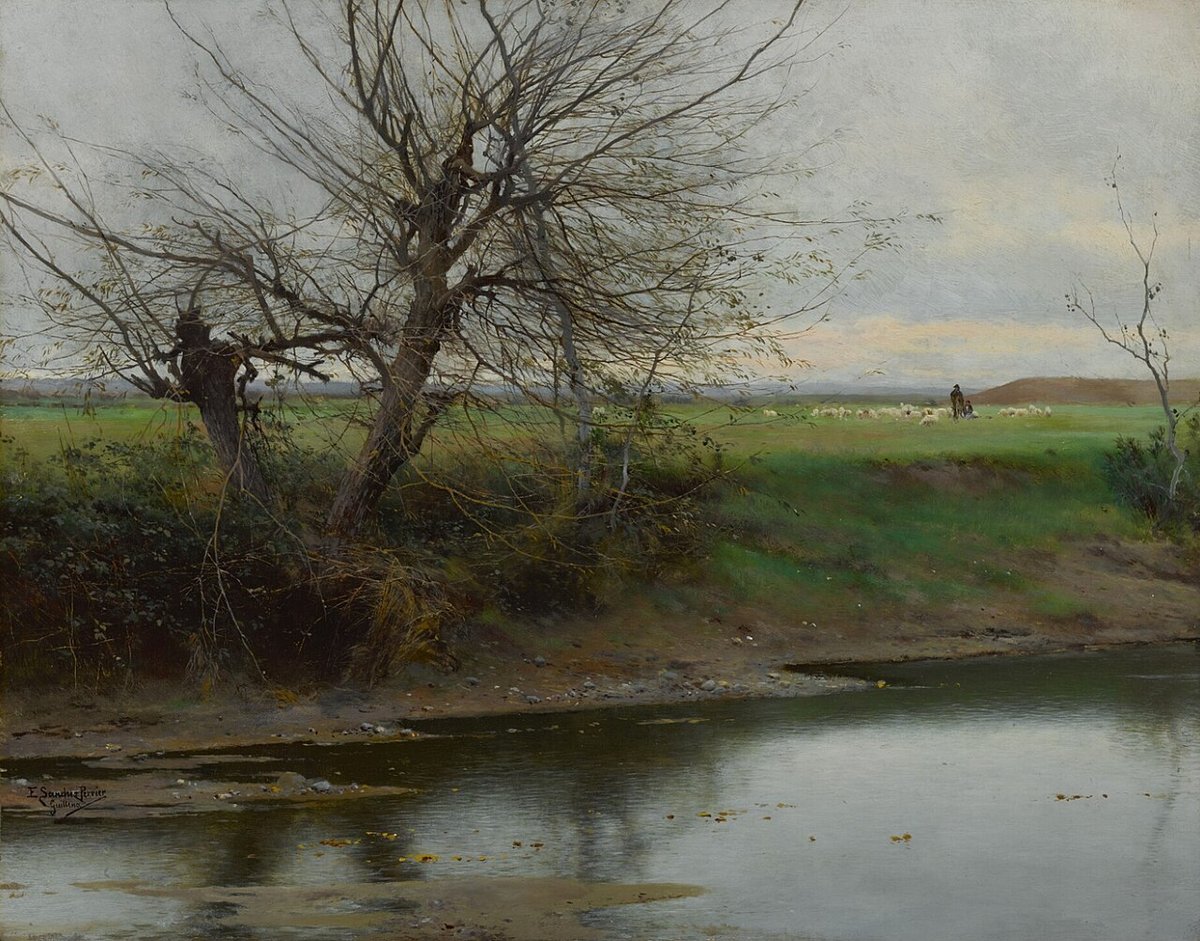
Walk fifty metres off the high street and you’re among stone pines and cork bark. The municipal boundary holds 9,000 hectares of dehesa—open oak pasture grazed by fighting-bull cattle and black Iberian pigs. Footpaths leave from the old railway station (trains stopped in 1983) and within twenty minutes you can be alone under a thousand-year-old holm oak watching kites ride the thermals. Bring binoculars: Bonelli’s eagles nest on the granite outcrops above the River Viar.

Eating What the Dehesa Produces

Lunch happens when the church clock says one. There are only half a dozen proper restaurants, so booking isn’t essential except at weekends when sevillanos drive up for mountain air. Expect a set menú del día (£10–£12) that starts with garbanzos con bacalao—salt cod and chickpeas in a gentle tomato sauce—and finishes with pestiños, honey-glazed fritters that taste like Christmas doughnuts. Meat eaters should try presa ibérica, a shoulder cut from acorn-fed pigs; it arrives pink, juicy and far cheaper than anything labelled “jamón 5J” in the capital. Vegetarians survive on revuelto de setas, scrambled eggs with wild mushrooms gathered from the Sierra Norte after the first October rains.

Evening drinking centres on Plaza de la Constitución. Tables spill from two competing bars; order a glass of manzanilla (£1.80) and you’ll usually get a free tapa of pringá—confit pork mashed into bread. Close your tab by midnight or you’ll discover the village’s main sonic drawback: cockerels start at 04:00 and donkeys answer back. Farmyards sit metres from the nearest houses; light sleepers should pack ear-plugs or choose the newer apartments near the polideportivo where double glazing masks the livestock chorus.

Moving About: Boots, Bikes, Borrowed Cars

Public transport exists in theory. Monday-to-Friday buses reach Seville in 55 minutes, but the last return leaves Plaza de Armas at 18:00—useless if you fancy dinner in town. Most Brits hire a car at the airport (50 minutes on the A-66 then the SE-630). Petrol is cheaper than the UK, parking is free, and the village layout means you’re never more than a five-minute walk from your door. Without wheels you’re stuck, so factor the rental into the holiday cost.

Cyclists can follow the Vía Verde de la Sierra Norte, a 9 km gravel rail-trail that heads north to the abandoned station of San José. Gradient is negligible, ideal for families whose children rate railways over churches. Mountain-bikers have tougher options: a 28 km loop climbs to the Puerto de San Nicolás at 600 m with views across two provinces. Summer riders need to start early—shade is scarce and the mercury touches 38 °C by noon.

Hikers have three signed routes. The shortest (6 km, two hours) circles the Arroyo de la Piedra and finishes at the Cerro del Castillo, an Iron-Age hillfort now occupied only by orchids and lizards. The longest, Sendero de la Encina Milenaria, is 12 km and demands stout footwear after rain when clay clogs boot soles. Download the Wikiloc app before you leave; waymarking is sporadic and phone signal dies in the valleys.

Water, Weather and When to Go

Spring steals the show. From late March the dehesa greens up, granite boulders glow orange after showers and the temperature hovers around 22 °C—perfect for walking without the sweat patch. May brings local fiestas: Romería de San Isidro sees tractors draped in rosemary sprigs parade to a country shrine where stewpots of rabbit and chickpeas feed half the county. Accommodation fills up, so book early if you want a front-row seat.

Autumn is quieter. Gurumelo mushrooms appear in the markets, vines along the lanes flame red and the light turns painter-soft. October half-term suits families who can take children out of school; daytime highs of 25 °C still allow pool time at the rural cottages that advertise “heated splash pools” (solar panels, so don’t expect bath-warm water after sundown).

Winter surprises newcomers. Night frosts are common, daytime 12 °C feels colder in the wind that barrels down the Viar valley. Yet skies stay cobalt and the Sierra can be snow-dusted while oranges ripen in village gardens. Hotels drop prices by 30 %; you’ll have the trails to yourself but cafés may shut mid-week—ring ahead.

Summer is a trade-off. July and August hit 40 °C; the ayuntamiento suspends hiking routes due to fire risk and the countryside smells of hot resin. Life shifts to the evenings: terraces open at 20:00, families stroll until midnight, swimming pools (public one by the school, €2.50 day pass) stay open past 22:00. If you can handle the heat, you’ll experience the Spanish art of living at siesta pace; if not, stay north of the Pyrenees until October.

A Night or a Fortnight?

El Ronquillo won’t keep adrenaline junkies busy for a week. What it offers is immersion: you wake to bells, buy bread that’s still warm, hear the baker ask after your dog even if you don’t have one. Pair two days here with Seville’s museums, or slot a mid-week stop between Córdoba and Aracena. Self-catering houses cluster on Calle San Antonio; expect three-bed cottages from £70 a night, Wi-Fi patchy, pools unheated. The only hotel in the strict sense is the three-star Hostal Rocío on the main drag—clean rooms, €55 B&B, occasional lorry hum.

Pack cash; rural bars dislike cards for orders under €10 and the nearest ATM runs dry at weekends. Bring binoculars, sunscreen and a phrasebook—English is thin on the ground. Leave behind expectations of souvenir shops or nightclubs; after midnight the loudest sound is the church clock striking the half.

Come for the landscape, stay for the rhythm. El Ronquillo doesn’t sell itself because it doesn’t need to. Whether that’s enough depends on whether you measure travel by sights ticked or by breathing space gained.

Key Facts

Region
Andalucía
District
Sierra Norte
INE Code
41083
Coast
No
Mountain
Yes
Season
spring

Livability & Services

Key data for living or remote work

2024
ConnectivityFiber + 5G
HealthcareHealth center
EducationElementary school
Housing~5€/m² rent · Affordable
January Climate9.5°C avg
Sources: INE, CNMC, Ministry of Health, AEMET

Planning Your Visit?

Discover more villages in the Sierra Norte.

View full region →

More villages in Sierra Norte

Traveler Reviews