Full Article
about Las Navas de la Concepción
Quiet mountain village, perfect for rural tourism and hunting in unspoiled countryside.
Hide article Read full article
Morning light and the shape of the town
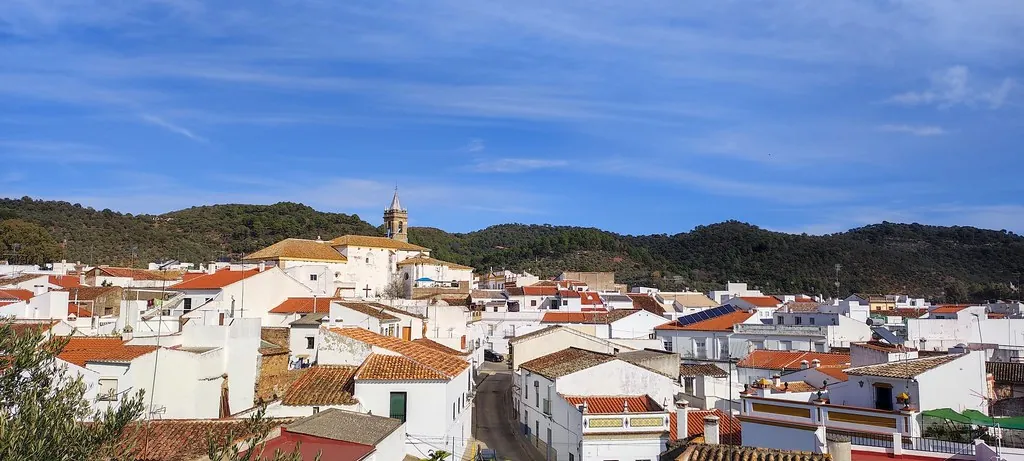
Early in the day, before the sun fully reaches the façades, Las Navas de la Concepción carries the scent of damp earth and last night’s extinguished firewood. A shutter lifts with a sharp clatter. In the narrower streets, shade lingers longer than it does in villages out on the plain. This is the Sierra Norte of Seville, where daily life follows the pace of the countryside more than the clock.
The town gathers around a gentle hill. White houses, many with black iron grilles and flowerpots resting on window ledges, form a network of short streets where cars barely fit and walking slowly feels natural. At around 400 metres above sea level, there is usually a bit of air moving, especially towards evening when it drifts down cooler from the surrounding hills.
Beyond the last few streets, the transition into open land is almost immediate. Olive groves and dehesa landscapes, dotted with holm oaks, begin without a clear boundary. Dirt tracks appear, along with low stone walls. Occasionally, the sound of a goat bell carries across the fields.
The church and the heart of the centre
At the centre stands the parish church of the Inmaculada Concepción. Its reddish brick tower is visible from most approaches and works as a natural point of reference. The building has old origins, often linked to a Mudéjar background, though later changes have left the interior quite restrained. Dark wood, worn benches and altarpieces with little decoration define the space.
Nearby streets retain features shaped by the climate. Stone doorways, deep-set iron grilles and interior courtyards offer pockets of shade even in August. Some entrances still show old tiled floors and aged ceramic details along the door frames.
Plaza de la Constitución becomes the main meeting place towards the end of the day. When the orange trees are in bloom, they release a light fragrance into the air. Benches gradually fill up. There is no rush and very little spectacle. Conversation moves easily, children cross the square on bicycles, and birds provide a constant background sound.
Open landscapes: holm oaks, olives and sky
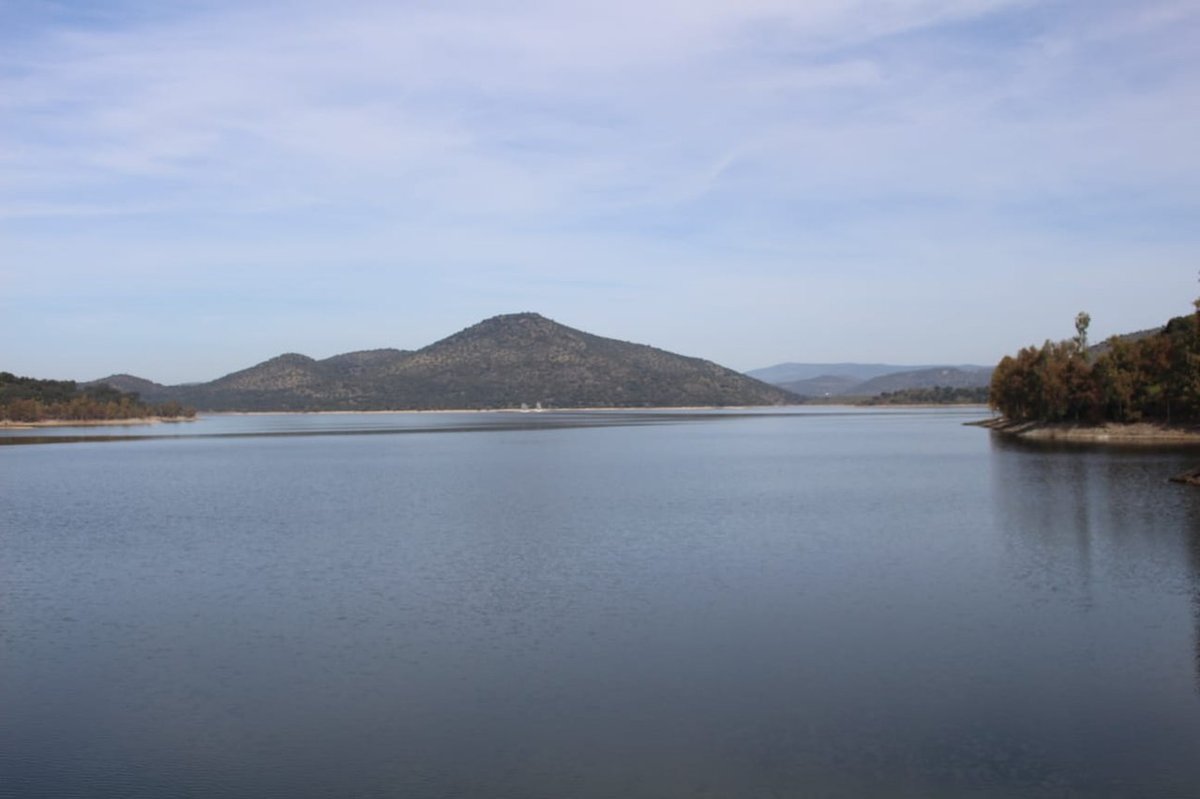
Las Navas de la Concepción sits within the Parque Natural Sierra Norte de Sevilla, and that setting becomes clear within minutes of leaving the town centre. The landscape blends olive groves with Mediterranean dehesa, where holm oaks stand spaced apart over low pasture and paths wind between rural properties.
Above, griffon vultures are often seen using the rising air currents. Booted eagles appear as well, and in spring and summer, groups of bee-eaters pass through with their sharp, distinctive calls. As for the Iberian lynx, local residents speak about it with caution. Its presence in the wider area is documented, but it is not something expected on a casual walk.
Light changes the character of the land throughout the day. In the early morning, it falls silvery across the olive leaves. By evening, everything feels denser. Long shadows stretch from the holm oaks, the smell of dry dust becomes more noticeable, and the quiet is only broken by the occasional distant tractor.
Paths leading out into the countryside
Several rural paths begin within the town itself and extend into the surrounding terrain. Some connect with former olive oil mill areas or link, after several kilometres, with routes towards other Sierra Norte towns such as Constantina and El Pedroso.
It is worth checking conditions before setting out, either at the town hall or by asking local residents. The state of the paths changes with the seasons. After heavy rain, certain sections become muddy, and signage is not always where expected.
In summer, starting early in the morning makes a difference. By midday, the sun is intense and shade is scarce among the olive groves. Early hours or late afternoon offer a more manageable experience of the sierra.
Those walking with a camera tend to notice small details along the way. Metal gates with peeling paint, stone walls covered in lichen, and long, perfectly aligned rows of olive trees fading into the distance all form part of the visual rhythm of the area.
Festivities and local customs
Local devotion centres on the Inmaculada Concepción. In December, celebrations bring much of the town together around religious events and gatherings in the streets.
In May, Cruces appear in certain corners and patios, decorated with flowers. These displays are modest in scale, usually organised among neighbours using plant pots, fabric and freshly cut blooms.
Summer brings the local feria, with casetas and music continuing late into the night. During Semana Santa, processions move through very narrow streets where most people know one another. The pasos advance slowly, passing close to the whitewashed façades.
Getting there
Las Navas de la Concepción lies in the northern part of the province of Seville, within the Sierra Norte. The usual approach is by car, following regional roads that gradually climb into the hills.