Full Article
about San Nicolás del Puerto
It's the source of the Huéznar River and the Martinete waterfalls, and has a unique river beach.
Hide article Read full article
A village shaped by water and slope
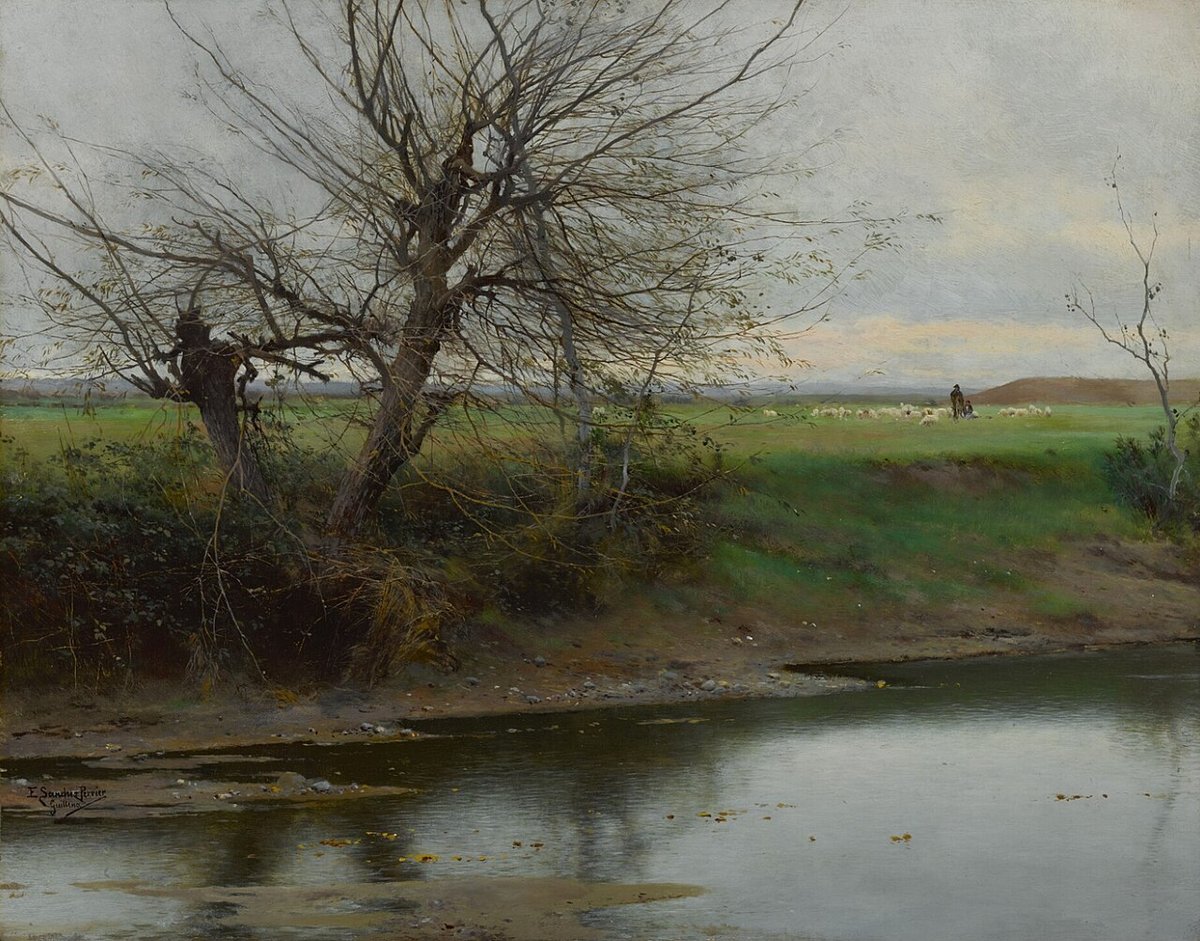
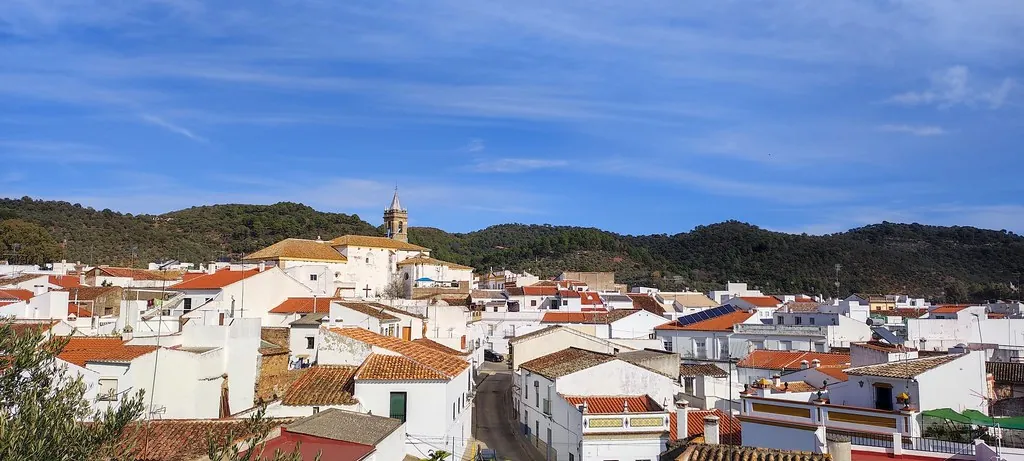
Early in the day, when the light is still grey and cool air drifts down from the sierra, the Huéznar river runs alongside San Nicolás del Puerto with a steady, glassy sound. From the road, the village appears between trees: white houses pressed along the hillside, red roofs rising and falling with the slope. The river sits close by and quietly sets the pace.
San Nicolás del Puerto has around six hundred inhabitants, a size that keeps everything within easy walking distance. The streets are uneven, with short inclines that slow your step. At times there is the smell of firewood, especially in winter, and at others the damp scent of the riverbank when the breeze comes up the valley. Many façades still show darkened wooden doors and iron window grilles that cast long shadows in the afternoon.
The church above and the open landscape
The parish church of San Nicolás de Bari stands in one of the higher parts of the village. It has been altered several times over the centuries, which is visible in its walls, where simpler sections sit alongside later additions.
From around the church, the wider setting becomes clear. To the north stretch dehesas, open pastureland typical of this part of Spain, dotted with well-spaced holm oaks and pale brown soil that crunches underfoot in summer. On clear days, large birds can be seen riding the air currents. At sunset, the light lingers over the treetops before finally fading.
The Huéznar, always within earshot
The Huéznar flows very close to the village centre, something that shapes the atmosphere. Even within the streets there are moments when the water can be heard, particularly at night when everything else falls quiet.
Following its banks reveals calmer sections where the river slows between pale stones. In spring, the margins fill with tall grasses and small flowers. By summer, the landscape dries out and colours soften, with shade concentrated beneath alders and ashes along the water’s edge.
It is worth heading down early in the warmer months. By midday, the heat settles heavily over this part of the Sierra Norte, and some paths beside the river offer little shelter from the sun.
Paths into the Sierra Norte
Several walking routes begin in the village and lead into the surrounding natural park. Some follow the course of the river, while others climb into hills covered with pines and holm oaks.
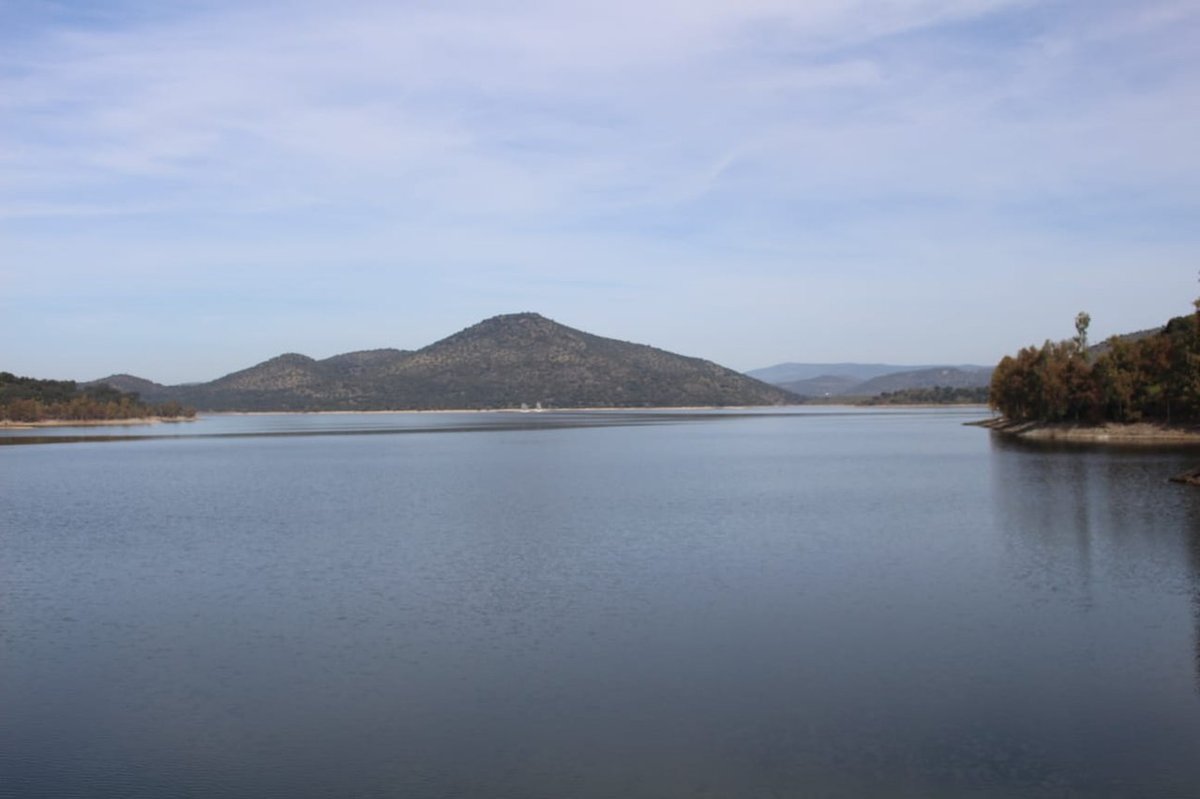
There are gentle routes that require little preparation and stay mostly on level ground. Others rise towards more open areas, where the Huéznar valley stretches out as a green band between rolling hills. The scent shifts with the terrain: pine resin higher up, damp earth near the water.
In summer, starting early makes a difference. As the day goes on, the heat intensifies and the contrast between sun and shade becomes harder to manage on foot.
Quiet mornings and passing wildlife
The first hours of the day tend to be the calmest around San Nicolás del Puerto. In autumn, low mists often gather over the river. In winter, the sky is usually clear after rain fronts have passed.
With a bit of patience, birds of prey can be seen gliding over the hills, or small movements spotted among the holm oaks. There is no need to travel far from the village. Sometimes it is enough to pause on a minor path and wait a few minutes.
Eating in the style of the sierra
Food here remains closely tied to the countryside. Products from the Iberian pig are central, and game stews appear when the season arrives. There are also honeys from the sierra and dense breads with a compact crumb.
After eating, the pace stays unhurried. A short walk nearby or a seat in the shade is often enough while the village eases into the slower rhythm of the afternoon.
A simple calendar
The patron saint festivities dedicated to San Nicolás de Bari take place in December. During those days, the atmosphere shifts, with more people in the streets, processions and gatherings that bring together long-time residents and those who return for the occasion.
Outside those dates, San Nicolás del Puerto remains quiet for much of the year. For a slower visit, spring and autumn are often the most comfortable times, with mild temperatures, fewer cars and the river carrying more water after the rains.