Full Article
about Alcalá la Real
Historic town dominated by the Fortaleza de la Mota; crossroads of cultures with a rich monumental heritage.
Hide article Read full article
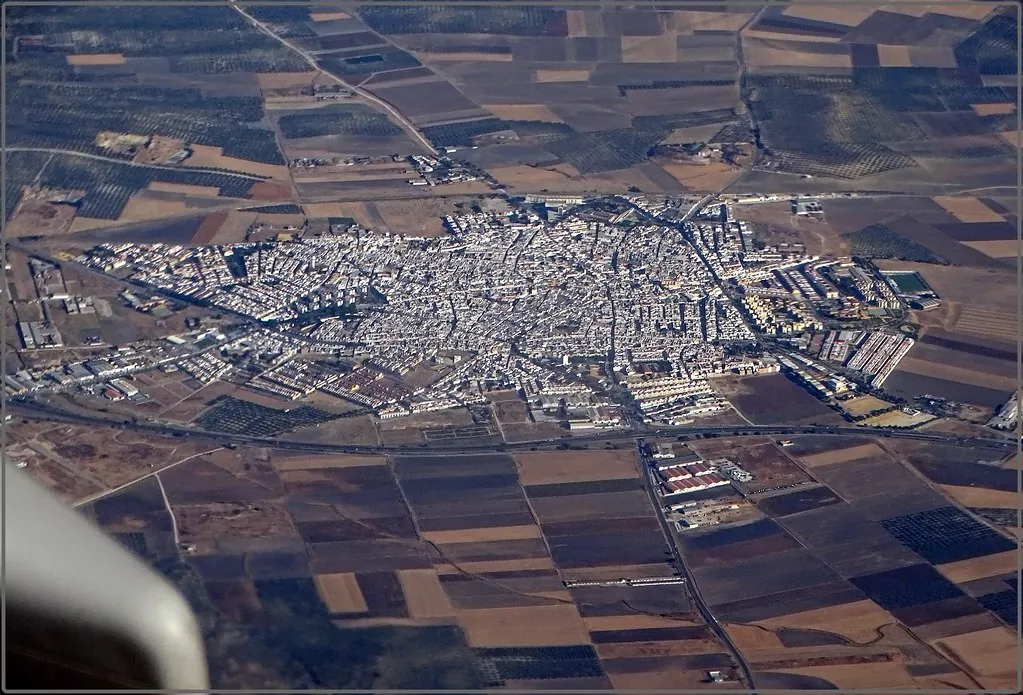
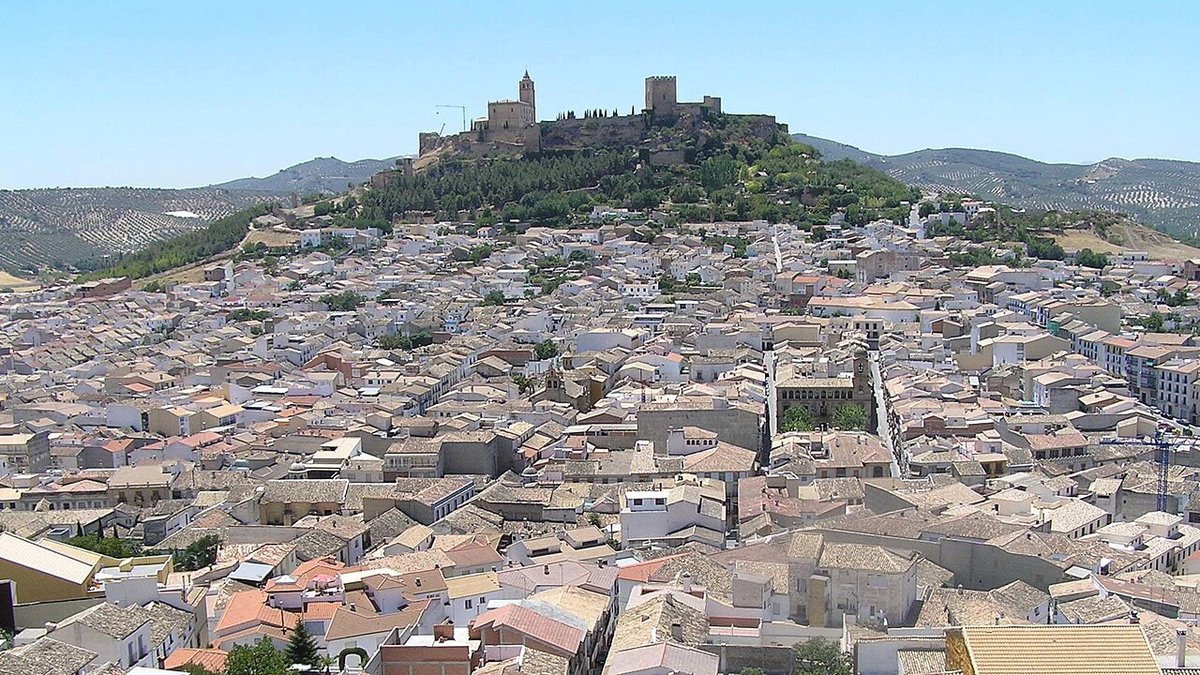
At eight in the morning, when mist still clings to the slopes of the Sierra del Potro, the smell of freshly baked bread drifts down the Santo Domingo hill. Metal shutters rise with a crash that echoes off the stone walls of the Fortaleza. From above, Alcalá la Real looks like an uneven mosaic of reddish roofs and steep streets spilling towards the olive groves.
This is a town shaped by height and horizon. Everything seems to slope, climb or look outwards.
The stone that watched it all
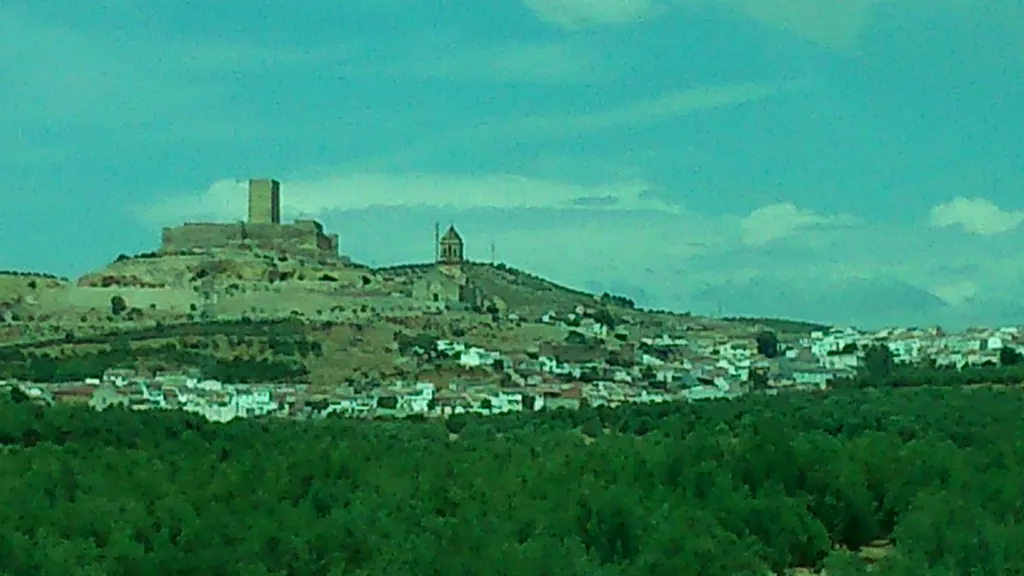
The walk up to the Fortaleza de la Mota is long and steady. It makes itself felt in your legs. The path winds uphill to the plateau where the old walled city once stood. For centuries this was frontier territory, first under Muslim rule and later Castilian, and that history is still visible in the way the site is organised around watching the landscape.
The keep, square and solid, stands out against the sky. From the top, the Velillos valley opens in every direction, covered by what looks like a sea of olive trees. Their colour shifts with the light: pale grey in the morning, deeper green when the sun falls directly on them.
In one corner of the fortress there is a large Islamic-era cistern. A narrow passage leads down to it. The temperature drops suddenly and the noise from outside disappears. Rainwater gathers in silence beneath the vaults, as it has done for centuries. The space feels self-contained, cut off from the wind that moves across the plateau above.
It is best to make the climb early in the day or towards late afternoon. At midday, especially in summer, the sun is strong and there is very little shade inside the enclosure.
When the bells set the pace
The Iglesia de Santo Domingo de Silos stands on the site of a former mosque. After the Christian conquest of the city in the mid-14th century, work began on the church that now occupies the centre of the old town.
Inside, the air carries the scent of warm stone and candle wax. In the afternoon, when the sun sits lower, light passes through the rose window and falls onto the floor in a circle of colour. Older residents sometimes watch that reflection closely. They say that when the light reaches near the baptismal font, the weather is about to change.
A few streets away, in the Plaza de las Angustias, the former Franciscan convent keeps a different rhythm from the rest of the town. Enclosed nuns still live there. If you ring the bell, a small wooden hatch sometimes opens from inside and a box of almond sweets appears. The voice comes from within, though the person speaking is rarely seen. It is a brief exchange, almost entirely without faces, that has changed little over time.
Throughout the historic centre, bells mark the hours and drift across the rooftops. They travel easily over the slopes and narrow streets, folding into daily routines.
The taste of the outlying villages
The municipality of Alcalá la Real stretches far beyond the main town. Numerous small villages lie scattered among olive groves and low sierras. In some of them, cooking still follows patterns set when agricultural work dictated the timetable of the day.
Choto al ajillo often appears at family gatherings and village fiestas. The goat meat is cut by hand and cooked slowly in local olive oil with crushed garlic and sometimes a little wine. The smell lingers on clothes for hours.
Migas here have their own character. They are made from several-day-old bread, dampened and worked in a frying pan until the texture turns loose and crumbly. Panceta or chorizo is usually added and, when in season, something sweet is served alongside, grapes or melon. It is a dish often eaten mid-morning, once work in the fields has begun but the day is still long.
These meals are closely tied to the surrounding land. Olive oil, bread, grapes: the same elements that shape the view from La Mota also shape what arrives at the table.
When the town dresses for celebration
During Semana Santa, Holy Week in the days leading up to Easter, processions move through narrow streets with noticeable gradients. The religious floats, known as pasos, advance slowly because some corners are tight and in certain stretches there is barely room for the procession to pass. The dominant sound is the steady beat of the drum setting the pace.
On some routes, when night has fully fallen, lighting is minimal. The scene is illuminated almost entirely by candlelight, which throws moving shadows onto the façades and the stone beneath.
In September, the annual feria takes place. For those days, activity shifts to the fairground area on the road out towards Córdoba. There is also usually a romería linked to the Virgen de la Mota, a pilgrimage-style gathering in which people walk up towards the fortress area. The atmosphere combines tradition and family reunion: groups making the ascent together, shared wine, long pauses in the shade when the heat intensifies.
Siesta time and small details
Spring weather changes quickly here. A day can begin in sunshine and end with a short storm that leaves the asphalt dark and the smell of damp earth hanging between the streets.
On Tuesdays, a market is usually held in the Plaza de Andalucía. People come down from nearby villages with produce from the countryside. If it has rained in previous days, wild mushrooms from the sierra sometimes appear on the stalls and sell out fast.
August has two sides. The heat presses down and the town fills with those returning to spend a few days with family. Streets become livelier and louder. For a quieter atmosphere, June or early autumn are often better times to visit.
At sunset, the Mirador del Cerro de la Cruz offers a view over the entire urban area. As the light fades, the rooftops shift in tone and the town seems to gather into itself beneath the outline of the Fortaleza. The slopes, the towers and the olive groves beyond settle into shadow, while the last light lingers on the highest stone.