Full Article
about Algámitas
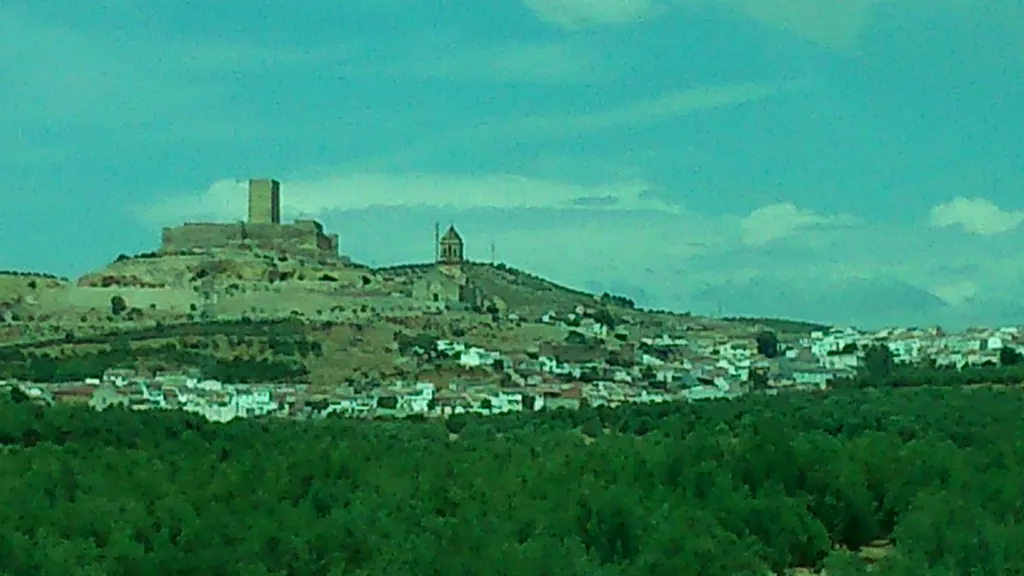
Mountain village at the foot of Peñón de Algámitas, offering some of the best natural scenery in the province.
Hide article Read full article
A village that turns down the volume
Some places feel like turning the volume down on the car radio. Everything slows, and details that once slipped by start to come into focus. That is the effect of Algámitas.
Tourism in Algámitas is not about vast monuments or queues for photos. It is about walking without hurry in a place where the countryside still sets the rhythm. The village sits in the Sierra Sur of Seville province, at around 600 metres above sea level, and has just over 1,200 residents. The small population shapes daily life. Streets are quiet, like a Sunday afternoon in a modest neighbourhood. Here, the olive harvest still acts as the clock that organises the year.
The appeal is straightforward. Streets rise and fall gently, the sort of slopes that make you slow your pace without quite noticing. From many corners, the same landscape repeats itself: olive groves stretching across the hills in a green-grey blanket.
Walls that tell their own story
Architecture in Algámitas is practical. Whitewashed houses, thick walls, little ornamentation. Everything points to a village built around work.
The Iglesia de Santa Ana, constructed in the 16th century, presides over the main square. It is not an imposing structure. It resembles an old tool that has kept doing its job for centuries: simple, solid, without excess decoration. Inside, Baroque altarpieces remain, along with an old carving of the saint.
A walk through the historic centre feels like stepping into a home where the furniture has not been rearranged in years. Not because it has been neglected, but because everything still has its place. The Plaza de la Constitución acts as a meeting point. Benches line the space, neighbours stop to talk, wrought-iron balconies look down onto the street.
Nearby stands the Pilarejo, a fountain that for many years served as a gathering spot where people came to collect water. Today it is hard to picture that daily routine. The idea belongs to another era, like rewinding a video cassette once did.
At the edges of the village, the landscape opens out. Hills covered in olive trees form a mosaic that shifts in tone with the light. At sunrise and sunset the countryside softens. The effect is subtle, more like watching a calm sea than witnessing a dramatic display.
Footpaths through the olive groves
Exploring the surroundings means walking. Trails leave the village and wind between farms and low hills. Some routes are gentle strolls, the kind where conversation carries you along without noticing the distance. Others require stronger legs.
One of the better-known routes is the Sendero de los Olivares Milenarios. It passes by long-established olive farms where traditional methods are still in use. A walk here clarifies something that is easy to miss from the road. In Algámitas, the olive grove is not a scenic backdrop. It functions as the rural equivalent of a factory in a city.
Local food follows the same logic. Dishes are simple and filling. Migas appear on the table, as does gazpacho when the heat sets in. When winter arrives, homemade sweets take their turn. Extra virgin olive oil features in almost everything. It is added generously, in the way someone at home might say “pour a good splash” without measuring.
From time to time, visits or activities linked to the village’s history or to agricultural work take place. These depend on the local calendar, so it is wise to check in advance. Algámitas does not run on a constant programme of events.
Traditions rooted in the land
Festivities follow both the religious and agricultural year. At the end of July, the patron saint celebrations in honour of Santa Ana fill the streets. Processions, music and a lively atmosphere take over the village. The feeling is less that of a spectacle designed to draw outsiders and more like a neighbourhood festival where everyone eventually crosses paths.
Semana Santa also has its moment. The processions are modest in scale. They pass through narrow streets, and the neighbours know exactly who is carrying each float. There are no elaborate productions. Familiar faces matter most.
In December, a celebration usually takes place around the olive. The timing makes sense. When the harvest season begins, the village revolves around the groves, much as an industrial town revolves around factory shifts.
Getting there and choosing your moment
Algámitas lies a little over 100 kilometres from Seville. The usual route is via the A-92 towards Granada, followed by the turn-off onto the A-361, which climbs into the hills.
By car, the journey takes around an hour and a half. Public transport connections exist, though they are not frequent. This is one of those places where having a car makes exploring the area much easier.
Spring and autumn are often the most pleasant seasons. The countryside feels alive and temperatures are comfortable. Summer heat can be intense, as in much of the Sevillian countryside. Winter brings a quieter atmosphere. At times it can feel very quiet if you are looking for activity. For anyone seeking a slower pace, that stillness is part of the appeal.
Algámitas does not try to compete with larger destinations. It offers something simpler: a village shaped by olive trees, steady routines and a landscape that repeats itself until you start to notice the differences.