Full Article
about Fuensanta de Martos
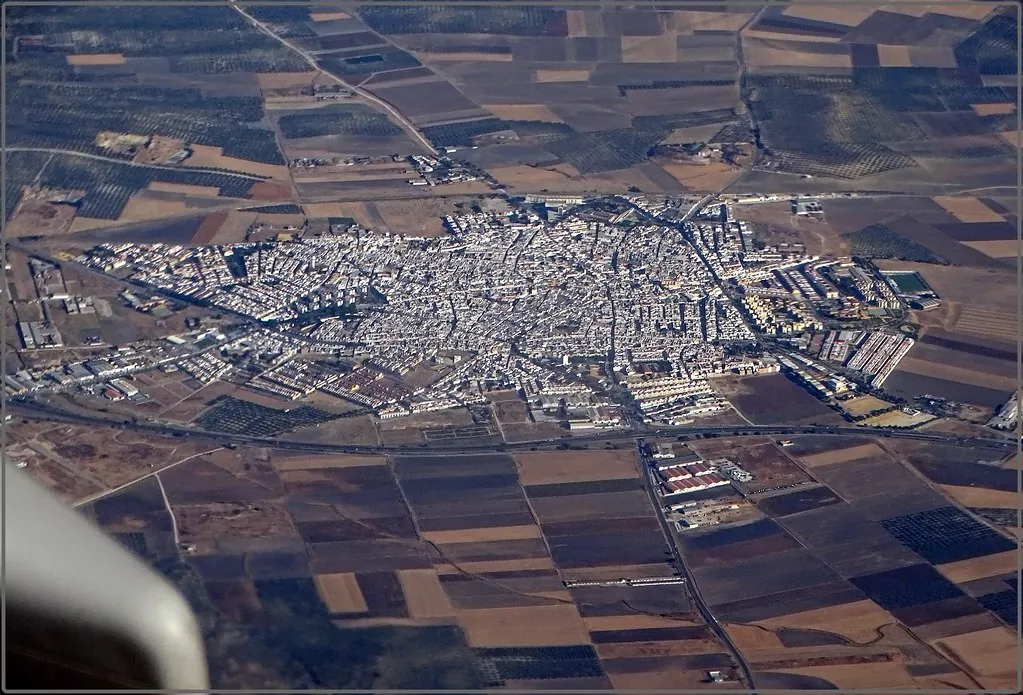
A town surrounded by olive groves and hills, known for the Fuente de la Negra and its natural setting.
Ocultar artículo Leer artículo completo
At 07:30 the church bell on Calle Iglesia strikes once, then twice, and every dog in the village seems to answer. From the mirador outside the Hostal Banderas you can watch the olive sea below turn from pewter to green while the first tractors cough into life. Fuensanta de Martos never promised drama; it offers this instead: a horizon-wide hush broken only by diesel engines and the clink of coffee cups in Bar Nuevo.
The village that climbs its own hill
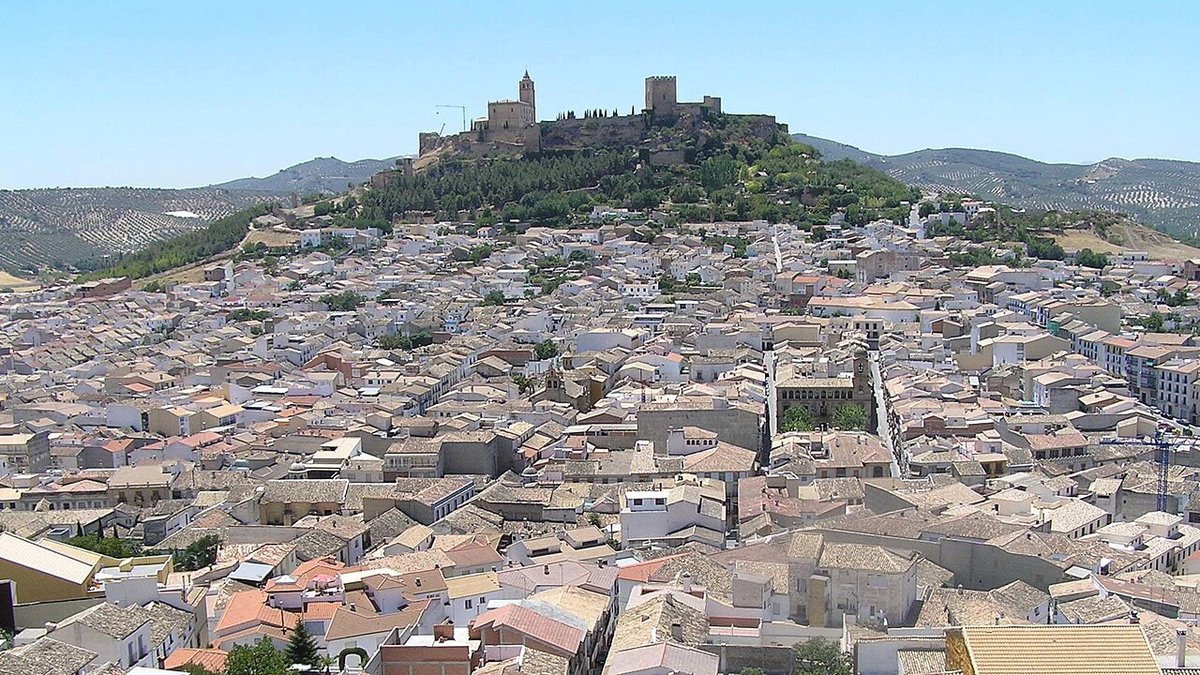
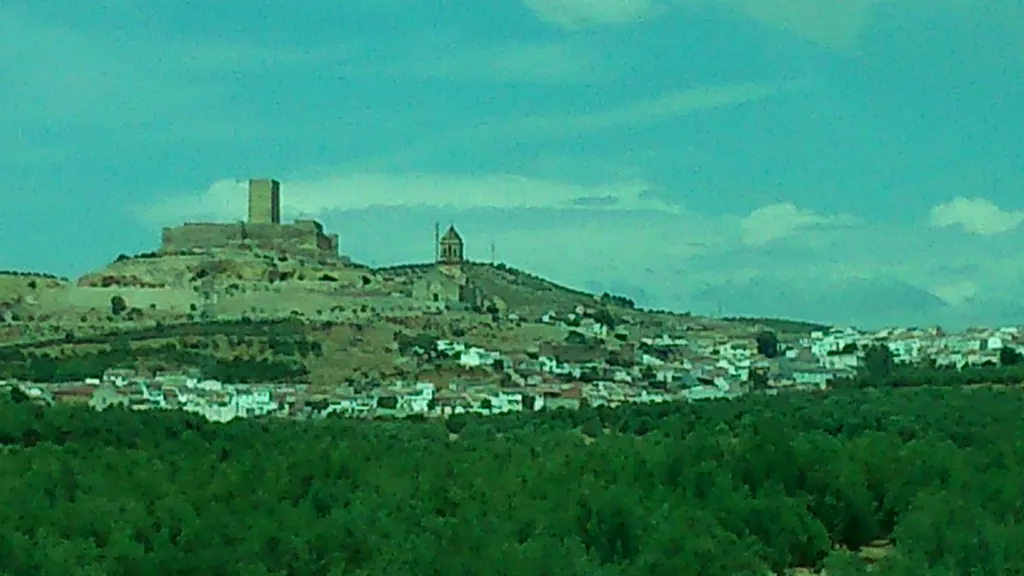
The place is essentially a staircase with roofs. Houses are glued to a 725-metre ridge; what the tourist office calls “picturesque” is, for residents, a daily calf workout. Streets have gradients that would shame a Sheffield hill-start lesson. Park at the upper plaza and walk down: it saves reversing up cobbled lanes later. Whitewash glares under the April sun, but the walls are thick; interiors stay cool without the ecological guilt of air-conditioning units humming all day.
The parish church, Nuestra Señora de la Fuensanta, sits at the top like a referee keeping order. It is 19th-century, neoclassical, unlocked only for mass and Saturday-evening bell practice. Step inside and the smell is textbook countryside Catholic: beeswax, floor polish, last week’s lilies. No charge, but a discreet box hopes for a euro towards roof tiles. From the small tower you can pick out the Despeñadero, a limestone scar that locals use as a weather gauge: when the cliff disappears in cloud, pack an umbrella.
Walking among billion-year-old trees
Leave the village by the signed Camino de la Umbría and you are inside the world’s largest man-made forest—olive groves from here to Jaén. Many trees were planted in the 1850s; their trunks have the cracked armour of medieval armour. Waymarks are painted white-yellow-white; the surface is stony, ankle-twisting stuff, so boots beat sandals. A four-kilometre loop drops to the Arroyo Salado and climbs back past an abandoned stone almazara; wild rosemary brushes your shins and the only soundtrack is cicadas and your own breathing. September brings harvest: tractors towing plastic crates crawl along the terraces and the air smells of crushed olives—bitter, green, almost metallic.
Cyclists can join the same network of caminos. Gradient profile is honest: nothing alpine, but 200-metre gains every few kilometres. Hire bikes in Martos (10 km) at Andalucía Activa; they will deliver if you promise to keep to rural tracks rather than the A-316. In July and August start before eight; by eleven the thermometer kisses 36 °C and the tarmac softens.
What arrives on the plate
Order lunch in Bar Nuevo and the menu del día still costs €9.50—soup or salad, flamenquín (a breadcrumbed ham-and-chicken roll the size of a truncheon), pudding and half a bottle of house red. The oil in the ceramic cruet is DOP Sierra de Segura; pour it over everything, locals do. If you prefer tasting without the carbs, drop into the cooperative on Calle San Roque on Wednesday mornings: three oils, three glasses, bread for cleansing. No charge, but they expect you to buy a bottle afterwards (€7–€10, half UK supermarket prices).
Evenings follow a pattern that hasn’t shifted since Franco’s day. Families stroll the upper plaza at eight; teenage boys practise wheelies; the single ice-cream kiosk opens at nine and shuts at eleven sharp. For something stronger try Casa Paco on the corner of Calle Real—grilled morcilla, mild goat cheese with honey, fino sherry at €2 a glass. Do not expect craft gin or tonic served in a goldfish bowl; the optic measures are Andalusian-generous and conversation fills the gap left by mixologists.
Fiestas without the coach-party crush
The big date is 15 August, Romería de la Fuensanta. A statue of the Virgin is carried downhill to a picnic meadow, followed by the entire village and one brass band that appears to know only two marches. After mass, everyone eats sardines grilled on cane stakes and drinks rebujito (fino sherry with 7-Up) until the return procession at sunset. Visitors are welcome—someone will lend you a plastic chair—but beds disappear months ahead. Easter week is quieter: three processions, no incense-thick Seville crowds, and you can follow the cross-bearers at arm’s length without being photographed by 200 smartphones.
Arrival, sleep and the cash question
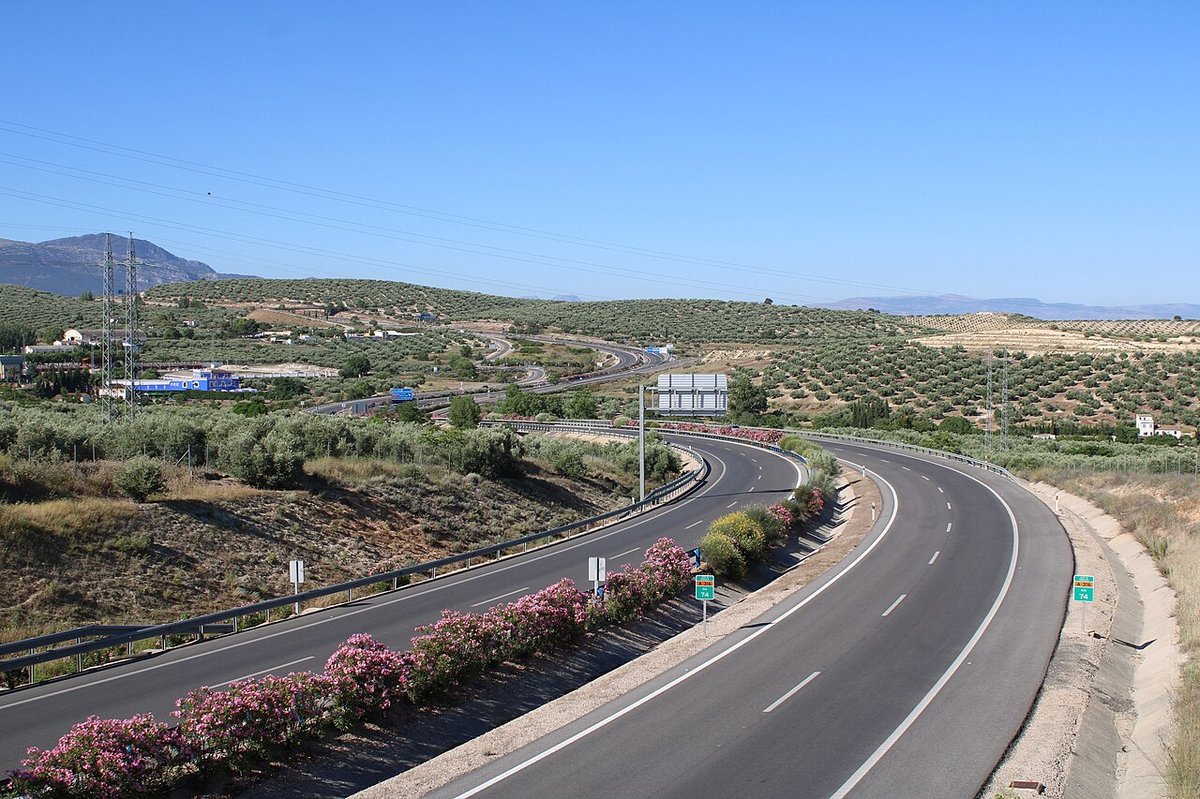
Fuensanta has no station. Fly to Málaga, collect a car, head north on the A-45 and then the A-316; the turn-off is signposted “Fuensanta de Martos” between two filling stations. Journey time from airport: 1 hr 45 min if you resist the temptation to photograph every bend. Public transport exists but feels theoretical: twice-daily ALSA coaches from Jaén, last return 19:00, no Sunday service.
The only beds in the village are at Hostal Banderas (12 rooms, €45 double with balcony over the olive carpet). Rooms are plain—white walls, terracotta floor, TV the size of a laptop—but spotless and the Wi-Fi reaches the roof terrace. If that is full, the 17th-century Palacio de los Salcedo in Martos offers four-poster beds and a pool from €85; British weekenders use it as a base for Jaén’s castle circuit.
Plastic is patchy. Bars prefer cash; the village cash machine sometimes runs dry on Saturday night. Bring euros or pay the 1.50 € withdrawal fee at the petrol station on the main road.
When to come, when to stay away
April–June and mid-September–October give 22–26 °C days, 12–15 °C nights, almond blossom or harvest colour depending on the month. Rain is possible—short, thundery, useful for clearing dust. July and August are for lizards and mad dogs; walking after 10 a.m. is reckless, and even the village swimming tank in nearby Martos feels like soup. Winter is crisp, often 5 °C at dawn; the reward is empty trails and wood-smoke curling from chimneys, but fog can lock the village in for days and rural hotels shut in January.
Parting shot
Fuensanta de Martos will not change your life. It offers no souvenir tat, no flamenco spectacular, no Michelin stars. What it does provide—olive-scented dawns, thigh-burning lanes, a cold beer for two euros—works best if you arrive with time rather than expectations. Turn up, walk until the only noise is your pulse, then time your return for when the church bell calls the village to eat. That rhythm has sustained 3,000 people for centuries; it will keep you happy for a long weekend.