Full Article
about Herrera
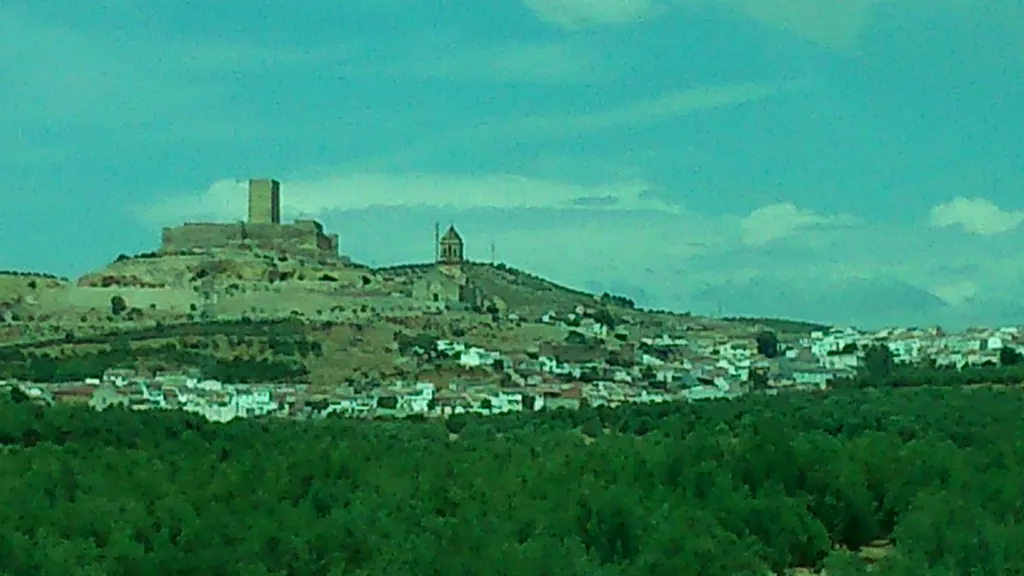
Municipality at a geographic crossroads with Roman baths and an olive-growing tradition.
Hide article Read full article
A morning that starts gently
The smell of freshly baked bread hits as soon as you step out of the car, just as the sun begins to warm the bricks of the square. It is nine in the morning and tourism in Herrera usually begins like this, with the town easing into the day as if still stretching after sleep.
Shutters open slowly across the streets. A man crosses the road with a newspaper tucked under his arm and a woollen hat on his head, even though the air has already turned mild. The bakery door is left ajar and the sweet scent of dough blends with the first coffees of the day. At that hour, every footstep still echoes clearly on the pavement.
There is no rush here. The rhythm settles in quietly, almost without being noticed, and sets the tone for everything that follows.
Light across fields and stone
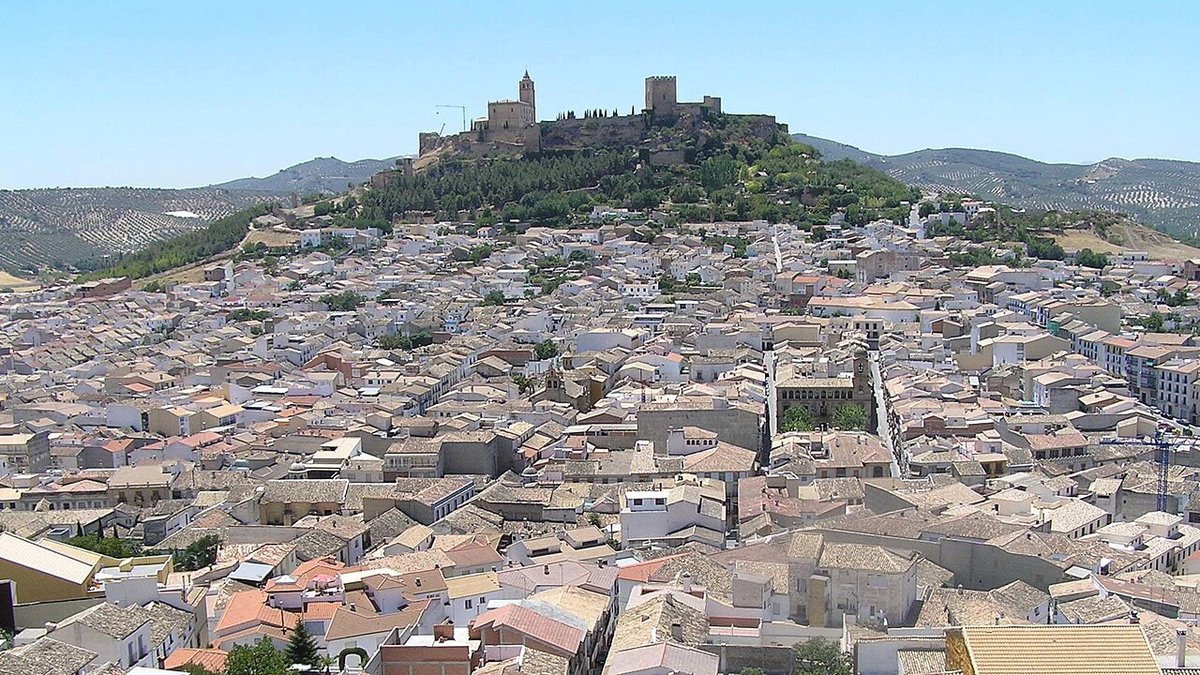
From the atrium of the church of Santiago el Mayor, the surrounding Campiña unfolds in waves of wheat fields and olive groves. On clear days, the light falls almost horizontally across the land, and the olive leaves catch it in silvery flashes that shift with the breeze.
The church tower has shaped the skyline of Herrera for centuries. Inside, a gilded altarpiece sits half concealed in a dimness that smells of wax and aged wood. Sometimes someone is sweeping or cleaning at an unhurried pace, and the soft scrape of the broom carries across the space, making the building feel larger than it looks.
This is not a grand or imposing church. Its scale is closer to domestic: well-proportioned naves, thick pillars, simple niches. Outside, the sun casts sharp shadows over the Plaza de Santiago. The stone benches still hold the coolness of the night, and it is common to find a cat stretched out in the warmest spot.
The contrast between light and shade, between open fields and enclosed interiors, defines this part of the town. It is a place where nothing feels exaggerated, and that sense of measure shapes the experience.
Traces beneath the fields
A short walk from the centre leads to the Roman thermal complex discovered here decades ago among farmland. The site sits slightly apart, surrounded by fields and scattered trees that cast uneven patches of shade across the low walls.
Parts of the mosaic floors remain, with black and white tesserae arranged in geometric patterns. When you crouch down and place a hand near the surface, the stones hold a slow, lingering warmth, different from the heat of the town’s asphalt. It is easy to picture what this place might once have been, filled with steam and the constant movement of water.
Today, the atmosphere is far quieter. Swallows dart in and out beneath the edges of the structures, insects hum through the summer air, and somewhere in the distance a tractor works the nearby plots. The setting feels suspended between past and present, without trying to reconstruct or dramatise what once stood here.
It is best approached early in the day or towards evening. At midday, the sun falls directly over the site and shade becomes scarce, leaving the space exposed and still.
When the town gathers
Towards the end of April, around the feast of San Marcos, the atmosphere shifts noticeably. During those days, many people return to Herrera to spend time with family, and the town fills with movement and noise.
Cars line the streets, squeezed into every available space. The smell that defines the morning changes too. Bread gives way to rosemary, glowing embers and food prepared outdoors. The air carries traces of cooking and celebration in equal measure.
In the Plaza del Ayuntamiento there is usually music, children running back and forth, and groups meeting again after months apart. Older residents talk about how these gatherings used to be decades ago, when most people lived here throughout the year.
As night falls, the air cools slightly, though the ground still holds the heat of the day. Churros appear, along with the sharp scent of fireworks and that constant murmur that fills a town when everyone is outside at once. It is not a staged event but a shared rhythm, something that belongs to those who return as much as to those who never left.
The slow hours of afternoon
After lunch comes the quietest part of the day. Many shutters close again and the streets empty almost completely. The only sounds are televisions playing behind closed windows and the occasional firm slam of a door.
Walking through Herrera at this time has a sense of enforced pause. Dogs settle into the shade beneath benches, a bicycle passes along the main street, and from an open window comes the smell of cooking or soap.
In summer, it is best to avoid walking between three and six in the afternoon. The heat lingers between the façades and the air barely moves. The town seems to retreat indoors, waiting for the temperature to ease before life returns outside.
This pause is part of the daily rhythm rather than an interruption. It divides the day into distinct halves, each with its own pace and character.
Arriving and choosing your moment
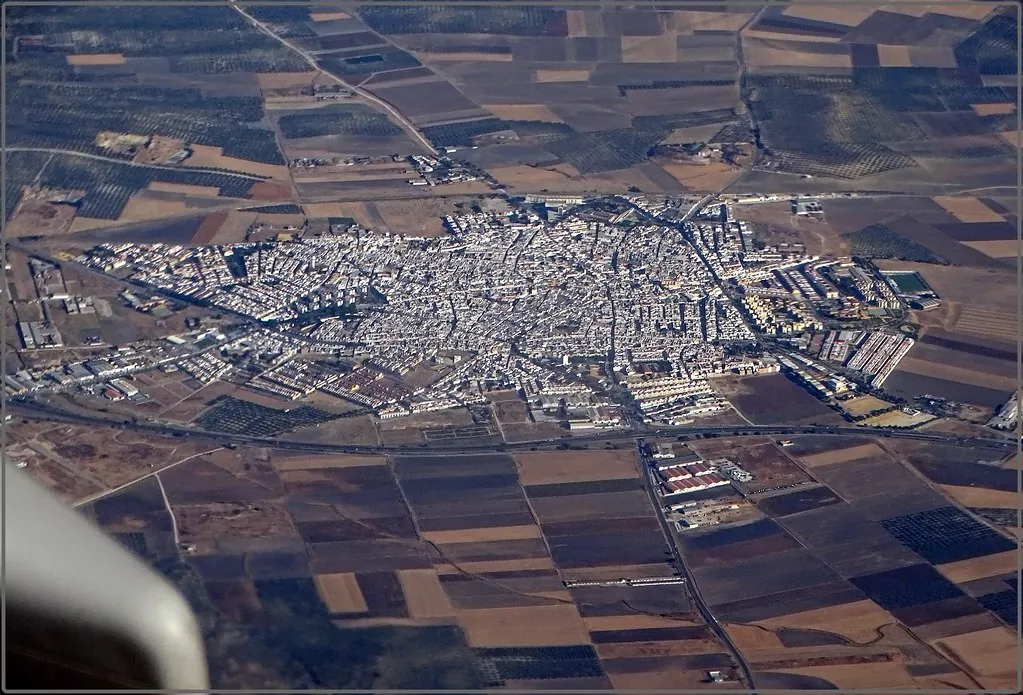
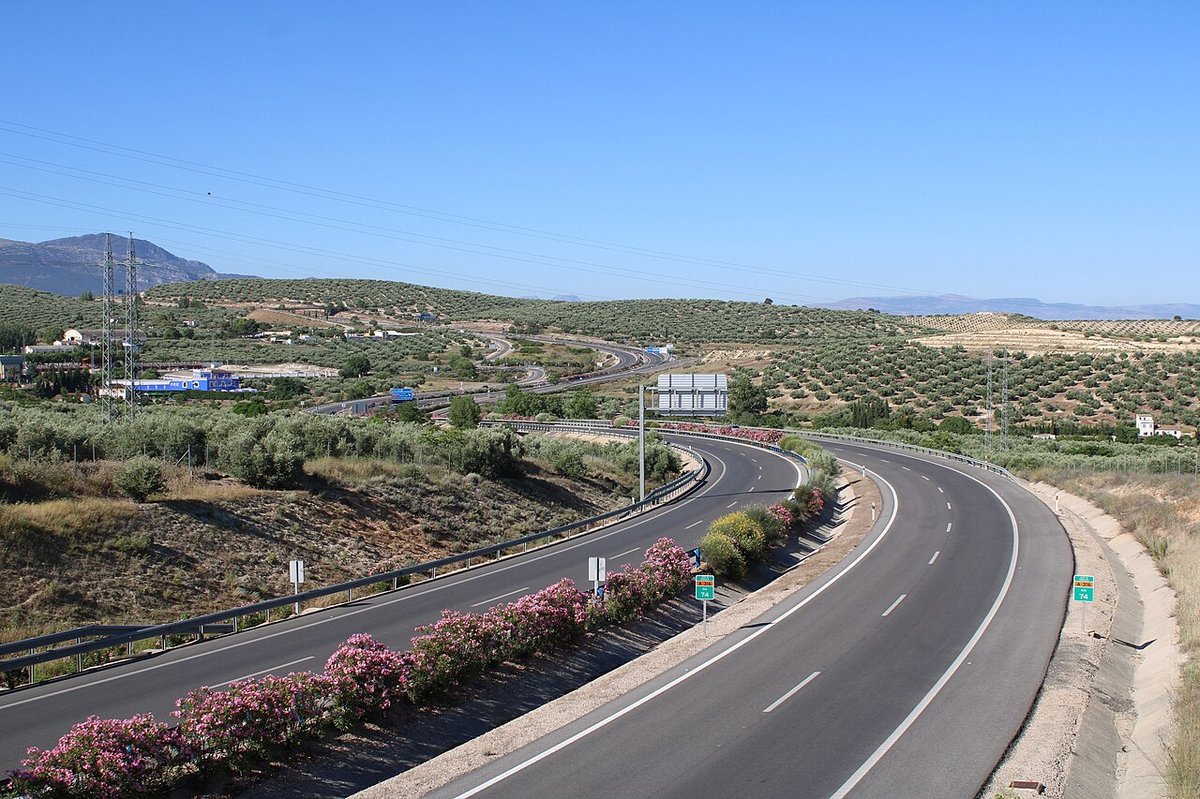
Herrera lies in the Sierra Sur of Seville, within an open stretch of countryside where roads cut through cereal fields and olive groves. Most visitors arrive by car from the nearby main road, then move around the centre easily on foot.
Spring is often the most inviting season. The fields remain green, and the wind moves through the wheat in a way that resembles waves. In autumn, the landscape shifts in tone, and the olive groves take on a muted grey sheen as the light lowers.
In August, the local feria takes place and the town becomes noticeably busier at night. Those looking for quieter moments might prefer another time of year or simply start the day early.
When it is time to leave, Herrera recedes quickly once you rejoin the road: the church tower, a few agricultural buildings, and then open countryside again. The town does not try to draw attention to itself. It stays as it is, moving at its own pace, with mornings that smell of warm bread. For many, that is reason enough to remember it.