Full Article
about La Roda de Andalucía
Rail and road hub with a railway museum and olive-growing surroundings.
Hide article Read full article
A stop on the route east
For more than a century, trains travelling between Seville and Granada have stopped at La Roda de Andalucía. That detail says a lot about the place. For a long time, this was an important point of passage across this stretch of countryside, a natural corridor towards the eastern interior of Andalucía.
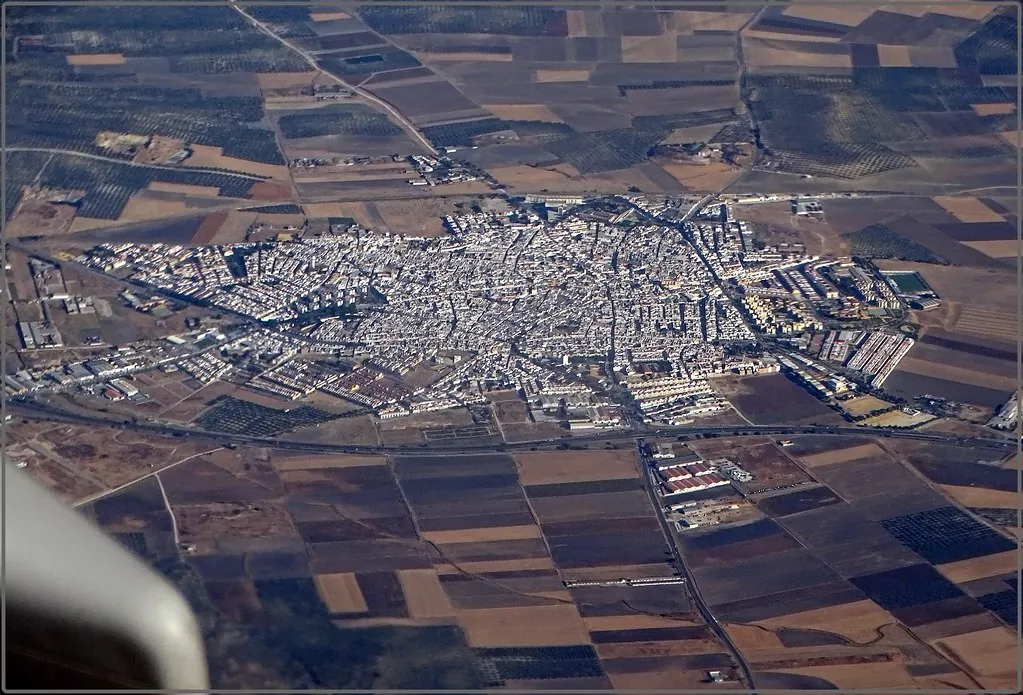
The town stands at around 460 metres above sea level, set on a gentle plateau. From here, the surrounding terrain opens out, giving a clear sense of movement through the landscape. This position helps explain both its origins and the traces of different periods that can still be sensed in the town centre.
La Roda is not large, but its setting has always mattered. Roads, fields and distant horizons all seem to converge here, reinforcing its role as a place people pass through, pause in, and continue from.
A church where a fortress once stood
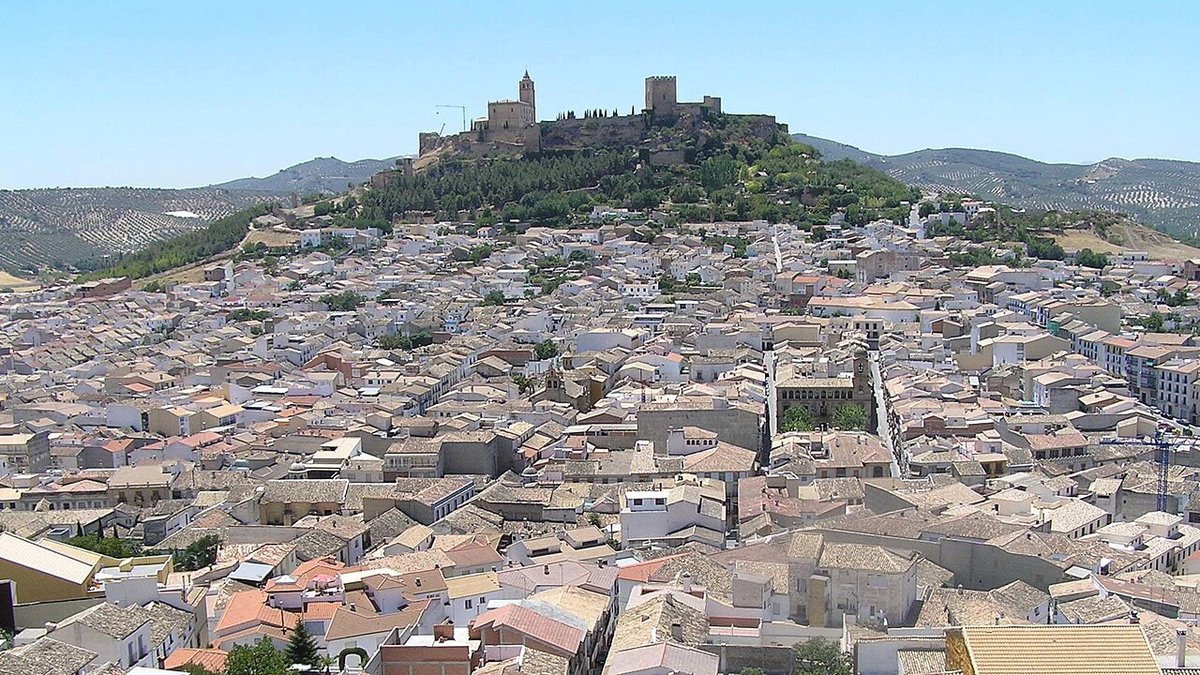
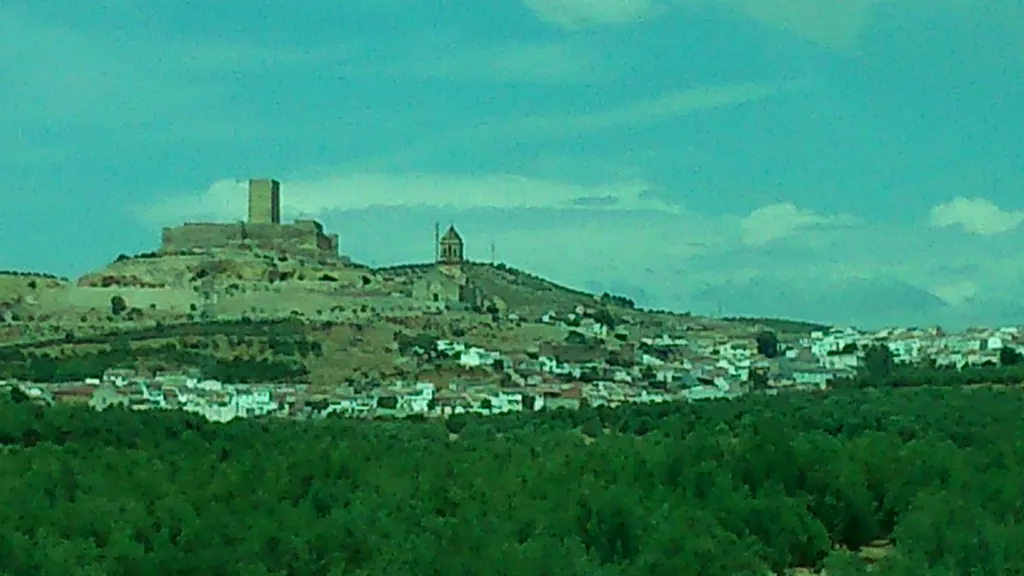
In the 11th century, a Muslim fortress occupied the highest point of the town. Nothing of it remains today. Over time, it disappeared, and on that same site the parish church was built.
The current building dates from the 16th century, although later alterations are easy to spot. Its most striking feature is the bell tower, which still reflects the strategic importance of the location. From the top, the road from Osuna can be seen clearly, along with the wide plain surrounding the town. On especially clear days, it is even possible to make out the area of the Fuente de Piedra lagoon to the east.
Inside, the church is restrained in style. It has a single nave and balanced proportions, with a late Baroque altarpiece that avoids excessive decoration. The main place is held by the town’s patron saint, Nuestra Señora de la Encarnación.
What stands out most is not the decoration but the continuity of use. A Christian church occupies the exact spot where an اسلامی defensive structure once stood, a pattern found across much of Andalucía. The location has retained its importance even as its purpose has changed.
A title earned in uncertain times
In 1476, during the War of the Castilian Succession, the town made a risky decision. It opposed the Marqués de Villena, who controlled much of the surrounding territory at the time. For a small settlement, this was not a minor stance.
Local tradition holds that this resistance was later rewarded by the Catholic Monarchs. From that episode comes the title “Muy noble y muy leal” (Very noble and very loyal), which is still associated with the municipality.
The town’s coat of arms reflects this history. It features a castle with closed gates and the initials R and F, commonly understood as a reference to “Roda Fuerte”. These symbols remain part of the town’s identity today, appearing in official and local contexts.
Olive groves and a nearby lagoon
The municipality is almost entirely covered by olive groves. The surrounding countryside is open and orderly, with long plots of land and straight agricultural tracks cutting through them. Scattered farmhouses, or cortijos, appear across the landscape, many of them dating from a period of expansion in the 19th century.
A short distance away lies the Fuente de Piedra lagoon, one of the best-known inland wetlands in Andalucía. Although it belongs to a different მუნიციპალ, it forms part of the wider environment around La Roda and shapes the character of the area.
In winter and spring, the lagoon attracts large colonies of water birds. Flamingos are among the most recognisable species found there. Their presence gives this otherwise dry agricultural setting a contrasting natural element that changes with the seasons.
Within the municipality itself, historic cortijos such as La Gloria, El Mesto and El Cerrillo still appear along rural tracks. Some continue in use, while others stand isolated among the olive trees, reminders of older forms of land organisation and rural life.
Daily life in the town
Life in La Roda de Andalucía centres on the Plaza de Andalucía. This is where the town hall is located, along with a bandstand and several benches that fill up in the late afternoon as the temperature drops.
The town has just over four thousand inhabitants, and its commercial life reflects that scale. There are small shops, essential services and bars where most customers are local residents. There is no infrastructure designed specifically for tourism, and that absence shapes the overall pace.
Visitors who arrive tend to spend their time walking through the streets of the centre. Some houses stand out for their size, with large gateways and coats of arms on their façades. These features point back to families who prospered through agriculture and the wine trade in the 19th century.
The atmosphere is steady and familiar rather than oriented towards visitors. What draws attention is not a single landmark but the way the town functions day to day, with routines that have changed gradually rather than abruptly.
Getting there and moving around
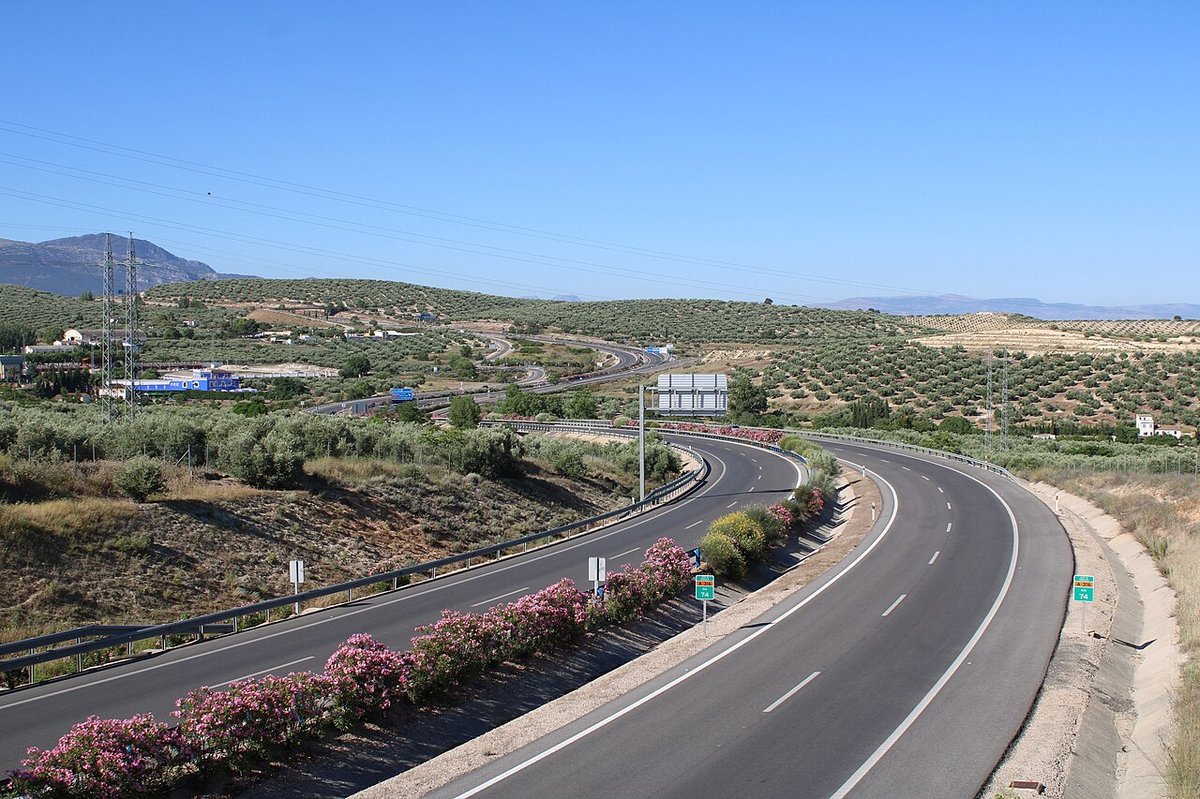
La Roda de Andalucía has a railway station on the line connecting Seville and Granada, with regional trains stopping there. It is also easily reached by road via the A‑92.
The town itself can be explored on foot in a short time. Beyond the built-up area, several agricultural paths follow the course of the Arroyo Salado, running between olive groves and small holdings. These routes are not marked as tourist trails, but they are commonly used by local residents for walking.
From almost anywhere in the municipality, the silhouette of the bell tower is visible. It continues to mark the centre of the town, much as that same ارتفاع once served as a lookout point over the surrounding land.