Full Article
about Lora de Estepa
Small town at the foot of the sierra with natural caves and olive-growing tradition near Estepa
Hide article Read full article
A small town shaped by the land
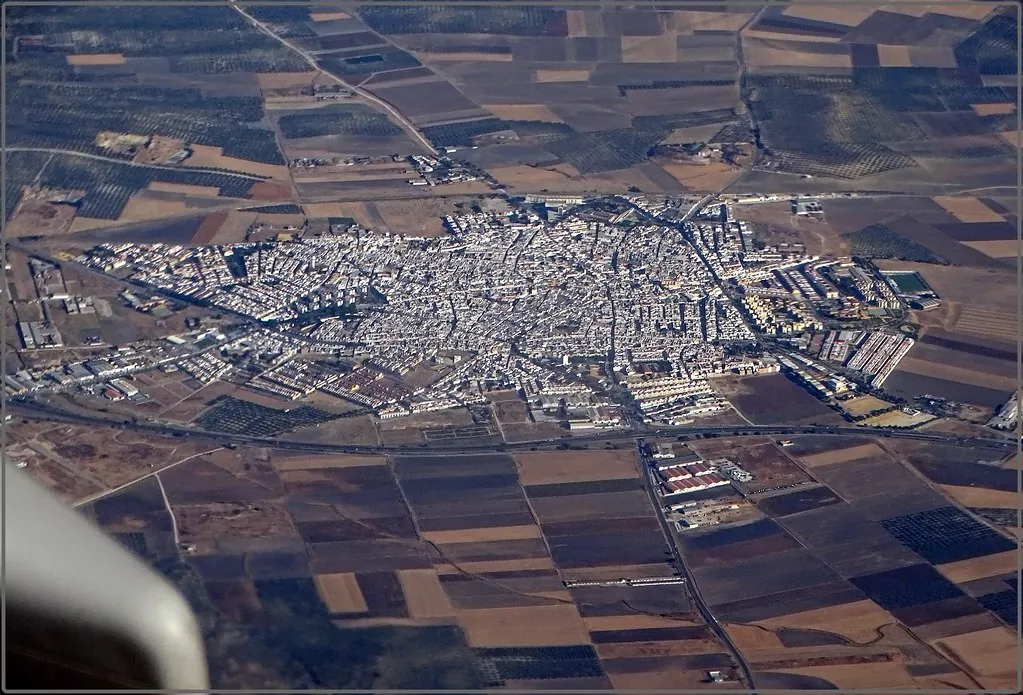
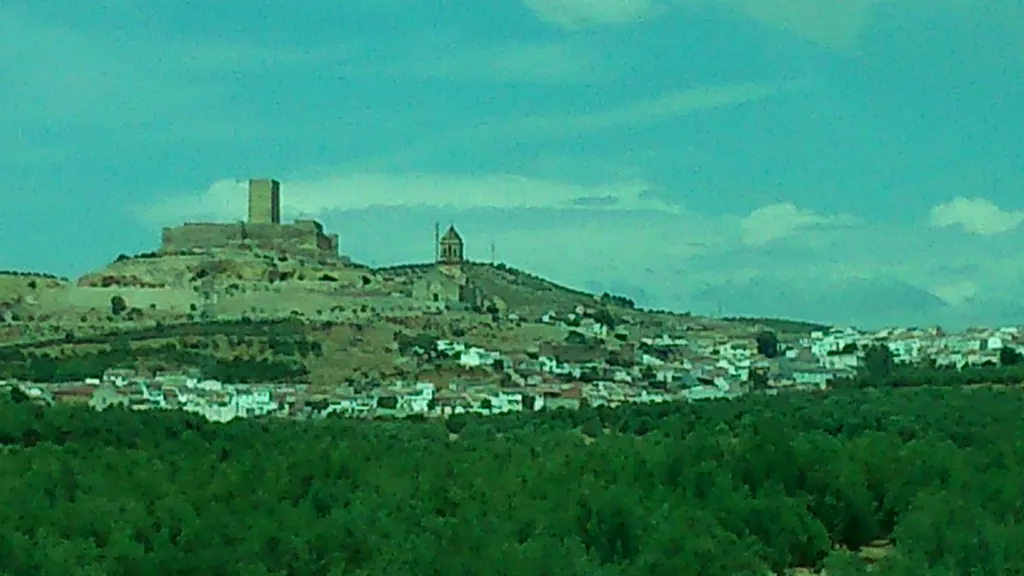
Tourism in Lora de Estepa is closely tied to its setting in the Sierra Sur of Seville, near the boundary with Córdoba. This is a small municipality, with fewer than a thousand residents, surrounded by an expanse of olive groves that stretch across almost the entire horizon. The layout of the town reflects this agricultural setting: narrow streets, whitewashed houses and a compact cluster of buildings that sits on a gentle rise.
Life here moves at a pace more typical of rural countryside towns than of established tourist destinations. There are no major monuments or infrastructure designed for large numbers of visitors. Instead, the town offers a calm, lived-in atmosphere, where the street pattern and daily routines remain closely linked to farming and the annual cycle of the olive harvest.
Around the church of San Miguel
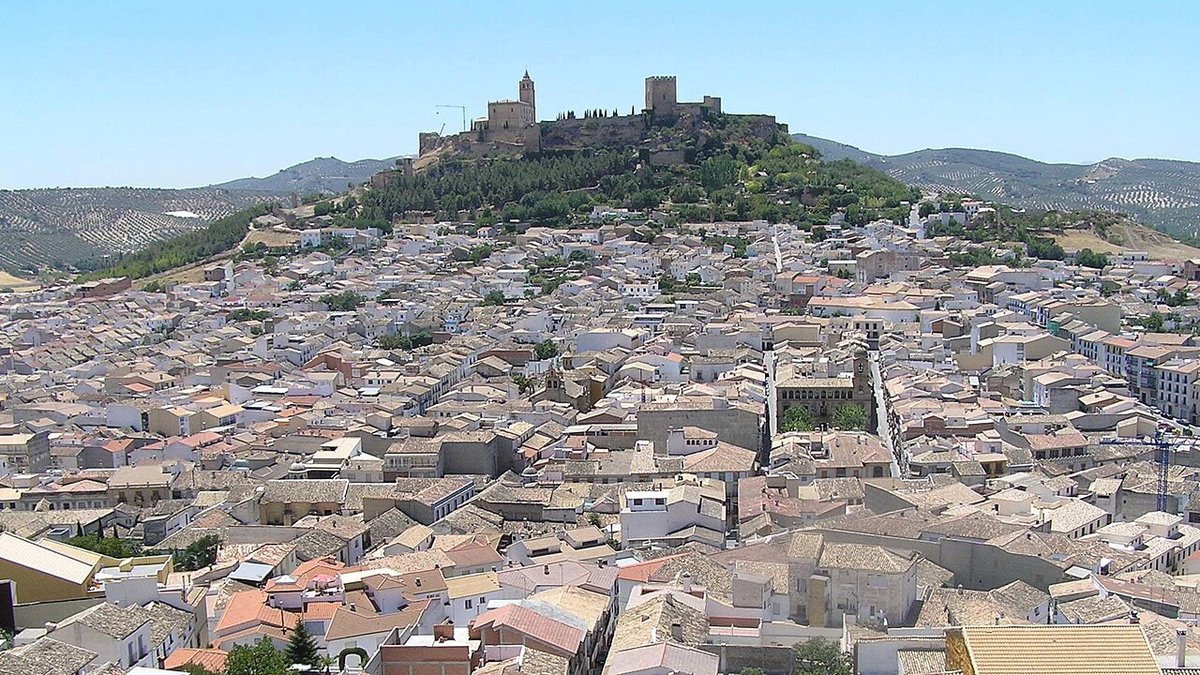
The centre of Lora de Estepa is organised around the church of San Miguel. The building seen today is the result of several phases of alteration, something common in rural Andalusian churches where extensions and repairs have taken place over centuries. From various points in the town, the tower stands out above the low rooftops and acts as a visual reference.
The surrounding streets retain the traditional structure of the settlement. Houses are typically one or two storeys high, many with an entrance hall and an internal courtyard, a layout adapted to both climate and everyday life. Some façades still feature iron grilles and decorative doorways dating back to the 17th and 18th centuries, a period when agriculture in the surrounding area provided a relatively stable local economy.
Interest here lies less in individual landmarks and more in the overall fabric of the place: a compact townscape shaped by practical needs, climate and agricultural work.
An uninterrupted olive landscape
What defines Lora de Estepa above all is the landscape that surrounds it. The municipality is almost entirely covered by olive groves, spreading over gently rolling terrain without sharp changes in elevation. On clear days, the Subbéticas mountains can be seen in the distance, forming a soft backdrop beyond the fields.
A network of agricultural tracks leads out from the town into this landscape. These paths connect farms, estates and neighbouring villages, and although not all are formally signposted, they have been used for decades as part of everyday rural activity.
Walking along these routes gives a clear sense of how the area functions. There are cultivated plots, scattered cortijos, which are traditional rural farmhouses, and a web of tracks that supports daily life in the countryside. The environment is consistent and open, shaped almost entirely by olive cultivation.
Close ties with Estepa and the Sierra Sur
Lora de Estepa forms part of the same cultural and economic area as Estepa, located just a few kilometres away. Historically, the two towns have maintained a close relationship, both in terms of trade and access to services.
From Lora, it is easy to reach other towns in the Sierra Sur of Seville. The landscape changes very little between them, remaining dominated by olive groves, but each settlement has its own scale and character. Estepa, for instance, is known for its more visible Baroque heritage and for a long-standing confectionery tradition recognised across Andalucía.
Lora de Estepa presents a much quieter and more everyday profile in comparison, with fewer outward attractions and a stronger sense of routine local life.
Festivals and everyday traditions
The annual calendar of celebrations follows patterns typical of towns in the Andalusian countryside. The patron saint is the Virgen de la Antigua, and the main summer festivities are dedicated to her. At this time of year, many people who have moved away return to the town, giving these celebrations a strong community focus.
Semana Santa, or Holy Week, is also observed, although on a smaller scale than in larger nearby cities. Processions pass through the central streets, drawing mainly local residents and families rather than large numbers of visitors.
During spring, activities linked to the Cruces de Mayo take place, a traditional celebration in which decorated crosses are displayed, often in courtyards or small squares. These events tend to be organised at neighbourhood level and reflect a more intimate, community-based way of marking the season.
Visiting Lora de Estepa
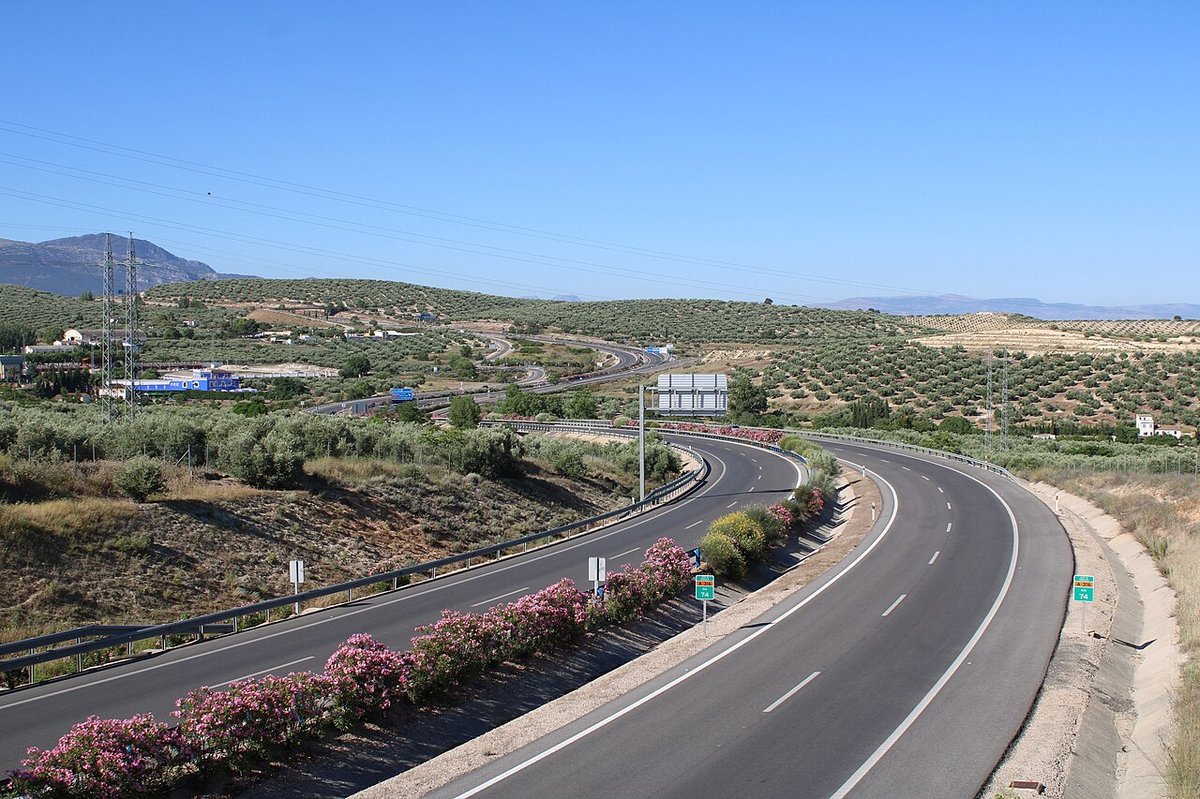
Lora de Estepa lies close to the A-92 motorway, the main route connecting Seville with Granada. The drive from Seville usually takes a little over an hour. The town itself can be explored at an unhurried pace in a short amount of time, which is why it is often best approached as part of a wider route through the surrounding area.
Spring and autumn are generally the most comfortable seasons for walking in the countryside around the town. In summer, daytime temperatures can be intense, as is typical of inland Andalucía. Comfortable footwear is useful for anyone planning to follow the rural tracks that extend beyond the town centre.
Lora de Estepa does not revolve around tourism, and that is precisely what shapes the experience of being there. Its appeal lies in the continuity of daily life, the presence of the olive groves and the steady rhythm of a place that remains closely tied to its land.