Full Article
about Morón de la Frontera
City of the Gallo de Morón, with a major air base, a castle, and a tradition of flamenco and lime.
Hide article Read full article
Between the Campiña and the Sierra Sur
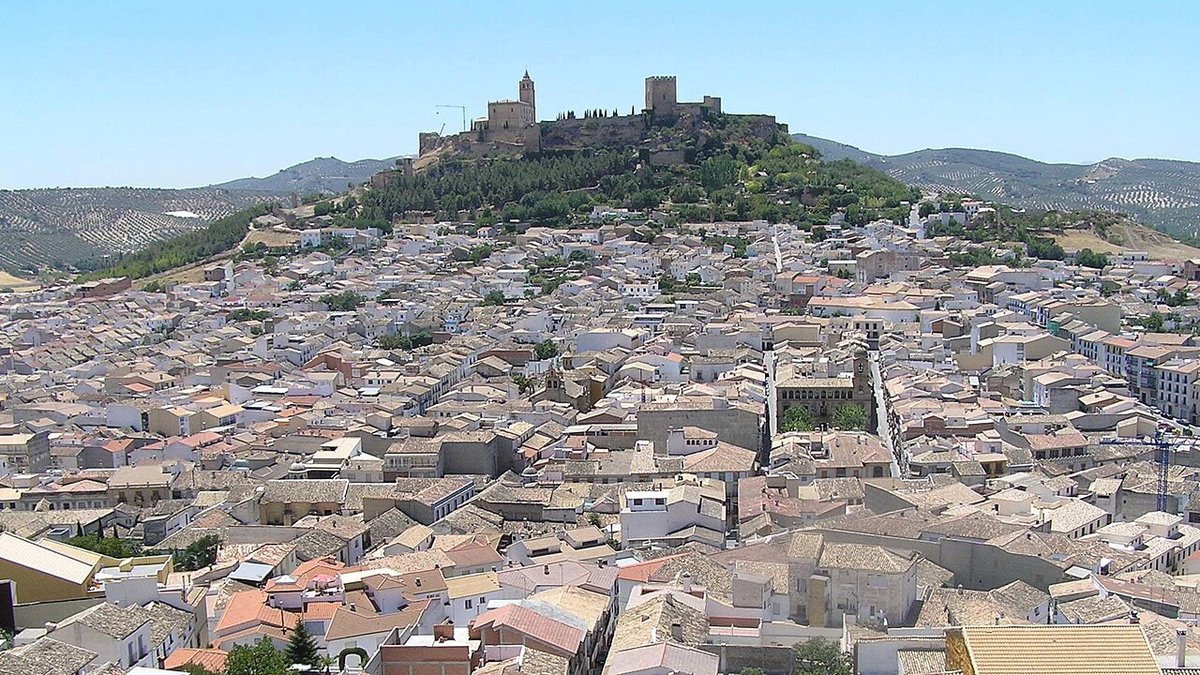
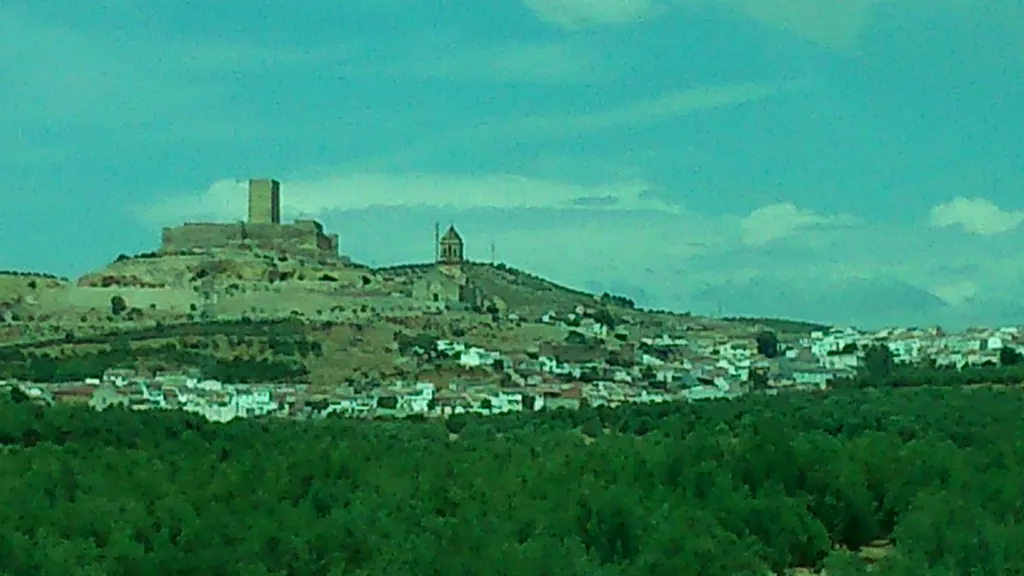
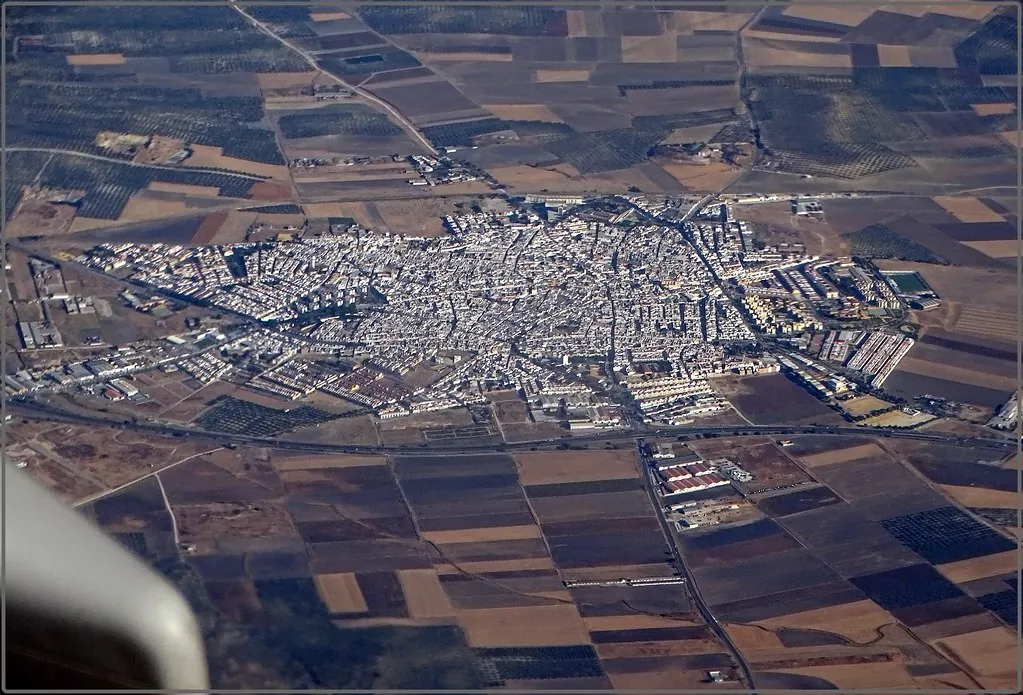
Tourism in Morón de la Frontera begins with geography. The town lies at the eastern edge of the Sevillian campiña, where the flat agricultural plain starts to ripple towards the Sierra Sur. For centuries this was a place of passage, a threshold between farmland and the routes leading towards the Serranía de Ronda. That frontier role explains much about its history and even its shape: a cluster of white houses leaning against a hill crowned by the remains of a fortification.
In the 19th century the arrival of the railway reinforced Morón’s agricultural importance. Olive oil and cereals from the surrounding countryside travelled along this line towards Seville. The setting has barely changed in essence. The landscape around the town is still dominated by olive groves stretching as far as the eye can see, a continuous green-grey expanse that defines daily life and local industry.
The Hill That Makes Sense of It All
Morón is best understood from above. A walk up to the Cerro del Castillo, about twenty minutes on foot from the centre, reveals the layout clearly: the sea of olive trees, the whitewashed houses climbing the slope and, at the summit, fragments of the old fortress.
There was occupation here as early as Roman times. The site is often identified with the Arunci mentioned in certain classical sources, although historians do not always agree on the exact location. During the Andalusi period the settlement appears under the name Murún. After the Christian conquest the hill retained its defensive value. The fortress was badly damaged during the Peninsular War in the early 19th century, and today what remains are mainly stretches of wall and the aljibe, the underground cistern that once stored water.
From this height the tower of the church of San Miguel also dominates the skyline. The current parish church dates from the 18th century and reflects a restrained Baroque style typical of many churches in the Sevillian countryside. Its tower, visible from much of the surrounding area, deliberately echoes better-known Sevillian models. Inside, there is a main altarpiece in a neoclassical style and several processional images closely tied to local religious life, particularly during Holy Week and other annual celebrations.
The climb itself helps to piece together Morón’s story. The defensive past, the agricultural plain and the later religious architecture are all visible at once, framed by the constant presence of olive trees.
Flamenco and Summer Nights
For decades Morón has maintained a close relationship with flamenco. The festival known as Gazpacho Andaluz takes place in summer and forms part of the established calendar of flamenco recitals in western Andalucía. It began in the 1960s, driven by local enthusiasts, and over time many leading figures of flamenco singing and dance have appeared on its stage.
The name brings together two elements rooted in the area: flamenco and a summer cuisine based on olive oil, bread and vegetables from the campiña. Gazpacho, the cold soup that gives the festival its name, is closely associated with the hot months in southern Spain. During the festival days the atmosphere centres on the main square and on interior patios where performances and informal gatherings are held. These often continue until the early hours, reflecting the social rhythm of Andalusian summer evenings.
Flamenco here is not presented as a museum piece. It is part of a living tradition that still shapes social life, with the square and private courtyards becoming temporary stages.
The Air Base and Contemporary Morón
A few kilometres from the town centre stands the Morón air base. It was established in the mid-20th century within the framework of military agreements between Spain and the United States. Since then it has formed part of the municipality’s everyday landscape.
The long-term presence of foreign military personnel has left visible traces. There are rental properties and shops adapted to an international clientele, and a familiarity with English and American culture that is unusual in towns of this size. At the same time, the local economy continues to depend largely on agriculture and on industry linked to olive oil production.
This coexistence of olive groves and air base gives Morón a distinct character. It remains rooted in the rhythms of the countryside while also shaped by decades of international connections.
Flavours of the Campiña
Local cooking reflects what the surrounding land provides. In winter, chickpea stews and lamb casseroles appear on the table, along with other slow-cooked dishes suited to cooler days. Olive oil runs through everything: in the base of stews, in cold summer soups and even in baking.
At the Convento de Santa Clara, traditional sweets have been made for generations. Among the best known is crema de batata, a sweet potato cream, along with pastries made from almonds and egg. These are usually sold at weekends or on special dates, continuing a monastic tradition found in many parts of Andalucía.
The ingredients are simple and closely tied to the campiña. Bread, pulses, olive oil and vegetables form the backbone of everyday meals, with seasonal changes marking the shift from hearty winter dishes to lighter summer fare.
Finding Your Way Around
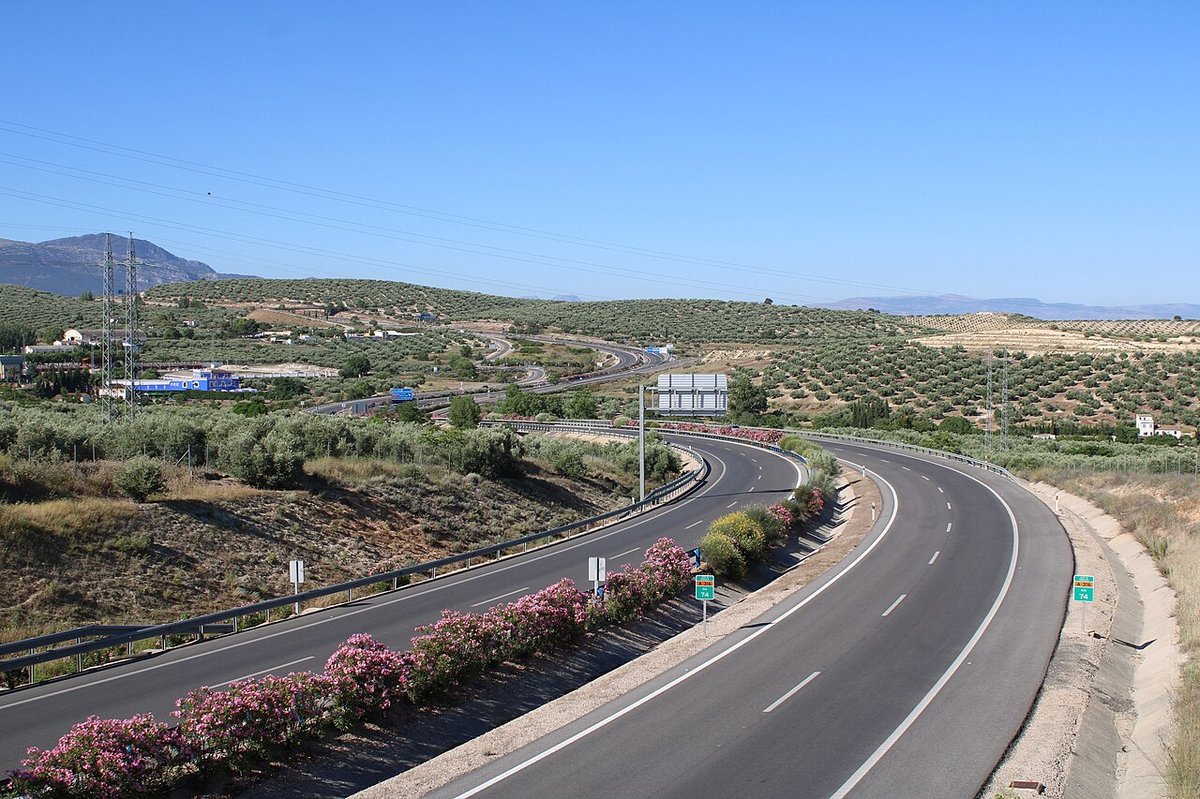
Morón de la Frontera is just over an hour by road from Seville. The usual approach follows the A‑92 and the regional roads that connect with the Sierra Sur.
The town centre can be explored on foot without much difficulty. A typical route begins in the lower part of town, near the square and the market, then climbs towards the parish church of San Miguel before continuing up to the Cerro del Castillo for a broad view of the surroundings.
Those interested in vernacular architecture should pay attention to the streets rising towards the hill. Whitewashed houses line the slopes, many with interior patios. Some façades still preserve iron grilles and doorways dating from the 18th and 19th centuries. These are small details, easily overlooked, yet they reveal how the town has expanded over time.
Morón de la Frontera does not overwhelm with monumental scale. Its appeal lies in how its elements fit together: the hilltop remains of a fortress, the steady presence of San Miguel’s tower, the olive groves stretching to the horizon and the sound of flamenco on summer nights. Understanding its position between plain and mountains is the key to understanding the town itself.