Full Article
about Pruna
It’s home to the province’s highest point, El Terril, and the Castillo de Hierro, set amid mountains.
Hide article Read full article
A village set above the fields
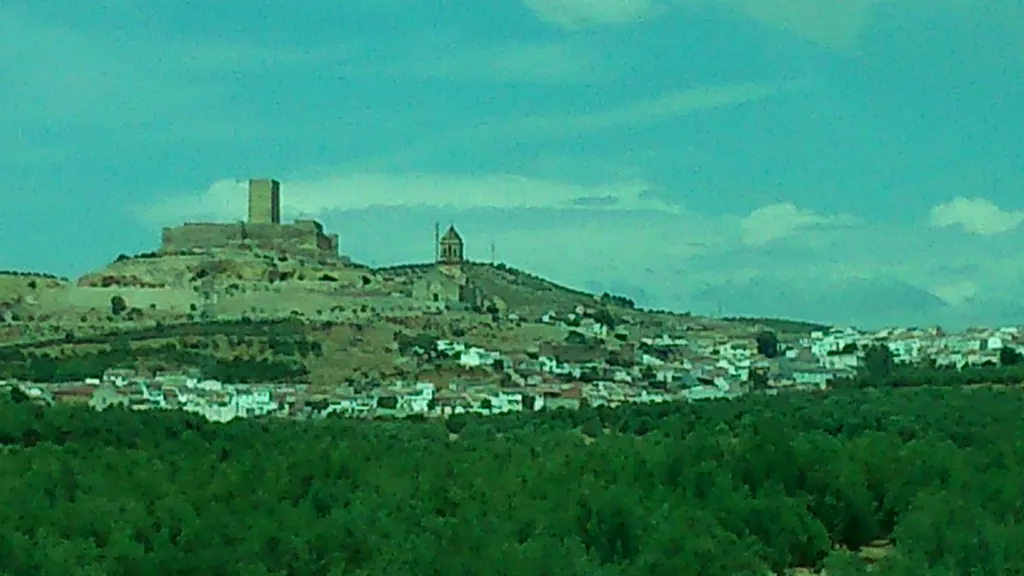
There is a moment, just after the last olive grove falls behind and the road begins to climb, when Pruna comes into view. It sits up on the ridge like a small, deliberate construction, almost as if it had been placed there to keep an eye on everything approaching from Seville. That is often how a visit to Pruna begins, with the sense that the village has chosen its position carefully.
People sometimes refer to it as “la atalaya de Sevilla”, the watchtower of Seville. Once you arrive, the name makes sense. Pruna stands higher than you might expect for this province, and the layout reflects that. Streets tilt and twist, steps appear where they need to, and walking here tends to slow you down whether you intend it or not.
This is not one of those polished white villages that appear in postcards from Cádiz or Málaga. Pruna feels more direct. The houses are whitewashed, the streets are narrow, and daily life happens in plain view, with neighbours stopping to talk in the middle of the square. It feels lived in rather than arranged.
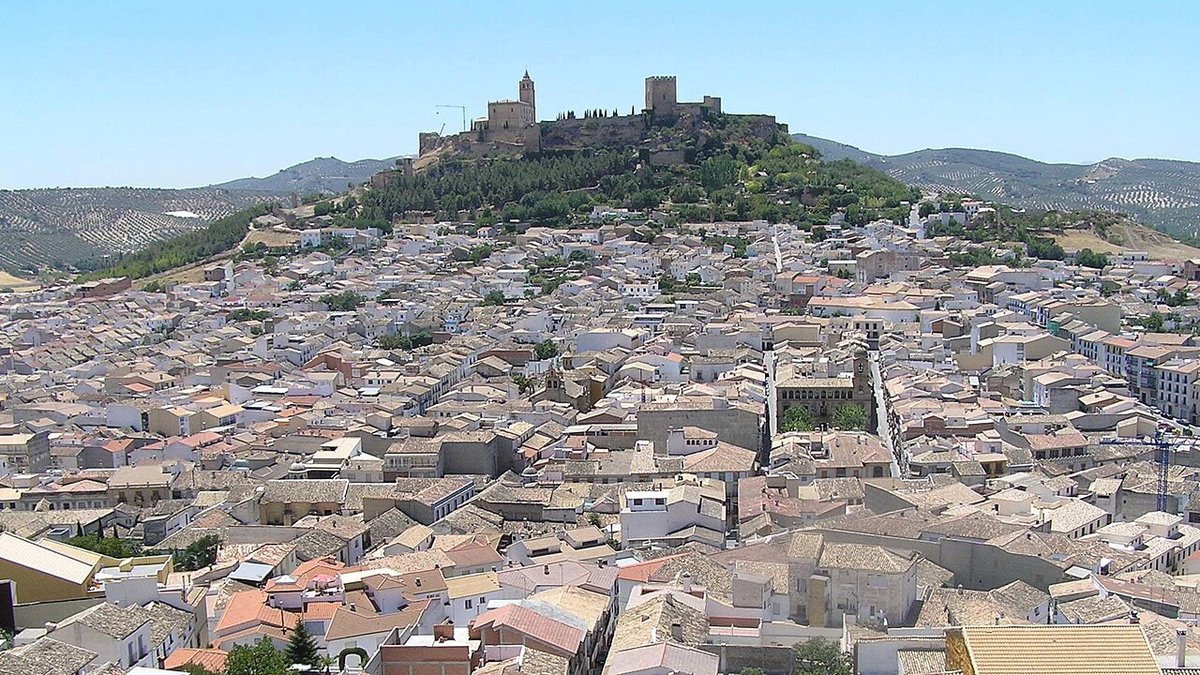
At the top of the village, traces of its past remain. There are remnants of an Andalusi-era fortress, once used to watch over this stretch of the sierra. From that height, the reason for its location becomes obvious. Much of the surrounding landscape lies open beneath it.
Climbing to the Castillo de Hierro
Above Pruna rises the hill crowned by what is known as the Castillo de Hierro. What survives today are fragments: sections of wall, hints of towers, the kind of ruins that ask you to fill in the rest yourself.
The climb is worth it. On the way up, the view back over the village begins to unfold, with white houses scattered along the slope. By the time you reach the top, the horizon opens properly. Olive groves stretch out, nearby sierras frame the distance, and there is a quiet that belongs to this lower mountain landscape.
In the same area, there is also a via ferrata, a protected climbing route that draws people equipped with helmets and harnesses. Even without taking part in that, simply walking up to the castle changes how the place feels. You see the scale of it, the way the village fits into its surroundings.
On the way back down, Calle Escalones appears, a street that does exactly what its name suggests. It is one of those places that reminds you how towns like this were shaped: stone, steep ground and time.
Food shaped by the sierra
The cooking in Pruna is straightforward and clear in its intentions. These are not dishes designed for display.
Olive oil is at the centre of everything. You notice it immediately, in toasted bread in the morning, in stews, and in local cured meats. The flavours follow the logic of the landscape and the seasons, especially when colder weather settles over the sierra.
One of the dishes that stands out is cocido serrano. It is a substantial meal built around chickpeas, meat from traditional slaughter and vegetables. The kind of food that slows the day down afterwards.
There are also traditional sweets that appear during celebrations or family gatherings. Pestiños and roscos de vino are among them. They are simple in concept, but when done well they are hard to leave alone.
El Terril and the wider landscape
Not far from Pruna lies El Terril, the highest point in the province of Seville. It might sound like a straightforward outing, but the climb has its effort.
The route crosses areas of scrubland and old cultivated ground. It is not mountaineering, but neither is it a short stroll. Reaching the top explains why people make the journey.
From the summit, the view opens in every direction. Villages appear as small white patches, and the olive groves form a continuous pattern that stretches as far as the eye can follow. The descent tends to remind you that the route asks something of your legs as well.
A place that keeps its own rhythm
Pruna does not try to impress. It moves at its own pace, with daily life taking priority over tourism.
In the main square stands a monument to the emigrant, a figure holding a suitcase. It reflects the many people who left the village over the decades to find work elsewhere, and it says a lot about the character of the place.
Throughout the year, local festivals and romerías bring noticeable changes. On those days, the streets fill, music appears, and families gather either out in the countryside or at the fairground. These are not events arranged for visitors. They are simply part of how the village marks time.
The best way to experience Pruna is to follow that rhythm. Walk without a fixed plan through the streets that climb towards the castle. Sit for a while in the square and watch the day unfold.
That is how Pruna works. Unhurried, without much need for explanation, and very much tied to the sierra around it.