Full Article
about Almedinilla
A land of dreams where Roman and Iberian heritage meets olive groves and mountain ranges, offering top-tier archaeology and cuisine.
Hide article Read full article
A quick pause in the Subbética
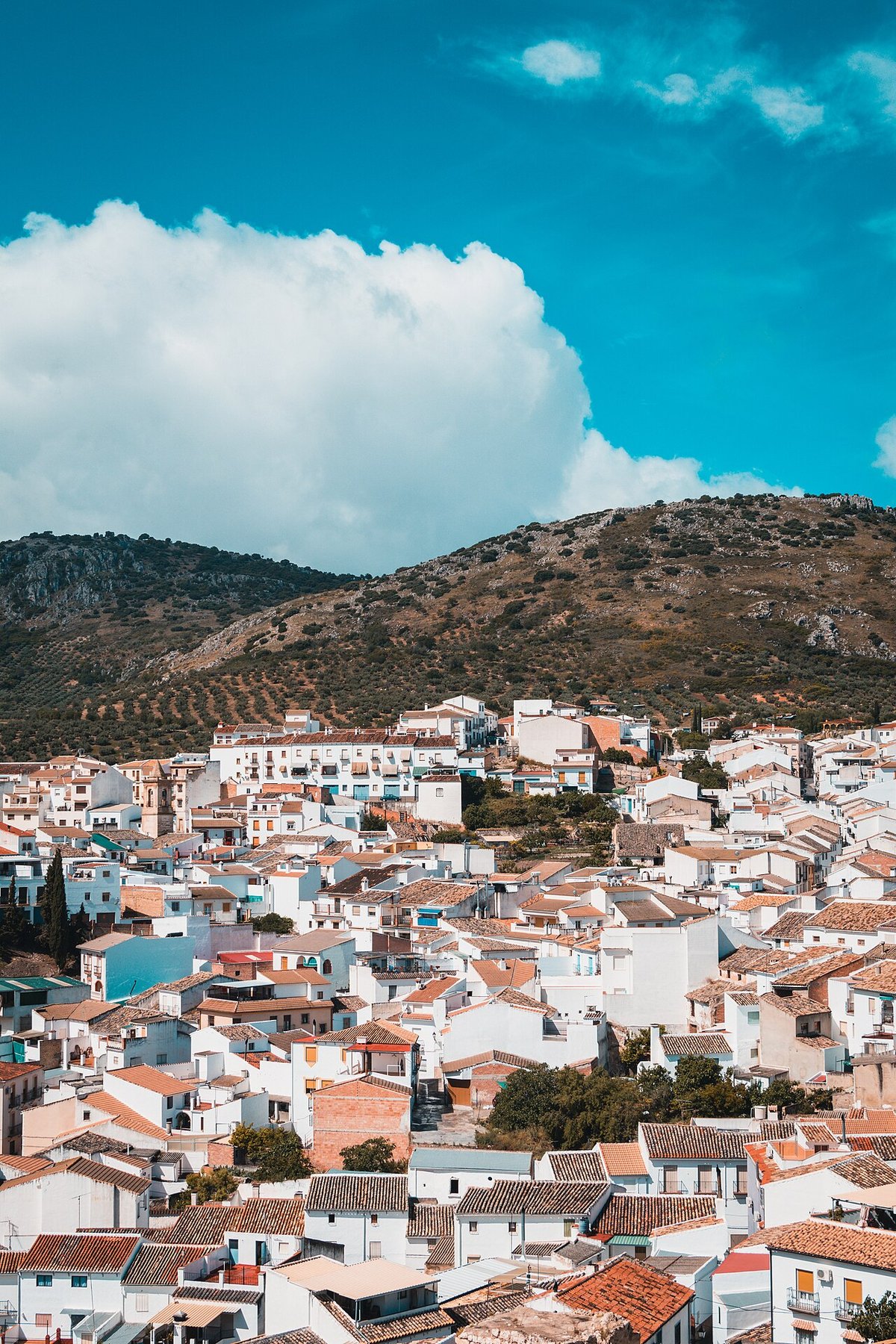
Almedinilla works best as a brief stop rather than a long stay. It sits in the Subbética region of Córdoba province, and the essentials can be covered quickly if you focus: the museum, the Roman villa, and the Iberian hilltop. Three stops, all close together.
One story sums up the place. The statue of Hypnos was found in an olive grove while the land was being worked. No excavation, no search. It simply appeared while ploughing, as often happens in this part of Andalucía. That moment explains a lot about Almedinilla. History here is not always behind glass. Sometimes it comes straight out of the ground.
Getting there and finding your way in
Córdoba is just over an hour away via the A‑45. The final stretch runs along a local road. It is in good condition, though several sections lack a hard shoulder.
As you enter the village, the museum appears on the right, almost immediately. Opposite it there is a small car park that usually has spaces. At weekends it is better to arrive early. Another option is to leave the car higher up, near the roundabout, and walk down. The village slopes downhill, so the route is straightforward on foot.
What makes the stop worthwhile
The museum is housed in a former 19th-century oil mill. This was once a working space for producing oil and flour. Now it holds the village’s most recognised piece: Hypnos, the Greek god of sleep. The sculpture is small, just a little larger than a book, and it was discovered at the nearby Roman villa. Pieces like this are rare in Spain, which gives it particular interest.
Five minutes away is the Roman Villa El Ruedo. It was occupied between the 1st and 7th centuries. What remains includes mosaics, the ruins of thermal baths, and a later Christian necropolis. Visits are usually guided and last around forty minutes. It is not a vast archaeological site, but it does a clear job of showing how a Roman estate dedicated to olive oil production functioned.
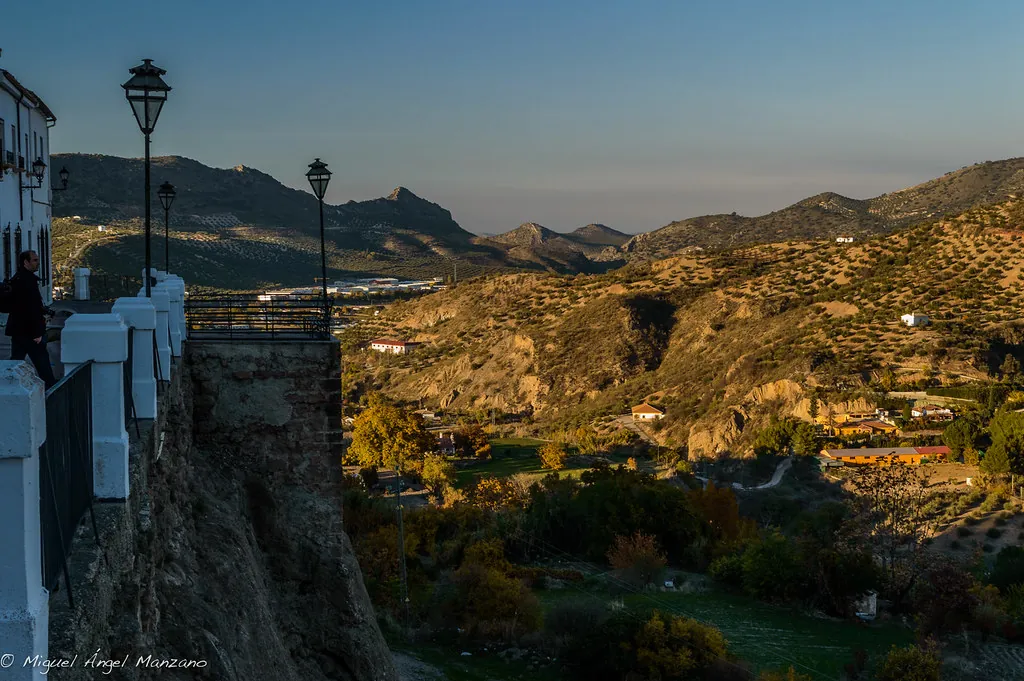
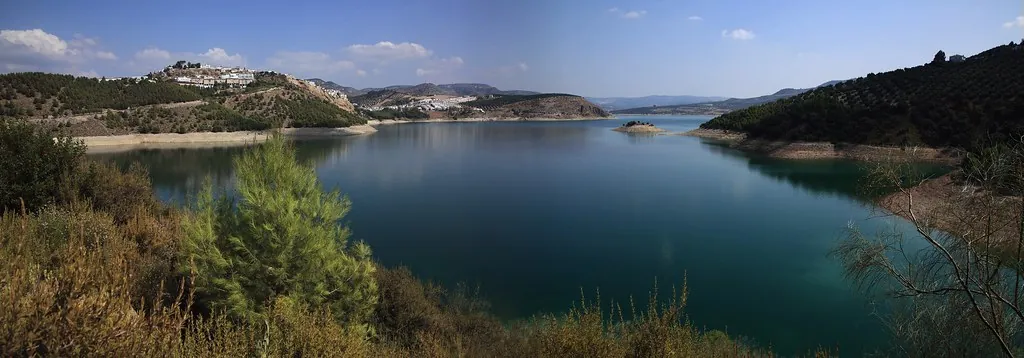
Above the village lies the Cerro de la Cruz. The walk up takes about twenty minutes along a dirt path. This hill once held an Iberian settlement, predating the Roman period. Today the structures are more suggested than clearly visible, but the viewpoint explains the setting better than anything else. Olive groves stretch in every direction, and beyond them rise the sierras of the Subbética. It is worth bringing water, as there is nothing open up there.
Timing your visit
Spring works particularly well. The temperature is mild, and the countryside turns green among the olive trees, which are otherwise associated with drier tones for much of the year.
Summer brings intense heat. In August, during the local feria, the atmosphere changes noticeably, with more activity and movement in the village.
For the rest of the year, things are quiet. Almedinilla has just over two thousand residents. There is some life around midday, especially at the time locals gather for a drink before lunch, but evenings tend to be calm and silent.
Local food without fuss
Traditional dishes here are simple and rooted in everyday cooking. Sopa de maimones appears often in winter. It is made with bread, garlic, paprika, egg and a little ham, a classic example of resourceful cooking using what is available.
Remojón combines orange, salt cod, egg and olives. It can sound unusual if unfamiliar, but it has long been part of the local cuisine.
Olive oil is central. The area falls under the Priego de Córdoba designation of origin. The picual variety is strong, with a flavour that catches slightly at the back of the throat.
At certain times, the village organises meals inspired by Roman recipes attributed to Apicio, a figure associated with ancient Roman gastronomy. These typically require booking in advance and a group.
A straightforward way to do it
The simplest approach is to follow a set order: museum, Roman villa, then Cerro de la Cruz. Everything is close together, and the full visit can be done in two or three hours without rushing.
Afterwards, there is the option of spending a bit of time in the main square. Or simply continuing the journey. Almedinilla fits neatly as a short stop between other villages in the Subbética. The draw is clear and limited: two archaeological sites and one unusual sculpture. That may not sound like much, but it is enough for what the place offers.