Full Article
about Iznájar
Picturesque village on a peninsula above Andalucía’s largest reservoir, with an Arab castle on the crest and the flower-filled Patio de las Comedias.
Hide article Read full article
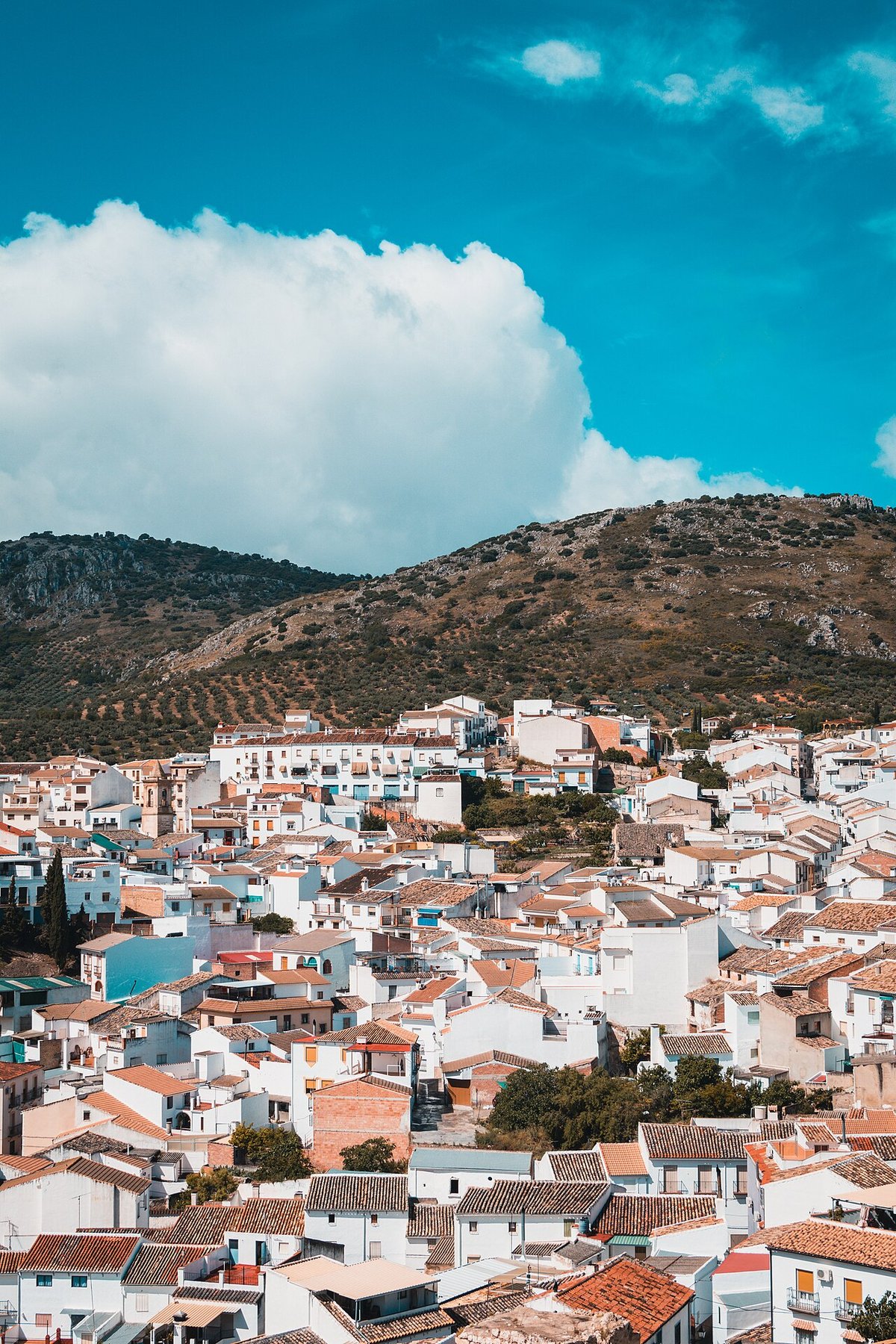
At eight in the morning, mist rises from the reservoir and settles between the white houses. From the castle, the water looks like a broken mirror stretching as far as the eye can see. Down in the Barrio de la Villa, some doors stand wide open and the air carries the smell of freshly baked bread and wood that burned through the night.
Iznájar does not greet you with big signs or staged smiles. The welcome is quieter: the stillness of cobbled streets before nine, the echo of footsteps in passageways that slope towards the lower part of the town, the scent of new olive oil slipping out from the mills when the harvest season begins.
The water that reshaped the town
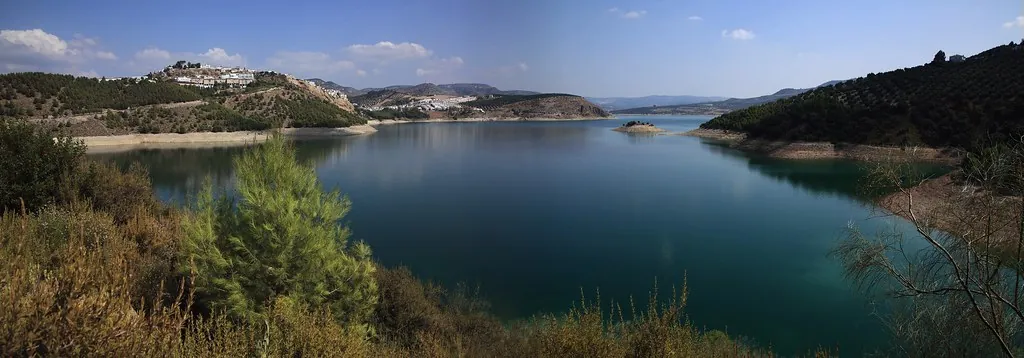
When the Genil reservoir was completed in the late 1960s, many locals felt the town had ended up beside something too vast. Parts of the fertile lowlands disappeared under water, and farming and paths had to be reorganised along the hillsides. Over time, that same water brought a different kind of movement.
Today, people arrive from nearby cities just to spend the day by the reservoir. Valdearenas beach, one of the few inland beaches prepared for visitors in Andalucía, fills up when the heat intensifies.
The beach is not large, but in summer the water is usually warm. Children jump from the small wooden jetty while their parents sit in the shade of the pines eating sandwiches. On weekdays, the scene slows down. Fishermen settle into folding chairs, facing the water until the sun drops behind the castle.
Up to the castle, into the old quarter
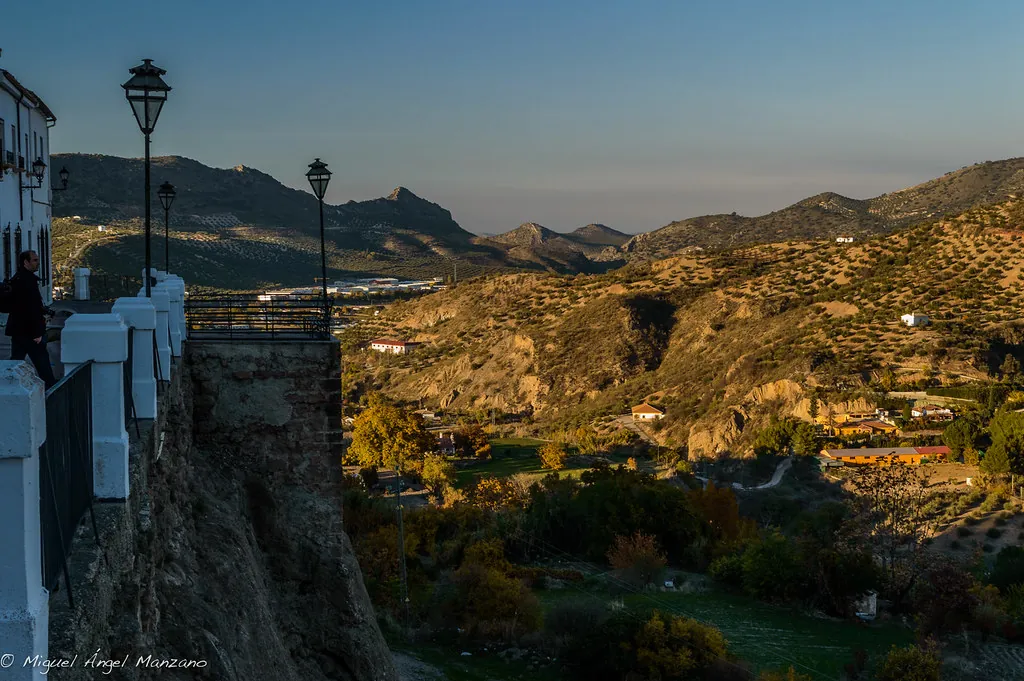
The castle of Iznájar does not impress by size. From below it looks almost like a ruin placed neatly on top of the hill, but once you climb up and lean against the parapet, its position makes sense: the reservoir on one side, the Genil valley on the other, and all around a rolling expanse of olive groves.
The streets of the Barrio de la Villa are narrow and steep. In some stretches you have to press yourself against the wall to let someone pass, especially if they are carrying shopping bags or taking out the rubbish. The houses keep their sun-faded white walls, with lower sections painted in ochre, blue or dark red, colours softened over time.
In the Patio de las Comedias, hundreds of blue flowerpots hang from the walls. By mid-morning, someone is often there watering them patiently, one by one. In spring, geraniums spill over in a cascade of red.
When the town fills with people
Semana Santa in Iznájar does not match the scale of larger Andalusian cities, but the processions here move through slopes that seem too steep for carrying religious floats. The silence is broken only by the sound of chains from some penitents and the measured steps of those carrying the images.
Easter Sunday shifts the mood. Maracas can be heard, colourful capes appear, and the square fills with the smell of rosemary and honey-based sweets prepared in many homes during those days.
In September, the celebrations for the Virgen de la Piedad begin. For several days, the town fills with relatives returning from elsewhere, and houses adapt as best they can, with mattresses on the floor and long shared tables. There are open-air dances, activities across different corners of the town, and a pilgrimage that climbs towards the sanctuary.
If you visit during these dates, it is more practical to leave the car in the lower part and walk up. The streets in the historic centre are so narrow that a poorly parked car can block the way entirely.
What and when people eat
Cooking here still follows the calendar closely. In summer, porra fría appears on many tables. In Iznájar it often includes pepper and is made with bread from the day before. It is served with chopped boiled egg and pieces of ham on top.
When colder weather arrives from the reservoir, many return to ajo caliente. This dish combines rustic bread, crushed garlic, grated tomato and plenty of olive oil. It is eaten with a spoon and leaves a golden sheen on hands and moustaches, the mark of fresh oil.
Choto, young goat, appears in some kitchens at weekends or during family celebrations. It is a slow stew with white wine, garlic and hours over a low heat. It is not something seen every day.
Getting there and choosing your moment
Iznájar sits in the Subbética of Córdoba, surrounded by olive groves that seem endless. It is reached by road from several directions, with the final kilometres unfolding in gentle bends as the reservoir comes into view between the hills.
In spring, the countryside changes scent: rosemary, damp earth and the blossom of the olive tree when May arrives. In summer, the heat lingers near the water, while the best views and a bit more air can be found up at the castle in the evening.
If there is a choice, it is worth avoiding weekends in August. The beach area fills with towels and the old quarter loses the calm it keeps during the week. On a Tuesday in May or early autumn, the town returns to its usual rhythm: half-lowered shutters, quiet streets, and that sense of time moving without hurry.