Full Article
about Palenciana
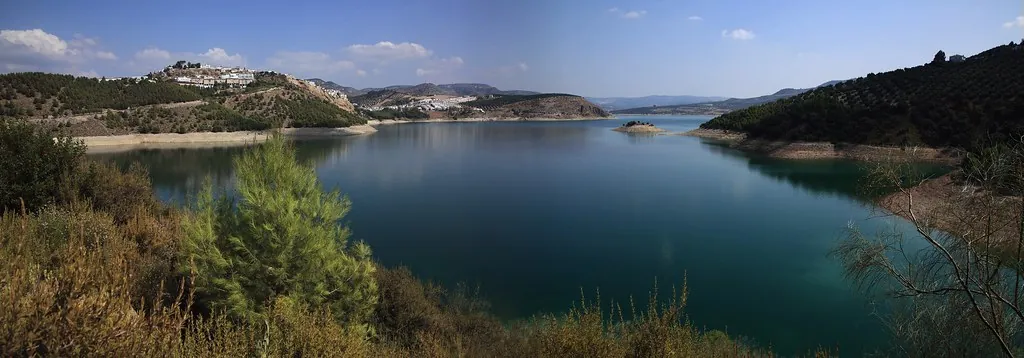
A border town with Málaga on the Genil River, surrounded by orchards and olive groves, with a quiet, traditional atmosphere.
Hide article Read full article
An Agricultural Village in the Southern Subbética
Understanding tourism in Palenciana begins with knowing where it sits. The village lies at the southern edge of the province of Córdoba, within the Subbética, a part of inland Andalusia defined by rolling limestone hills and an almost continuous expanse of olive groves. Just over 1,400 people live here. This is not a destination shaped around grand monuments or streets designed with visitors in mind. It is, above all, an agricultural village that has grown in step with the rhythms of the countryside.
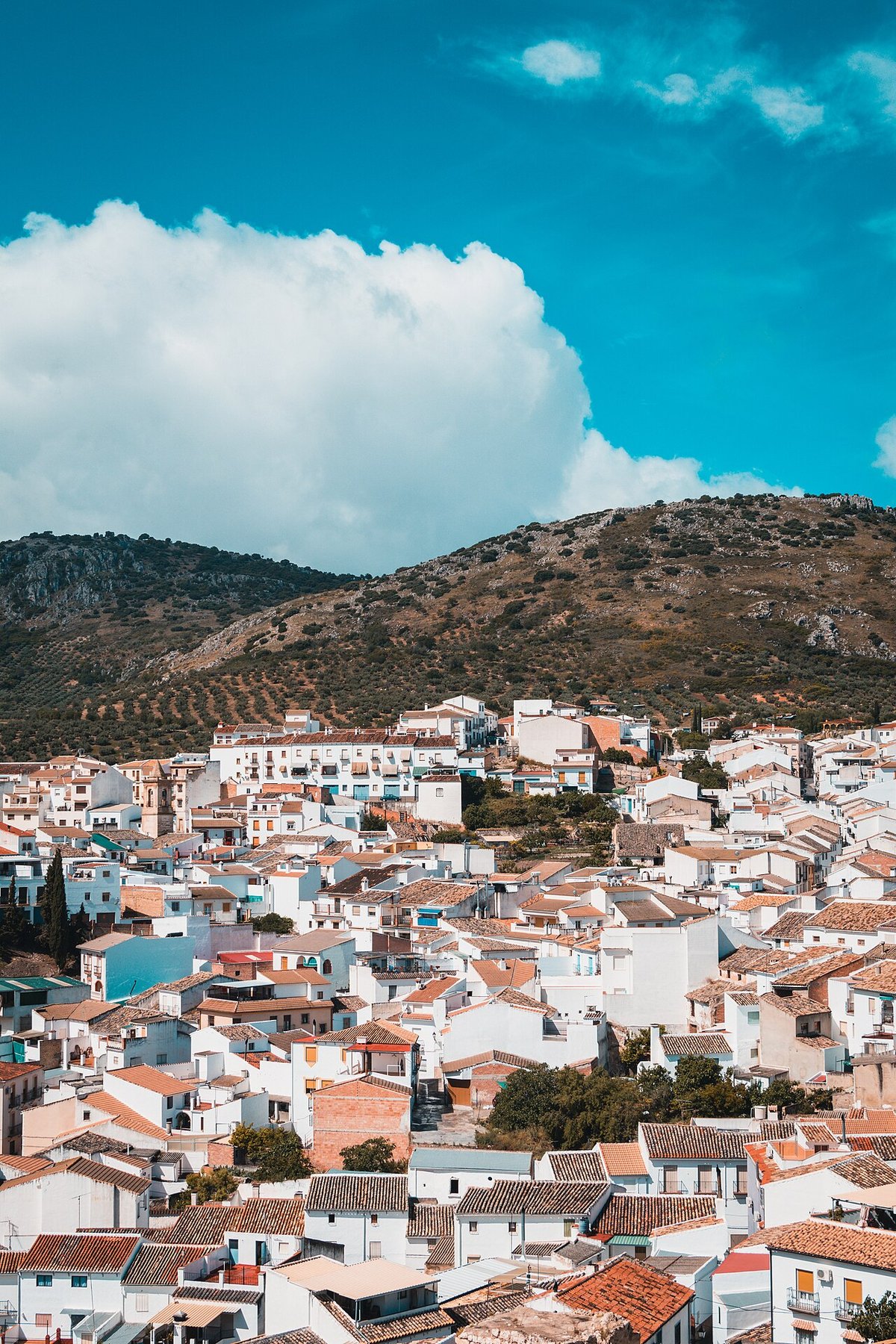
The urban centre is compact, without large modern expansions. Whitewashed houses cluster along a handful of main streets and small inclines that follow the natural topography. Everything can be covered on foot in a short time. That small scale makes it easier to understand how many villages in the Subbética still function: daily life concentrated into a tight area, close neighbourly ties and open countryside only minutes away.
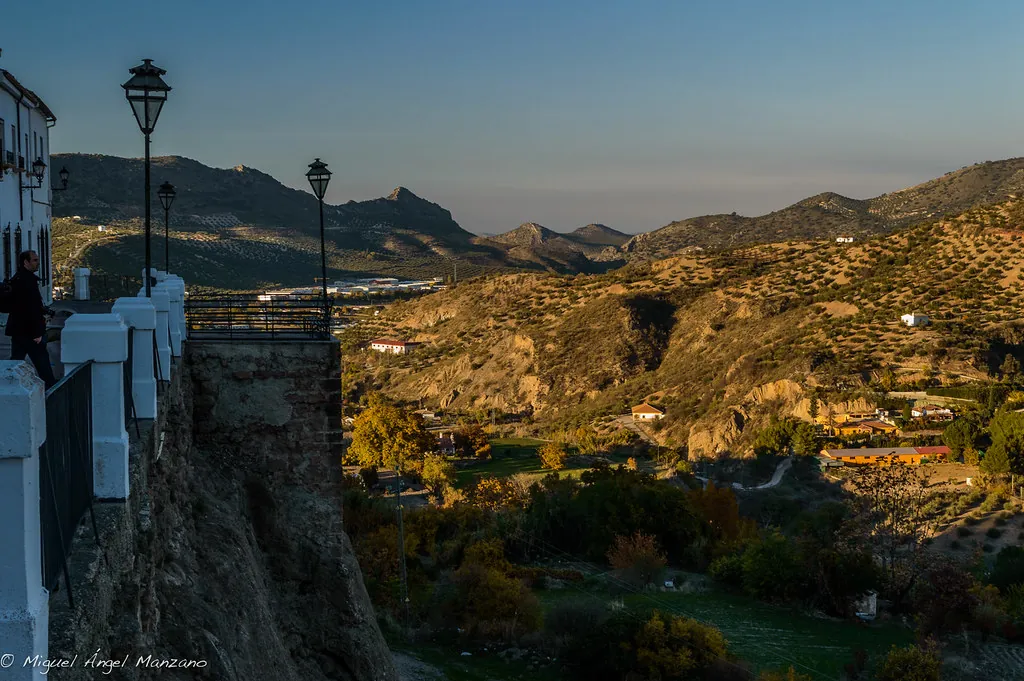
Palenciana belongs to an inland Andalusia that often falls outside the best-known travel routes. For that reason, it retains a fairly faithful image of the comarca. Olive groves stretch in every direction, agricultural tracks criss-cross the terrain and the landscape shifts more with the light and the seasons than with the presence of monumental landmarks.
The Village Layout and the Iglesia de San Miguel
The street plan follows a familiar pattern for this part of the Subbética. Narrow streets adapt to the relief, opening onto small squares that act as informal meeting points. There is no monumental historic quarter, yet the popular architecture is consistent and practical, built with simple materials and designed for the climate.
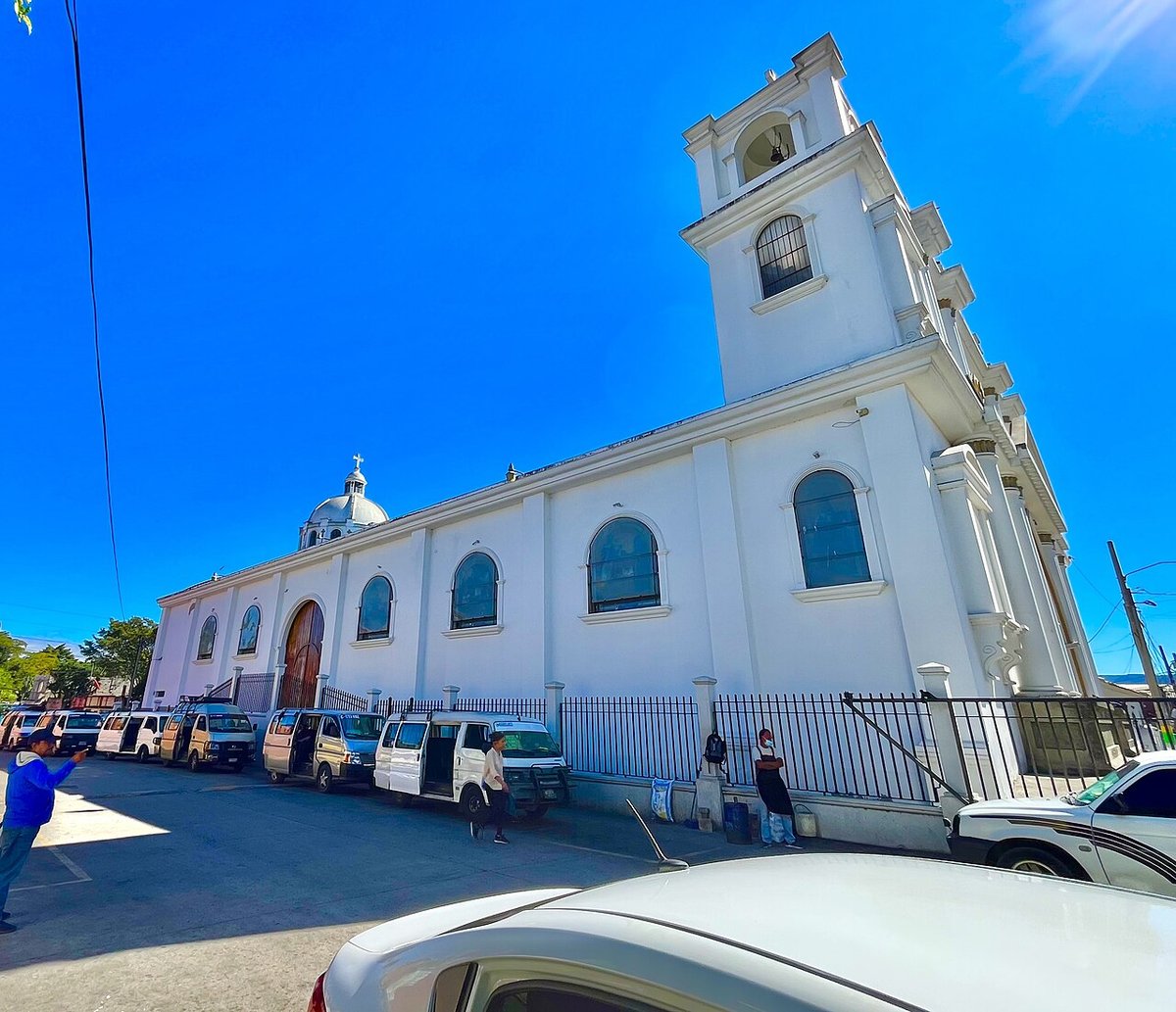
The parish church of San Miguel serves as the main visual reference point within the village. The current building appears to date from the early modern period, probably with later alterations that changed parts of its structure. Its façade is restrained. Inside, the elements are those typically found in rural Andalusian parishes, where the value of the building lies more in its communal role than in artistic richness.
Step beyond the last houses and the scenery changes quickly. Agricultural tracks begin almost immediately, bordered by olive groves that encircle the municipality. Plots are arranged across gentle hills, linked by dirt lanes that connect farmhouses and small holdings. From some of the higher points on clear days, the limestone sierras of the Subbética can be seen in the distance.
Walking the Tracks and Reading the Landscape
Much of the area around Palenciana is best understood by walking along these rural tracks. They are not always signposted routes. They are working paths, used primarily for agricultural activity, though over time they have also become routes for those who head out on foot to explore the countryside.
The olive grove shapes almost every view. Lines of trees repeat for kilometres, giving the territory a recognisable structure. Between the plots, there are still stone walls, small agricultural buildings and traces of older paths that once linked different estates. These details speak quietly of a landscape organised around cultivation and continuity.
The local cooking follows the same logic as the land: nearby ingredients and recipes passed down within families. Extra virgin olive oil forms the base of many dishes. From there come simple stews, seasonal garden produce and sweets associated with the religious calendar. For visitors unfamiliar with rural Andalusian cuisine, this usually means hearty, home-style food rooted in what the fields provide at any given time of year.
Although olive trees now dominate almost the entire municipality, there are still references to former vineyards that once had a stronger presence in the area. That agricultural memory survives in local accounts and occasionally in celebrations linked to the end of summer.
Festive Dates and Shared Traditions
In a village of this size, the festive calendar continues to play a central role in social life. Religious celebrations structure much of the year, with processions and events that involve neighbours of different generations.
The patron saint festivities typically concentrate several days of activity in the streets and squares. Semana Santa, or Holy Week, is also observed, though on a smaller scale than in the larger cities of the province of Córdoba. Even so, it remains an important moment in the annual cycle.
Summer brings open-air dances and neighbourhood gatherings, particularly when those who work elsewhere during the rest of the year return home. These reunions reinforce the sense that Palenciana’s identity is closely tied to family networks and shared traditions, as much as to its agricultural base.
Getting There and Setting Expectations
Palenciana is located in the south of the province of Córdoba, close to the border with Málaga. The simplest way to reach it is by road, linking through other municipalities in the Subbética and central Andalusia. Public transport does exist, though it is generally limited if the aim is to move freely around the comarca.
Many travellers pass through Palenciana while visiting nearby towns with a stronger historical profile. Here, the pace is different. It works best as a short stop within a broader route through the Subbética, with time set aside to walk its streets and look out over the surrounding olive groves.
When to Visit
Spring and autumn tend to show the countryside at its best. In spring, the olive groves appear more vibrant and temperatures are mild. Summer can be hot, which is typical of inland Andalusia. Each season brings subtle changes in colour and light across the fields, reinforcing the sense that in Palenciana the landscape itself is the main point of reference.
Palenciana does not seek to impress with scale or spectacle. Its appeal lies in offering a clear view of everyday life in the southern Subbética, where agriculture still shapes the land and the calendar, and where the village and the countryside remain closely intertwined.