Full Article
about Albánchez
Small valley town known for its citrus and olive groves; still has the quiet appeal of an inland village.
Ocultar artículo Leer artículo completo
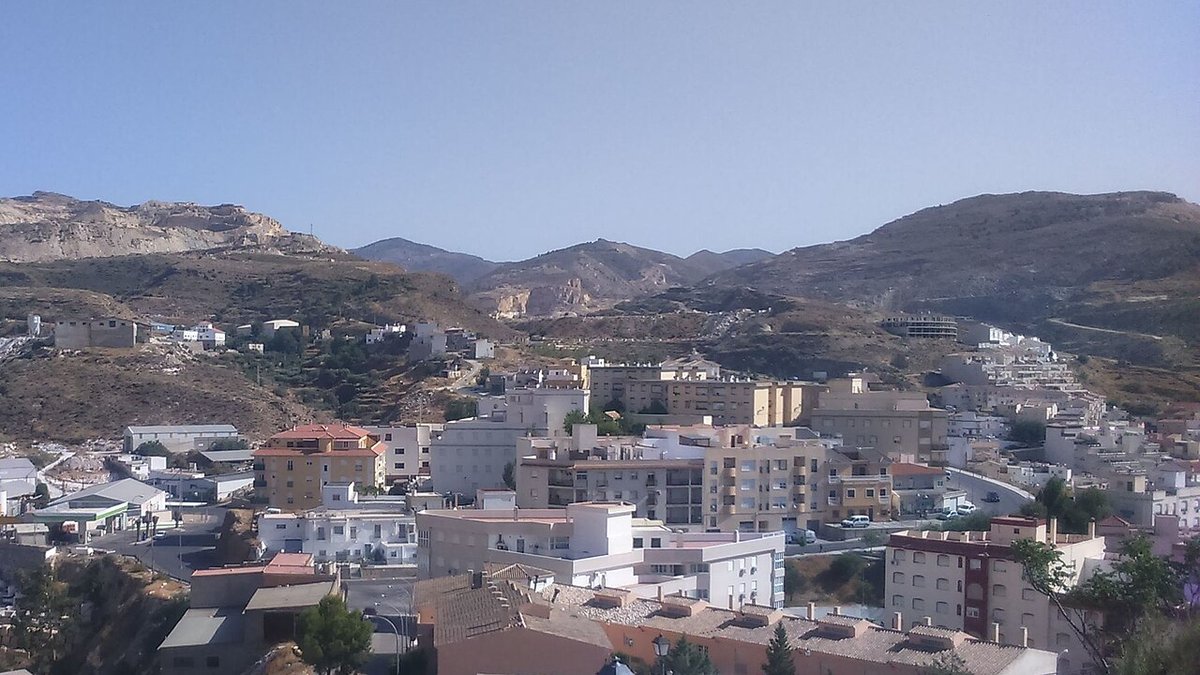
The church bell strikes noon, and Albanchez does what it's done for centuries—pauses. Shop shutters roll down. The butchers at Carnicería Manolo wash their knives. Even the village dogs seem to understand that nothing urgent happens between twelve and five. This is not the Spain of package posters; it's the Spain that Britons who've bought three-bed village houses for €25k call "the real deal," 465 metres above the nearest crowded playa.
Valley Life, Mountain Time
Albanchez sits on a ridge that catches the first chill of Sierra Nevada nights yet bakes under Almería's desert sun by day. The result is a split personality: winter mornings cold enough to see your breath, August afternoons that send you scampering back indoors at two o'clock. Locals treat the thermometer like a daily cliff-hanger.
The almond trees make the calendar legible. Late February brings a blizzard of blossom so complete the valley looks sugared. By June the same branches droop with green husks, and the air smells faintly of marzipan. Come October the nuts are cracked open on doorsteps; teenagers toss shells into the street for the council sweeper—one man, one van, 5000 residents.
Below the ridge the Almanzora River is usually a gravel braid, but when it rains the water rises fast enough to strand cars on the old stone bridge. That's when photographs appear in Bar Central showing the 1973 flood reaching the first-floor balconies. Everyone knows exactly where they were.
A Five-Street Social Network
Forget monuments. Albanchez trades in conversation. The Plaza de la Constitución measures barely forty metres across, yet manages to fit a stone fountain, four benches, and every piece of gossip generated since 1950. Pensioners occupy the east bench at 10 a.m. sharp; the west bench is reserved for mothers waiting outside the primary school. Strangers who sit in the wrong spot are politely redirected—this is Andalusian democracy in action.
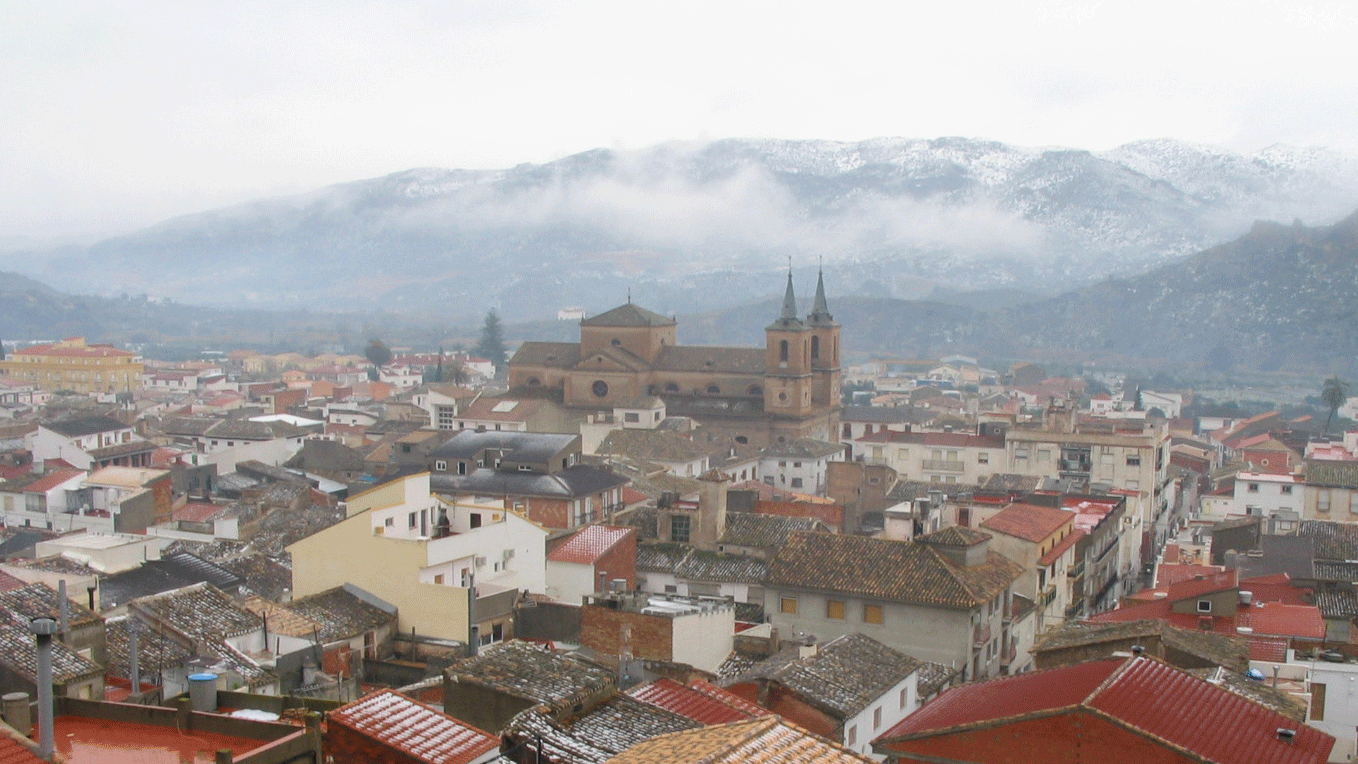
The Church of Nuestra Señora del Rosario anchors the square like a referee. Its Mudéjar bones were re-skinned in the eighteenth century, but the tower still leans two degrees north after the 1522 earthquake. Inside, the baroque altarpiece glitters with gold leaf paid for by Mexican silver—money that came back with men who emigrated and returned, a pattern repeated when half the village left for Germany in the 1960s. Their pensions now finance the Saturday night tapas round.
There is no admission charge; the door stands open until the priest locks up at eight. If you arrive during rosary, you will hear voices echoing off stone exactly as they did when the building was new. Photography is tolerated, flash is not, and shorts must cover the knee—rules enforced by a retired señora who can out-stare a customs officer.
Walking Without Waymarks
Proper maps stop at the village edge, which suits the local walking fraternity—about twelve Britons, two Dutch and a retired Guardia Civil officer named Paco. They meet on Tuesdays by the olive-oil cooperative and follow farm tracks to ruined cortijos where swallows nest in broken roof beams. The so-called Ruta de los Almendros is simply the path that irrigation channels take; when the water flows you step aside, when it doesn't you walk on cracked mud that feels like broken biscuits.
Carry at least a litre of water per person; there is no cafe mid-route, phone signal vanishes in the first ravine, and the only shade belongs to a 500-year-old holm oak whose trunk is wider than a London bus. The return leg climbs 200 metres in a kilometre—enough to make you reconsider that third beer the night before.
Birdlife is understated but constant: hoopoes flick between almond trees, crested larks sprint along tractor ruts, and if you start early you will hear partridges calling from the terracing. Bring binoculars, not a soundtrack; silence is part of the ticket price.
What Lands on the Table
Order a caña in Bar Central and you receive a free tapa whether you asked or not. Monday might be migas—fried breadcrumbs laced with chorizo—while Friday brings papas a lo pobre, potatoes softened in olive oil and green pepper. Vegetarians do better at Mesón la Plaza, where the tortilla de ajos comes thick as a paperback and speckled with sweet garlic. None of it costs more than €2.50 a plate; lingering is expected, splitting the bill is frowned upon.
The weekly market on Tuesday fills the upper car park with eight stalls: one for knickers, one for melons, one for hardware, five for gossip. The cheese man drives up from Baza and sells a nutty sheep's milk round for €6; wrap it in a tea-towel for the journey home because he ran out of vacuum packs in 2019.
If you self-cater, shop early. The butcher closes at one, the baker by two, and the tiny Día in Albox—ten minutes down the AL-7104—shuts on Sunday. Most expats do a weekly run, cool box in the boot, stopping for a cortado at Cafetería Avenida which has Wi-Fi reliable enough to download a BBC programme.
When the Village Lets Its Hair Down
Fiestas are not put on for tourists; they are the village talking to itself. The October patronales begin with a fireworks rocket that everyone pretends isn't late, followed by a procession where the Virgin is carried at shoulder height through streets too narrow for her canopy. Seats are not provided; you stand, or you watch from a first-floor balcony owned by someone's cousin.
At midnight the plaza becomes an open-air disco. Teenagers who left for university in Granada return transformed, wearing metropolitan black and ironic expressions. By two a.m. the playlist has reverted to 1980s rumba and even the mayor is dancing. If you accept a plastic cup of tinto de verano, prepare to defend your choice of football team for the next half hour.
Semana Santa is quieter but more intense. The Friday-night procession moves in silence, broken only by a drumbeat that echoes off whitewashed walls like a slow hammer. Tourists are welcome if they dress appropriately—no beachwear, no selfies during the passage—and if you follow that rule someone will probably offer you a seat and explain which statue is which.
Getting Here, Staying Sensible
Almería airport is 75 minutes south on the A-7 and usually quoted as "closest" by estate agents. In practice Alicante can be quicker: the final stretch from Almería involves a winding canyon road where lorries crawl at 40 kph. Whichever you choose, hire a car—public transport means a twice-daily bus to Albox that stops running at seven.
Parking in the village is vertical. The single public carpark at the top has 47 spaces and fills by ten on market day; after that you inch along streets designed for donkeys and hope for a gap. If you hear applause, you've either found the last slot or scraped your exhaust—sometimes both.
Accommodation is limited to three rental houses and a handful of B&B rooms above residents' garages. Expect ceiling fans rather than air-conditioning, patchy Wi-Fi, and the neighbour's cockerel. Prices hover around €55 a night, cash only, sheets included but bring your own towel if you're particular. Book early during almond blossom; once the petals drop, availability ceases to be a headline.
Leave the Costa swagger at the motorway exit. Albanchez will not entertain you; it will include you, provided you slow to its cadence. Miss the rhythm and you'll depart calling it sleepy; catch it and you'll understand why some Britons came for a long weekend and are still here ten years later, arguing over whose turn it is to fetch the bread.