Full Article
about Alcóntar
High-mountain municipality in the Sierra de los Filabres; source of the Almanzora River and pine forests.
Hide article Read full article
A Hillside Village in the Almanzora Valley
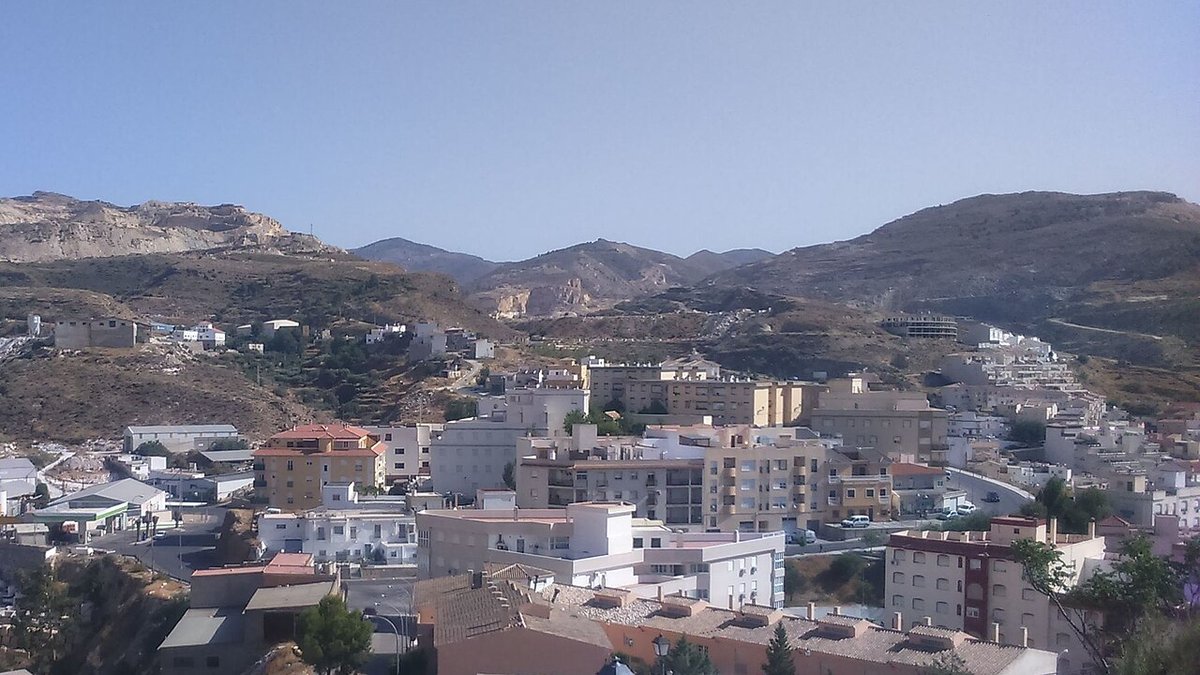
Alcóntar is the sort of place you come across almost by accident. Driving through the Valle del Almanzora, following bend after bend between olive groves, the village suddenly appears on the hillside. Its white houses spill down the slope as if placed there without much of a master plan.
From a distance, it looks like a small Andalusian village where nothing much is going to happen. That is precisely the appeal. There is no staged atmosphere, no streets designed for photographs. Alcóntar works like many villages in the interior of Almería province: an unhurried rhythm, open countryside on all sides, and the sense that daily life revolves more or less around the olive groves.
It is not a destination built around sights to tick off. It is somewhere to pause, to walk a little, and to get a feel for how this part of inland Andalucía moves at its own pace.
Around the Church of the Inmaculada Concepción
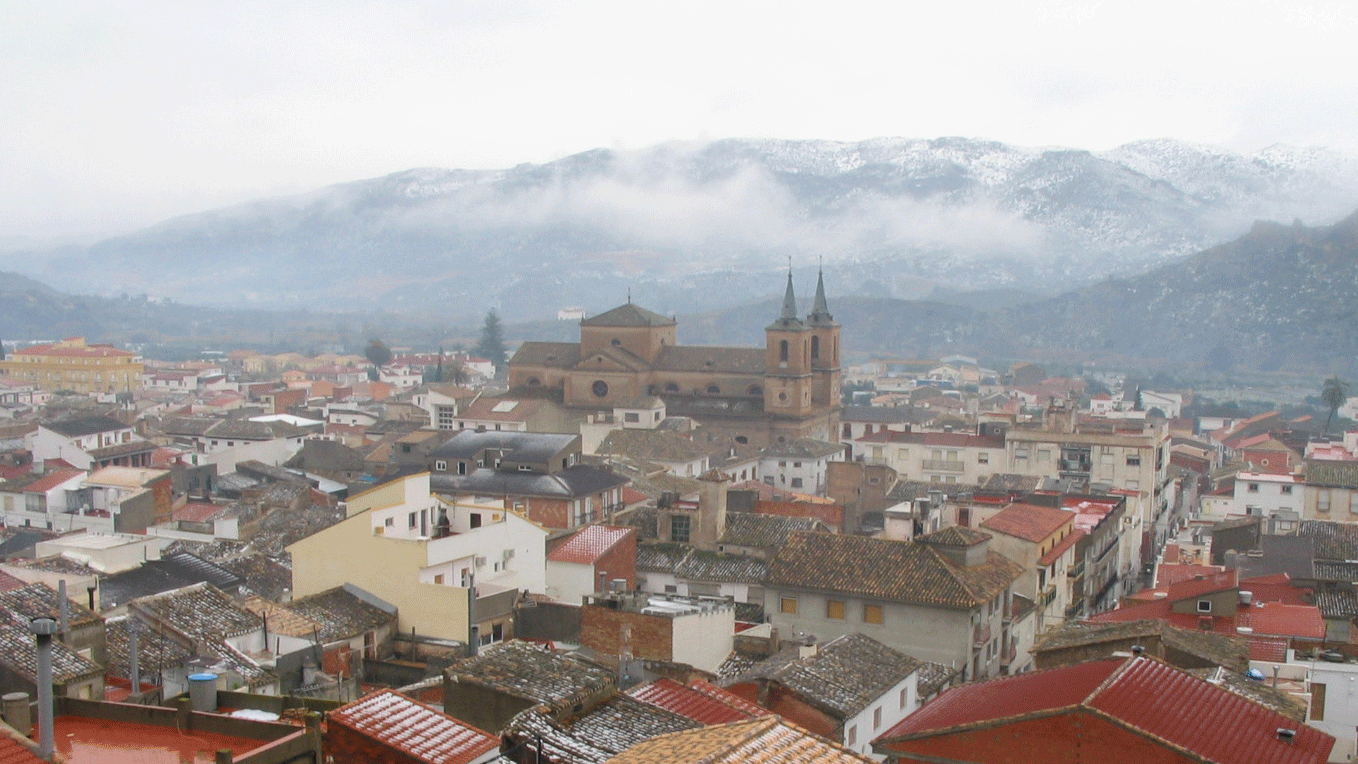
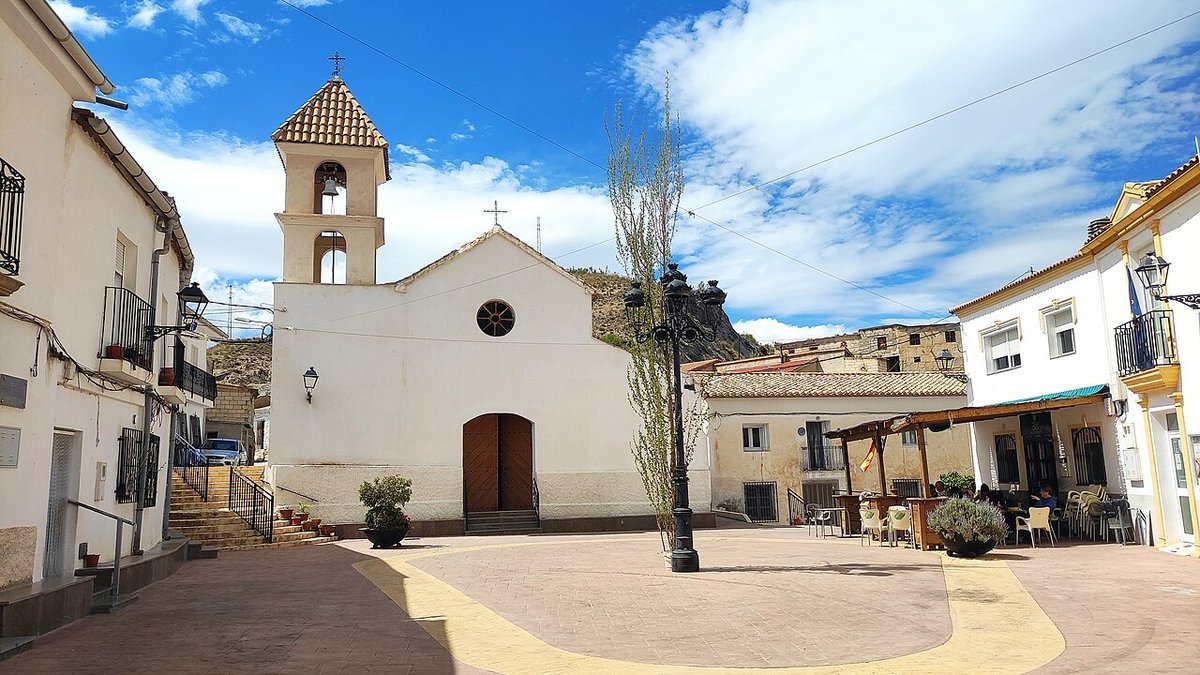
The centre of Alcóntar revolves around the Iglesia de la Inmaculada Concepción. The church has Mudéjar origins, a style that blends Christian and Islamic artistic traditions and is common in parts of southern Spain. Its tower is usually the first feature to stand out as you approach by road.
A small square nearby acts as a loose focal point. From here, streets rise and dip following the natural slope of the land. If you know other villages in the area, the layout will feel familiar: narrow lanes, whitewashed façades, iron window grilles with the occasional flowerpot, and cars parked wherever they fit.
There are no major monuments and no corners arranged with visitors in mind. Still, a short wander has its appeal. Within ten or fifteen minutes you can get a clear sense of the place. It does not take long to understand the scale of the village or the way its streets adapt to the hillside.
Looking Out Over the Valley
One of the simplest and most worthwhile things to do in Alcóntar is to head towards the edges of the built-up area. Because the village sits on a slope, several points open up wide views across the Valle del Almanzora.
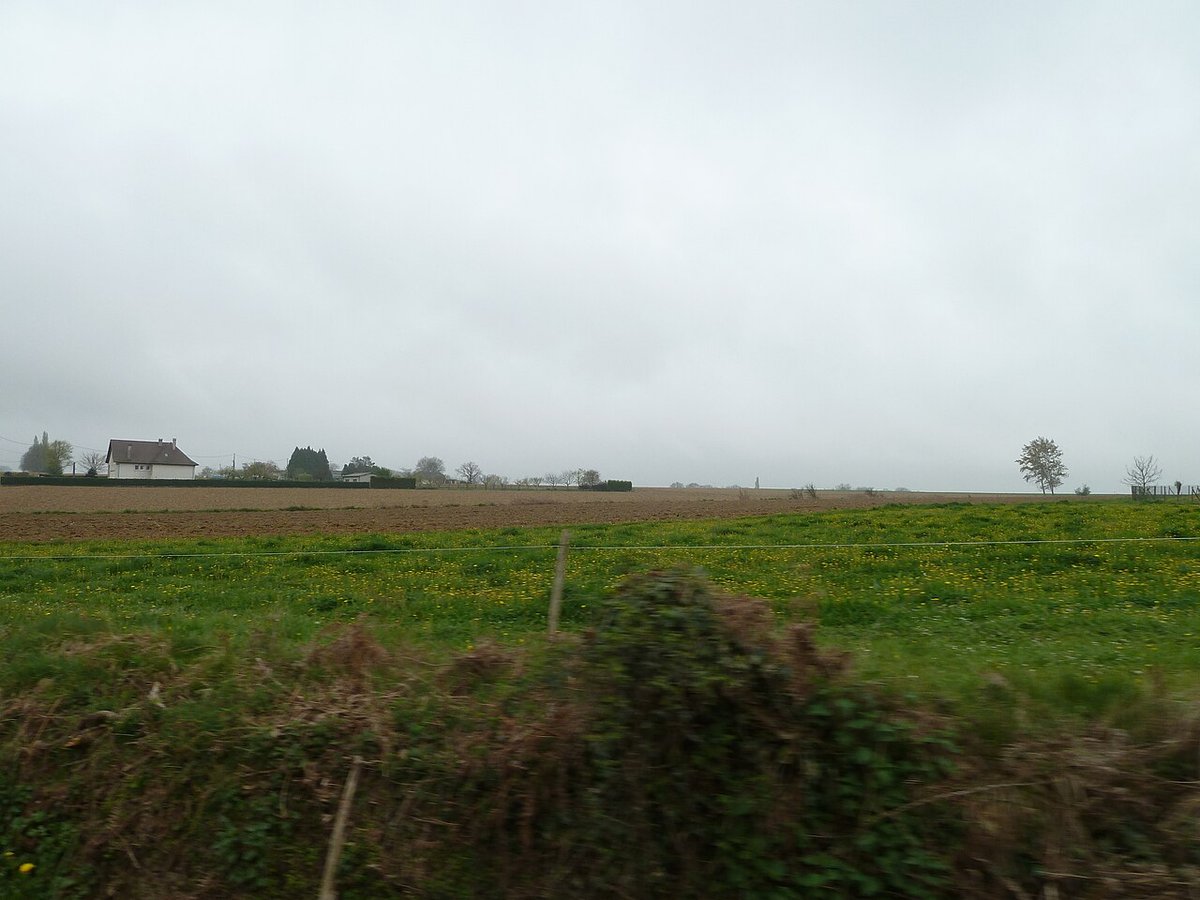
These are not formal viewpoints with railings or information panels. They are simply spots where the houses thin out and the landscape suddenly unfolds. Terraced olive groves, dirt tracks and distant sierras fill the horizon.
Light makes a noticeable difference here. At sunrise and again towards the end of the afternoon, the valley softens and the shapes of the land become easier to read. The contours stand out more clearly and the different tones of green and brown shift as the sun lowers.
It is a straightforward pleasure: walking to the edge of the village and standing still for a few minutes, watching the agricultural landscape that defines this part of Almería.
Olive Groves and Terraced Fields
The surrounding comarca has a very recognisable look. There are no dramatic peaks or unusual rock formations. The olive tree is what dominates.
Around Alcóntar, terraced fields step down the hillsides, many planted with fairly old trees. Agricultural tracks criss-cross the slopes, and here and there a cortijo, a traditional rural farmhouse, stands on its own. Some are still used; others appear half-abandoned.
The landscape changes subtly with the seasons. In winter the fields look barer, the earth more exposed. In spring, if there has been enough rain, almond trees come into blossom and patches of green break up the browns of the soil.
At first glance, it may not seem spectacular. Yet for anyone who enjoys walking without noise or crowds, there is something compelling about these open spaces. The repetition of olive trees, the geometry of the terraces and the quiet of the countryside give the area its character.
Rural Tracks and Short Walks
Several rural paths leave from the outskirts of the village. Farmers and local residents use them regularly, and some follow old livestock routes or link up with cortijos scattered across the hills.
Not all of these paths are signposted, so it makes sense to use a map or GPS if heading further out. For a short stroll, though, there is no need to complicate things. Simply leave the village along one of the tracks and walk between the olive trees.
Very quickly, the typical silence of the area takes over. Now and then a distant car passes, or the wind moves through the branches, but otherwise it is calm. The absence of noise becomes one of the main features of the experience.
After Dark: A Clearer Sky
Once you step a little way beyond the centre of Alcóntar, the night sky appears surprisingly clear. Street lighting is limited, and that makes a difference. On cloudless nights, more stars are visible than most people are used to seeing in towns and cities.
There is no need to organise anything elaborate. Park along a nearby track, step out of the car and look up. It is a simple activity, yet in small villages like this it still works as it should.
The quiet, the darkness and the open sky combine to create a different perspective on the landscape, one that feels far removed from urban routines.
Food Rooted in the Countryside
The local cooking follows the patterns of inland Almería. Dishes are filling and closely linked to rural life.
Migas are still common in many households, especially when the weather turns colder. This traditional dish, made from fried breadcrumbs and usually accompanied by other ingredients, has long been associated with agricultural communities. Stews based on pulses also appear regularly, along with local cured meats and, of course, olive oil produced in the surrounding groves.
It is food without much ornamentation, designed more to sustain than to impress. The ingredients reflect what the land provides and what has been available for generations.
Festivities and the Olive Harvest
The annual calendar in Alcóntar moves between religious and agricultural moments. Around the feast of the Inmaculada Concepción, the village celebrates its patronal festivities. These include processions and gatherings of neighbours, following traditions common across much of Spain.
In summer, when the weather is more reliable, verbenas and informal activities are usually organised. A verbena is an open-air celebration with music and dancing, often held in a square or communal space. It is a seasonal way of bringing people together.
Then there is the olive harvest. It is not a festival in the strict sense, but it shapes village life for weeks. Work in the groves intensifies, and the rhythm of daily routines adjusts accordingly. In a place where olive trees dominate the landscape, the harvest inevitably becomes one of the defining periods of the year.
A Short Stop in the Valley
Alcóntar lies in the Valle del Almanzora, in the interior of Almería province. From the provincial capital, the drive takes a little over an hour, combining motorway stretches with regional roads.
It is best approached with simple expectations. This is not somewhere to fill an entire day with planned activities. Alcóntar works better as a quiet stop on a broader route through the valley. Walk through the centre, take in the views, spend some time among the olive groves, then continue on.
It is a small place that does not try to attract attention. Pause for a while, though, and it offers an honest sense of how life unfolds in this part of inland Andalucía.