Full Article
about Laroya
Hidden village among marble mountains; known for quality, quiet rural tourism.
Hide article Read full article
At five in the afternoon, near the top of Calle Mayor, a small group of sheep moves slowly through Laroya, their bells breaking the quiet. The light turns golden as it slips between whitewashed façades, and the air, still carrying a slight coolness even on warm days, smells of dry dust and thyme. In that moment, it becomes clear how life works here: time follows the rhythm of the countryside more than the clock.
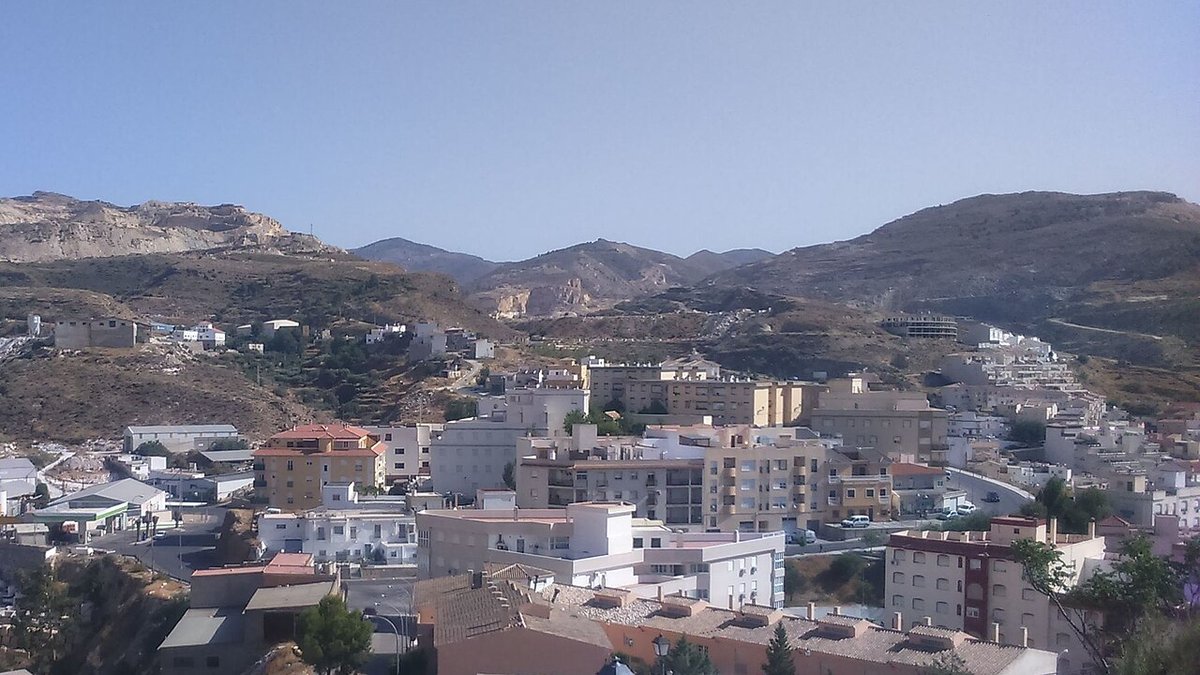
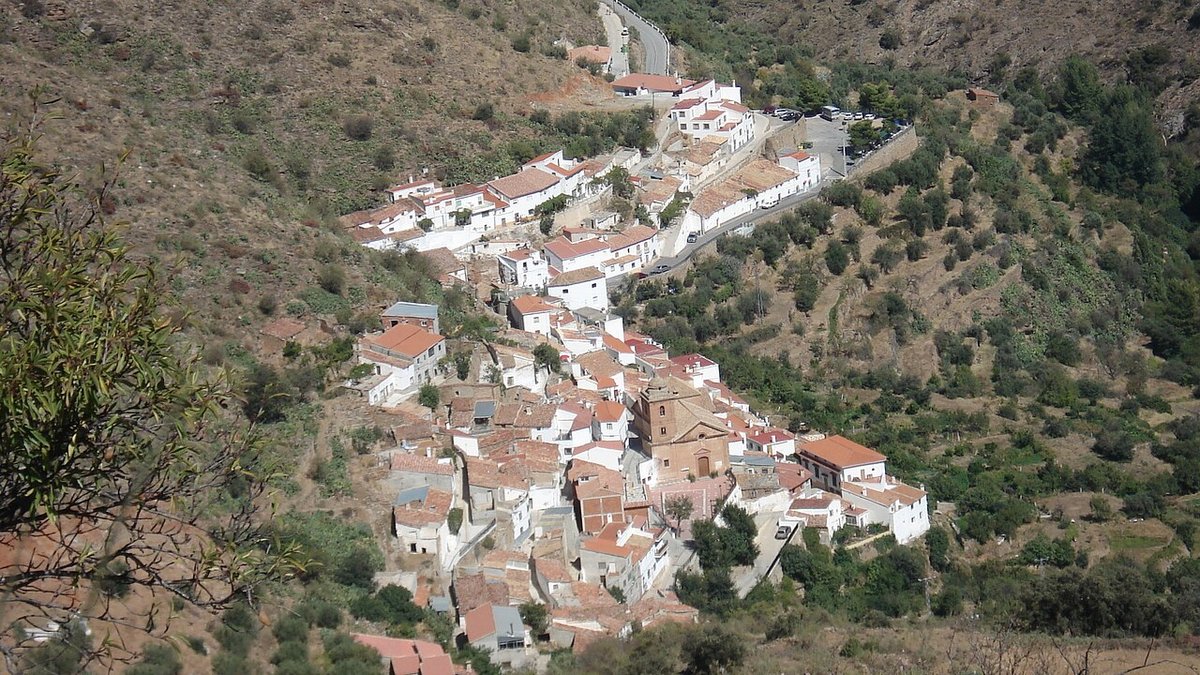
Laroya sits on a slope in the Valle del Almanzora, at around 860 metres above sea level. From a distance, the cluster of houses appears as a compact white patch shaped by the hillside. Once inside, the layout quickly reveals itself. Streets are narrow, the inclines short but constant, and corners often too tight for more than a single car. In summer, when the sun reflects off the white walls, walking at midday can feel heavy; it is easier to move around early in the day or later in the afternoon.
The houses keep to a simple, traditional style. Walls are whitewashed, windows are small and often protected with iron grilles, and roofs are covered with curved tiles. Many homes still have small yards or vegetable plots at the back. On quiet mornings, the sounds are familiar and unhurried: chickens, the occasional loose dog, and tools striking the ground.
Around the church and the narrow streets
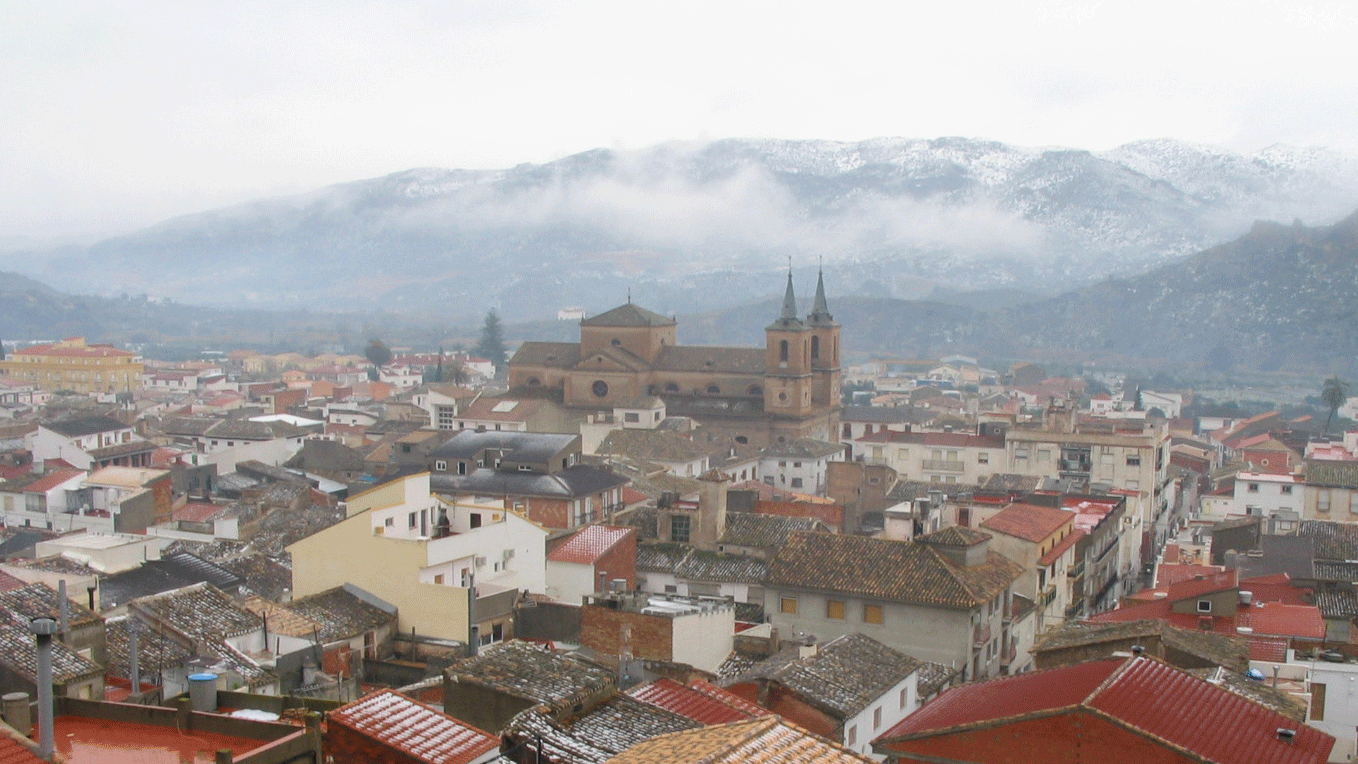
The centre of the village revolves around the church of San Ramón. Its bell tower is visible from several points and works as a useful reference when the slopes and turns become confusing. The exterior is plain. Inside, dark wood and worn benches reflect years of everyday use rather than display.
Nearby, narrow alleyways branch off and the ground underfoot changes texture from one stretch to another. Along streets such as Calle Real, or in small corners where stone basins still collect water, the flow from public fountains can still be heard. On quieter days, there is little movement. A neighbour might pass slowly, carrying bags or tools, but there is no sense of rush.
Walking the land around Laroya
In Laroya, the surroundings matter more than the buildings themselves. Olive groves spread across the hills, their muted green turning almost grey when the wind moves through the leaves. The landscape shifts noticeably with the seasons. In spring, almond trees scatter pink blossoms across the slopes. By autumn, olive branches grow heavy and the tones of the land deepen.
From higher points in the area, parts of the Valle del Almanzora come into view, along with the surrounding mountain ranges on clear days. The terrain alternates between pale rock and old terraces held in place by dry stone walls, traces of long-standing agricultural work.
Traditional paths connect Laroya with nearby villages such as Sierro and Tíjola. Many of these routes follow older lines between olive groves and dry riverbeds known locally as ramblas. They are not designed for speed. Loose stones, compacted earth and only occasional patches of shade shape the walk. Carrying water is sensible even in spring, as the sun can feel stronger than expected.
Scattered across the area are old cortijos, rural farmhouses, along with abandoned animal enclosures. As evening approaches, the silence becomes more pronounced. The wind through the olive trees or the brief crossing of a bird over the valley are often the only sounds.
Food shaped by the surroundings
Food in Laroya is closely tied to what the land provides. Olive oil, bread baked in traditional ovens, and simple sweets made with honey or nuts are common elements. During family gatherings or colder days, more substantial dishes appear. Migas, a dish based on breadcrumbs, and slow-cooked stews are typical, reflecting a way of eating linked to agricultural work rather than restaurant menus.
Conversations with local residents often turn to home production. It is still common to hear about domestic pig slaughters or food prepared within the household. These practices remain part of daily life in many homes in the area.
Festivities and returns
The festive calendar centres mainly on religious celebrations. In August, the feast of San Ramón Mártir is usually held. At that time, people who live elsewhere return to the village, and the streets regain a level of activity that is otherwise rare.
Processions move through the narrow streets with a strong sense of proximity among neighbours. There are no large-scale displays. The atmosphere is more about reunion, with people who have known each other for years sharing the same space again.
Easter, or Semana Santa, is marked in a similarly understated way, with short routes through the village centre. At Christmas, some evenings bring carols accompanied by guitars or handclaps, heard in the square or inside the church.
Getting there and choosing when to go
Laroya lies away from the main roads of the valley. Access is via regional roads with plenty of bends, particularly in the final stretch. The journey is best approached without hurry, allowing extra time beyond what a map might suggest.
On arrival, it is common to leave the car in more open areas at the entrance and continue on foot. Within the old centre, there are sections where a vehicle barely fits.
For walking and spending time outdoors, spring and autumn are usually the most comfortable seasons. In summer, heat builds up between the white houses from midday onwards, and climbing the slopes can feel demanding.
Laroya is not a place of constant movement. That stillness, shaped by landscape and routine, defines the experience as much as any street or building.