Full Article
about Serón
A terraced village crowned by a castle; known for its ham and mining past at Las Menas.
Hide article Read full article
A village where ham sets the tone
Anyone looking into tourism in Serón notices one thing straight away: ham. It hangs in shop windows, appears behind glass counters and fills drying sheds scattered across the village. The smell of curing meat lingers in the air for much of the year. That is no coincidence, as a large part of the local economy revolves around it.
Serón is small and easy to get around on foot. It does not take long to cross from one end to the other, which makes it well suited to a short visit without any complicated planning.
Getting there and finding your way
From Almería, the drive takes just under an hour and a half, usually via the A‑92 and smaller regional roads heading towards the Valle del Almanzora. The final stretch includes plenty of bends, so the approach is not entirely straightforward.
It is best to leave the car in the lower part of the village or near the entrances to the old centre. Inside, the streets are narrow and steep. Trying to drive right into the middle often turns into awkward manoeuvring.
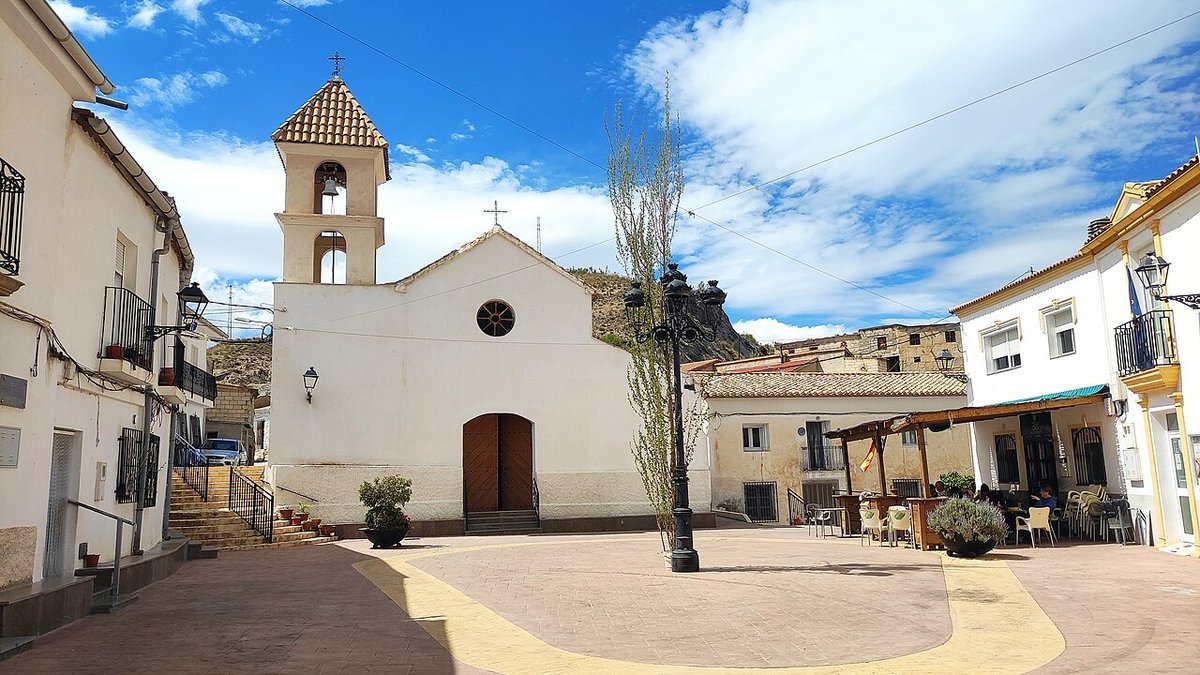
The village can be seen in a couple of hours. A simple route works well: begin at the top, near the castle area, then make your way down towards the main square along Calle Real.
What you will find, and what you will not
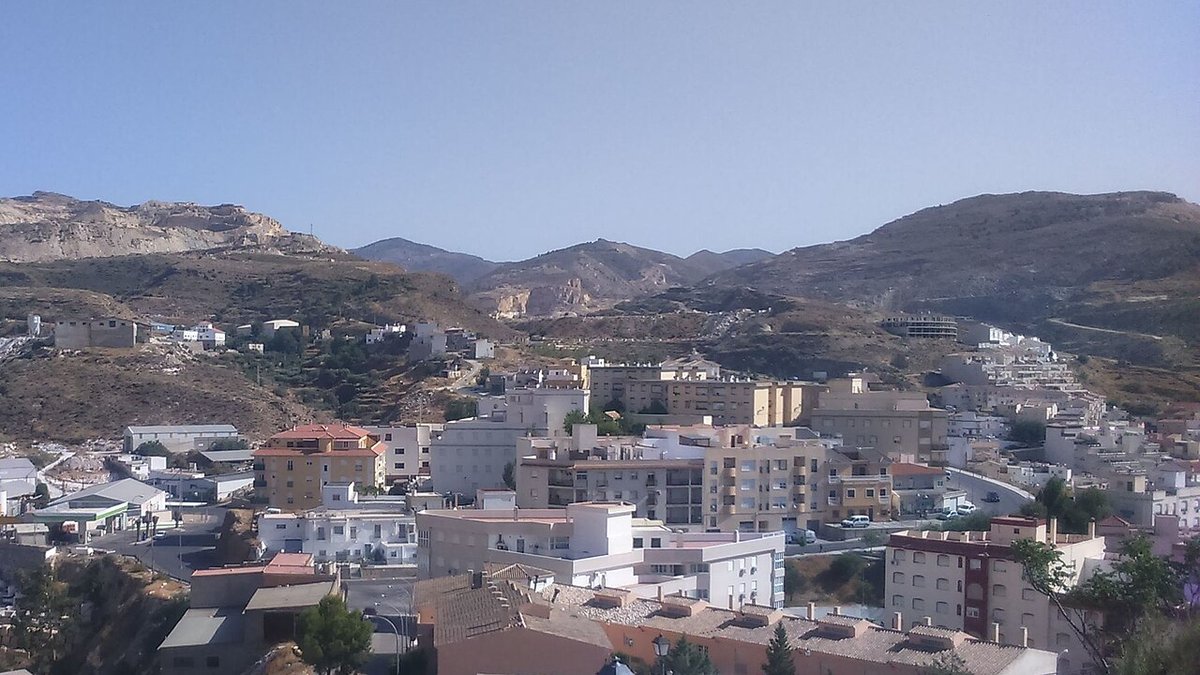
The castle has been partially rebuilt and can be reached on foot in a few minutes from the centre. From the top, there are clear views over the Valle del Almanzora and the surrounding hills covered with olive trees. What remains of the structure consists mainly of walls and the occasional tower. It is not an imposing fortress, but it works well as a viewpoint.
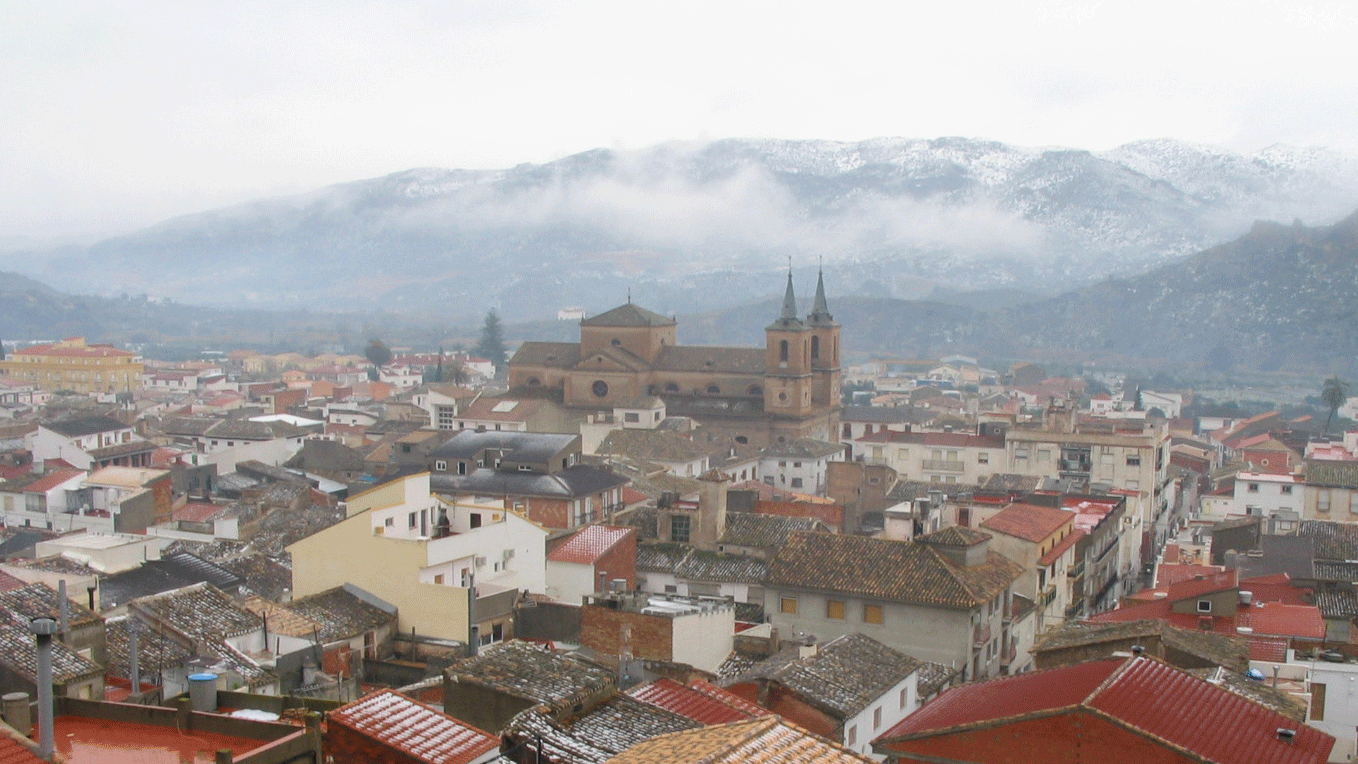
The Iglesia de la Anunciación stands out for its Renaissance-style entrance. If it happens to be open, it is worth stepping inside briefly. The interior is what you might expect in a village of this part of Andalusia: a wide nave, gilded altarpieces and a quiet atmosphere.
Beyond these points, the old centre is made up of steep streets, dark stone houses and benches where older residents often sit. For decades, mining drove activity in the area. When that came to an end, life slowed down and the village became noticeably quieter.
Las Menas and the mining past in the mountains
Around 15 kilometres away lies Las Menas, in the Sierra de los Filabres. The road leading there is narrow but paved, so it is accessible with some care.
This was once an important mining settlement. Engineers and workers from various European countries lived here while the iron mines were operating. Traces of that period remain, with some buildings still standing and certain areas restored. Others have been left in ruins.
It is possible to walk through the former settlement and follow paths that climb up into the surrounding hills. The landscape shifts quite noticeably compared to the valley below, with more woodland and higher elevation. Conditions vary depending on the season. Winter can bring serious cold, and in some years even snow. Summer, by contrast, means strong heat and intense sun. Services in the area are limited, so carrying water is advisable.
Eating in Serón
Serón ham has protected designation of origin status, a label used in Spain to recognise products tied to a specific place and method of production. It is well cured and easy to find in bars and local shops.
Many menus feature traditional, filling dishes typical of inland Almería. These include gurullos con conejo, a stew made with small pasta pieces and rabbit, migas prepared with flour, sopicaldos and andrajos. The cooking is straightforward and rooted in the surrounding mountains.
Modern or experimental cuisine is not what you come here for. Food in Serón follows long-established habits, with recipes that have been part of daily life in the region for generations.
Practical notes before you go
Morning is generally the best time to visit. By mid-afternoon, the village becomes very quiet and many places close.
Autumn and the milder part of winter tend to be more comfortable than summer. In July and August, the heat can be intense, and the steep streets make walking more demanding.
Sunday mornings bring a bit more activity. There are people shopping, bars open and locals gathering in the square, which gives a clearer sense of everyday life.
Serón does not require much time. A walk through the streets, a climb up to the castle and perhaps picking up some ham is enough to get a feel for the place. From there, it makes sense to continue through the Almanzora Valley. Several villages sit close to one another, and linking them together in a single day is a practical way to explore the area.