Full Article
about Almogía
Arab-origin village in the Montes de Málaga, with steep streets and a tradition of verdiales music.
Hide article Read full article
A village that keeps things simple
On Fridays, the square fills with a small market. It is modest: fruit, a bit of clothing, and a cheese stall that usually comes from outside the village. Even so, it breaks the usual quiet. Tourism in Almogía works on this same scale. The village has just over four thousand residents and sits along the slope of a hill, a little over twenty kilometres from Málaga.
There is no busy historic centre packed with shops. Life moves at its own pace, with everyday routines still visible in the streets. Almogía does not try to present itself as something it is not. What you see is what is there.
Getting there and parking
The approach road already hints at what comes next. Narrow streets and steep climbs mean low gears and careful driving. Once inside, cars are often parked at odd angles, and pavements are minimal.
It is best to park as soon as a reasonable space appears. In summer, especially by mid-morning, you may need to leave the car lower down and walk up. During the rest of the year, there is usually space closer to Plaza de la Constitución, where parking bays were painted some time ago.
Walking through the centre
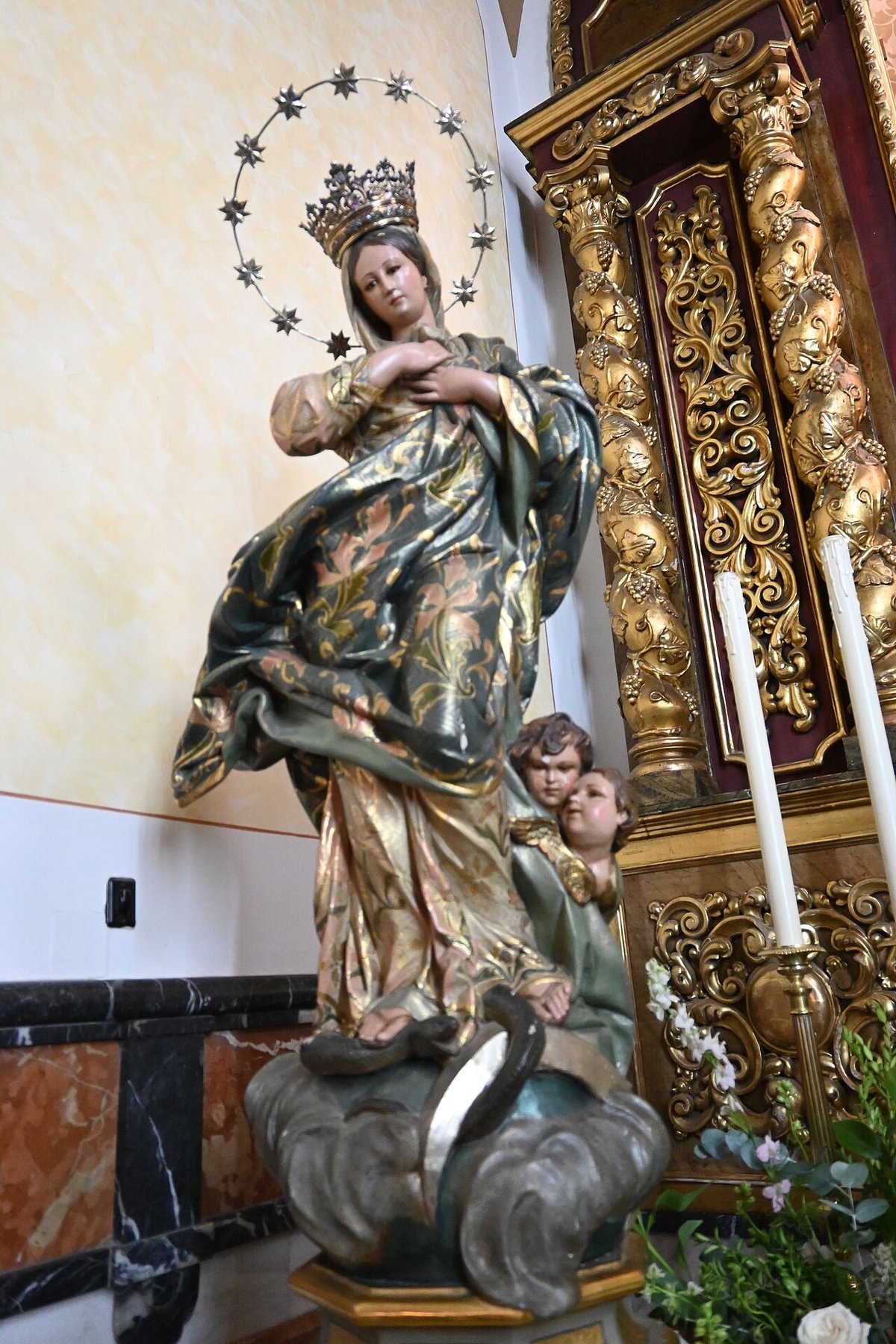
At the highest point stands the Iglesia de la Asunción, a 16th-century church that combines Renaissance elements with later additions. The door is usually open. Inside, there is a clear smell of old wax and wood, and the pews creak when you sit.
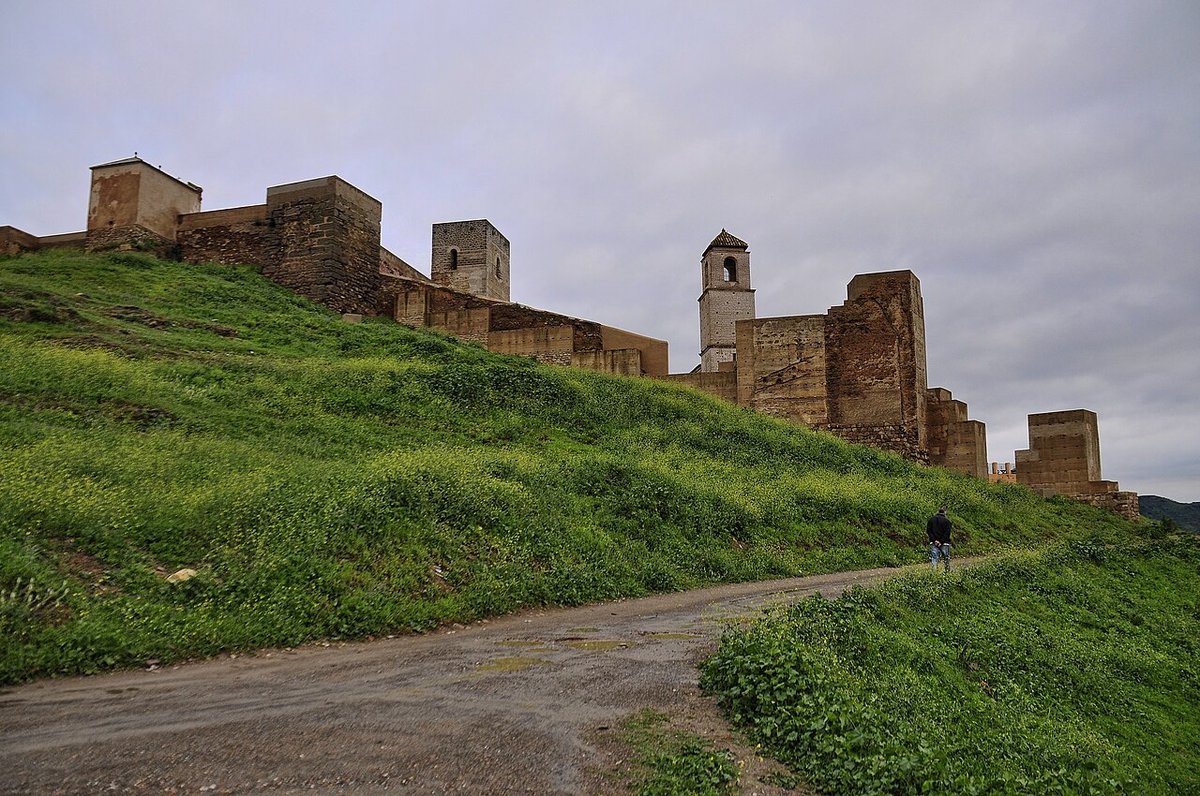
Opposite are the remains of the old castle. What survives is limited to sections of wall and a viewpoint. The tower lasted until the late 15th century, when the area passed into Castilian hands. Today, people come up here to talk and look out over the valley.
Heading down Calle Real, the familiar white houses appear, with window frames painted in ochre tones. There is little attempt at presentation. Laundry hangs out to dry, plant pots sit by doorways, and somewhere a dog barks throughout the day. It feels lived in rather than arranged.
Local food and celebrations
The night before San Juan, Almogía marks the occasion by burning what are known as júas. Each neighbourhood builds its own bonfire using old furniture and rag dolls. Around midnight, firecrackers begin, and smoke drifts down towards the valley. Younger people jump over the embers, while older residents stay nearby, talking.
Towards the end of September, there is usually a day dedicated to the almond, a crop that has long been important here. In the square, people prepare fried sweets with honey and ajoblanco made with local almonds. Ajoblanco is a cold almond soup typical of Andalusia. Food is eaten standing up, in small groups.
At neighbourhood fairs, another constant appears: caldereta de chivo. This is a substantial dish, goat meat cooked on the bone in a thick broth, with bread for dipping. It is not the kind of meal you eat carefully. Shirts end up stained, and no one pays much attention.
Verdiales, or fandango
In Almogía, the local music and dance are called fandango. If you use the term verdiales, some people will correct you.
The style here is fast and often led by a violin. The singing sections are short and follow one after another without much pause. When local musicians gather, the result is lively and loud. This is not music designed for a stage. It belongs to long gatherings, with drinks on the table and people coming and going.
When to visit and the climb to Santi Petri
March and April are usually the most pleasant months to visit. The surrounding countryside fills with almond trees in bloom, and the temperature allows for walking without too much heat.
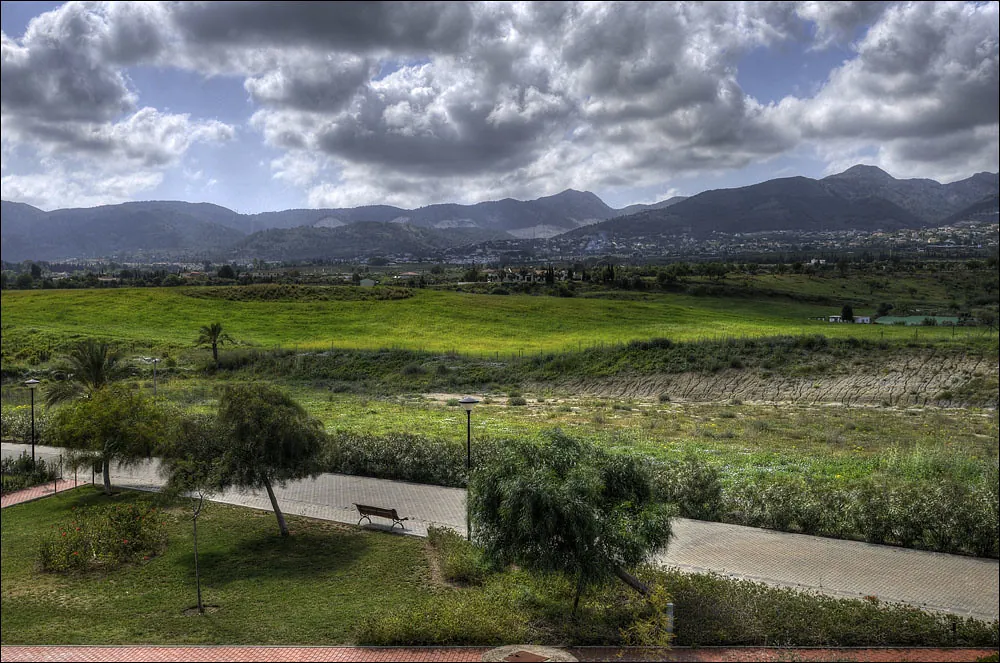
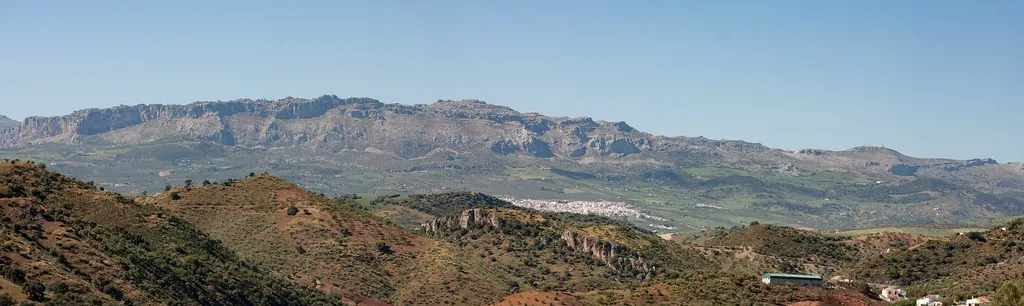
For those who enjoy walking, the climb to Cerro Santi Petri is worth considering. The path begins behind the cemetery and takes roughly three quarters of an hour to reach the top. From the summit, the whole Guadalhorce valley opens out.
It is important to bring water, as there are no fountains along the way, and the sun can be strong even in winter. It is also best to return before dark. Once outside the village, mobile signal becomes unreliable, and the tracks look quite similar to one another.