Full Article
about Obejo
Mountain village of narrow, steep streets, known for its San Benito pilgrimage and sword dance, set in a highly valuable natural landscape.
Hide article Read full article
The first sound is the bell of San Antonio Abad, a single toll that cuts through the morning mist hanging over the Guadiato valley. At that hour, the only movement in the square is a cat crossing the worn cobblestones. The air smells of damp stone and, faintly, of woodsmoke from a kitchen fire. This is Obejo before it stirs, a village of just over two thousand people in the folds of Sierra Morena where tourism is a quiet affair.
You won’t find a queue of hotels here. Planning an overnight stay requires some forethought, as rooms are limited. What you get in return is a different cadence. Evenings are spent in the square as the heat fades, and conversations are slow. If you linger too long with a map, someone will likely ask where you’ve walked from, not as a formal welcome, but out of genuine curiosity.
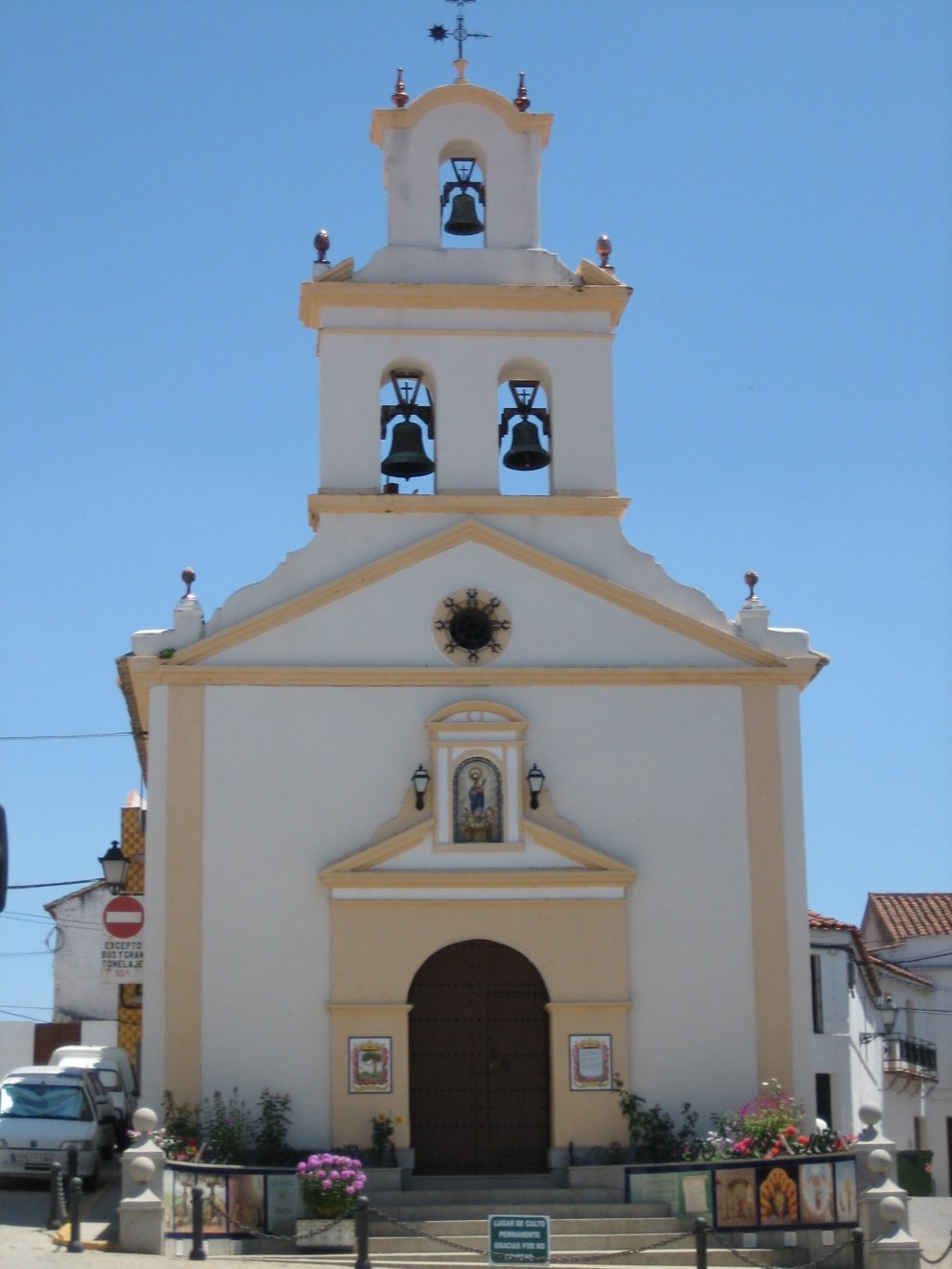
The parish church of San Antonio Abad stands as a physical record. Its walls show layers of work: older stone at the base, Renaissance-era alterations above, all holding a quiet weight.
The Sound of Wood on Stone
Come Easter Sunday, the quiet breaks. The sound begins up at the hermitage, a steady percussion of drums and a dry, rhythmic striking. The Danzantes descend into the streets, their heavy costumes stitched with sequins that flash in the spring sun. Their wooden swords hit the ground in unison, a sound that carries for blocks.
This isn’t a show. It’s part of the village calendar, passed down without fanfare. Older residents remember their grandparents practicing the same steps when many of these streets were still dirt.
For most of the year, the Virgen del Sol resides in her hilltop hermitage. The walk up there late in the day changes everything. The village falls away below, and the view opens to the Puente Nuevo reservoir cupped between hills, the air scented with pine resin and dry brush.
Other dates mark the year. In May, the romería for San Benito winds up the hill with carts and horses; it’s a long climb under a strong sun, so people start early. June brings the velá for San Antonio, where the square fills with music and children carry paper lanterns until well past midnight. August has its feria, with temporary tents and strings of lights. But on an ordinary Tuesday night, once the few streetlights go out, the sky over Sierra Morena reveals a deep black. From the hermitage hill on a clear night, you can see the pale smear of the Milky Way without any help.
What Comes from the Land
The cooking here follows the seasons closely. In winter, you might catch the scent of paprika warming in lard, signalling gachas de matanza being prepared in homes. It’s a thick, hearty dish, sometimes served with an egg cooked right on top.
Spring means tagarninas. These wild thistles are foraged from field edges and become a stew with a distinct, bitter-green taste that somehow captures the smell of damp earth.
Over in the Cerro Muriano area, they still prepare choto with cumin or chilli powder. Locals say this touch comes from foreign miners who worked here a century ago, a small culinary footnote to history.
Then there’s the honey. Hives are moved according to what’s blooming on the sierra, so its flavour shifts from mild to intense, sometimes carrying notes of rosemary or rockrose from one month to the next.
Walking from the Cemetery
A common path starts behind the cemetery, following the River Obejo downstream. It’s shaded by poplars and willows for long stretches, cool even in late spring. The sound of moving water is your companion before you ever see it.
Further along sits an old iron bridge, now rusted and half-swallowed by ivy. It’s a relic from the mining past, silent and slowly returning to the land.
For a shorter stroll, you can trace lanes through the old quarter to end at the Fuente Grande. This stone fountain runs with cold water even in August’s peak heat. Early in the morning, you’ll see people filling large plastic bottles to carry home.
Other trails connect Obejo to surrounding hills and hamlets. The land constantly rolls underfoot through olive groves and scrubland. In summer, walk these in early morning or late afternoon; shade is scarce and midday sun is punishing.
The Pace of Things
Obejo isn’t performing. Its rhythms are its own: the bell at seven, the Virgen moving between church and hermitage with the liturgical year, the Danzantes’ swords hitting stone once every Easter.
If you come looking for grand monuments or a full itinerary of sights, you might leave wondering what you missed. The point reveals itself slowly. It’s in the chill of fountain water on a hot wrist, the crunch of gravel underfoot on a river path, the specific scent of paprika hitting hot fat from a kitchen window.
The day begins with mist in the valley and ends under an expanse of stars. In between, life here unfolds without hurry