Full Article
about Villaharta
Spa town known for its ferruginous, medicinal springs, set amid Sierra Morena pine and olive groves.
Hide article Read full article
A quiet start in the dehesa
Early in the morning, as sunlight begins to filter through the holm oaks, the dehesa around Villaharta fills with thin golden lines and a kind of clean silence. Hardly any cars pass. This small village, home to just over six hundred residents in the Valle del Guadiato, wakes gradually while the air still carries a trace of coolness from the nearby Sierra Morena.
Tourism in Villaharta makes more sense when approached without a fixed plan. A slow walk through the centre or a short step out towards the countryside is enough. There are no major attractions designed for quick photos, no streets arranged to impress at first glance. What defines the place is the landscape, the low whitewashed houses and a rhythm that still belongs to village life rather than to a polished destination.
Streets that climb gently
The main streets, Calle Mayor, La Cuesta and a few narrow side lanes, rise with a steady incline. In some stretches, the ground remains uneven stone, the kind that makes you watch where you place your feet. By mid-morning, the sound of shutters lifting drifts through the air, along with the clink of cups from bars where breakfast lingers.
The houses are fairly uniform. White walls reflect the strong midday light, dark metal grilles cover the windows and wooden doors show signs of age. On certain corners, benches appear where neighbours gather in the late afternoon, especially during milder months, sitting and talking as the day softens.
The parish church and its surroundings
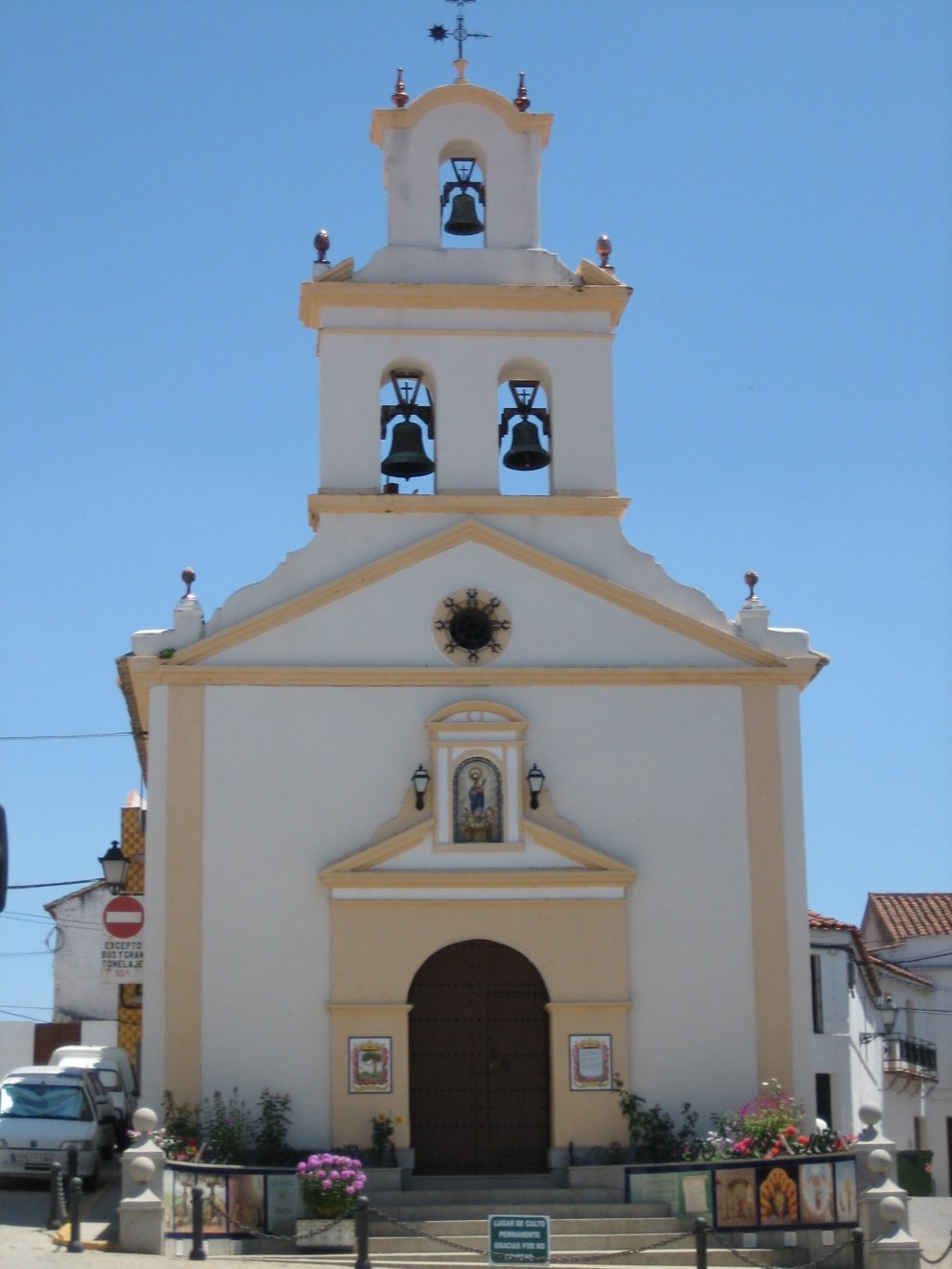
The parish church of Nuestra Señora de los Remedios comes into view quite quickly when moving through the centre. Its tower rises above the rooftops and works as a useful point of reference. The current building dates back to the 16th century, though it has undergone later alterations.
Inside, the space feels restrained. Light enters through small windows and falls across thick stone walls, creating pronounced areas of shadow. It does not take long to visit, yet it is the kind of place where it is worth pausing briefly, allowing your eyes to adjust to the dimness.
A little further from the centre stands the ermita of Nuestra Señora de Buenavista, documented since at least the 17th century. It lies towards the edge of the built-up area and is usually reached at the end of a short walk, where the houses become more scattered.
The landscape around Villaharta
The surroundings are typical of the dehesa found across Sierra Morena: open stretches of holm oaks, some cork oaks and grazing land where cows or sheep move slowly between the trees. In summer, the ground turns dry and straw-coloured. In autumn, ochre tones take over and the smell of damp earth returns with the first rains.
On the way out of the village towards Fuente Obejuna, there is a slightly elevated spot by the roadside where part of the Valle del Guadiato can be seen. It is not a formal viewpoint, just a widened area where people often stop briefly to stretch their legs and take in the view.
Paths into the hills
Several rural tracks begin directly from the village and lead into the Mediterranean woodland. Some follow seasonal streams which, after rainfall, form small flows of water moving between rocks smoothed by erosion. Others climb towards low hills where the valley opens out below.
There are marked routes in the area, although it is worth checking local information before setting out, as conditions can change depending on the year and the amount of rain. After several wet days, certain sections can become quite muddy.
Walking at an unhurried pace, it is possible to spot large birds using the air currents. At certain times of year, vultures can often be seen circling high above, and occasionally a bird of prey crosses the sky over the holm oaks. In spring, the call of the bee-eater stands out, a metallic sound that carries clearly on calm days.
Food shaped by the countryside
Local cooking remains closely tied to the surrounding land. Small game has long been part of traditional dishes prepared in homes: rabbit, partridge or wild boar appear in recipes passed down through generations. Cured meats produced in the area are also common, often served during family gatherings or local celebrations.
In autumn, if rainfall has been sufficient, mushrooms begin to appear in the nearby countryside. Residents head out early to search for them among the fallen leaves of the dehesa. It is not unusual to see people walking along shaded paths carrying baskets.
Festivals and local traditions
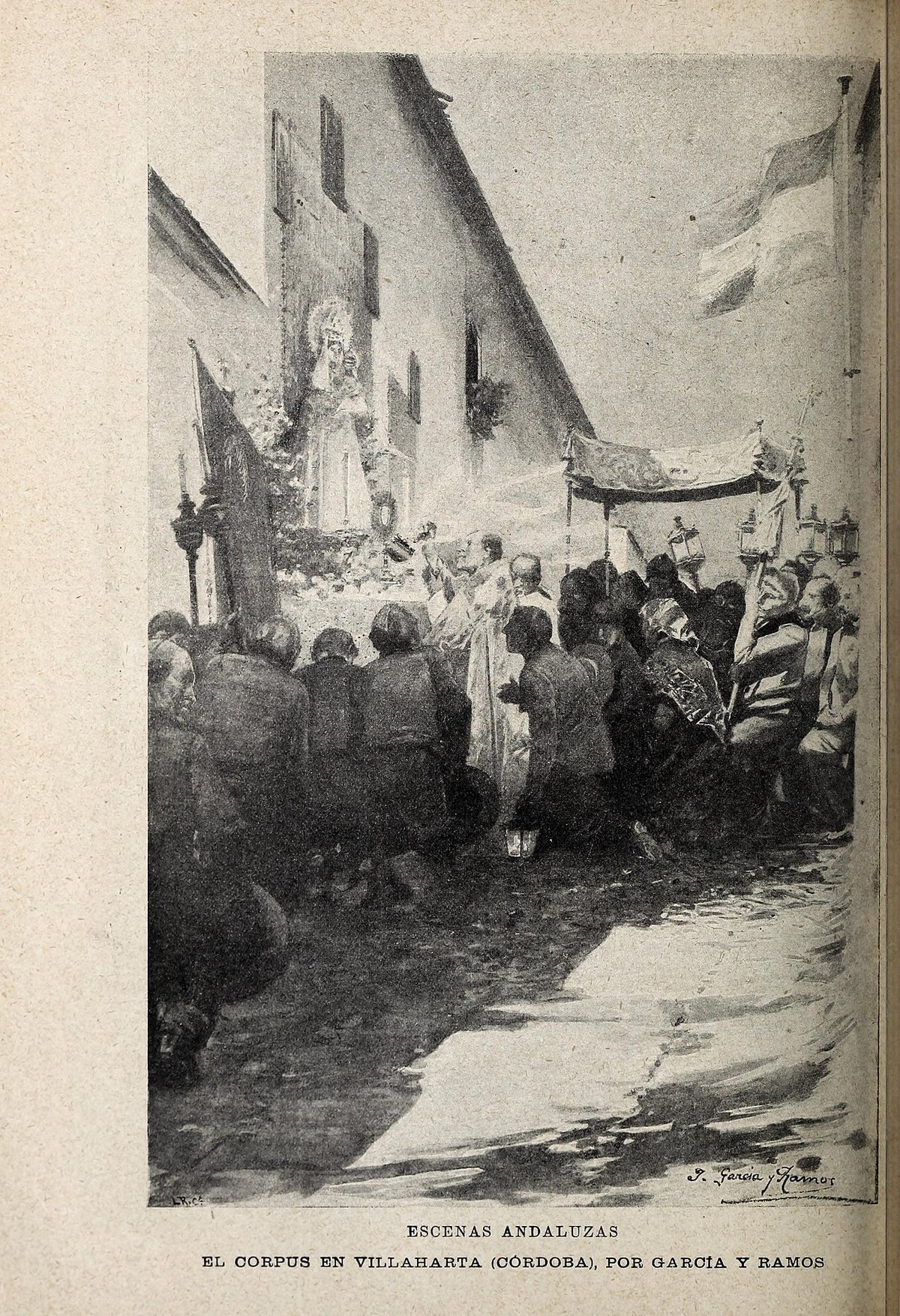
The main festival usually takes place in mid-August in honour of Nuestra Señora de los Remedios. During these days, the village becomes livelier than usual, and residents who live elsewhere return to take part in the celebrations.
Carnival also has a presence in Villaharta, with groups moving through the streets singing coplillas, short, often humorous songs. In May, events linked to San Isidro Labrador are held, reflecting the strong agricultural roots of the area.
When to go
Spring and autumn are generally the most comfortable times to walk in the surroundings. Temperatures make it easier to follow the paths without the intensity of summer heat, and the landscape shifts noticeably between these seasons, from fresh greens to warmer, earthy tones.