Full Article
about Villanueva del Rey
Mountain village ringed by hunting reserves and untouched nature, its traditional architecture and deep quiet intact.
Hide article Read full article
At around five in the afternoon, the storks begin to return. They settle on chimneys, along the eaves of the church, sometimes on a lamppost near the square. From different corners of Villanueva del Rey you can watch them arrive, heavy and deliberate, their wings making a dry sound like a book snapping shut. They are part of the architecture here. You notice the nests as soon as you look up—clumsy bundles of sticks piled on the highest roofs, on the bell tower, on any ledge that will hold them.
The village sits on a small rise in Sierra Morena. Around it, the dehesa opens up, a landscape of holm oaks and pale grass that turns silver in the wind. From the Cerro del Calvario, the view is a slow roll of that open woodland and dark pine woods marking the edge of the range. On clear days the horizon fades into a pale blue, almost blending with the sky. The light is harsh and dry. At midday it bounces off whitewashed façades and the pale earth of the tracks, and you understand why the streets empty out then.
Walking in the dehesa
Walking through the dehesa feels like moving across a shifting pattern of shade. Holm oaks grow twisted, searching for water in clay soil that cracks open in summer. Dry leaves crunch underfoot, built up over years. The air carries the scent of humus and resin, with the low scrub warmed by the sun. If you go after rain, the smell is different—wet earth and crushed thyme.
This area was once crossed by Roman routes linking the Guadalquivir valley with the northern side of Sierra Morena. A miliario was found within the municipal boundaries some time ago and is now kept by the town hall. Its inscription is heavily worn, usually linked to the period of Emperor Constantine. It’s a small, almost understated clue that these hills were already travelled many centuries ago.
Long before that, there were prehistoric settlements. On the Cerro del Ermitaño, about two kilometres from the village, remains of a Chalcolithic settlement have been identified. Among the undergrowth, fragments of pottery have come to light. The Sierra del Guadiato is full of similar traces, places where people found water, mineral resources and enough shelter to stay.
The names left behind
Villanueva del Rey has not always been called that. In old documents it appears as Lugar de Casillas, a name that suggests early houses thrown up quickly from mud and basic materials. At the start of the 14th century it was granted the status of a villa. For a time it was also known as Villanueva de las Viñas, although it is difficult today to picture extensive vineyards on these hills.
In the 16th century, part of its land was separated to form Espiel. Later the settlement passed into lordly hands and for years it was called Villanueva de Cárdenas. The name still surfaces now and then among older residents when they refer to the village as their grandparents did.
The current name was fixed at the beginning of the 19th century during a period of administrative reforms. Since then, little else has changed in scale.
The church and its thickness
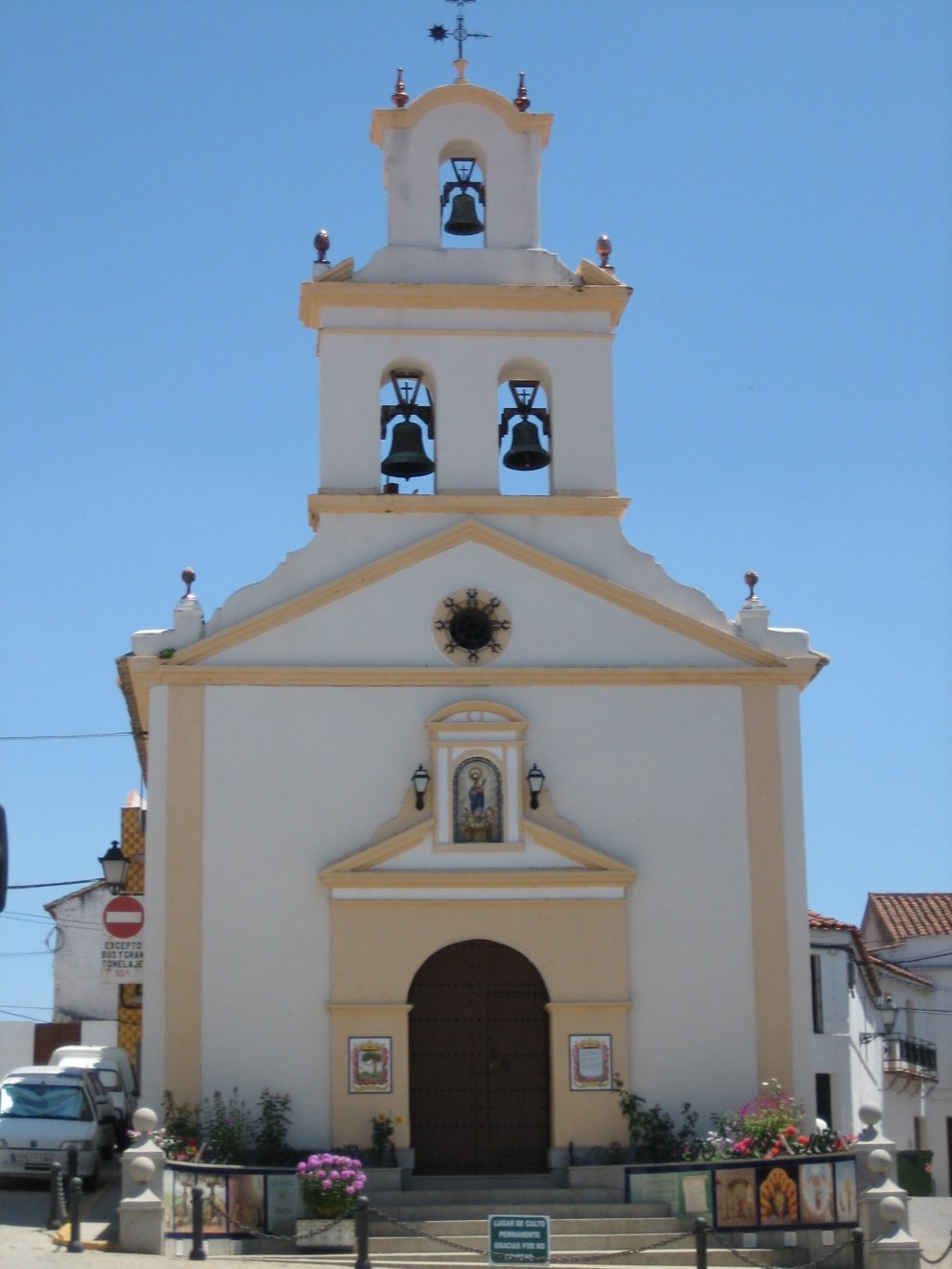
The church of la Inmaculada Concepción has something of a defensive feel. Its walls are thick, the tower is square and restrained, and the Renaissance doorway seems designed more for endurance than decoration. Inside, the air carries the scent of wax and aged wood. Whitewashed walls allow light to fall cleanly through the high windows.
There is a local account that part of building once had a civil function linked to the town council, though documentation is limited. What you can see is mixture—alterations, additions and small marks in stone from centuries of use.
When to go
Towards end of winter and into early spring, landscape shifts noticeably. Holm oaks begin to sprout new leaves that are almost yellow-green against darker branches. The ground retains some moisture and storks are already settled into their nests across village roofs.
Summer can be intense here in Guadiato valley. In July and August heat builds easily; at midday streets are empty save for sound cicadas from surrounding pines trees It makes sense head out early or wait until sun begins drop behind sierra when light turns long shadows gold
During week pace unhurried late afternoon as light softens sound church bells carries across streets occasional car passes slowly along main road It simple moment with little crowding when Villanueva del Rey shows itself much as it is