Full Article
about Almodóvar del Río
A town dominated by an imposing medieval castle overlooking the Guadalquivir valley, offering spectacular views and a natural setting perfect for outdoor activities.
Hide article Read full article
A fortress that defines the landscape
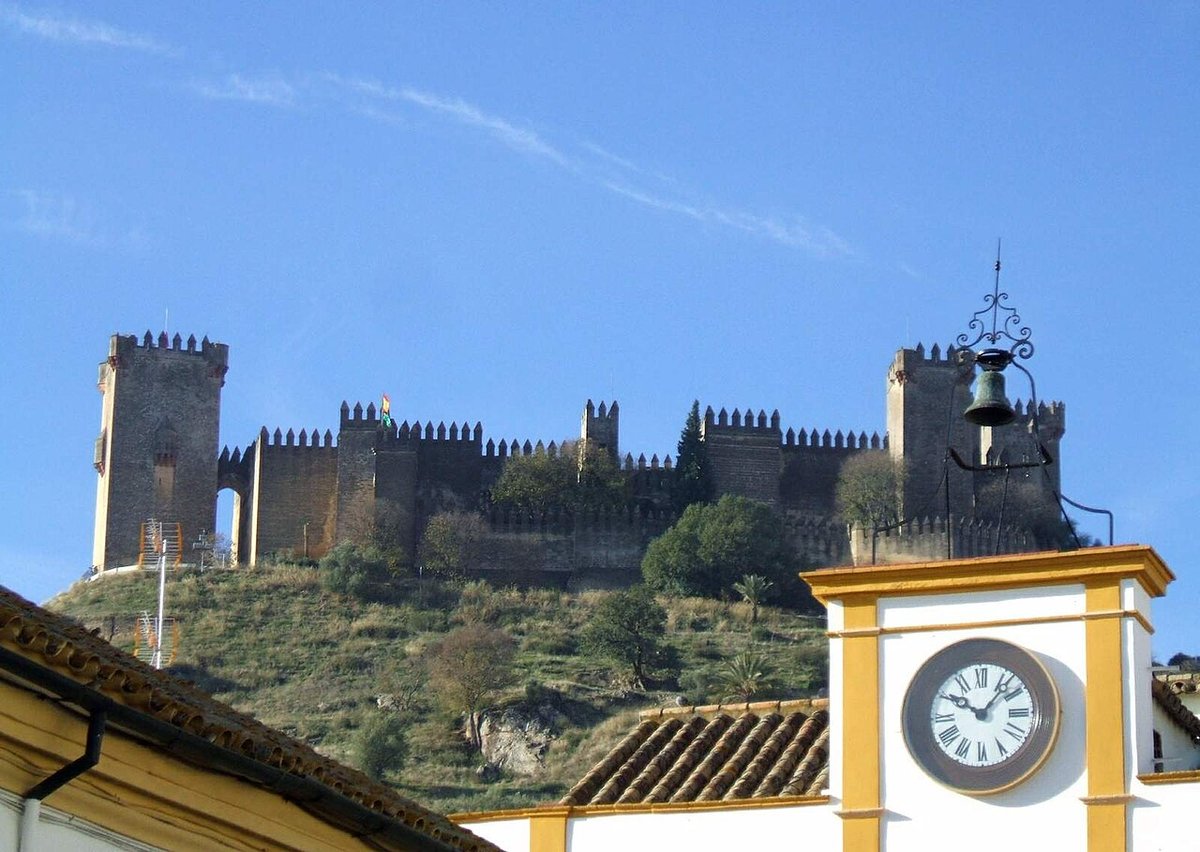
Approaching along the A‑431, the castle of Almodóvar del Río appears all at once: an ochre mass rising above green orange groves. It sits on the summit of a rounded hill that overlooks a bend in the Guadalquivir. The location is no accident. In the 8th century, the Umayyads built a fortress here because it allowed early control over movement through the valley.
This elevated position still explains everything about the place. The hill dominates the surrounding farmland, and the river traces a wide curve at its base. From a distance, the castle’s outline sets the tone for the entire landscape.
The hill and the name
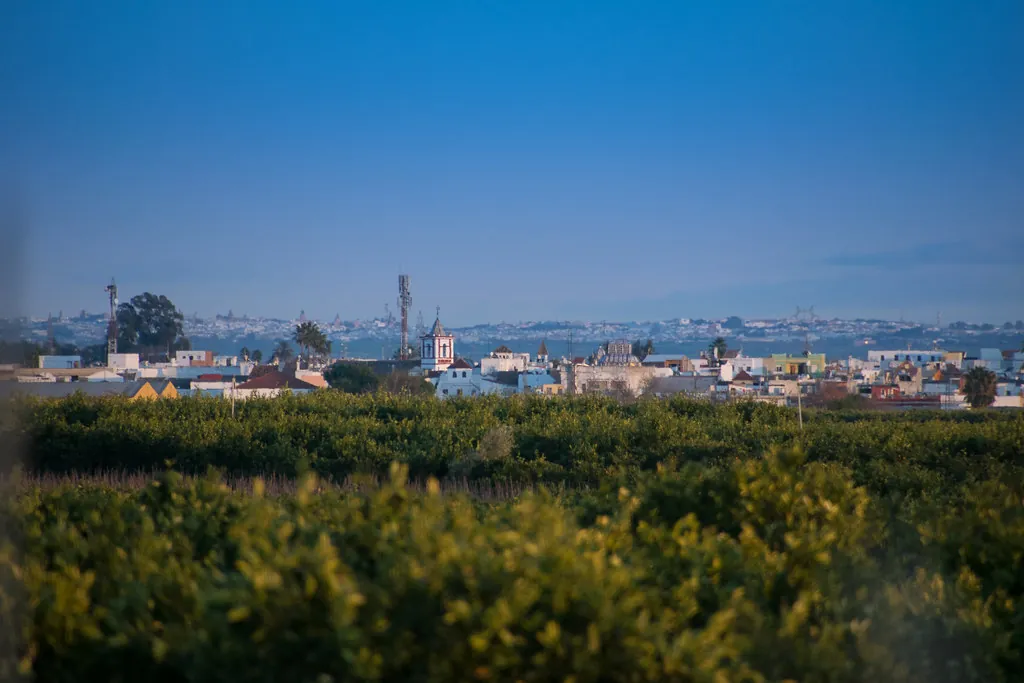
Almodóvar is less a village with a castle than a settlement shaped by it. The name comes from the Arabic Al‑Mudawwar, meaning “the round one”, a reference to the hill itself. From below, the meaning becomes clear: white houses gather along the slope while the castle crowns the summit.
After the Christian conquest in the 13th century, the fortress remained strategically important within the Guadalquivir valley. Over the centuries it passed through noble hands and went through periods of neglect. Much of what is seen today comes from a major restoration in the early 20th century, led by the Count of Torralva. The aim was to return the castle to a complete medieval appearance. Some sections reflect that romantic vision of a fortress rather than a strictly archaeological reconstruction.
Even so, the climb is worthwhile for the sense of place it offers. From the towers, the Cordoban countryside stretches northwards, while to the south the Guadalquivir broadens before reaching a nearby reservoir. On clear days, the outline of Córdoba can be made out in the distance. The choice of this hill makes sense when seen from above. It has been occupied since very early times, and there were once Roman settlements nearby linked to the river, though little remains today.
Streets beneath the slope
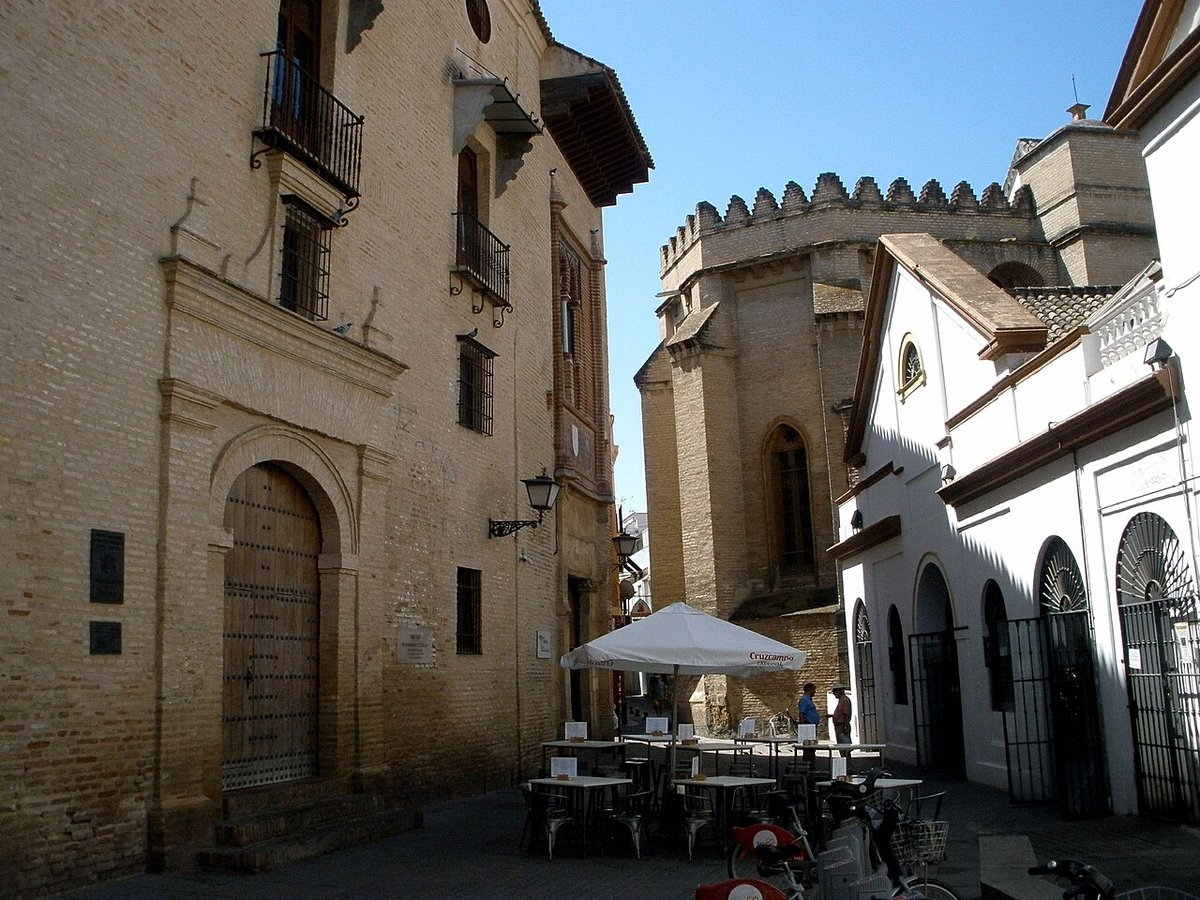
The town itself is small and generally quiet. The church of Santa María, heavily altered in the 18th century, stands on the site of the former mosque, something common in settlements along this stretch of the valley. A number of houses still display stone coats of arms from the 17th and 18th centuries, reminders of families connected to the administration of the surrounding lands.
Some of the most interesting features are found in the street layout. Routes climbing towards the hill retain tight turns and steep gradients typical of Andalusí design, shaped for walking rather than vehicles.
Daily life centres around the market and Calle Real. Almodóvar is an agricultural town, tied to the fertile plain and especially to citrus cultivation. In spring, the scent of orange blossom fills the valley. From below, the castle seems to hover above this green band of orchards.
Local traditions and gatherings
At the end of August, the romería of San Bartolomé usually takes place at a hermitage a few kilometres from the town. A romería is a traditional pilgrimage that combines religious devotion with a day spent outdoors. Here it feels more like a gathering of neighbours than an event designed for visitors, with shared food and a long day in the countryside.
During the summer, cultural events are sometimes held inside the castle. These may include historical re‑enactments, concerts or night visits in certain years. The setting is the inner courtyard, with limited capacity, which keeps the atmosphere relatively intimate.
Semana Santa, or Holy Week, also plays a role in the local calendar. Among the processions, the one known as El Silencio stands out for its restrained tone, moving through the streets at night in near silence.
Walking up and looking out
From the town, a road leads up to the hilltop, and there is also a path for those who prefer to walk. The ascent is short but can be steep in places, so carrying water is sensible in hot weather.
At the top, walking along the ramparts gives the clearest sense of the setting. The Guadalquivir winds at the foot of the hill, and the nearby reservoir extends the sheet of water towards the west. Birds of prey can often be seen gliding along the rocky edges nearby.
For a longer walk, paths run alongside the river and the reservoir. These are straightforward routes through riverside vegetation and farmland, where scattered remains of older river infrastructure sometimes appear.
Practical notes for a visit
Almodóvar del Río lies a short distance from Córdoba, reached by following the Guadalquivir valley westwards. There are also interurban buses, though services tend to be limited.
The castle is open for most of the year, with opening times that vary by season, so it is worth checking in advance.
Spring is when the valley feels most vibrant, with orange trees in bloom and temperatures that make walking more comfortable than in the intense summer heat typical of Córdoba. Winter is quieter, although winds coming down from Sierra Morena can be noticeable at the top of the hill.
The town can be explored at an unhurried pace in a morning or an afternoon. Its logic is simple: climb to the castle, look out over the valley, and understand why this hill held such importance along the middle stretch of the Guadalquivir for so many centuries.