Full Article
about Brenes
A farming town in the Guadalquivir plain known for its fruit orchards and riverside setting.
Hide article Read full article
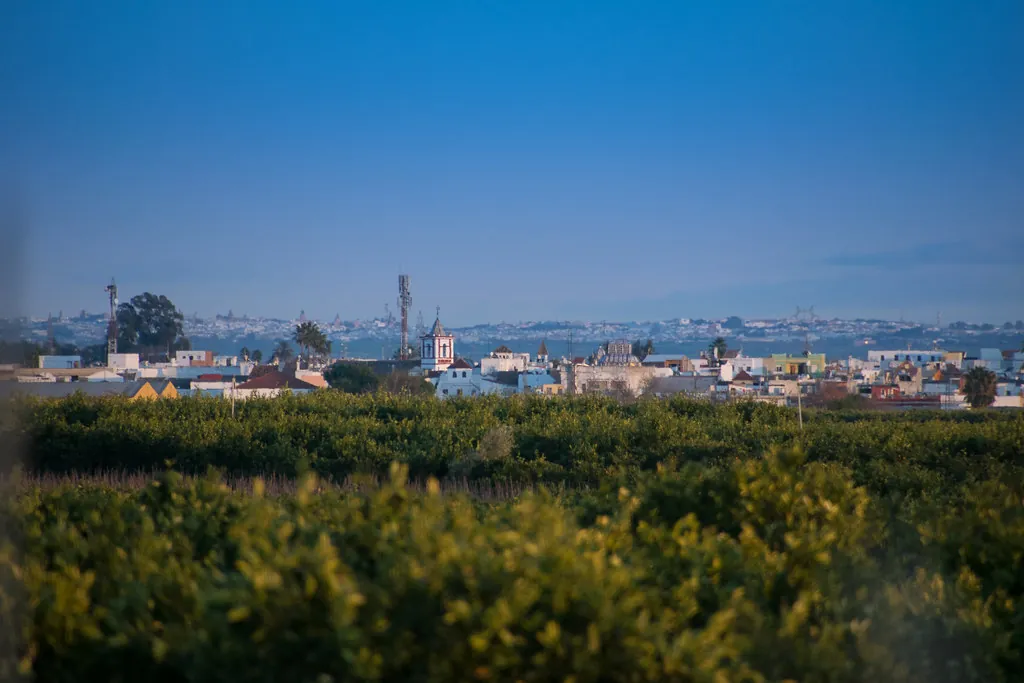
The bells from the Mudejar tower begin at seven. Their sound drifts over the beet fields and into the quiet plaza. A metal shutter rattles up, a coffee machine hisses to life, and the day in Brenes starts without any fanfare. This is a place where you notice the ordinary rhythm first: neighbours crossing the square, the low morning sun on whitewashed walls, a car starting slowly on the cobbles.
Life here moves to the pace of the vega, the fertile plain of the Guadalquivir that wraps around the town.
The smell of wet earth
After rain, the air carries the scent of freshly turned soil. It is a practical smell. Irrigation channels run close to the streets, and cereal fields form a green belt that changes with the months. In spring, the wheat is an intense, almost electric green. By summer, it turns a bright gold that reflects the light and makes you squint.
That earthy note mixes with the orange blossoms in the church courtyard and something heavier drifting up from the river.
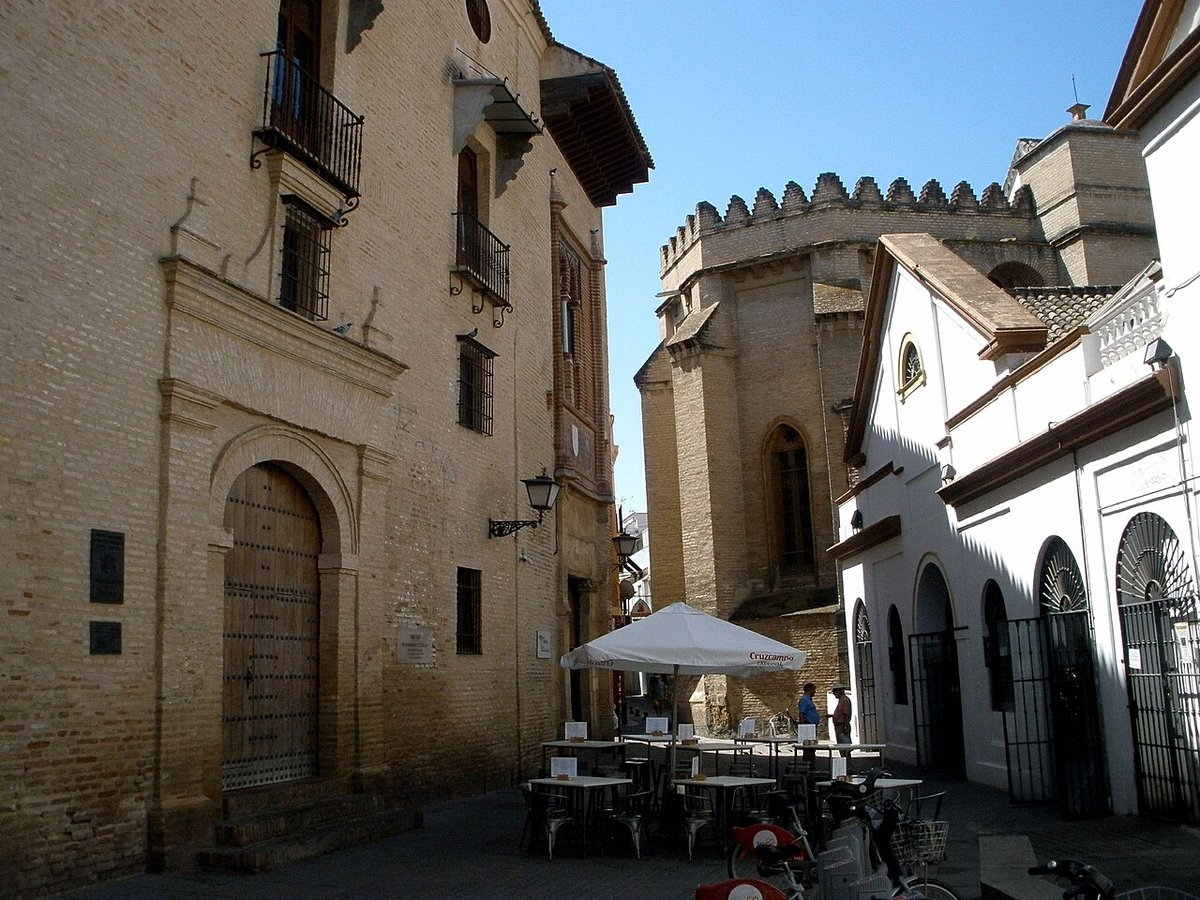
The tower of the Purísima Concepción is your constant landmark. Built with Mudejar origins, it rises above the rooftops. Storks nest in its bricks, their large platforms swaying when the wind comes in from the river. Sometimes you hear the dry tap of their beaks, a sound that blends with the bells.
Where the river shifts the scene
A fifteen-minute walk from the plaza changes everything. The houses give way to eucalyptus trees and a path that opens towards the Guadalquivir. The riverside walkway is where you feel the link between town and plain most clearly.
Early in the day, fishermen lean on the railings with long rods and flasks of coffee. Their attention stays on the water. Carp and barbel are the usual catch.
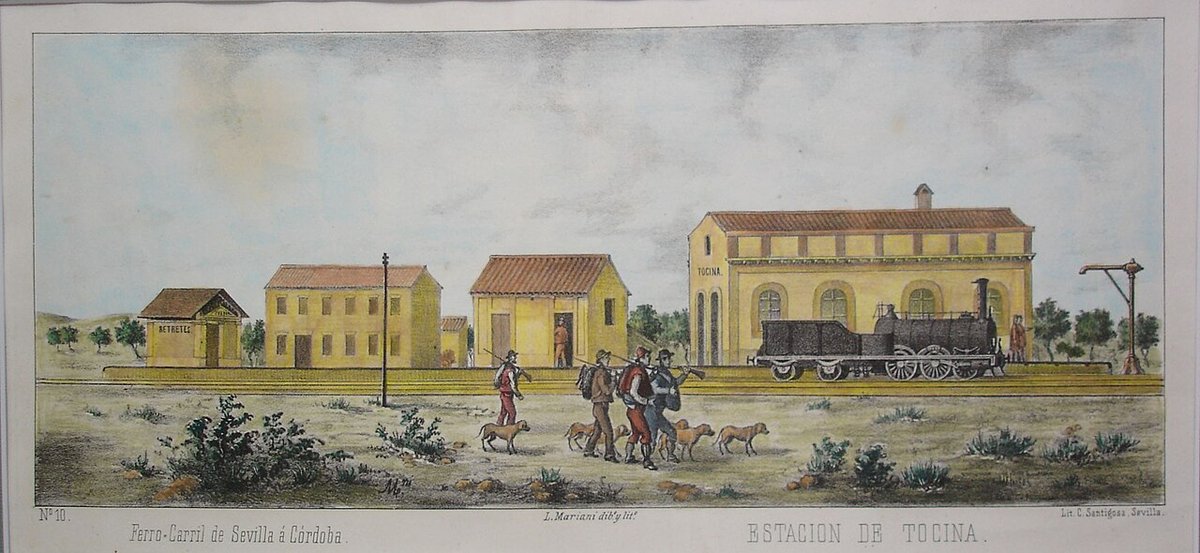
The river moves thick and slow here, carrying leaves and mud, and sometimes debris that hints at Seville upstream. It carries history too. This stretch once saw goods moving when the railway began transporting beet from the vega. The old industrial chimney of the Torre de la Cigüeña stands nearby, a brick marker from that time.
In May, for the Santa Cruz celebration, the riverside changes. Folding tables appear under the trees, families arrive with cool boxes, children run through the grass. You don’t need to go far; the river becomes the countryside.
Snails, seasons and the kitchen
You can mark the calendar here by what appears on the table. The season for snails starts with the first spring rains. They emerge in the fields and, almost immediately, in local bars.
There’s rarely a sign. You’ll see it in the wicker baskets carried through a door mid-morning. They’re cooked with cumin and mint, served steaming hot, eaten slowly with toothpicks.
Another marker is menestra de habas y guisantes, made when the legumes are still tender, before the heat sets in. Later come stewed artichokes from nearby plots. Menudo, a tripe stew, stays on menus year-round but feels right in colder weather: a deep plate of hot broth, with bread to soak it up.
Festive days and quieter moments
The Feria de Octubre alters Brenes for several days. Stalls and lights fill the fairground; music carries to where houses meet open fields at town's edge.
For a quieter visit, avoid those dates. Come on a weekday morning instead. That’s when you’ll find market stalls set up and long conversations held in doorways.
Semana Santa has weight here. You can hear rehearsals months in advance—the rhythmic steps of costaleros practising lifts in municipal yards. A monument at the entrance roundabout shows a costalero bearing a paso on his shoulders. It is not just decoration.
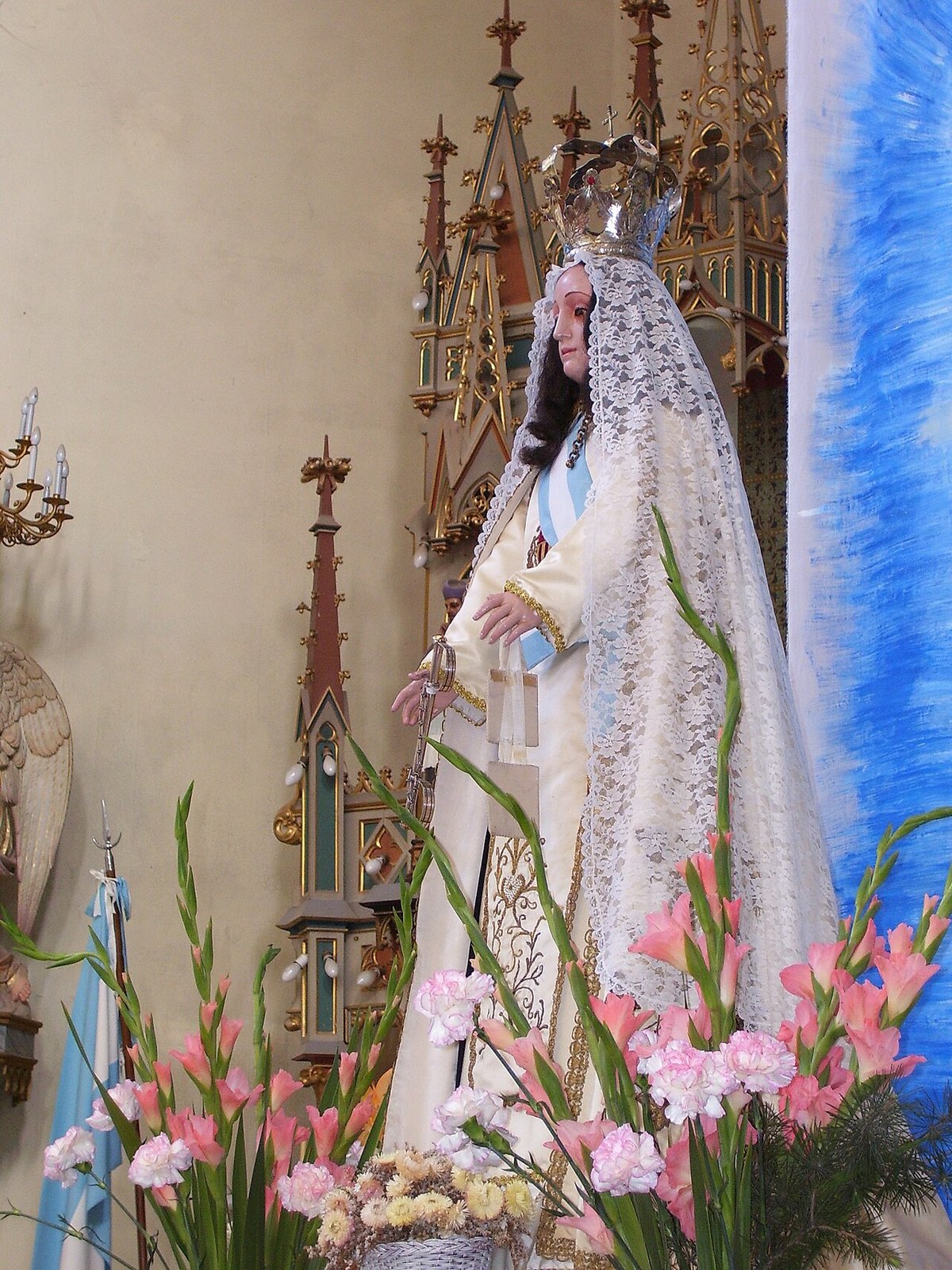
On Palm Sunday, when the float of La Purísima leaves its church, those tower bells ring out with force again. For a while, everything moves together through narrow streets: wax candles scenting air already thick with dusk light spilling over flat fields all around