Full Article
about Burguillos
Expanding municipality at the foot of the Sierra Norte with pleasant natural surroundings for leisure.
Hide article Read full article
A village shaped by fields
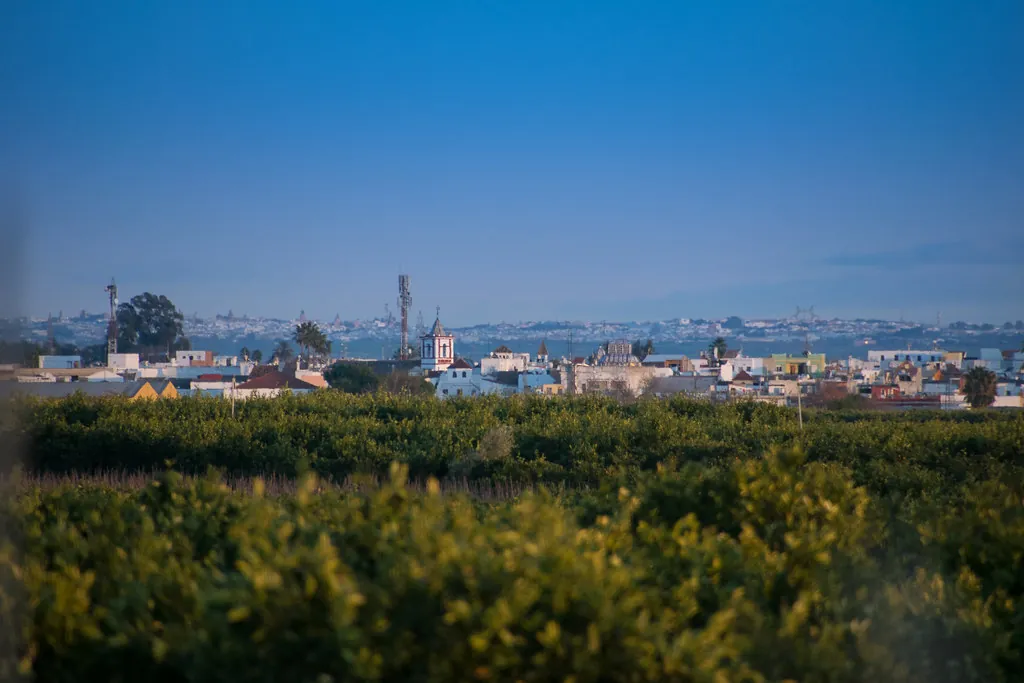
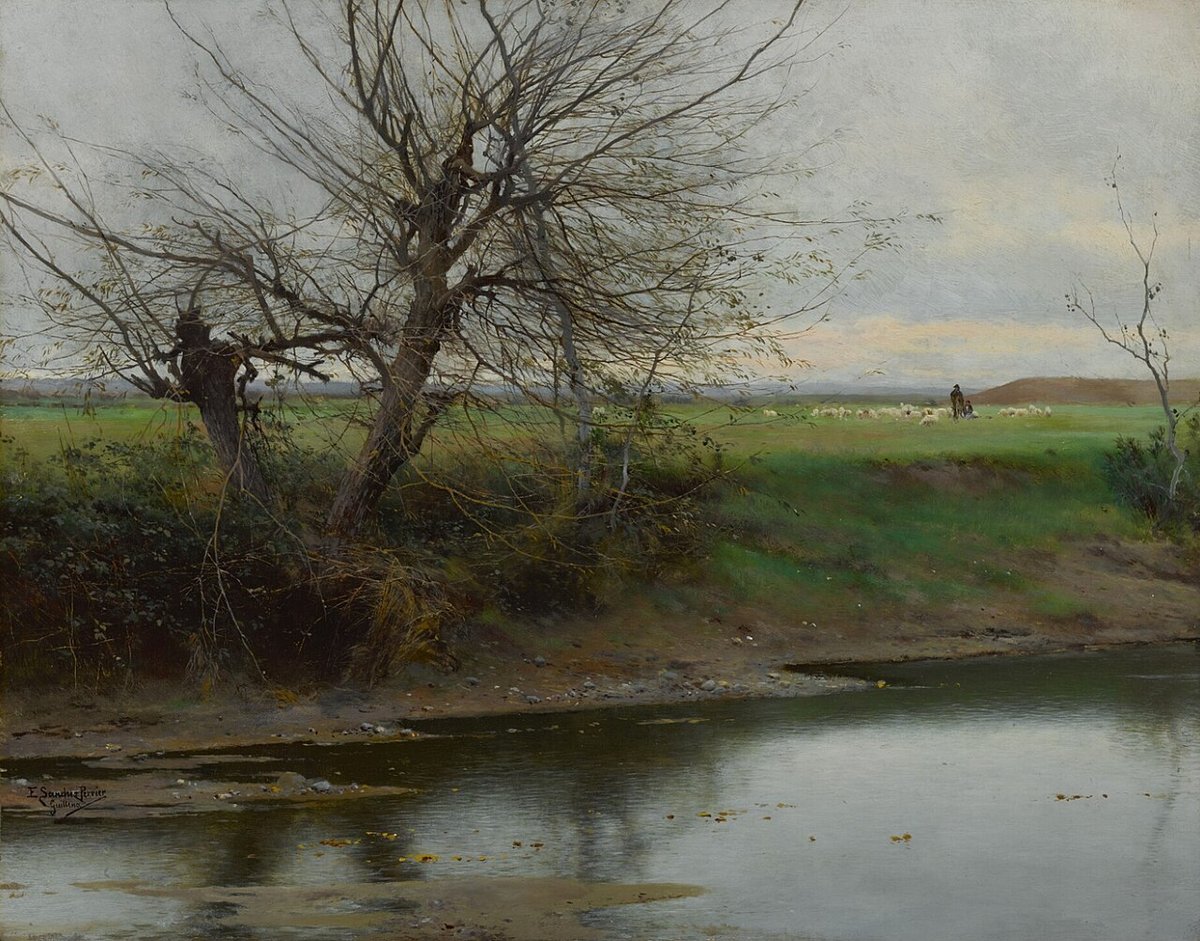
The landscape shifts quickly when turning off the A‑66 towards Burguillos. This part of the Vega del Guadalquivir, a broad agricultural plain in the north of Seville province, is defined by open land where olive groves dominate and plots fall into a clear, almost geometric order. At the centre of that space sits the town itself, compact, white, and set on a slight rise above the surrounding fields.
Tourism in Burguillos does not revolve around well-known monuments. Its interest lies elsewhere, in how the surrounding farmland is organised and in its role within the rural belt that encircles Seville. For centuries, Burguillos has depended on this fertile vega. It began as a small الزرا settlement linked to the capital, first as farmland and later also as a residential base for those working in Seville. That dual character, both agricultural village and nearby periphery, explains much of what is seen today.
Fragments of a defensive past
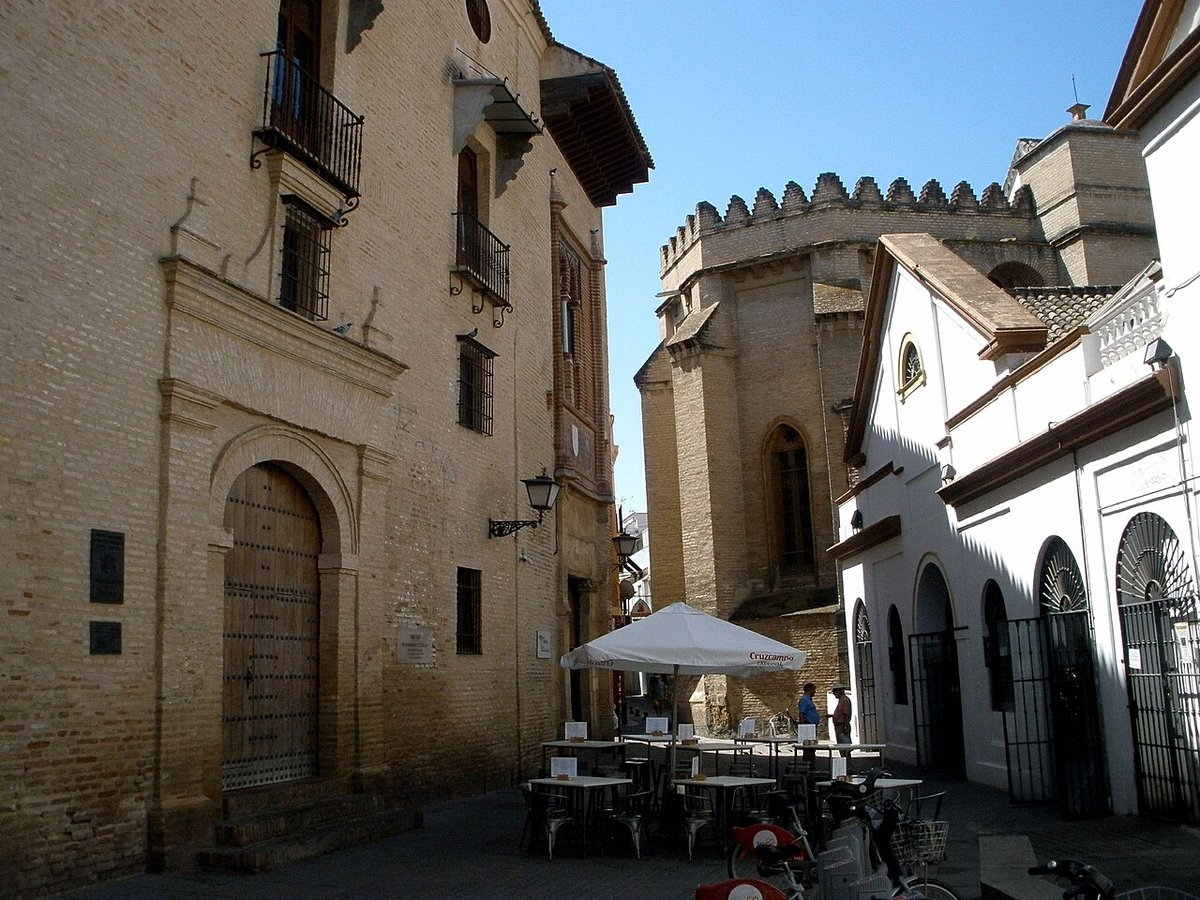
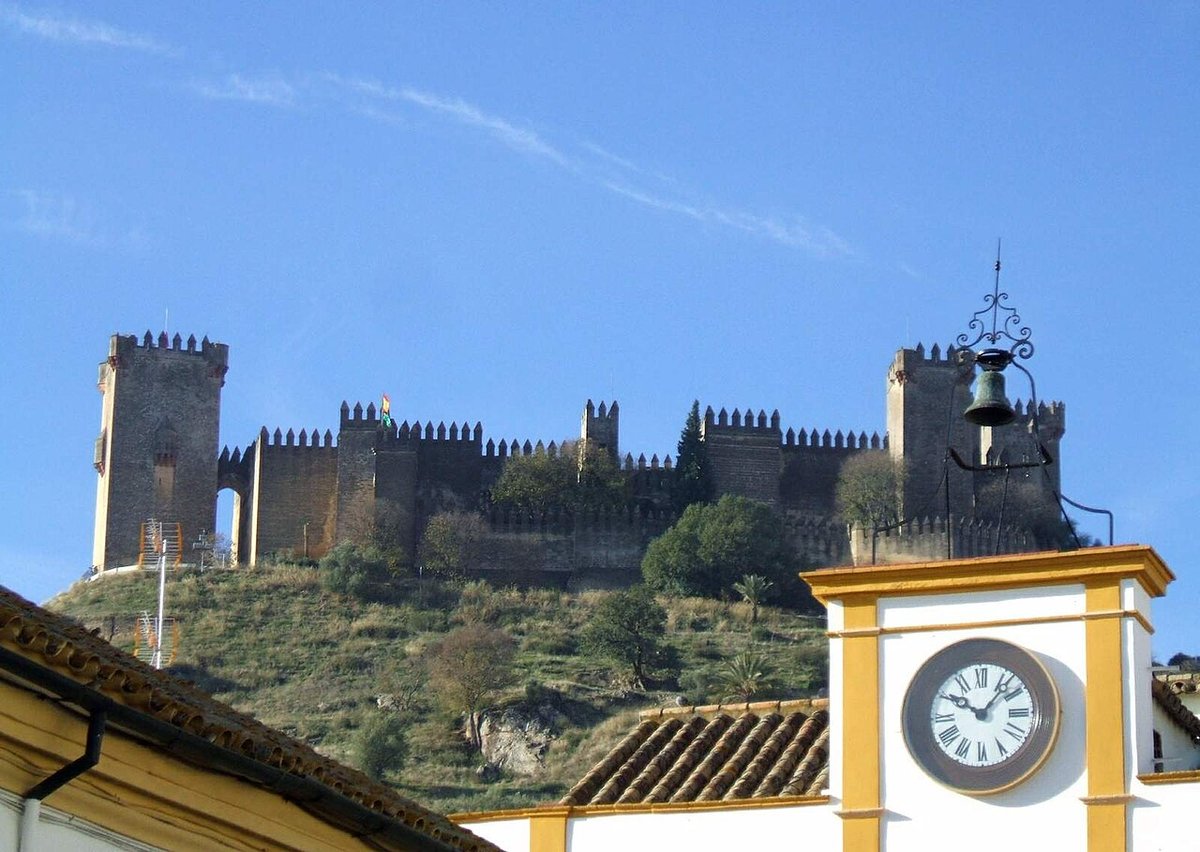
Along the edges of the old town, traces of a defensive structure still survive, though in a very fragmented state. A tower and sections of masonry are usually attributed to the late Middle Ages. The documentation about their origin is not entirely clear, but they are often linked to systems of territorial control established after the Castilian conquest of the Guadalquivir valley.
Today, these remains are absorbed into the fabric of the town. They do not form a recognisable castle. Instead, they appear as scattered elements embedded within houses and streets. Even so, they help explain why the settlement took shape here. The slight elevation offers a vantage point over the surrounding agricultural plain, a practical advantage in earlier periods.
San Cristóbal at the centre
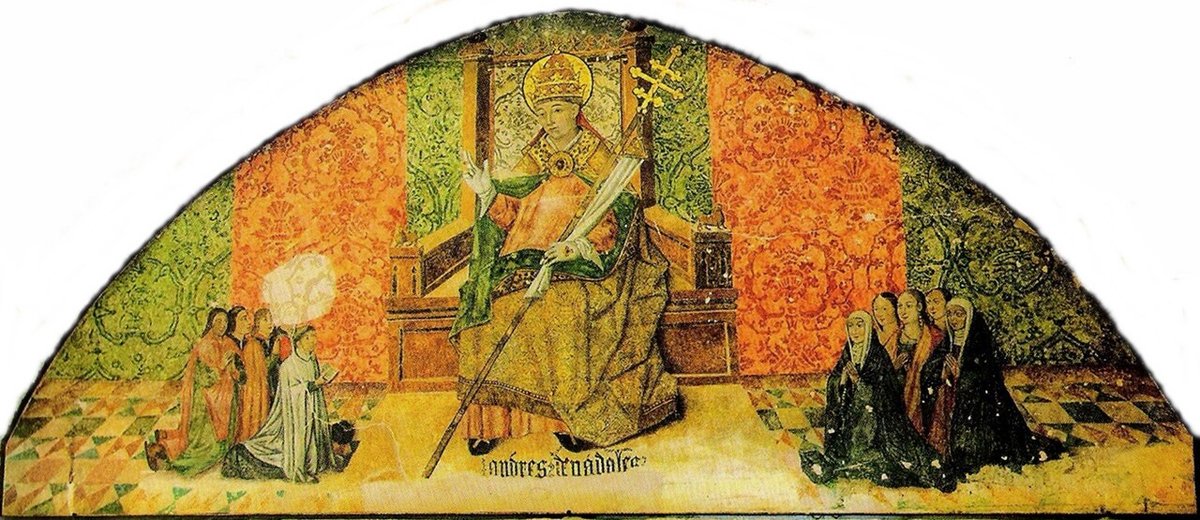
The most visible architectural reference point is the parish church, dedicated to San Cristóbal. The current building reflects mainly later, early modern reforms, though it is likely that a parish existed here following the Christian repopulation of the area.
From the outside, the square tower stands out clearly against the skyline of the town. Inside, the space is broad and relatively restrained, in keeping with many parish churches across the Sevillian countryside that have undergone extensions and alterations over time. Rather than a single artistic highlight, the church functions as a focal point for local life. Religious celebrations, annual festivities and community gatherings continue to revolve around this space.
Walking through an agricultural town
The layout of Burguillos is straightforward. Short streets, some with a gentle slope, are lined with whitewashed houses of one or two storeys. Interior patios exist behind many façades, though they are rarely visible from the street. There is no concentrated monumental centre. The place is best understood by wandering without a fixed route.
Details of a traditional rural economy still appear in everyday architecture. Old iron window grilles, wide doorways once designed for carts or adapted as garages, and small backyards or corrals behind certain houses all hint at earlier ways of life. In several corners, built-in benches remain, where neighbours still gather towards the end of the day. This habit continues to shape the rhythm of daily life in many towns across the Vega del Guadalquivir.
The surrounding vega
To understand Burguillos more fully, it helps to step beyond the urban core. The agricultural tracks around the town reveal the scale of the vega. Large plots stretch out across the plain, with extensive olive groves and areas where cereals or seasonal crops alternate depending on the time of year.
The Guadalquivir river itself lies some distance away, but this entire northern strip of Seville belongs to its historical agricultural system. Fertile soils and relatively flat terrain have shaped the landscape over centuries. Here, the countryside has not been designed as scenery. It is a working environment, and that is evident in its straight paths, practical infrastructure and small scattered buildings used for storage or shelter during fieldwork.
Everyday food and local habits
Daily life in Burguillos is also reflected in its simple bars and roadside eateries, where home-style cooking is the norm. Breakfast commonly consists of bread with local olive oil, sometimes accompanied by tomato or cured meats.
Many dishes belong more to a rural culinary tradition than to a formal menu. Migas, typically made from fried breadcrumbs, appear alongside hearty winter stews and tomato soup with egg. These recipes are closely tied to the agricultural calendar and to a practical approach to cooking, making use of whatever is available in the pantry.
Visiting from Seville
Burguillos lies about twenty minutes by car from Seville, connected by the A‑66 and local roads. Parking is usually found on the streets within the town itself.
A visit tends to be brief. A relaxed walk through the streets and perhaps a short stroll along nearby tracks is enough to gain a sense of the place. Late winter and spring are often the greenest moments in the vega, while summer brings the typical heat of the Sevillian countryside.
The local festive calendar follows patterns common across the region. There is a summer fair, along with religious celebrations throughout the year, all tied in one way or another to the parish and to the rhythms of the community.