Full Article
about Fuente Carreteros
A young municipality recently split off, founded during the colonizations of Carlos III, still keeping alive the unique dance of the locos as its cultural hallmark.
Ocultar artículo Leer artículo completo
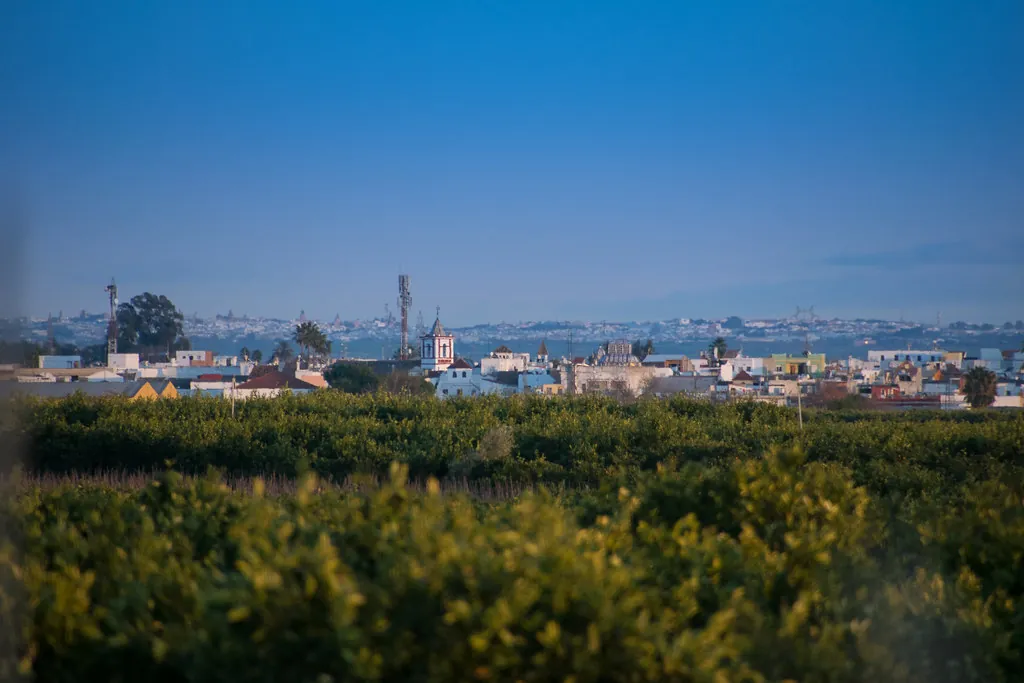
The church bell strikes seven and the square fills with folding chairs. Grandparents claim the shady spots under the lone eucalyptus; teenagers circle on bikes, tyres crunching the gravel. This is Fuente Carreteros at sundown, 158 metres above sea level yet still the highest point for miles of flat cereal fields. In late May the air smells of warm barley and the irrigation ditches carry a trickle from last week’s rain. By August the same soil will be bone-dry, the ditches empty, and the evening ritual will have shifted to midnight.
Altitude here is more statistical than scenic. The village sits on a barely perceptible rise, just enough to lift the church tower of Nuestra Señora de los Remedios above the sea of grain. What matters is what that modest height keeps at bay: the clammy ground-hug of the Guadalquivir marshes lies thirty kilometres south, while the olive terraces of the Subbética begin twenty kilometres north. Fuente Carreteros belongs to the wide middle – the Vega – where tractors rather than tourists set the timetable.
A Grid of Whitewash and Iron Grilles
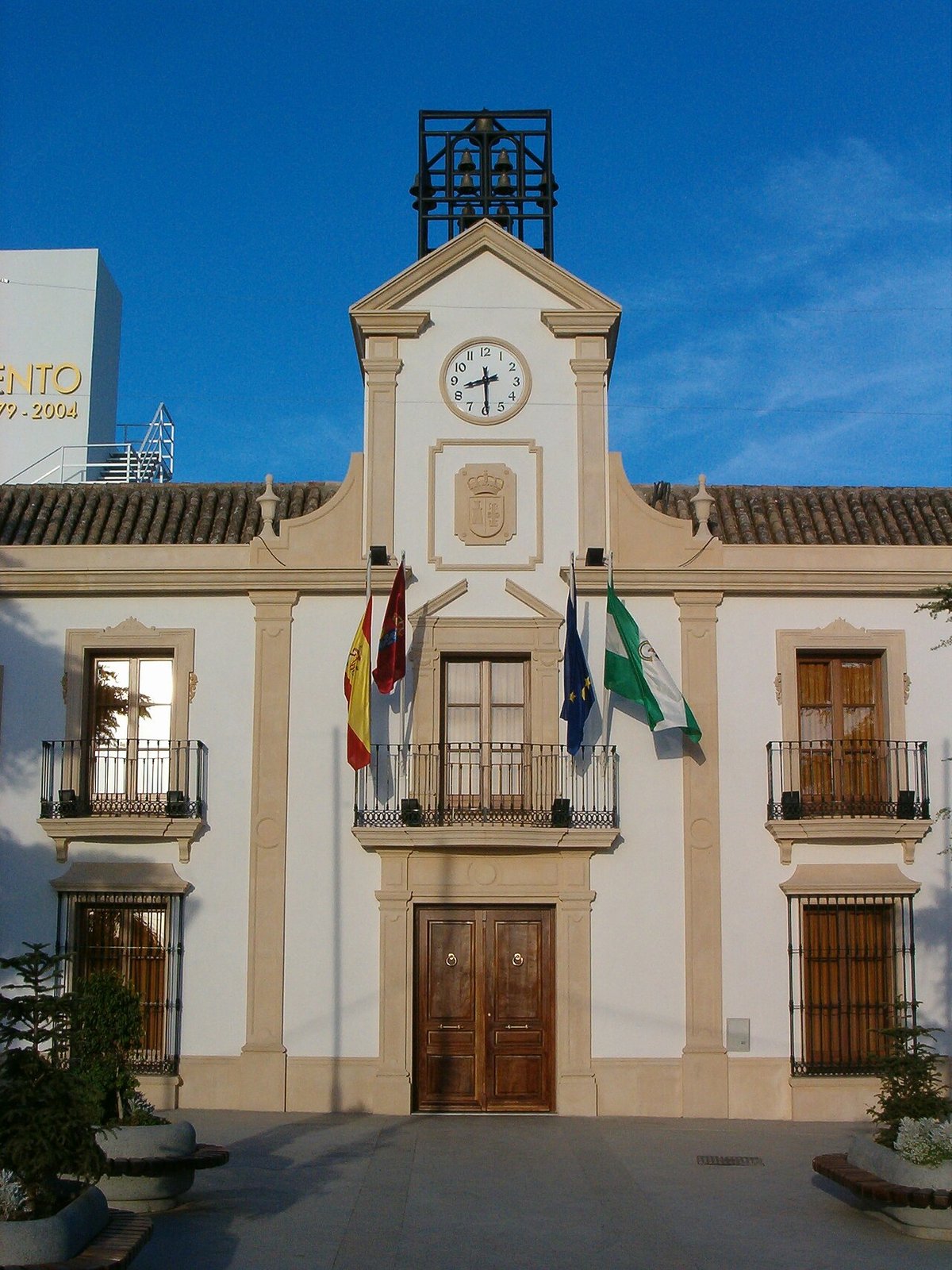
No medieval walls, no castle keep. The settlement plan is Enlightenment-rational: straight streets named after the agricultural unions that financed them in the 1920s. Houses are one or two storeys, lime wash refreshed every spring whether the owners are home or not. Look closer and the details emerge: horseshoe nails hammered into doors as talismans, geranium cuttings wedged into olive-oil tins, boot scrapers cast in the shape of the province of Córdoba. The overall effect is tidy rather than quaint; this is a working village whose residents refused to let the place slide when the younger generation left for the city.
Peer through the rejas – the wrought-iron window grilles – and you’ll see interiors that answer practical questions. Why the tiny interior patio? So the kitchen door can stay open in July without the dog escaping. Why the wall-mounted ceramic basin? Olive oil is easier to wash off hands outdoors. The architecture explains the climate: 45 °C at noon demands shade, airflow, and a place to rinse before stepping inside.
Walking Out, Not Up
Hikers expecting limestone crags will be disappointed. The pleasure is horizontal. A lattice of farm tracks radiates from the last streetlamp, each one signed with hand-painted tiles giving the distance in “leguas antiguas”, the old Spanish league. Choose the sendero to the ruined cortijo at Arroyo Salado (3.8 km) and you’ll pass first through sprinkler-irrigated vegetables, then unirrigated wheat that rusts gold by June. Montagu’s harriers quarter the fields; crested larks run between the furrows. The only shade is provided by lines of poplars planted after the 1950s land reform, their trunks whitewashed to eye-level like socks.
Spring is the forgiving season: temperatures in the low twenties, enough moisture in the soil to keep the dust down. Autumn adds colour – sunflowers face the ground like dropped satellite dishes – but the days shorten fast. In winter the plain is windswept; frost can blacken the feral tomato plants that sprout beside the irrigation gates. Summer walking is best done head-torch early: by ten o’clock the heat shimmers make the horizon ripple like a faulty mirage.
What Arrives on the Back of a Lorry
There is no gastro-bar street, no weekend craft market. If you want to eat you have two options: the bakery opens at 6 a.m. and sells out of empanadillas by 9; the only bar, La Parada, serves lunch from 1.30 p.m. until the food runs out, usually around 3. The menu is written on a wipe-board and changes with whatever the owner’s cousin brings from the coast: puntillitas (baby squid) in February, broad-bean & ham stew in April, tomato-heavy gazpacho when the local crop ripens. A media ración costs €7 and arrives with a basket of bread baked across the square. Order a second beer and someone will ask where you’re parked and whether you’ve come for the pigeon shoot.
Outsiders sometimes arrive hoping to buy the village’s own olive oil. There isn’t any. The cooperative mill closed in 2008; the olives now travel by lorry to a super-mill outside Lucena. You can still taste the oil, but only in the form of drizzled generosity: a plate of toast at breakfast, the invisible base of salmorejo. Ask for a bottle to take home and the barman will produce a plastic 250 ml container with a handwritten label – surplus from his mother-in-law’s harvest, price €3, cash only.
Calendar of Noise and Silence
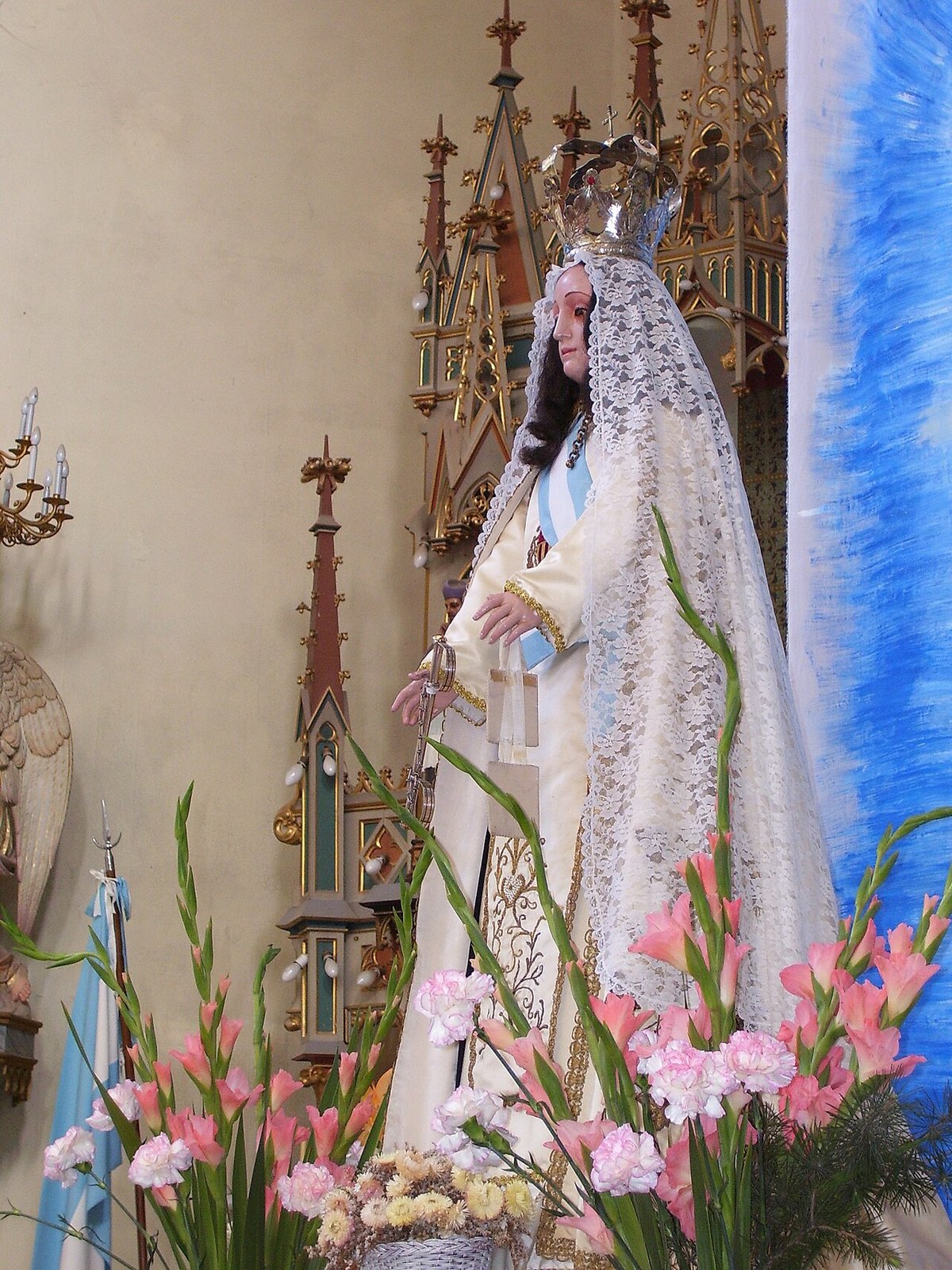
The year starts quietly. January brings fog that sits on the fields like a lid; traffic is an occasional tractor headlamp. Easter changes the tempo: theCofradía del Santísimo rehearses drum beats after dark, and the single traffic light blinks red to let the processions shuffle past. August is the thermal peak and the social one. The feria occupies the polideportivo for five days; queues for the portable showers are longer than those for beer. September belongs to the patrona, the Virgin of Remedies. A brass band marches the icon down Calle Real at walking pace, halting every hundred metres so the bearers can switch shoulders. Fireworks are let off at 7 a.m.; dogs vanish under beds.
Then October empties. The combine harvesters head north, the swallow nests under the eaves fall silent, and the village regains its acoustic default: wind in the poplars, the click of irrigation sprinklers, the church bell counting the hours no one needs to know.
Getting Here, Getting Stuck, Getting Out
Fuente Carreteros lies 65 km south of Córdoba city. The fastest route is the A-4 to exit 408, then the CO-620 for 12 km of straight road so dull that even the rental-car GPS sighs. Public transport exists – a Monday-to-Friday bus that leaves Córdoba at 2 p.m. and returns at 6 a.m. next day – but it was designed for doctors, not visitors. Miss it and you’ll spend the night.
Accommodation is limited to three rooms above the bakery, bookable by WhatsApp and scented permanently of warm dough. There is no pool, no air-conditioning beyond a ceiling fan, and the Wi-Fi drops whenever the dough mixer starts. Alternatively, stay in nearby Puente Genil and drive over for the evening paseo; the road is empty enough to cycle if you’re hardy and carry lights.
Leave the car on the edge of town; streets are single-track and residents park by ear. Saturday afternoon fills up with returning families – look for Madrid number plates and dented hatchbacks loaded with washing. If every space is taken, continue 300 m past the cemetery; the farmers’ co-op yard is unofficially open after 7 p.m. Lock your car, but don’t be surprised if it’s unlocked by morning: someone will have wanted to move the seat and borrow your hazard triangle for a broken-down moped.
Take-Home Realities
Come for the horizon, not the highlights. Bring binoculars, not climbing boots. Expect to explain why you’re here – the question will be asked, politely, in the bar, the bakery, and again by the old man who appears whenever strangers photograph his wall. The answer that works is “para descansar un poco del estrés” – to rest from the stress. It’s understood; the plain offers space, and space is the one thing Fuente Carreteros has in abundance.
Just don’t expect it packaged. The village brochure is a single sheet printed in 2011; the tourist office is the mayor’s cousin and she’s only in on Tuesday mornings. If that sounds like too much effort, the A-4 will carry you smoothly back to the cathedral city in forty minutes. But if you stay long enough for the dust to settle on your shoes, you’ll leave with a different measure of distance – not kilometres, but bell rings between one thought and the next.