Full Article
about Fuente Palmera
Colonia de Carlos III, now known as the town of brides for its strong wedding-textile industry and its orderly grid layout.
Hide article Read full article
Fuente Palmera: Un pueblo con apellido extranjero
Fuente Palmera es como ese amigo que habla perfecto andaluz, pero cuando te dice su nombre completo, suena a otra cosa. Te quedas un segundo pensando: "¿cómo?" Y ahí empieza la historia.
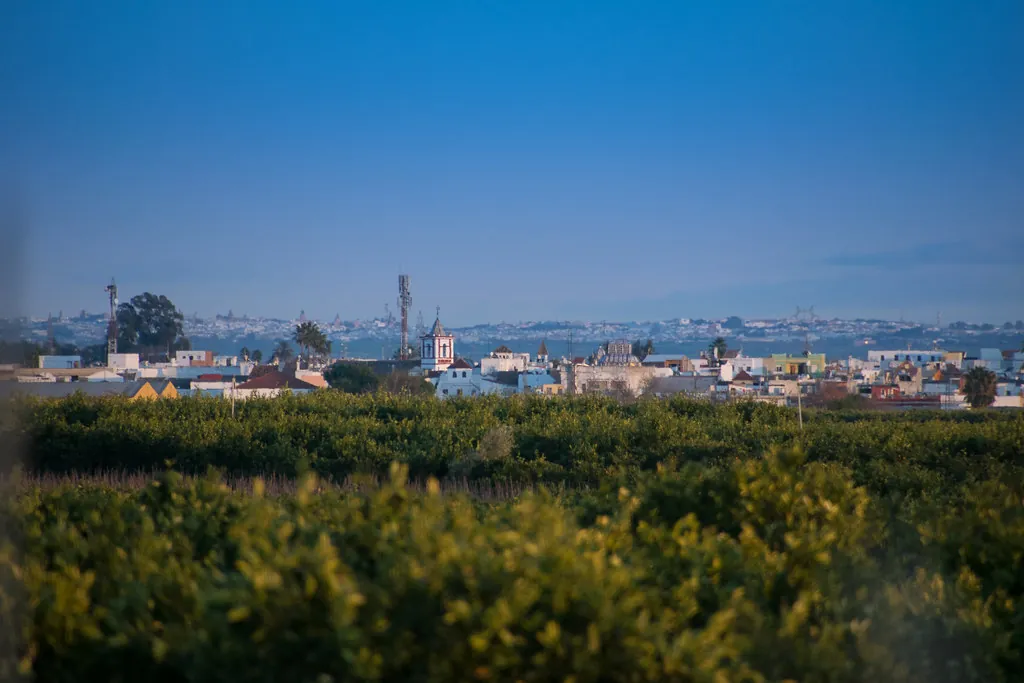
Este pueblo de la Vega del Guadalquivir, en la provincia de Córdoba, no nació como los demás. Fue una idea del rey Carlos III en el siglo XVIII. Trajo familias de Alemania, Flandes, Italia y Suiza para poblar estas tierras. Lo que parece un dato histórico curioso lo notas al caminar: los apellidos en las placas de las calles o en los negocios no son los que esperas aquí. Después de más de dos siglos, esos apellidos son tan parte del paisaje como el olivar.
El negocio de las novias
Si preguntas por Fuente Palmera fuera de aquí, mucha gente lo reconocerá por una cosa: los vestidos de novia. Le llaman el pueblo de las novias por algo.
No es que haya una tienda. Es que buena parte de la actividad económica gira en torno a talleres y comercios dedicados a esto. La tradición textil local derivó en esta especialización. No es raro ver coches con matrícula de fuera aparcados mientras alguien prueba modelos. Es un contraste ver maniquíes con vestidos blancos llenos de volantes en medio de una calle tranquila y ancha, típica de un pueblo agrícola.
Diez pueblos en uno (y necesitas coche)
Aquí viene el primer aviso práctico: Fuente Palmera no es solo un núcleo urbano compacto. El municipio es una constelación de aldeas diseminadas por el territorio: Cañada del Rabadán, La Herrería, Villar... Cada una con su propia placita y su bar.
Esto cambia completamente la experiencia si vienes a visitar. No hay un casco histórico que recorrer a pie en una mañana. Para entender el lugar, necesitas moverte en coche entre estos núcleos, ver cómo cada uno tiene su carácter pero comparten esa misma esencia ancha y rural. Sin coche, te quedarás con una foto muy incompleta.
Lo que hay (y lo que no) para ver
Vamos a ser claros: no vengas buscando monumentos espectaculares. No los hay.
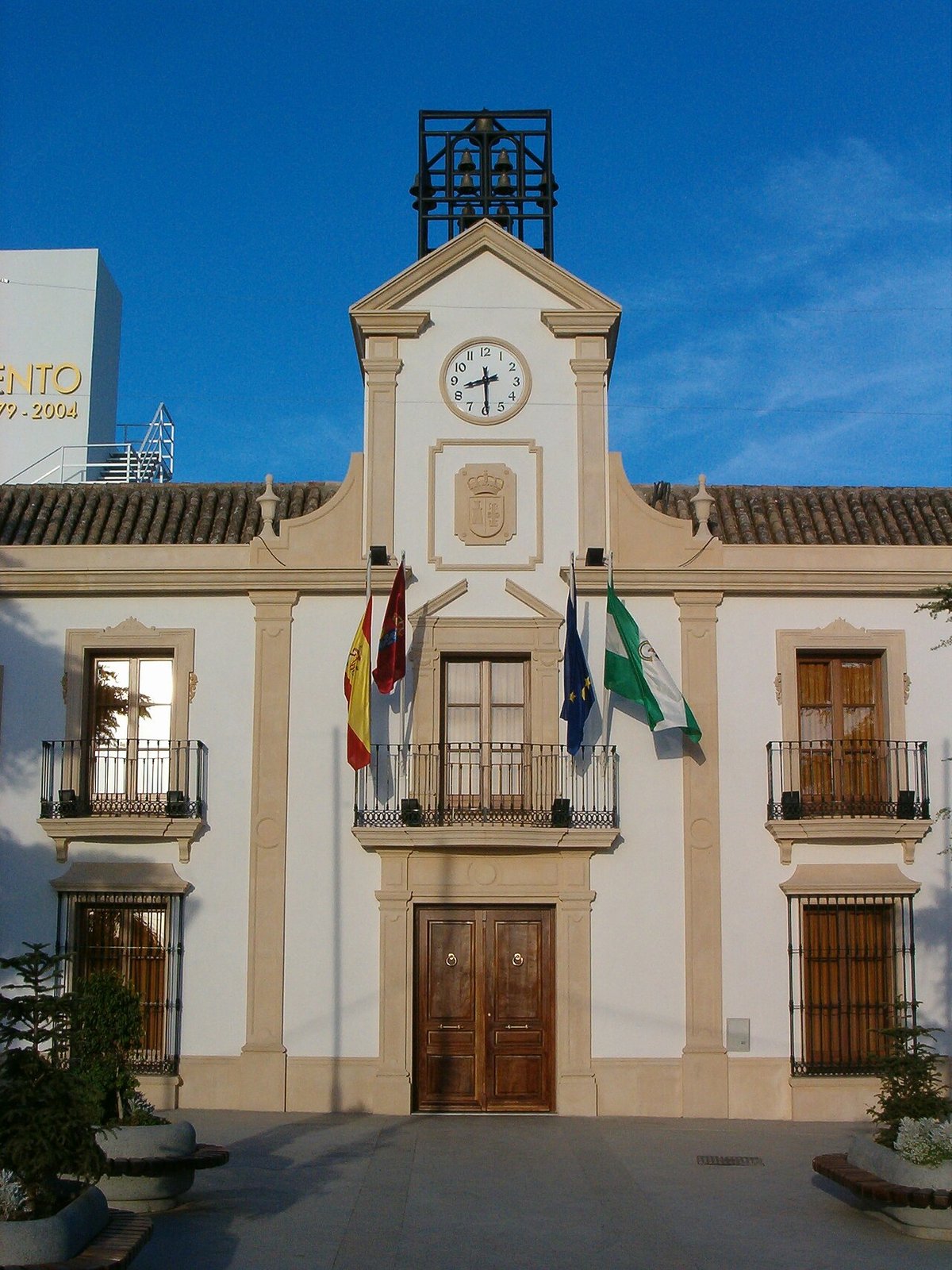
El centro neurálgico es la Plaza Real, una plaza grande y abierta donde se desarrolla la vida cotidiana. Es el mejor sitio para sentarte en un banco y observar el ritmo del pueblo. Cerca está el antiguo pósito, el granero público del siglo XVIII que recuerda los orígenes agrícolas de la colonia. Su arquitectura es sobria, funcional. Como todo aquí.
La gracia está en fijarte en los detalles mientras paseas: la disposición cuadriculada de algunas calles (herencia del proyecto ilustrado), las casas bajas encaladas junto a otras con cierto aire centroeuropeo en sus ventanas, y siempre, el olivar al fondo.
Una cápsula del tiempo bajo la plaza
En una celebración reciente del aniversario de la fundación, enterraron una cápsula del tiempo en la plaza con objetos y documentos actuales. No se abrirá hasta dentro de varias décadas.
Me pareció un gesto bonito y coherente. Es como si este pueblo, consciente de su origen peculiar, quisiera dejarle pistas claras al futuro sobre quiénes eran ahora: un municipio andaluz con raíces europeas e industria nupcial.
Cómo visitarlo sin frustrarte
Fuente Palmera funciona mejor como una parada tranquila si ya estás recorriendo la campiña cordobesa o vas camino a otros sitios.
Mi recomendación es esta: llega, pasea por la Plaza Real y sus calles aledañas para captar el ambiente. Si puedes y tienes coche, date una vuelta por alguna aldea cercana como La Herrería para ver la otra parte de la ecuación. Y luego sigue tu camino.
Si puedes planearlo, la primera semana de julio suele haber más ambiente por las fiestas fundacionales. Hay más actividad cultural y se nota más esa reivindicación de los orígenes mestizos.
Al final, Fuente Palmera no te golpea con su belleza. Te explica su historia poco a poco, a través de un apellido inesperado o un escaparate con un vestido blanco. Es ese tipo de sitio que tiene más miga de lo que parece desde la carretera