Full Article
about Guadalcázar
A town on the Vía Verde de la Campiña with remains of a ducal palace and farmland perfect for cycling and nature.
Hide article Read full article
An unexpected stop in the Guadalquivir plain
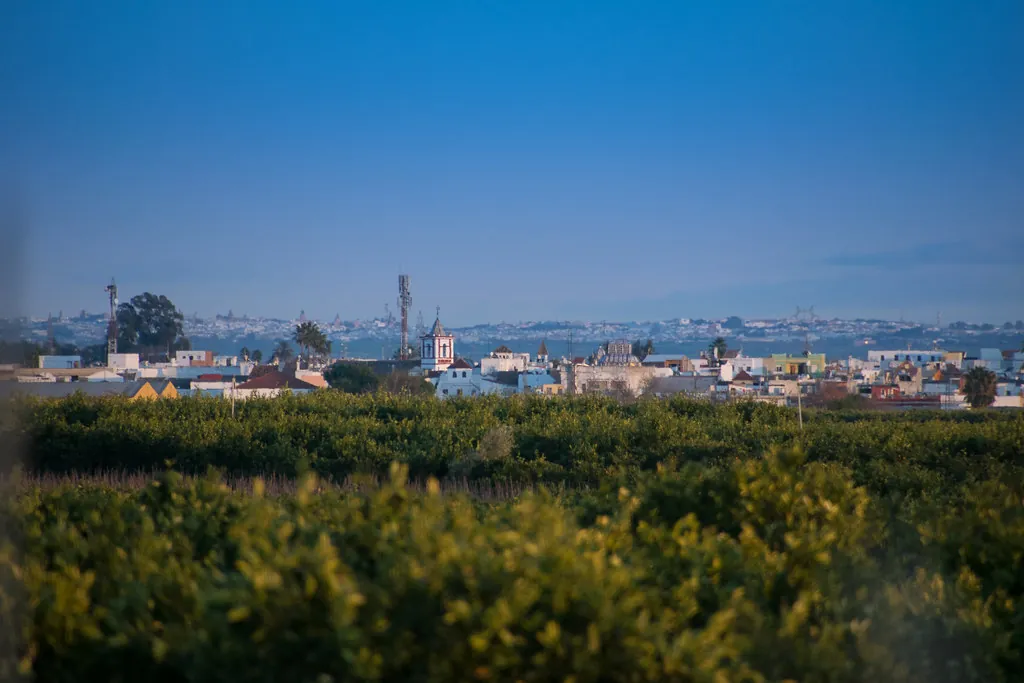
Guadalcázar tends to appear without warning. One moment the road runs through the wide agricultural stretch of the Vega del Guadalquivir, the next the village is there, surrounded by olive groves that seem to go on indefinitely. White houses cluster tightly together, bright against the landscape, as if dropped into the middle of the fields.
The first impression is one of quiet observation. Visitors are noticeable, not in a hostile way, simply because they are new. Life here carries on at its own rhythm, and that rhythm does not adjust itself for anyone passing through.
The Torre Mocha and the marquis who once ruled here
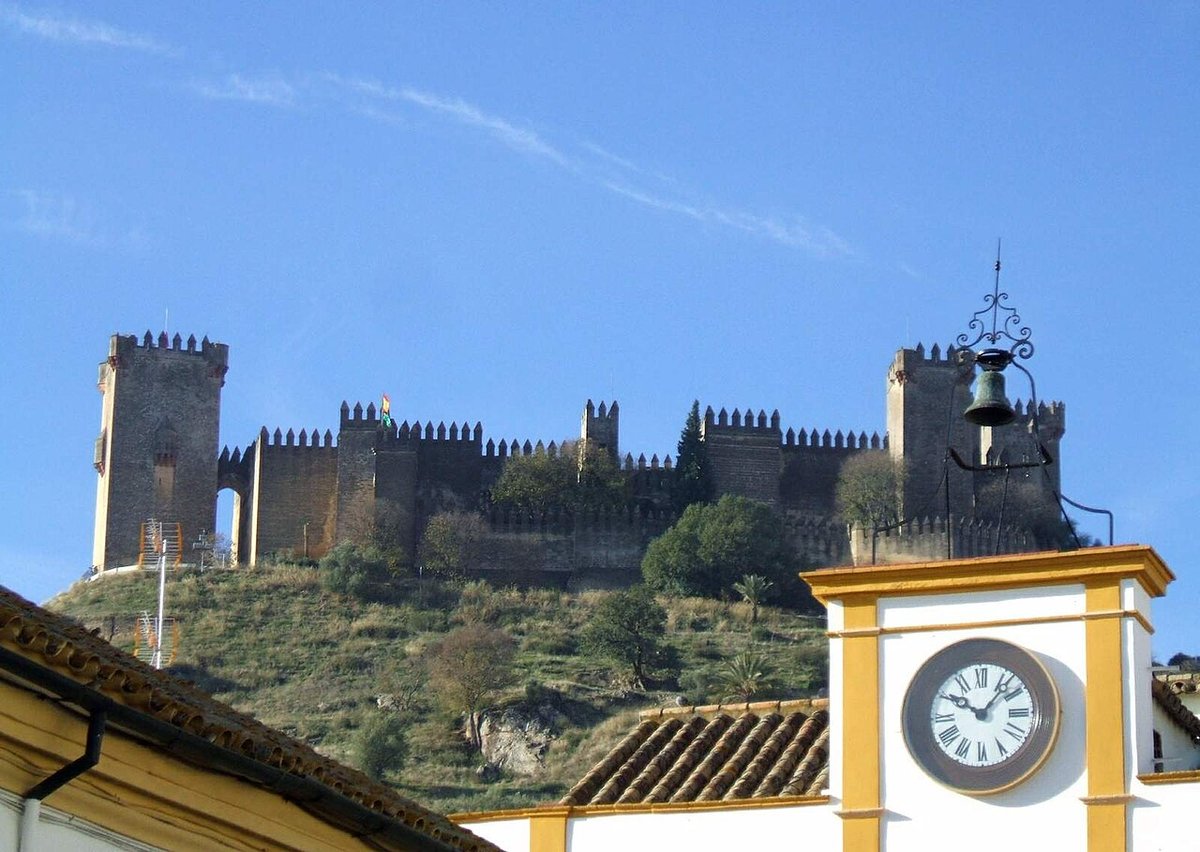
The Torre Mocha stands out straight away. Its shape is slightly irregular, as though parts have been worn away over time. From the outside it can look unfinished, but there is more behind it than first impressions suggest.
The tower formed part of the former palace of Diego Fernández de Córdoba, the first marquis of Guadalcázar. His family held considerable influence in the area, and the remains of that presence still mark the village.
Today, the building serves a different purpose. It is used as a space dedicated to the natural environment of the Guadalquivir plain, at least in its most recent use. Inside, the focus shifts from history to landscape. Information is given about the surrounding countryside: cultivated land, wetlands close to the river, and birdlife that passes through during migration.
It is the sort of detail that often goes unnoticed when travelling through by car. The fields are usually seen as background, something to cross rather than something to consider. Here, they are brought to the foreground, with explanations that connect the village to the wider ecosystem around it.
Nuestra Señora de Gracia, quiet and unassuming
The church of Nuestra Señora de Gracia does not dominate the village visually, but it holds its place with a kind of understated presence. It is generally dated to the 17th century and has a single nave, a simple layout that reflects a practical approach to space and function.
Its door is often open, which is not always the case in smaller towns. Inside, the atmosphere is calm and familiar, with the scent of wax and a sense of routine that has built up over years. There is nothing elaborate about the space, and that seems to be the point. It feels used rather than displayed.
The experience is quiet rather than striking. It does not demand attention, but it rewards a slow look around.
Walking through Guadalcázar
A walk through Guadalcázar unfolds at a steady pace. The streets are narrow, and pavements appear and disappear without much consistency. Cars move slowly, almost matching the speed of pedestrians.
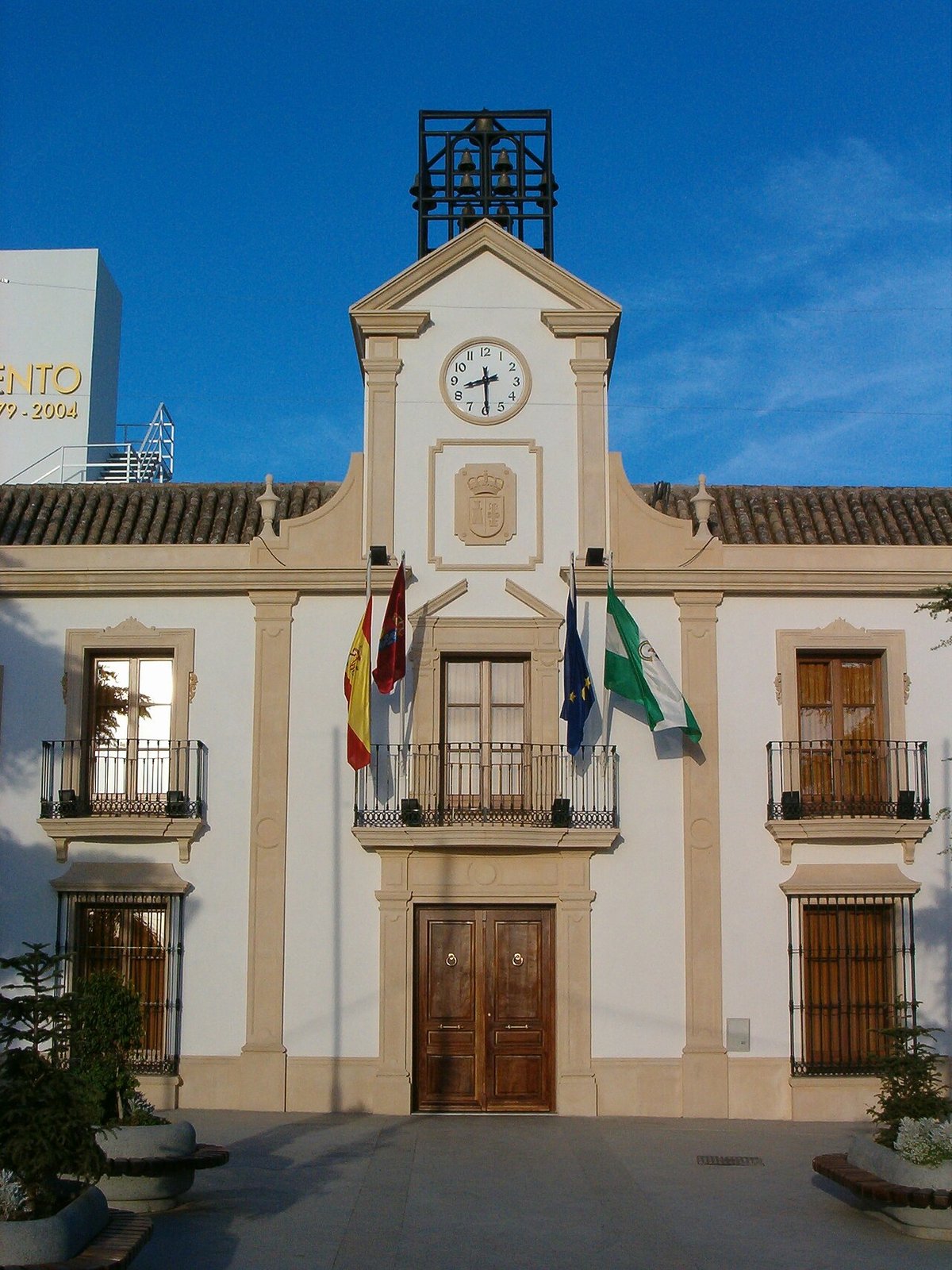
Everyday scenes define the place more than any landmark. A tractor parked near the town hall does not draw attention. It is simply part of how things work here.
Small squares offer places to stop. Some may not even have clearly marked names. A closed kiosk, stone benches, and groups of older residents absorbed in a card game form part of the setting. The games are taken seriously, with a level of focus that suggests long familiarity.
There is no need to search for specific sights. The interest lies in how ordinary life is arranged and how little it seems to change in response to outside expectations.
Food shaped by the countryside
Food in Guadalcázar reflects its surroundings more than any broader culinary trend. Expectations formed elsewhere do not always apply here. Dishes associated with nearby cities, such as flamenquín in Córdoba, are not necessarily what appears on the table.
Instead, the cooking leans towards what comes from the countryside. Caldereta, a traditional stew, is a typical option and fits naturally into the local diet. Game dishes also feature, with ingredients like partridge or rabbit reflecting what is available in the surrounding land.
The distinction makes sense when looking beyond the village itself. The fields, rather than urban influences, shape what is eaten. Recipes are rooted in long-standing habits, tied to the rhythms of rural life rather than to passing trends.
As evening settles
Towards the end of the day, Guadalcázar becomes even quieter. The light softens over the olive groves, and activity slows further. A few vehicles return from the fields, a garage door opens or closes, and little else interrupts the calm.
It is not a place of dramatic viewpoints or widely shared images. There are no obvious landmarks designed to impress at first glance. What it offers is more subtle: a shift in pace, a sense that time is handled differently here.
In the Vega del Guadalquivir, a short detour to Guadalcázar serves a simple purpose. It allows for a pause, a walk, and a moment away from the expectation that every journey needs a clear plan or a major highlight. Sometimes, a wrong turn is enough to arrive somewhere that asks very little and quietly gives something back.