Full Article
about La Carlota
Municipality founded by Carlos III as a model of the Nuevas Poblaciones, with a regular urban layout and a notable history of Central European settlement in the countryside.
Hide article Read full article
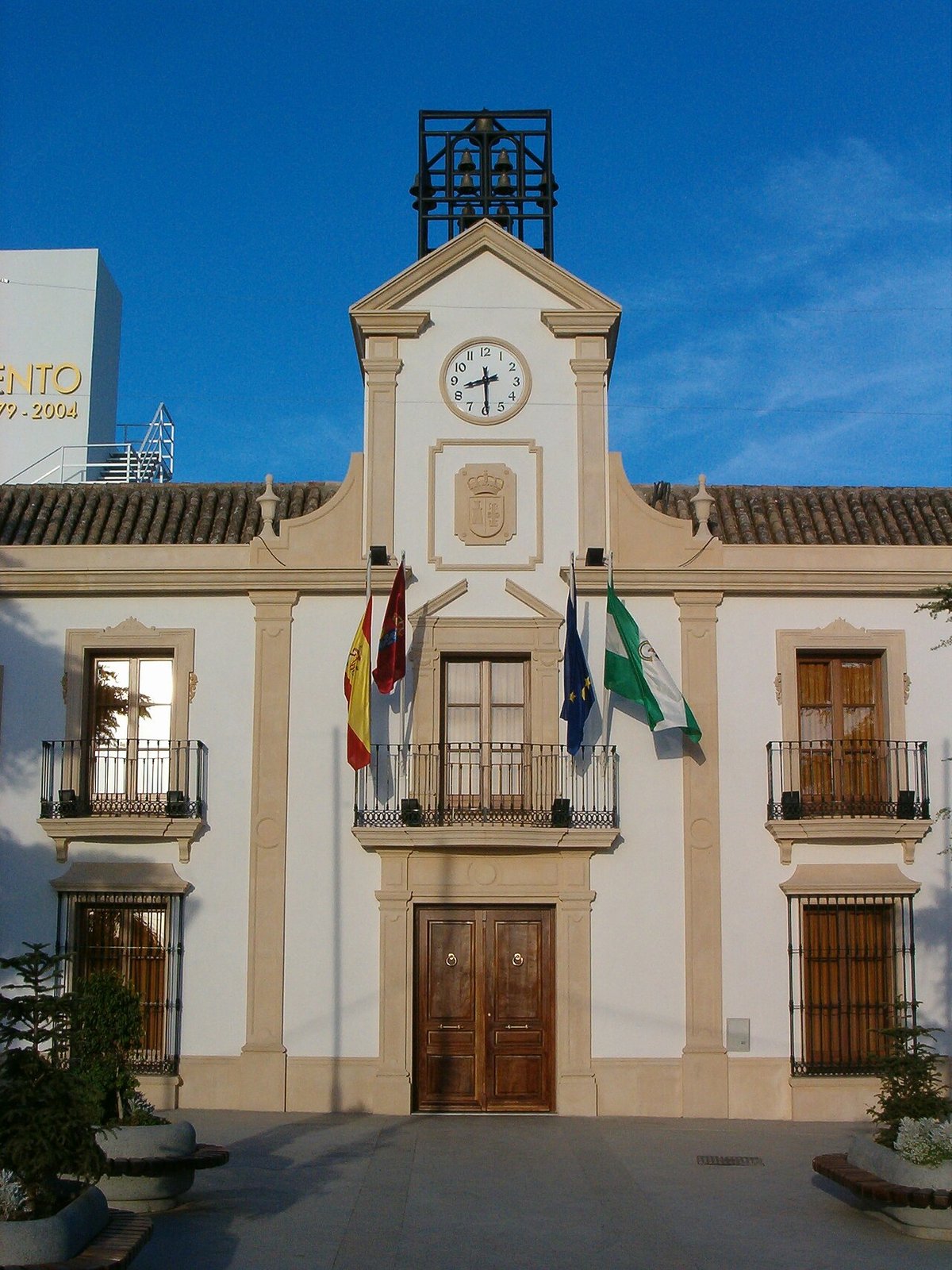
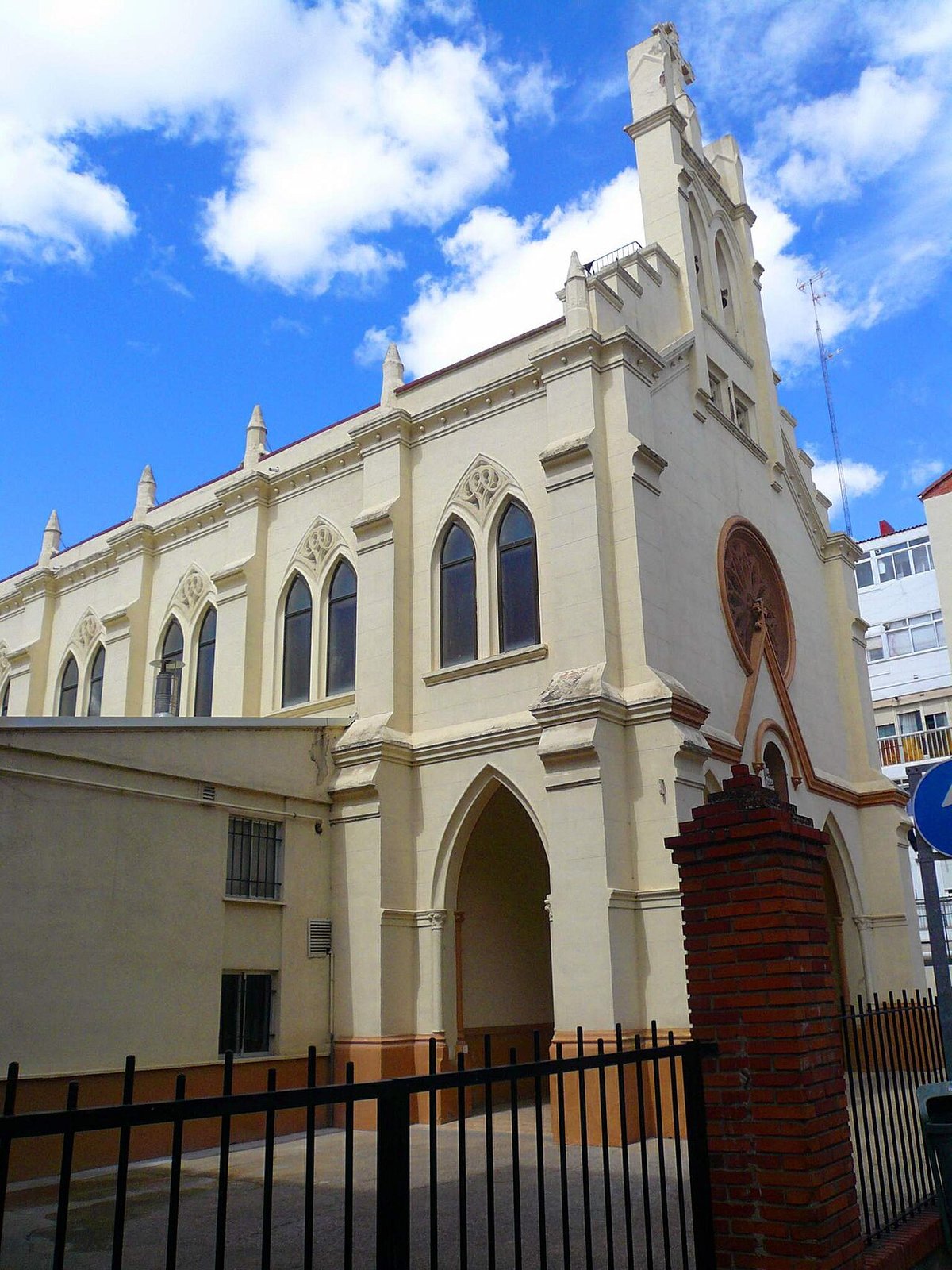
The bells of the Inmaculada Concepción strike eight, and the sun is still low over the rooftops of La Carlota. From the Plaza Mayor, the shadows of the arcades stretch long across the pale ground. A bakery has just opened its doors, and the smell of warm dough drifts out, mixing with the scent of orange blossom from the trees. At this hour, you hear the rattle of shutters being lifted more clearly than any car.
La Carlota feels different from other towns in the province. Its layout is a firm, stubborn grid. Streets run straight, blocks repeat with regularity, and the corners open wide so the wind moves through without interruption. This is the Enlightenment-era plan Carlos III used to populate this part of the Vega del Guadalquivir in the 18th century. Space here is open and deliberate, a contrast to the tight medieval streets of nearby towns.
The grid and its legacy
On Friday mornings near the market, farmers gather after coming in from nearby villages. Conversations circle around the olive harvest, the lack of rain, the price per arroba. Some surnames still echo the Central European settlers who arrived from 1767 onwards to establish these Nuevas Poblaciones. The Crown’s plan was direct: distribute land, build uniform houses, create an agricultural community from scratch. The first decades were harsh. Illness and poor harvests drove many away. Those who stayed saw their names slowly blend into the town’s identity.
On the outskirts lies the old colonial cemetery, one of the earliest burial grounds from that effort. It’s a restrained place, low walls and simple gravestones. Wild rosemary grows between them. In winter, the air smells of damp earth and dry grass. It isn’t monumental, but it shows how this settlement began from nothing.
The rhythm of the day
Around midday, many homes cook at an unhurried pace. During the colder months, the products of the matanza appear. Chorizo carloteño is typically slimmer than in nearby areas and carries a strong note of garlic. Courtyards fill with smoke from large pots, and conversations stretch through the afternoon.
Easter brings a quieter custom. In some houses, you might see wool baskets filled with painted eggs. This tradition isn’t common beyond the area and is often linked to those first European settlers. It remains a family detail, not a public spectacle.
Food in local bars sticks to a simple approach: stews, slow-cooked dishes, pork, good bread for dipping. There’s little interest in refinement. What stands out is the rhythm. At certain hours, dining rooms fill with agricultural workers, and the sound of spoons against plates sets a steady pace.
September light
September changes the light and the air in La Carlota. The town’s fair, historically for livestock, draws traders and farmers from across the region. In the morning, the fairground smells of straw, animals, and albero dust. People take their time, standing before pens to study an animal’s legs or back before talking numbers.
By nightfall, the mood shifts. Lights come on in the casetas, and pasodobles spill into the walkways. Families arrive from the surrounding villages—La Paz, El Arrecife, Fuencubierta. You see work boots next to fair outfits, children weaving between tables, a constant background of clinking glasses and overlapping conversations. It feels like an old rural exchange adapted for now.
The surrounding plain
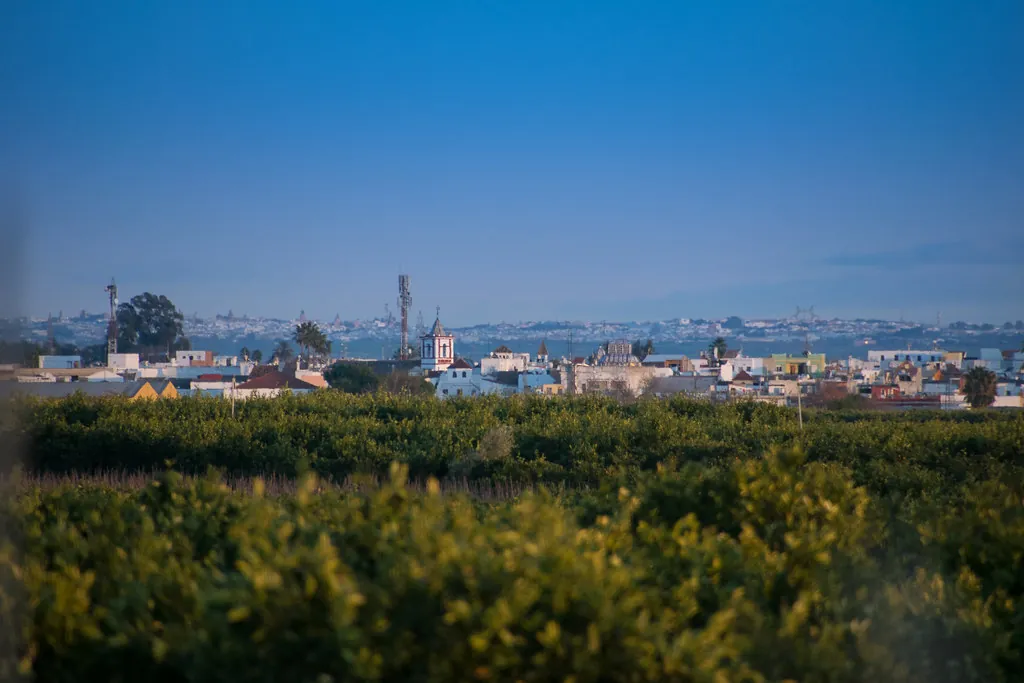
Leaving town, the Vega del Guadalquivir opens into long plots where olive groves alternate with cereals. In spring, young wheat turns the fields a sharp green against the grey-green of olive leaves.
The pace changes during the olive harvest in late autumn. Roads get busy with vans and trailers; workers move between farms from first light until after sunset when artificial lights still glow across the fields.
A short drive to any surrounding village shows the same pattern repeating: straight streets, aligned houses. It’s the imprint of that same 18th-century project spread across land.
A practical light
Spring is generally the most comfortable time to walk the countryside here, with mild temperatures and green fields. September has more life because of the fair, though evenings are busier.
La Carlota sits close to a major road. Some roadside stops cater mainly to passing traffic. Turn into the grid of streets instead. The pace slows down to match its origins