Full Article
about Lora del Río
Key farming hub in the Guadalquivir Valley with a mountain sanctuary and Baroque heritage.
Hide article Read full article
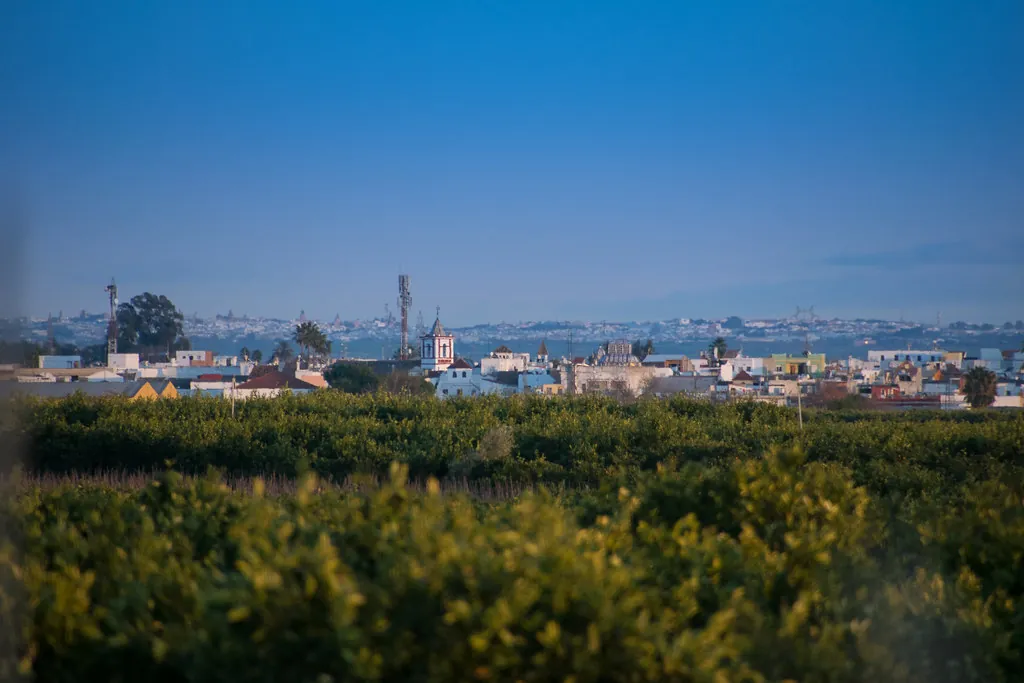
You reach Lora del Río along the A-431. When the orange trees are in blossom, the scent of azahar hangs in the air before you even enter the town. Lora sits close against the Guadalquivir, with the wide river plain stretching out around it.
Parking in the centre is rarely straightforward. Streets are narrow and spaces are limited. The market car park tends to fill up early, so it often makes more sense to leave the car a little further out and walk in.
This is not a place of headline monuments or a long historic quarter packed with sights. Lora del Río is seen quickly. A short walk, a climb to the castle, a look inside a church or two, and you have a clear sense of it. Beyond that lies countryside, orange groves and a pace of life that has not felt the need to shout for attention.
The Castle and the View Over the Vega
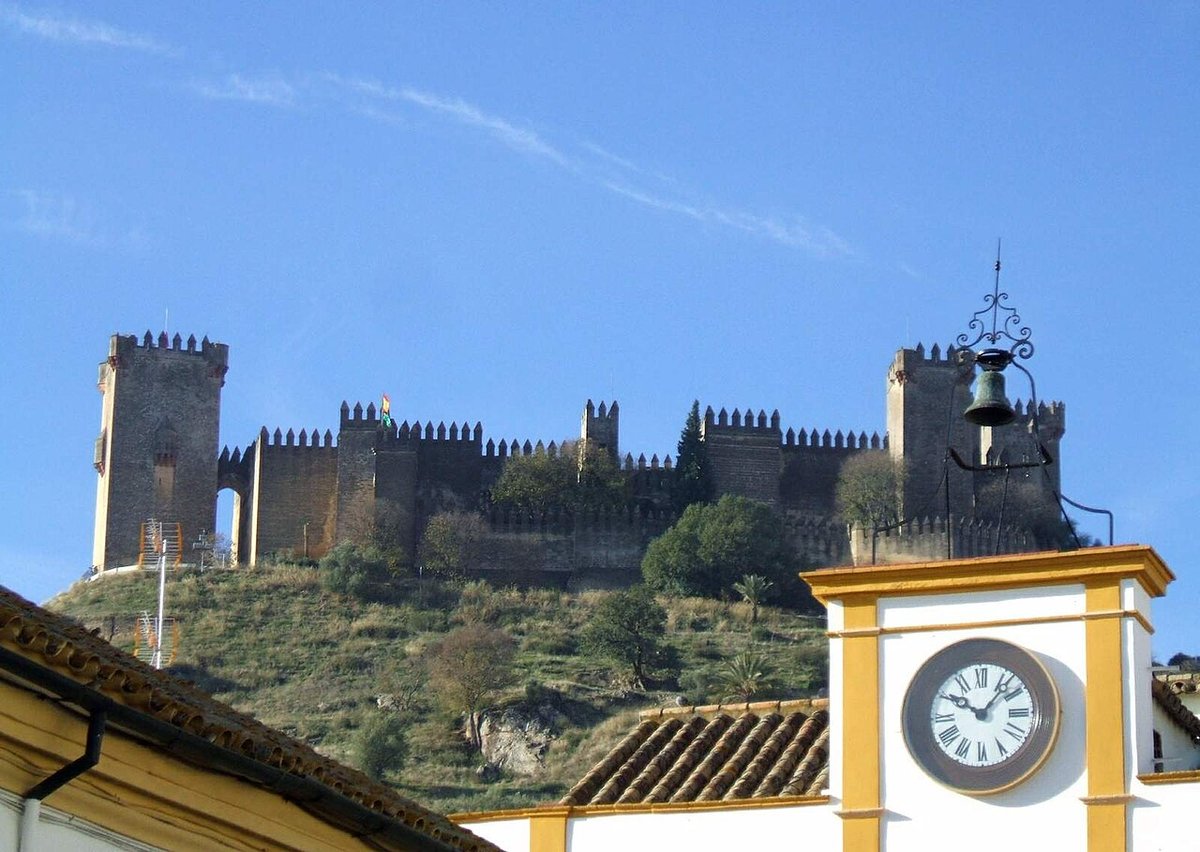
The climb to the castle begins along the Cuesta del Castillo. It takes about ten minutes at an easy pace. At the top, expectations need to be modest. There are two towers and several stretches of wall. That is all.
Even so, the view explains the location. The vega, the fertile plain beside the river, spreads out below in plots of orange trees and some olive groves, running towards the Guadalquivir. From here the relationship between town, farmland and river becomes clear.
The town hall sometimes opens the torre del homenaje, the main keep, at weekends, although not consistently. If it is closed, there is no way in. You remain outside and make do with the exterior and the panorama.
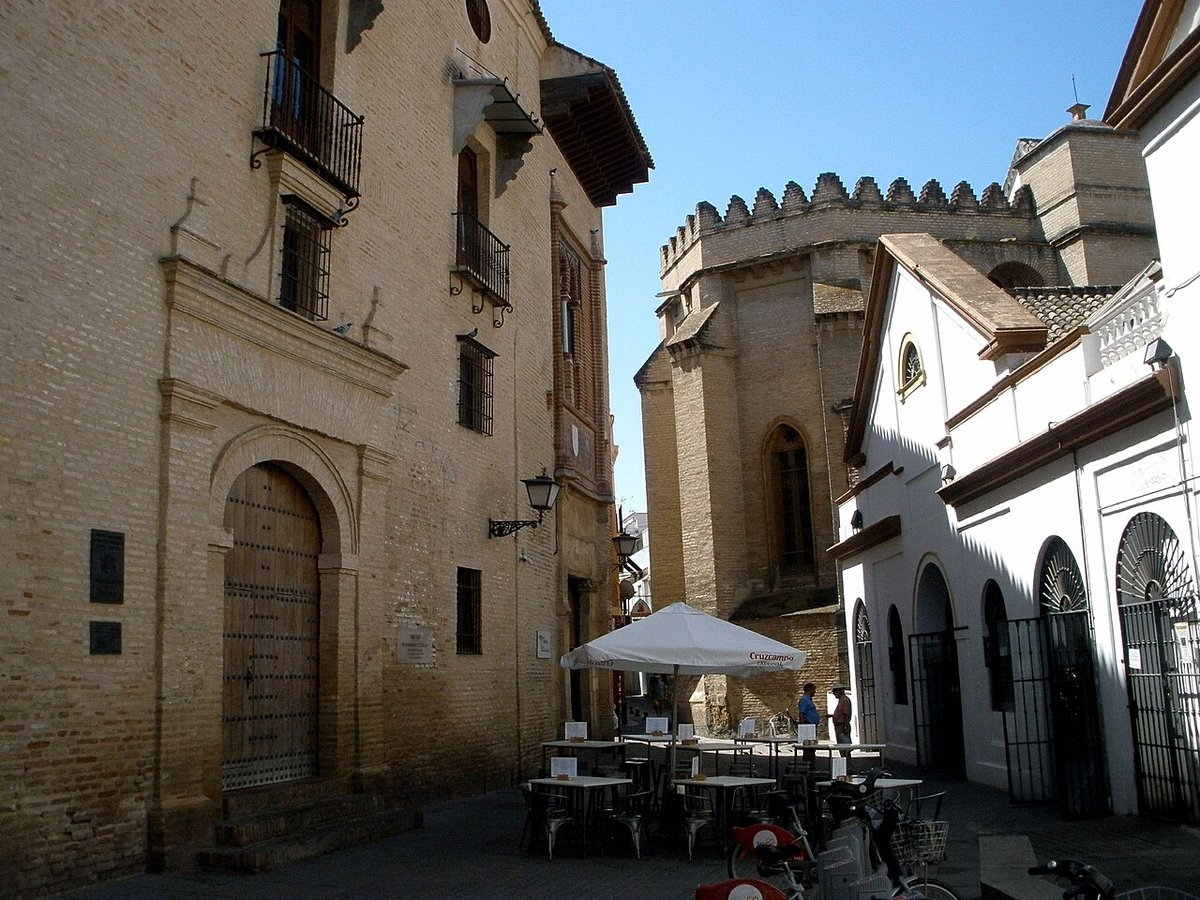
On the way back down, the Iglesia de la Asunción comes into view. It is the most imposing building in Lora. The façade is Renaissance in style, the tower Baroque, and inside there are several images well known in the surrounding area. The church usually opens in the morning and again later in the day, though this depends very much on the date. If there is a mass taking place, entry is straightforward.
Setefilla and the Ancient Trace
About 12 kilometres from Lora stands the cerro de Setefilla. This hill was once home to Tartessian settlements, linked to one of the earliest cultures recorded in the south of the Iberian Peninsula. The road reaches almost to the top without difficulty. The final stretch is a dirt track. After rain it becomes heavy going.
At the summit, the archaeological site is understated. You can make out the bases of houses and some sections of wall, with little else remaining. There are no clear information panels, so it is not always easy to understand what you are looking at. The position above the Guadalquivir is strong, which helps explain why people chose this spot.
There is no shade and no facilities, so take water. The hill is exposed and services are absent.
Back in Lora del Río, several churches can be linked together in a short walk. San Pedro, San Sebastián and the former convent of the Concepción stand close to one another. Most of the time they are closed. The convent now functions as a residence, although if you ask, it is sometimes possible to step briefly into the cloister.
Eating the Way It Is Done Here
Local food follows the rhythms of the town. In the centre you will find gazpachos de Lora, which differ slightly from those in Córdoba. The version here carries more spice. Cumin and marjoram from the surrounding countryside are noticeable. It is served simply, with bread and olives, and without ceremony.
Around Semana Santa, the week leading up to Easter and one of the most important moments in the Spanish religious calendar, pestiños appear. They are pieces of fried dough coated in honey, solid and sweet. The rest of the year you can still come across torrijas made with vino de naranja.
That orange wine has a local story. In the nineteenth century, a priest experimented with macerating orange peel in white wine. The idea caught on and remained. Today some households in the town still produce it. It rarely travels beyond Lora.
These details tell you as much about the place as any building. The orange groves that frame the town reappear on the table, whether in spice, fruit or wine.
When to Go, and When to Think Twice
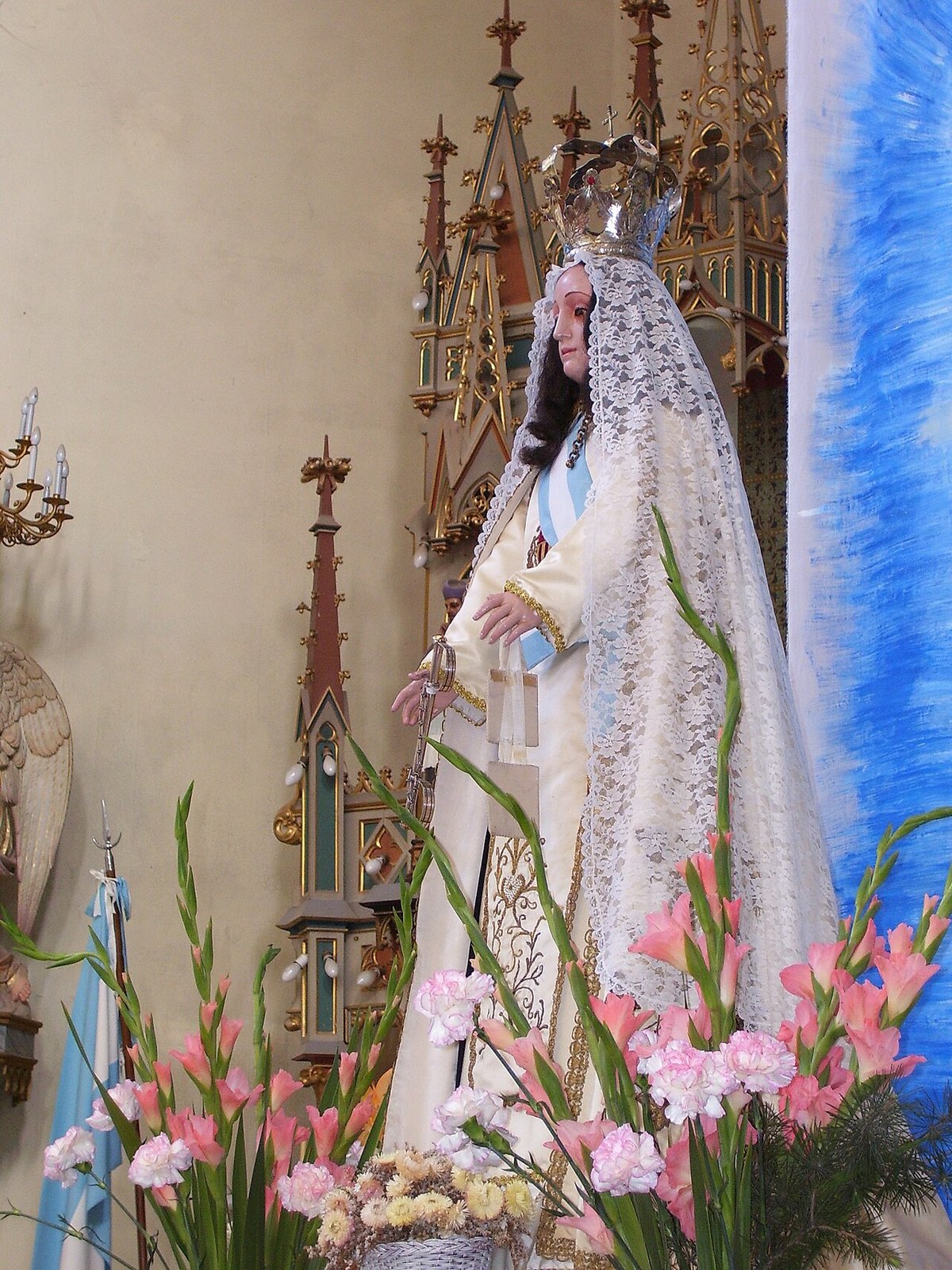
In May, the romería de Setefilla usually takes place. A romería is a pilgrimage and a popular festival combined. Large numbers of people head towards the sanctuary, and the roads fill with carriages and cars. Parking becomes complicated.
August brings the feria de San Roque. The heat is intense and music continues late into the night in the fairground area. Anyone seeking quiet should choose another moment.
In September, the fiestas de los Remedios arrive. There is less noise than in August, although the town is out on the streets with processions and fireworks.
Spring tends to work best. Temperatures are manageable and the vega remains green. In the height of summer, the heat presses hard.
Before You Come
Lora del Río does not offer grand monuments or an extensive old quarter. It is straightforward to cover. Park on higher ground, walk down into the centre, climb to the castle and take a turn around the churches.
If you then drive out to Setefilla, the day feels complete. Afterwards, the motorway takes you back towards Sevilla in less than an hour.
Life here continues much as it has: orange groves, farmland, a town beside the Guadalquivir. Lora del Río has never needed to make a spectacle of itself, and it does not begin now.