Full Article
about Palma del Río
Orange-growing town at the confluence of the Genil and Guadalquivir rivers, ringed by an Almohad wall and birthplace of celebrated matadors.
Hide article Read full article
The hour when the river turns gold
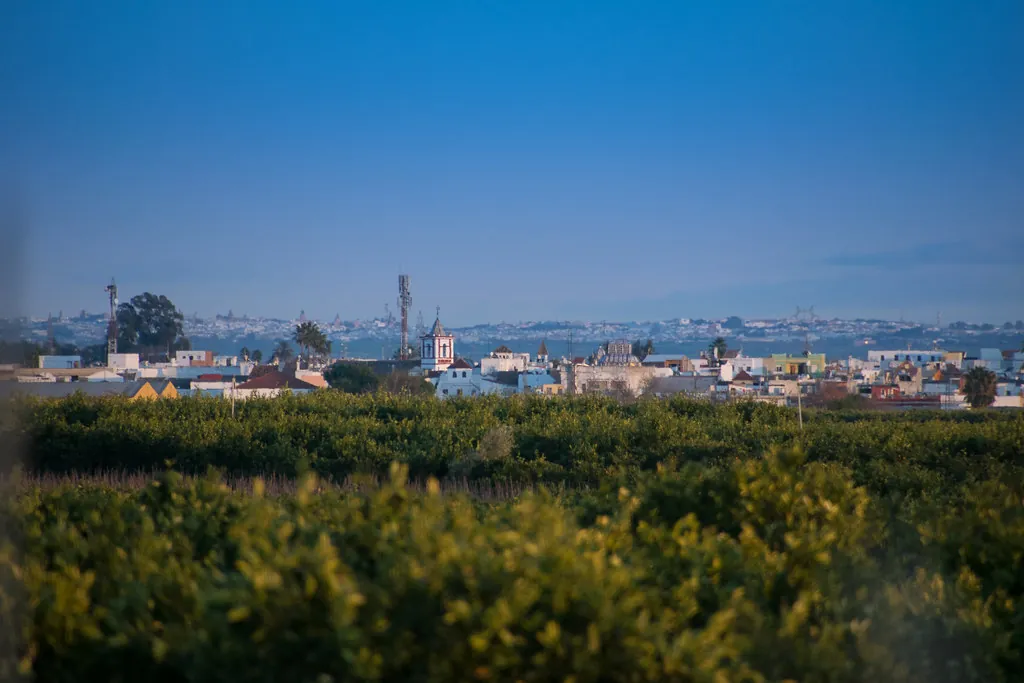
Around early evening, when the light softens and the Guadalquivir takes on a golden sheen, Palma del Río begins to reveal itself through scent. Conversations about tourism here tend to circle back to that moment: the sharp, clean smell of citrus drifting in from the fertile plain, blending with the cool presence of a slow-moving river.
From the iron bridge, a metal structure brought from France in the late 19th century, the view opens across a wide valley of orange groves stretching out like a green carpet. Stand still and you might notice a faint vibration underfoot as a car passes. The bridge still does its job, carrying traffic while quietly anchoring the scene to another era.
This meeting of river and orchard defines the town. The Guadalquivir does not rush here, and neither does Palma del Río. The pace is measured, shaped by agriculture and the steady rhythm of the seasons.
Citrus in the air, citrus on the table
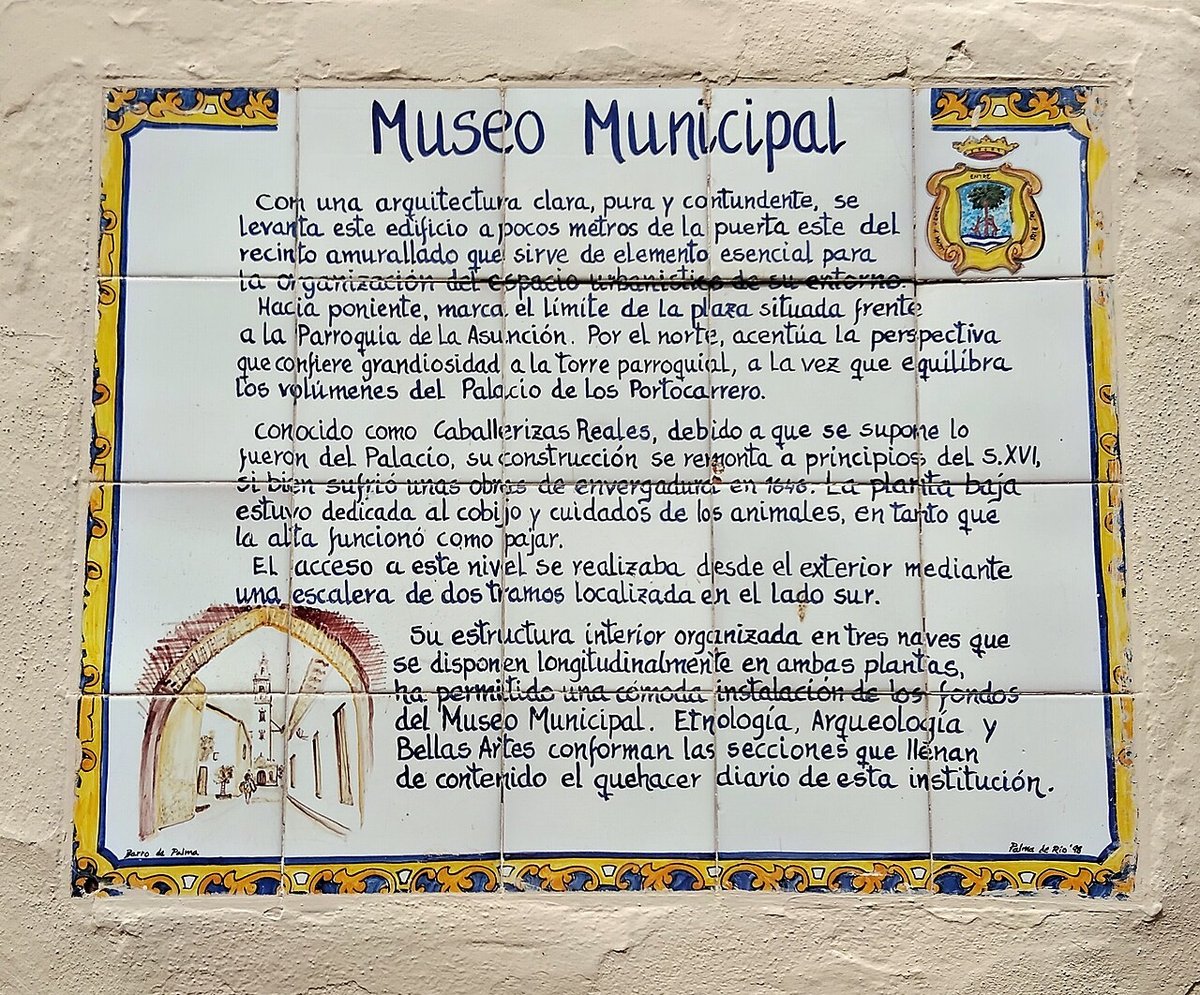
The scent of oranges and lemons lingers in Palma del Río even outside harvest time. Inside the gardens of the Palacio Portocarrero, built over what was once a fortress, dozens, some say hundreds, of varieties of citrus trees grow side by side. The so-called Museo Vivo de la Naranja, or Living Orange Museum, is set outdoors among these trees. It is less about display cases and more about walking, reading, and understanding how deeply citrus cultivation has shaped the local economy.
This relationship with the land also appears in the kitchen. In some homes, gazpacho made with bitter orange is still prepared. It is not commonly found on menus, yet it continues to circulate through family traditions. The flavour arrives with a brief sharpness that surprises at first, then settles as it mixes with olive oil and tomato.
Seasonally, the surrounding plain also produces thick white asparagus, known for a clean taste that reflects the damp soil it grows in. In Palma del Río, the vegetable garden and the river have always been closely linked, each sustaining the other in quiet ways.
Walls that still hold their ground
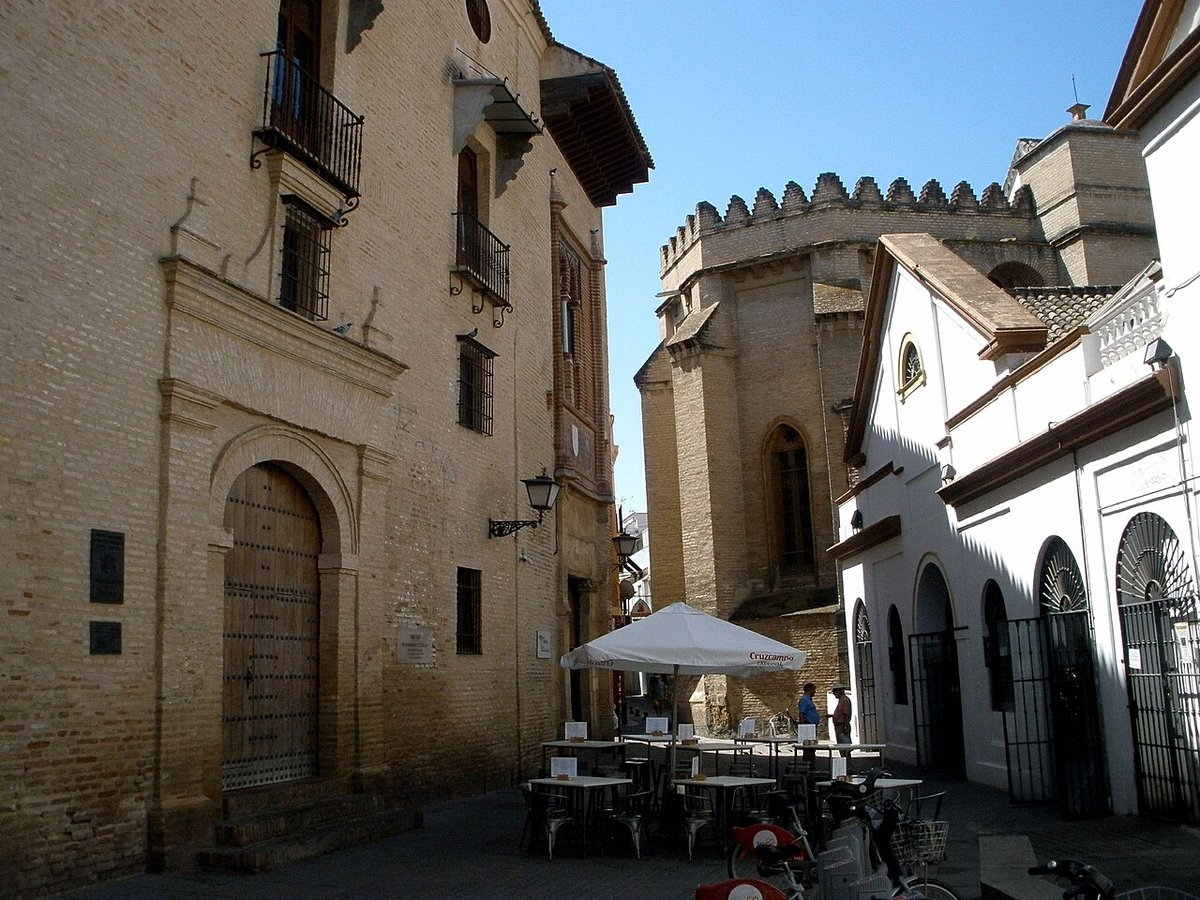
The walled enclosure of Palma del Río is not a decorative relic. It surrounds the old town with a continuity that is still easy to follow on foot. Officially protected since the 1980s, the layout itself is much older, and for centuries it marked the boundary between the settlement and the cultivated land beyond.
Step inside and the atmosphere shifts. Streets narrow, and sound behaves differently. Footsteps echo off earth-toned walls. Wooden gates break up the facades. There are stretches where the outside world feels held at a distance by stone.
Within one of the towers sits the Capilla de las Angustias. It is a small space, built with thick stone, a low ceiling, and the faint smell of wax. The same wall that once served to watch the surroundings now shelters a place of quiet reflection. The contrast is subtle but clear, defence on one side, stillness on the other.
Walking here is less about ticking off sights and more about noticing how the town is arranged. The wall is not a backdrop, it remains part of daily life, shaping movement and sound.
Fashion, bullfighting, and convent walls
The Convento de Santa Clara carries centuries of silence in its courtyards. Within those walls now sits a museum dedicated to Victorio & Lucchino, designers associated with Spanish fashion. The exhibition occupies former convent rooms, spaces that remain simple and restrained. Against that backdrop, embroidered details and heavy fabrics stand out more sharply.
It is not a place that invites rushing. The thickness of the walls and the enclosed layout seem to slow everything down, encouraging a more careful look at each piece.
A short walk away, in a stately house in the town centre, is a museum devoted to Manuel Benítez, known as El Cordobés. Born in Palma del Río, he is still referred to locally as Manolo. The museum is modest in size, with photographs from his early years and personal objects that trace his path from rural beginnings to filling bullrings. The story is told through these fragments rather than grand displays.
These two spaces reflect different aspects of local identity, one tied to contemporary design, the other to a figure from the world of bullfighting. Both are rooted in the town, shaped by its history and its people.
When to arrive, when to slow down
Spring tends to be the most rewarding time to visit. When the orange trees are in bloom, the air over the plain becomes dense and sweet, especially towards evening. In May, the town comes alive with its fair, drawing visitors from across the province.
Those looking for a quieter experience may prefer weekdays, when the historic centre and the riverside can be explored at a gentler pace. The rhythm of daily life is easier to observe without the added movement of larger crowds.
Summer brings a different reality. In August, the heat of the surrounding countryside falls directly and intensely, and the streets empty during the central hours of the day. Early mornings and the end of the afternoon become the more comfortable times for walking.
From the viewpoint at the Palacio Portocarrero, as the light begins to fade, the Guadalquivir turns a silvery grey that resembles liquid metal. Below, the fertile plain merges into an almost continuous green surface. Once the sun has fully disappeared, the scent returns: citrus and slow water, a combination that gradually becomes inseparable from the idea of Palma del Río itself.