Full Article
about Tocina
A Vega municipality made up of two centers (Tocina and Los Rosales) with strong farming activity.
Hide article Read full article
An afternoon that sets the pace
At six in the evening, when the sun dips and the shadows of the orange trees stretch across the reddish soil, Tocina smells of orange blossom and freshly baked bread. In that quiet hour, the rhythm of the place becomes clear. Streets are wide, shutters sit half closed, and everything moves at a pace far removed from nearby Seville, even if it is not far away.
People are indoors for the siesta or out tending the fields. The only sounds are the faint buzz of a distant motorbike and, if you stop for a moment, the song of goldfinches nesting in the pines along the pavements.
This is what tourism looks like in Tocina. There are no grand gestures, just a daily routine that continues whether anyone is watching or not.
The scent of the vega
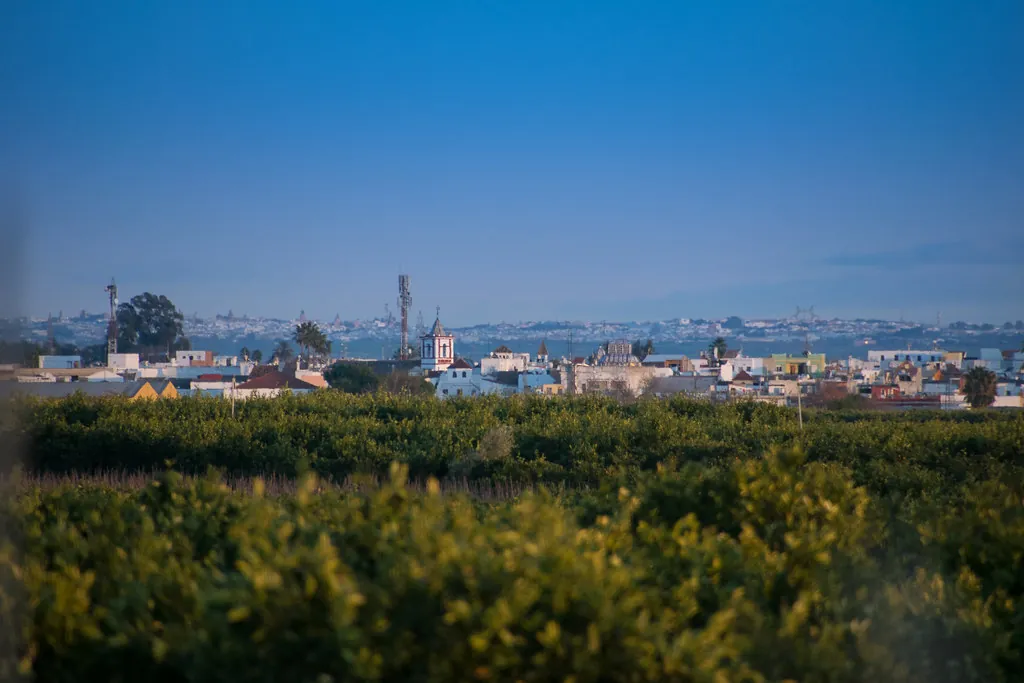
The town faces the Vega del Guadalquivir as if looking into a mirror. Much of what is eaten, sold or talked about in Tocina comes from this fertile plain. Market gardens stretch almost to the last houses, and after rain the dirt tracks turn into thick mud that clings stubbornly to your shoes for several metres.
On benches in the square, older residents discuss irrigation and the price of oranges. Nobody frames it as heritage or tradition. It is simply what has always been done here.
At the end of a straight street stands the church of San Vicente Mártir, its honey-coloured brick and square tower visible from a distance as you approach the town. The current building is usually dated to the early 18th century, though locals tend to describe it less as a finished project and more as something built gradually, through effort and time.
Inside, the air carries the scent of wax and aged wood. On an ordinary morning, it is easy to find someone quietly cleaning the altars with a cloth, murmuring to themselves as they work.
The chimney that no longer smokes
In Los Rosales, a district that functions almost as a separate town, a tall chimney from a former sugar factory cuts into the sky like an exclamation mark. It has not produced smoke for decades, yet it remains the clearest landmark around. Young people still use it as a meeting point, saying they will meet “by the chimney”.
At its base lies an open patch of ground with tall grass and scattered brick remains. As evening approaches, orange light settles on the walls of the abandoned factory, and for a few minutes the whole scene feels less like a ruin than it really is.
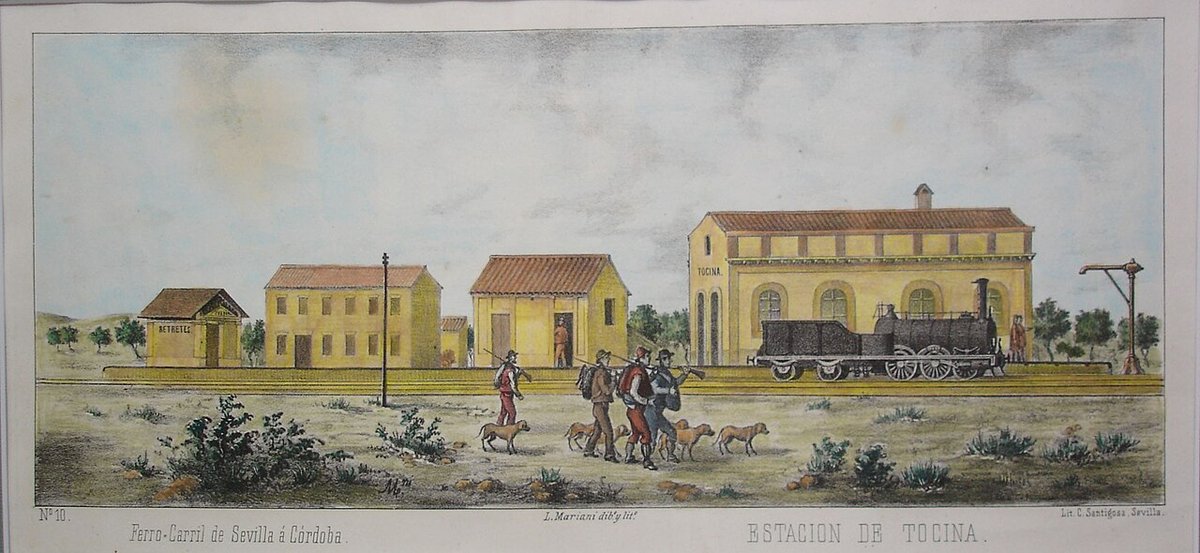
Los Rosales has a railway station, something Tocina itself never had. The local train linking Seville and Córdoba stops briefly, and a handful of passengers step off carrying backpacks or shopping bags. The platform smells of hot tar and eucalyptus. In spring, the surrounding fields fill with poppies, their red cutting through the green of the orange groves.
When everything gathers
In September, the shared fair between Tocina and Los Rosales transforms an open space beside the road for a few days. White canvas tents, strings of lanterns, and music that can be heard from several streets away announce it before you arrive. The smell of fried fish mixes with dust stirred up by cars parking nearby.
Children spend hours on the swings while adults remain at tables late into the night, breaking into sevillanas, a traditional Andalusian dance, when someone starts clapping out the rhythm. By the end of the evening, it is not unusual to hear someone singing “Tocina, Tocina” as if it were an improvised anthem.
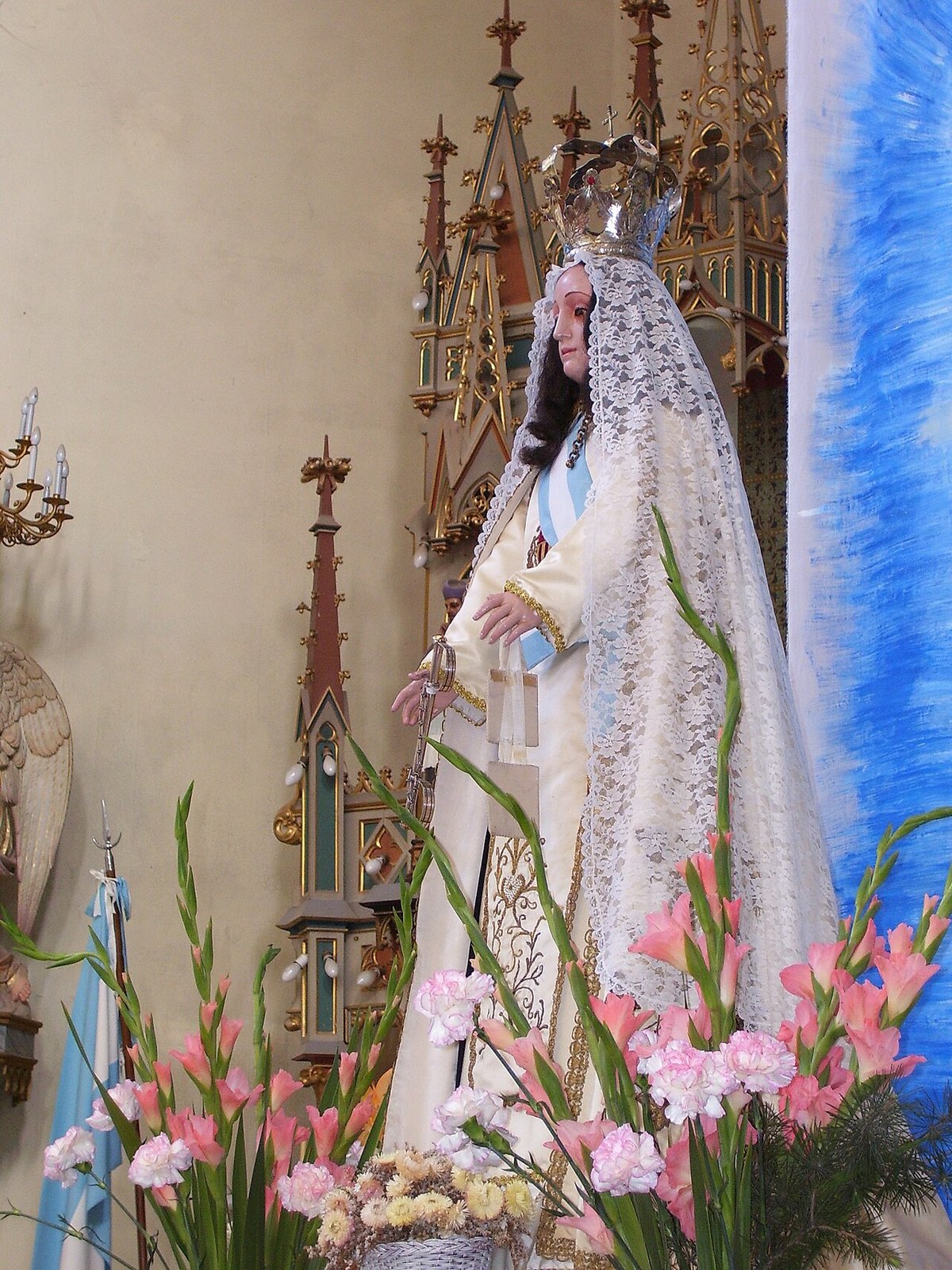
A few months earlier, the romería of the Virgen de Fátima takes place. This is a rural pilgrimage in which the image of the Virgin is carried to a spot known as La Playita, beside a stream. The name can be misleading. There is no sand or water for swimming. The route is about two kilometres under the sun, with the image carried on shoulders and children running ahead holding olive branches.
Once there, the day unfolds among homemade food, cool boxes and guitars that appear once the atmosphere warms. It is a simple gathering, shaped more by habit than by any formal plan.
Getting there and choosing the moment
Early spring is often the most pleasant time to come. After the rains, the vega smells of damp earth and the orange trees are in blossom. If travelling by car, the A-4 motorway is only a few minutes away. Those arriving by train can get off at Los Rosales station and walk roughly a kilometre to reach the centre.
August brings intense heat, and by mid-afternoon the streets are nearly empty. In winter, after several days of rain, some of the tracks across the vega become heavy and slippery underfoot.
It is worth avoiding fair nights if quiet is what you are after. And it is best not to expect menus designed with visitors in mind. Cooking here follows long-standing habits: bacalao con tomate, alcauciles con lomo, or rabbit that was still running in nearby enclosures the day before. If an orange sponge cake appears on the table, it is worth trying. It is usually made with fruit from the surrounding orchards and carries a slight sharpness that lingers on your fingers long after the last bite.